
| Quick Answer: Solicitor fees for selling a house in the UK typically range from £610 to £1,500 in legal fees, plus VAT at 20% and disbursements of £200–£722. Total costs for a standard freehold sale usually land between £800 and £1,600. Leasehold properties cost more, often reaching £1,045–£2,339 in total. |
Solicitor fees for selling a house are the line item that trips people up every time I go through this with a seller. The numbers aren’t secret. They just never get mentioned until the invoice lands.
You allocate funds for the estate agent and the removal van.
Then the legal bill arrives higher than you penciled in, and suddenly you’re second-guessing every other cost on the list.
Here’s the real breakdown: what solicitor fees for selling a house actually cover, what counts as a genuine extra versus a padded line item, and where you can trim the bill without cutting corners on the legal work that protects you.
How Much Do Solicitor Fees Cost When Selling a House
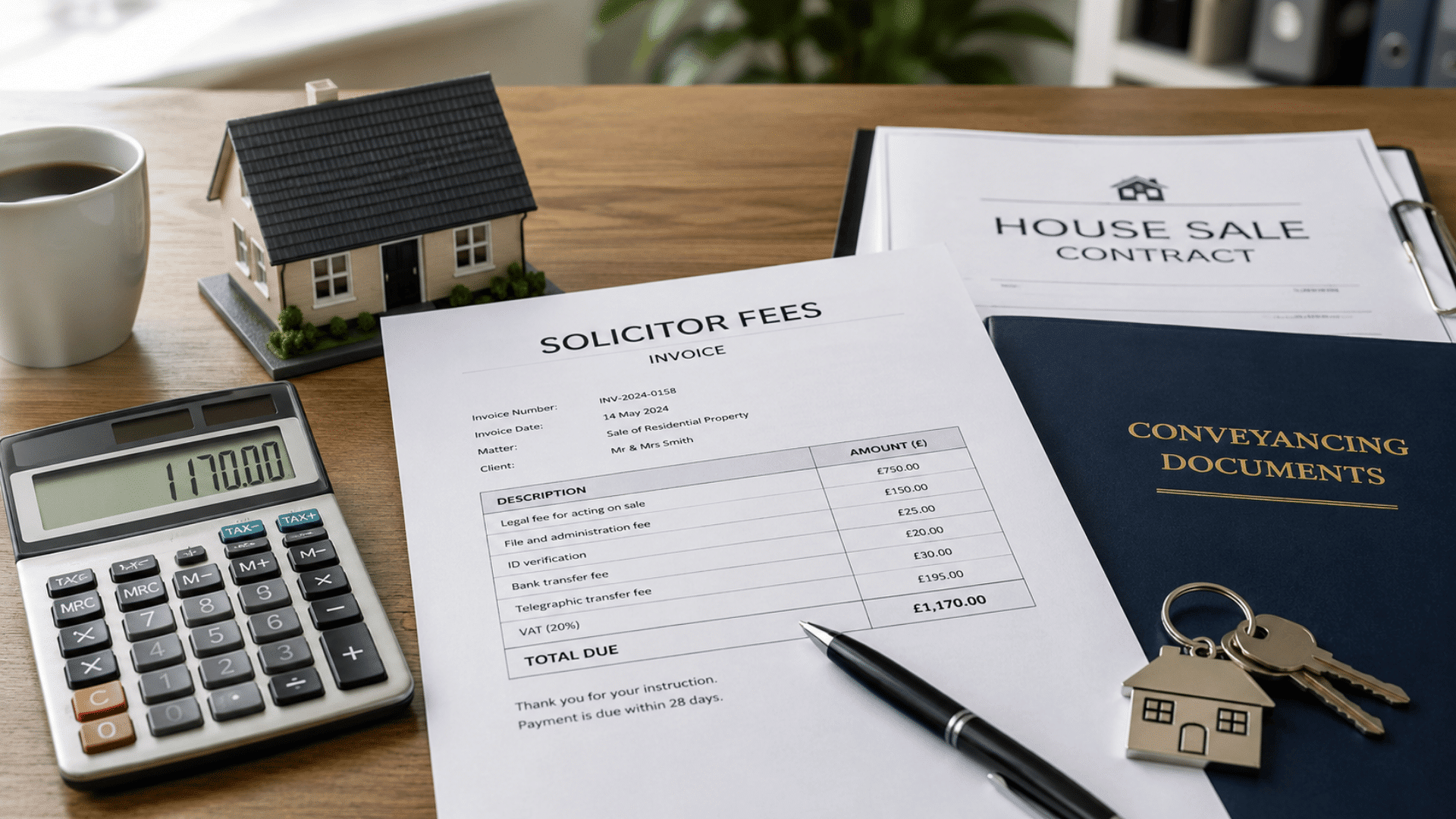
For most standard freehold sales in the UK, solicitor legal fees run between £610 and £1,500 before VAT. Add 20% VAT on the legal fee and disbursements on top, and your total bill typically lands between £800 and £1,600.
Leasehold properties cost more due to the extra legal work involved. Total costs for a leasehold sale commonly reach £1,045–£2,339.
This is what average fees look like by property price for a standard freehold sale:
| Sale Price | Average Solicitor Fees (inc. basic disbursements) |
|---|---|
| £100,000 | £525 |
| £200,000 | £580 |
| £300,000 | £620 |
| £400,000 | £715 |
| £500,000 | £770 |
| £750,000 | £830 |
| £1,000,000 | £910 |
What Solicitor Fees Include in a House Sale

The solicitor you hire handles most of the legal work from start to finish.
- Preparing and checking contracts: Your solicitor drafts the sale contract and ensures all restrictions or covenants are clearly stated. They also prepare the Property Information Form (TA6) and the Fittings and Contents Form (TA10) with your input.
- Managing legal ownership transfer: They prepare the transfer form, run title checks to confirm you legally own the property, and coordinate with your lender to arrange mortgage repayment at completion.
- Communication with all parties: Your solicitor sends and receives contract papers, responds to the buyer’s legal queries, liaises with your estate agent, and chases progress when things slow down.
- Handling completion and fund transfers: On completion day, they receive the sale funds, pay off your mortgage, transfer the remaining balance to your account, and send the signed transfer deed to the buyer’s solicitor.
- Post-completion updates: After completion, they notify the Land Registry of the change in ownership and close your file once everything is confirmed.
Disbursements are separate from the legal fee.
| Disbursement | Typical Cost |
|---|---|
| Anti-money laundering check | £6–£44 |
| Title register copy | £7–£10 |
| Bank transfer (CHAPS) fee | £20–£50 |
| Land Registry document fee | £200–£330 |
| Leasehold management pack | £275–£800 |
| Indemnity insurance (if needed) | £20–£300 |
How Property Type Affects Solicitor Fees
Selling a leasehold property costs more than selling a freehold one, and the gap is real and worth planning for. With a freehold sale, your solicitor handles a straightforward ownership transfer.
With a leasehold sale, they have to do significantly more work:
- Review the lease terms and flag any restrictions
- Contact the freeholder or managing agent for a leasehold management pack
- Check service charge accounts and ground rent history
- Handle any lease-specific legal queries from the buyer’s solicitor
The management pack alone typically costs £275–£800.
You pay this directly, and it’s non-refundable, even if the sale falls through. If your property has two separate managing agents (common in some larger developments), you may need two packs, which doubles that cost.
Tip: Ask your solicitor for a leasehold itemization before you agree to anything. Get the management pack fee confirmed in writing as a separate line item but not bundled into the headline quote.
Fixed Fee vs Hourly Rate: Which Should You Choose?
Fixed fees are better for sellers in almost every case. You know your costs before the process starts, you can compare quotes directly, and there are no surprises when the invoice arrives.
Most UK solicitors now offer fixed-fee conveyancing for standard house sales, so you agree on a price upfront and pay that regardless of how long the work takes.
Some traditional high-street firms still charge by the hour, typically £150–£300 per hour, particularly for complex cases involving disputed ownership, boundary issues, or title defects.
For a standard sale, there’s no good reason to accept an hourly rate.
If a solicitor quotes you hourly, ask whether a fixed fee is available. If they say no, that’s worth factoring into your decision.
What to Look for When Choosing a Solicitor
While price is important, remember it’s not the only thing to consider. There are other factors that also play a role in making the best choice. Price matters, but it’s not the only thing that matters.
- Check regulation first: Only use a firm registered with the SRA or CLC. Both registers are searchable for free online, and regulated firms carry professional indemnity insurance if something goes wrong.
- Look for property experience: Pick a solicitor or conveyancer who handles residential sales regularly, not a generalist who does a handful of property transactions a year.
- Test their communication at quote stage: Poor communication is the most common complaint about conveyancing solicitors, so a slow reply now usually means a slow reply during your sale.
How to Keep Solicitor Fees Down
Solicitor quotes vary more than most sellers realize. Knowing where the gaps are before you instruct can save you a significant amount.
- Compare quotes and confirm VAT: Get an itemized breakdown from at least three firms and check whether VAT is included. A £750 quote with VAT beats a £700 quote without it.
- Consider a licensed conveyancer: They specialize in property transactions, are regulated by the CLC, and are often cheaper than a full solicitor for a standard sale.
- Skip your estate agent’s recommendation: Agents often earn a referral fee for these introductions, so you may pay more and get less by going with their pick.
- Look for no sale, no fee terms: This protects your legal fee if the sale falls through, though you’ll still cover disbursements already spent.
- Instruct before you list: Getting ID checks and paperwork done early can cut weeks off your timeline, and some costs too
Extra Costs Which Are Often Overlooked
Some selling costs fall outside your solicitor’s main quote and can add up quickly. Check these possible extras early so you can budget for them before completion.
| Extra Cost | Typical Amount | What It Covers |
|---|---|---|
| Early repayment charge | 1–5% of mortgage balance | Fee for ending some mortgages early |
| Redemption statement | £25–£50 | Lender’s payoff statement |
| Indemnity insurance | £20–£300 | Covers missing property documents |
| Fast-track fee | £150–£300 | Priority solicitor handling |
| Joint seller ID checks | Varies | AML checks for each seller |
Frequently Asked Questions
Do I Compulsorily Need a Solicitor to Sell a House in the UK?
In most cases, yes. You can legally sell without one, but it is extremely rare and not recommended for buyers or lenders.
When Do I Pay My Solicitor Fees When Selling a House?
Most solicitors take a small upfront payment for disbursements at the start. The bulk of your legal fees are deducted from your sale proceeds on completion day.
Do I Pay Solicitor Fees If My House Sale Falls Through?
With no sale, no fee terms, you won’t pay the legal fee if the sale collapses. You still cover disbursements already spent, like ID checks.
Can I Negotiate Solicitor Fees When Selling a House?
Yes, ask each firm for their best fixed-fee quote and mention any competing quotes you’ve received. Firms often match or beat a rival’s price for straightforward freehold sales.