

Subletting means a tenant rents out all or part of the property they already rent to another person. The new person is called a subtenant, while the original tenant remains responsible for the tenancy they have with the landlord.
The rental relationship works like this:
Landlord → Tenant → Subtenant
The landlord rents the property to the original tenant. The tenant then allows another person to live in the property and collects rent from them. The subtenant does not usually have a direct agreement with the property owner.
The word “sub” means “under,” which explains the structure of the arrangement. A subtenant sits under the original tenant in the rental chain rather than directly under the landlord.
For example, if a tenant moves away temporarily for work and lets someone else live in their rented flat, that person becomes the subtenant. The original tenant still has to pay the landlord, follow the tenancy rules, and deal with any issues caused by the subtenant.
What Is the Difference Between Subletting and Renting?
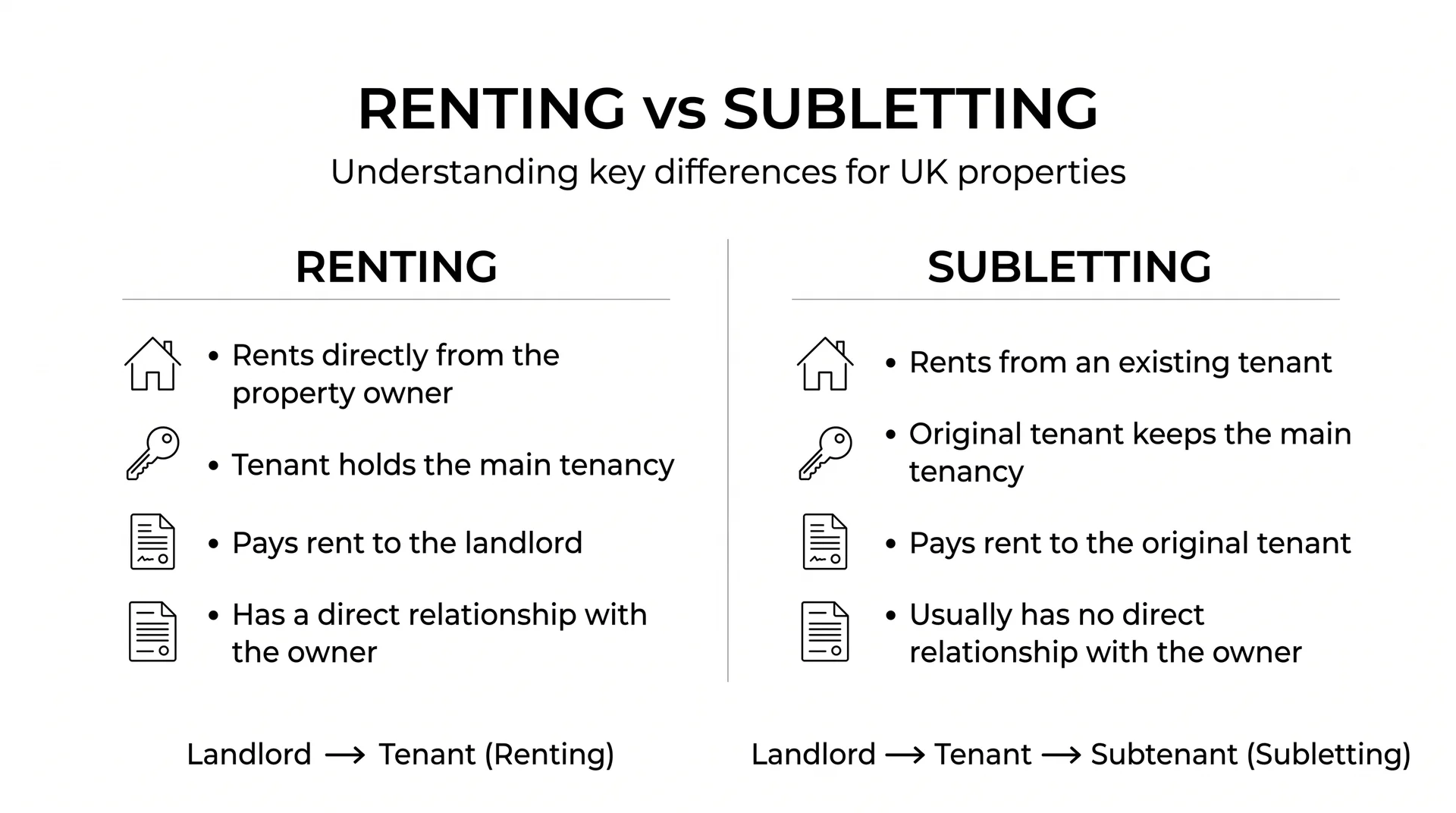
In a normal rental, you deal directly with the property owner. In a sublet, your agreement is with an existing tenant who already rents the property.
When you rent a property, the landlord is the owner, you hold the main tenancy, and you pay your rent directly to them.
You also have a direct relationship with the property owner for issues such as repairs, tenancy terms, and ending the agreement.
With subletting, the original tenant remains responsible for the main tenancy. The subtenant pays rent to that tenant instead of the property owner. The subtenant’s rights depend on the agreement they have with the tenant, and their arrangement may be affected if the original tenancy ends.
Common Reasons People Sublet
People sublet for practical reasons, not because they want to add complexity to a rental arrangement. These are the most common situations that lead to a sublet.
- Temporary job relocation: a posting abroad or in another city for three to twelve months.
- Extended travel: gap years, sabbaticals, or long-term personal trips.
- Financial difficulty: needing help covering rent after a job loss or pay cut.
- Relationship changes: a couple separating, leaving one person unable to afford the rent alone.
- Study abroad programmes: students who need to keep their flat but leave for a semester.
- Avoiding early lease break fees: leaving before the tenancy ends without losing the deposit.
Is Subletting Legal in the UK?
Subletting is not automatically illegal in the UK, but it usually requires the landlord’s permission before another person moves into the property.
Most private tenancy agreements in England and Wales will either:
- Ban subletting completely.
- Allow it with the landlord’s written consent.
- Not mention it clearly.
If your agreement requires permission, you should get approval before proceeding. If it says nothing about subletting, do not assume it is allowed. It is safer to ask the landlord in writing.
Social housing has stricter rules. Subletting a council or housing association property without permission can be a criminal offense under the Prevention of Social Housing Fraud Act 2013. Possible consequences include prosecution, fines, or orders to repay profits made from the arrangement.
In most cases, the original tenant remains responsible for following the tenancy conditions, paying rent, and dealing with problems linked to the sublet.
What Are the Benefits and Disadvantages of Subletting?
Subletting can be a practical option when circumstances change, but it affects both the original tenant and the person moving in.
For the Original Tenant
- Keeps costs manageable: A subtenant can help cover rent while you are away, instead of leaving you to pay for an empty property.
- Keeps your tenancy active: You avoid ending your agreement early and can return to the property when your situation changes.
- Reduces vacancy issues: Having someone live in the property can help prevent problems that may go unnoticed in an empty home.
However, you remain responsible for the tenancy. If the subtenant misses payments, causes damage, or breaks the rules, the landlord can still hold you accountable. You may also face difficulties removing a subtenant who refuses to leave.
For the Subtenant
- Offers flexible housing: A sublet can provide a shorter-term option without committing to a full tenancy.
- May reduce moving costs: Many sublets come furnished, making them useful for temporary stays.
The downside is that your security depends on the original tenant’s agreement. If their tenancy ends or there are problems with the landlord, your living arrangement may be affected.
Who Can Sublet and Who Cannot?
Not everyone has the same right to sublet. The answer depends on the type of tenancy you hold and what your agreement says.
| Tenant Type | Can They Sublet? | Key Condition |
|---|---|---|
| Private renter (AST) | Usually yes, with permission | Written landlord consent required |
| Council or housing association tenant | Rarely, and strictly regulated | Criminal offense without consent |
| Leaseholder renting their flat | Depends on the lease | Both the landlord and freeholder may need to approve |
| Tenant with an explicit ban in the agreement | No | Agreement must be renegotiated first |
What About Leasehold Flats?
If you rent a flat in a leasehold building, there is another layer to check. The head lease between the freeholder and the landlord may restrict subletting separately from your tenancy agreement. Both documents need to allow it before you proceed.
What Are the Risks and Penalties for Subletting Without Permission?
Going ahead without consent is a breach of your tenancy agreement. It gives your landlord grounds to act. This applies even if you have always paid rent on time and caused no damage.
- Eviction: Your landlord can start possession proceedings by serving a Section 8 notice for breaching the tenancy agreement.
- Can You Evict a Tenant for Subletting? Yes, landlords can seek possession, with the rules depending on whether the tenancy is private or social housing.
- Can a Tenant Be Evicted Immediately? No, landlords must follow the legal process and obtain a court order before removing a tenant.
- Financial Penalties: Courts can order tenants to repay profits made from an unauthorised sublet and may award legal costs to the landlord.
- Damage to Future Rental History: An eviction linked to unauthorized subletting can make future rental applications more difficult.
- Your Landlord’s Mortgage Terms: An unauthorized sublet may breach the landlord’s mortgage conditions, giving them a strong reason to take action.
How to Sublet Legally: A Step-by-Step Guide
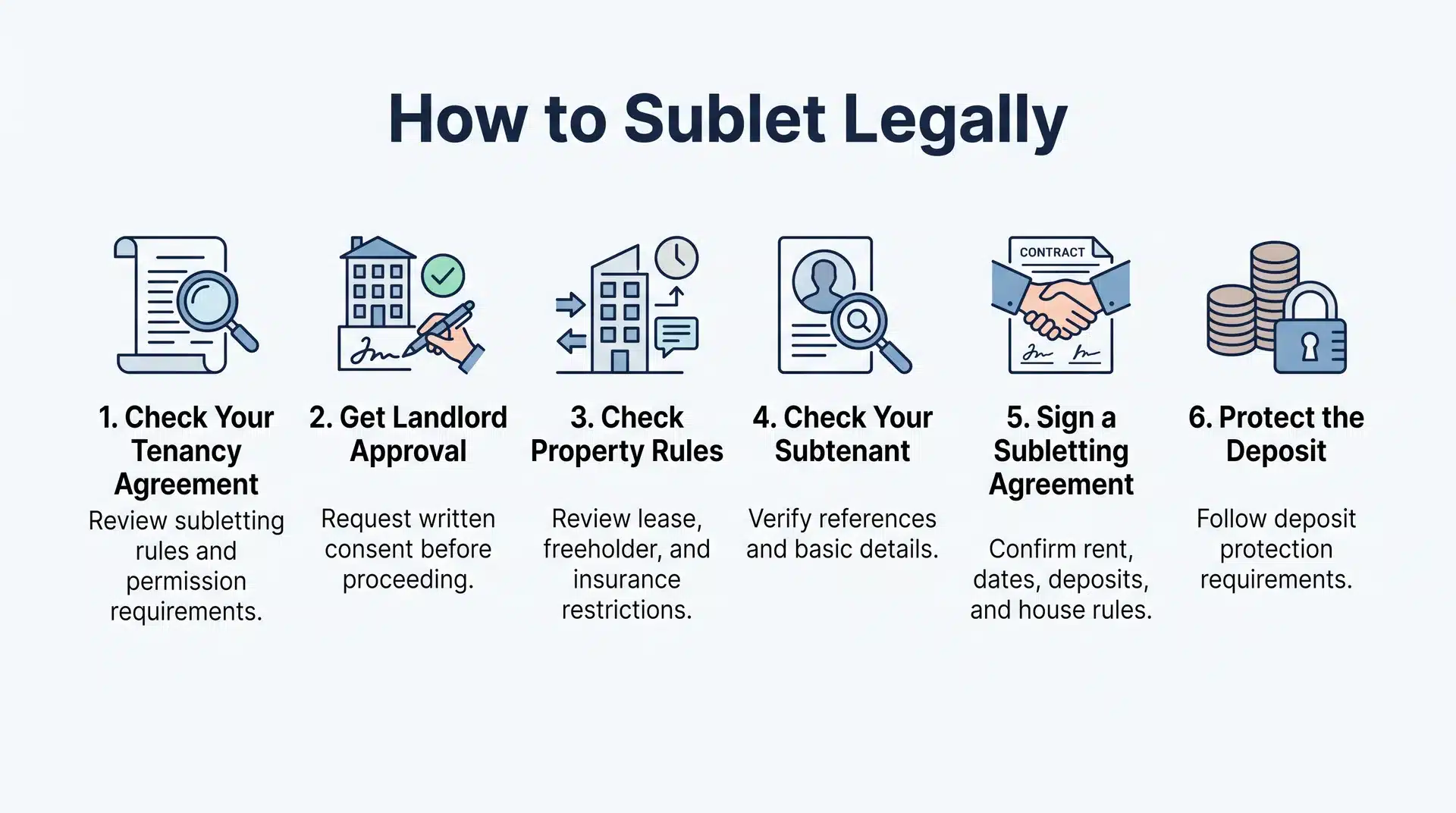
Following the correct process helps you avoid tenancy problems and protects both you and your subtenant.
Step 1: Check Your Tenancy Agreement
Read the subletting or assignment section to see if it is allowed, restricted, or requires permission. If the agreement is unclear, ask your landlord before making any arrangements.
Step 2: Get Written Permission From Your Landlord
Send a formal request explaining who the subtenant will be, how long they will stay, and why you want to sublet. Keep written records of all communication.
Step 3: Check Property Restrictions and Insurance
If you rent a leasehold flat, check whether the freeholder or management company has additional rules. You should also confirm that your insurance covers another person living in the property.
Step 4: Choose and Check Your Subtenant
Ask for references and carry out basic checks before agreeing to the arrangement. Remember, you remain responsible for their actions and any problems they cause.
Step 5: Create a Written Subletting Agreement
Set out the rent amount, payment dates, deposit details, start and end dates, notice period, and house rules. A clear agreement helps prevent disputes later.
Step 6: Protect the Deposit and Follow the Rules
If you take a deposit, place it in an approved tenancy deposit scheme and provide the required information. Make sure the sublet follows the terms of your original tenancy and ends when your tenancy ends.
How Much Can You Charge a Subtenant?
There is no legal cap on what you can charge a private subtenant. Most tenants charge roughly what they pay the landlord, or a proportional amount for a single room.
Charging notably more than your own rent raises questions. Many tenancy agreements include a clause that specifically bans profiting from a sublet. Check yours carefully before setting a figure.
It also helps to know how rental figures are typically presented in UK tenancy documents before you set an amount. How monthly rent is stated in UK tenancy agreements catches many renters off guard the first time they see it. Clearing it up early avoids confusion about what is owed and when.
On deposits: the Tenant Fees Act 2019 caps deposits in England at five weeks’ rent where the annual rent is under £50,000. As the sub-landlord, you are bound by the same cap.
Subletting vs Lodger: What Is the Difference?
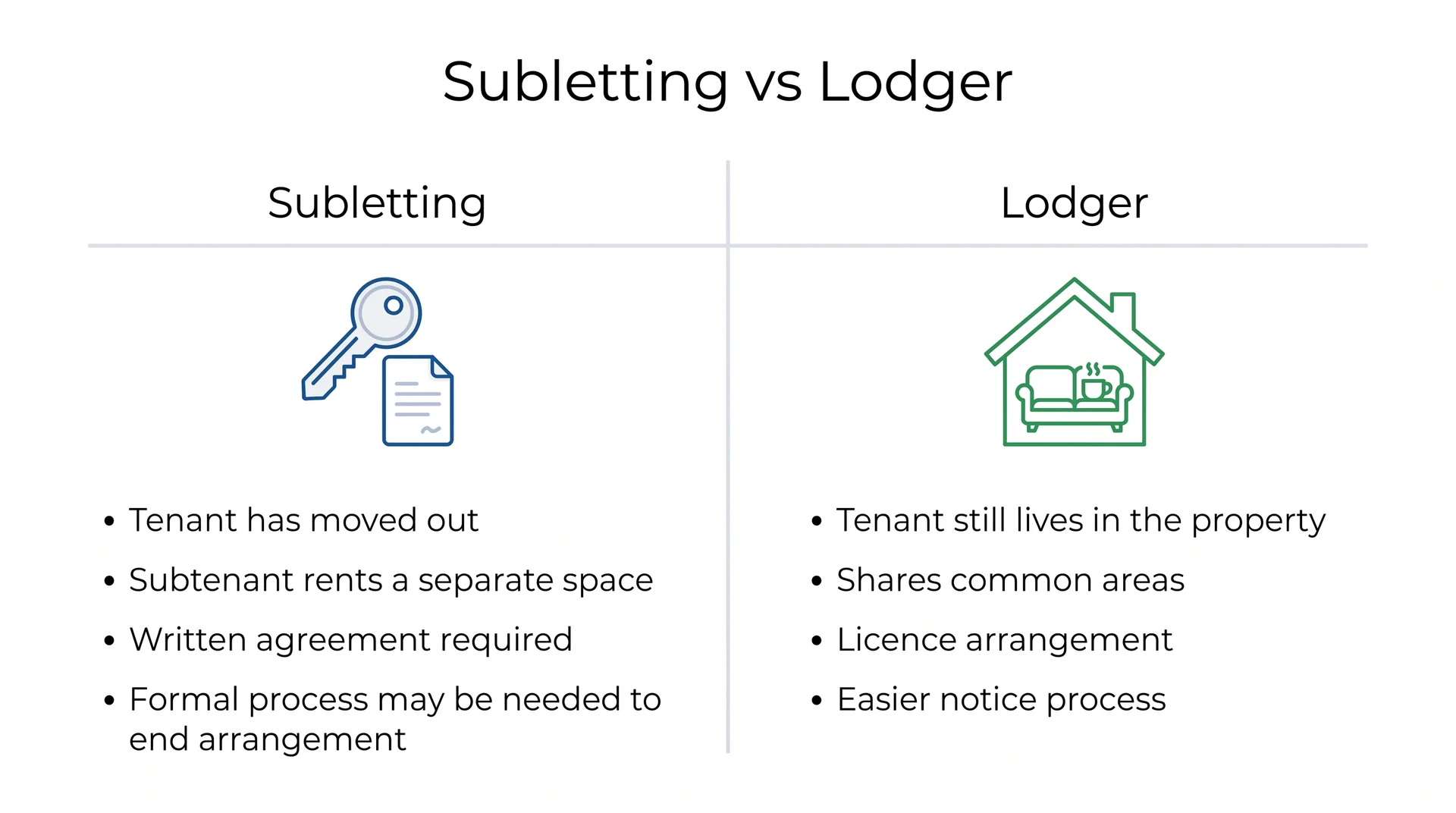
A subtenant usually lives in the property without the original tenant being present. They rent a space with a level of exclusive use and have an agreement with the tenant who arranged the sublet.
A lodger, on the other hand, lives with the tenant in their home and shares areas such as the kitchen, bathroom, or living room. They usually have a license to occupy rather than their own tenancy agreement.
The biggest differences are:
- Living arrangement: A subtenant usually has the property or their own separate area, while a lodger shares the home with the tenant.
- Rights over the space: A subtenant generally has exclusive use of their rented area, whereas a lodger shares communal spaces.
- Legal position: A subtenant’s rights depend on their tenancy agreement, while a lodger usually has fewer protections under a license arrangement.
- Ending the arrangement: Removing a subtenant may require a formal legal process, while ending a lodger arrangement is often simpler.
Confusing the two can create problems. Treating someone as a lodger when they are actually a subtenant may leave you with extra responsibilities and legal complications.
Mistakes I Have Seen Tenants Make When Subletting
The same mistakes often turn a simple sublet into a legal or financial problem. Tenants commonly move forward without checking their tenancy agreement, rely on a landlord’s verbal approval instead of getting written consent, or assume short-term rentals like Airbnb are outside the rules.
Others charge more rent than allowed, forget to protect the subtenant’s deposit, fail to update their insurance, or use agreements that do not match UK tenancy requirements. Leasehold flat tenants also sometimes overlook head lease restrictions.
Before subletting, it is important to plan for issues such as missed payments or a subtenant refusing to leave, as the original tenant remains responsible throughout the arrangement.
Frequently Asked Questions
Why do landlords dislike subletting?
They lose control over who lives in their property. An unapproved occupant may break their mortgage and insurance terms. Some tenants sublet at a profit without the landlord’s knowledge or consent.
What is the penalty for illegal subletting in the UK?
For private tenants: eviction, deposit loss, and legal costs. For social housing tenants: criminal prosecution and a court order to repay all profit under the Prevention of Social Housing Fraud Act 2013.
Can a landlord reject a subtenant?
Yes. A landlord can refuse a specific person named as a subtenant. They can apply the same referencing standards as for any tenant. The refusal cannot be discriminatory.
Can you evict a tenant for subletting without permission?
Yes. A Section 8 notice can be served for breach of tenancy. For social housing, possession is mandatory. No landlord can remove someone without a court order. The full legal process must be followed.
What happens if I am a subtenant and the original tenancy ends?
Your sublet ends with the original tenancy in most cases. If the original tenant’s lease was terminated without your knowledge, take legal advice quickly.
Putting It All Together
The meaning of subletting is straightforward: a tenant rents out their property to another person while staying legally tied to the original tenancy. The process itself takes more care. Read your tenancy first.
Get written permission. Check your insurance. Use a proper agreement. Protect the deposit. Those five steps cover the majority of what goes wrong when this is handled without enough thought.