
Every crowded garden is hiding the same simple fix, and most people never think to look up. So what is a trellis, exactly?
It’s an open frame that gives climbing plants somewhere to go besides sideways into each other.
Add one to a tangled bed, and you’ll notice the difference quickly: better airflow, more blooms, and less mess, making your gardening experience more enjoyable and rewarding.
Stick around, and you’ll see the types, materials, and plants that work best, so you can pick the right trellis for your own garden today.
What Is a Trellis?
A trellis is an open framework made of materials such as wood, metal, or vinyl that helps climbing plants grow vertically.
It gives vines and stems a surface to wrap around, cling to, or weave through as they develop.
After 14 years of building and repairing garden structures, I’ve seen the same pattern play out in almost every overcrowded bed: give the vines a frame, and the plants sort themselves out within a season.
Many climbing plants naturally seek support for their growth. Without a trellis, they may spread across the soil, become tangled, or use nearby plants as support.
A trellis provides a dedicated structure that keeps their growth controlled.
Trellises are used in gardens, patios, fences, and walls. They support plants, add privacy, divide areas, and organize gardens. Growing upward enhances airflow and plant health.
What Is the Purpose of a Trellis?
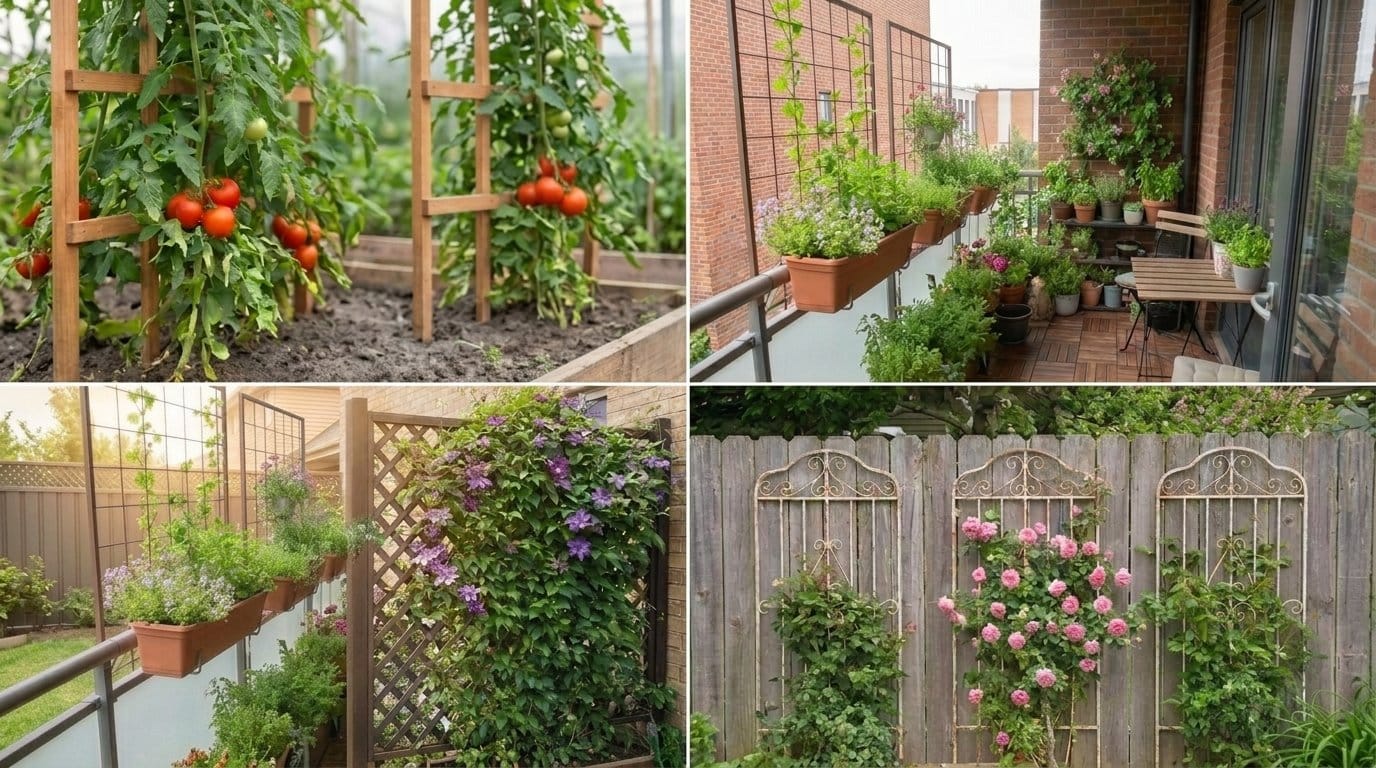
A trellis does more than support climbing plants. It also saves space, improves plant health, and adds structure and style to your garden.
1. Supports Climbing Plants
Climbing plants need something to grip. A trellis guides vines upward instead of letting them spread across the ground. It keeps flowers, vegetables, and fruits lifted off the soil.
This reduces rot and pest damage at the base of the plant. Better airflow around the stems also lowers the risk of fungal disease. Your plants stay healthier and produce better results.
2. Saves Garden Space
When plants grow up instead of out, you free up valuable ground space.
This makes trellises a smart choice for small gardens, balconies, and narrow side yards. You can grow more plants in less area.
A single trellis against a wall can hold several climbing varieties at once. Vertical framing like this is one of the easiest upgrades in a small garden design, since it adds growing space without using up floor area.
3. Adds Privacy and Structure
A trellis covered in dense vines works like a natural screen. It blocks unwanted views and adds height to flat, open spaces.
A trellis can section off a patio, seating area, or vegetable bed without the cost of a solid wall.
If you’re mounting one on top of a garden fence, check your local fence height rules first, since a trellis counts toward the total structure height and can push it over the legal limit.
Over time, as plants fill in, the screen becomes thicker and more effective.
4. Improves Garden Appearance
A bare wall or plain fence can look dull. A trellis with climbing plants adds texture, color, and life to those spaces.
It creates a natural focal point that gently guides the eye toward a specific area, making the design feel more inviting and engaging.
Even a simple wooden trellis can really enhance the look of your garden, making it feel more polished and thoughtfully designed.
How Does a Trellis Work?
A trellis provides a strong, open structure that helps climbing plants grow upward. The spaces in the frame allow vines, stems, and tendrils to move through and find support as they grow.
Plants climb trellises in different ways:
- Twining stems: Some plants wrap their stems around a support as they grow. Beans and morning glories are common examples.
- Tendrils: Thin, curly parts of the plant grab onto small bars or wires. Peas and cucumbers use this method.
- Clinging plants: Certain plants attach themselves to surfaces with tiny roots or sticky pads. Ivy is one example.
A trellis does not control how a plant grows. It only provides a structure that guides upward growth.
Choosing the right trellis depends on the plant’s climbing style, size, and weight, as smaller climbers need lighter supports while heavier vines require stronger frames.
What Are the Different Types of Trellis Shapes?
Trellises come in a handful of standard shapes, each suited to different plants and spaces.
- Flat panel: A grid mounted flush against a wall or fence. Works well for jasmine, ivy, and climbing hydrangea.
- Obelisk: A tall, narrow tower that stands alone in a bed. Good for clematis or morning glory.
- Fan: Wide at the top and narrow at the base. Suited to lighter vines, such as sweet peas.
- Teepee or A-frame: Poles angled together at the top. A common choice for beans, peas, and cucumbers.
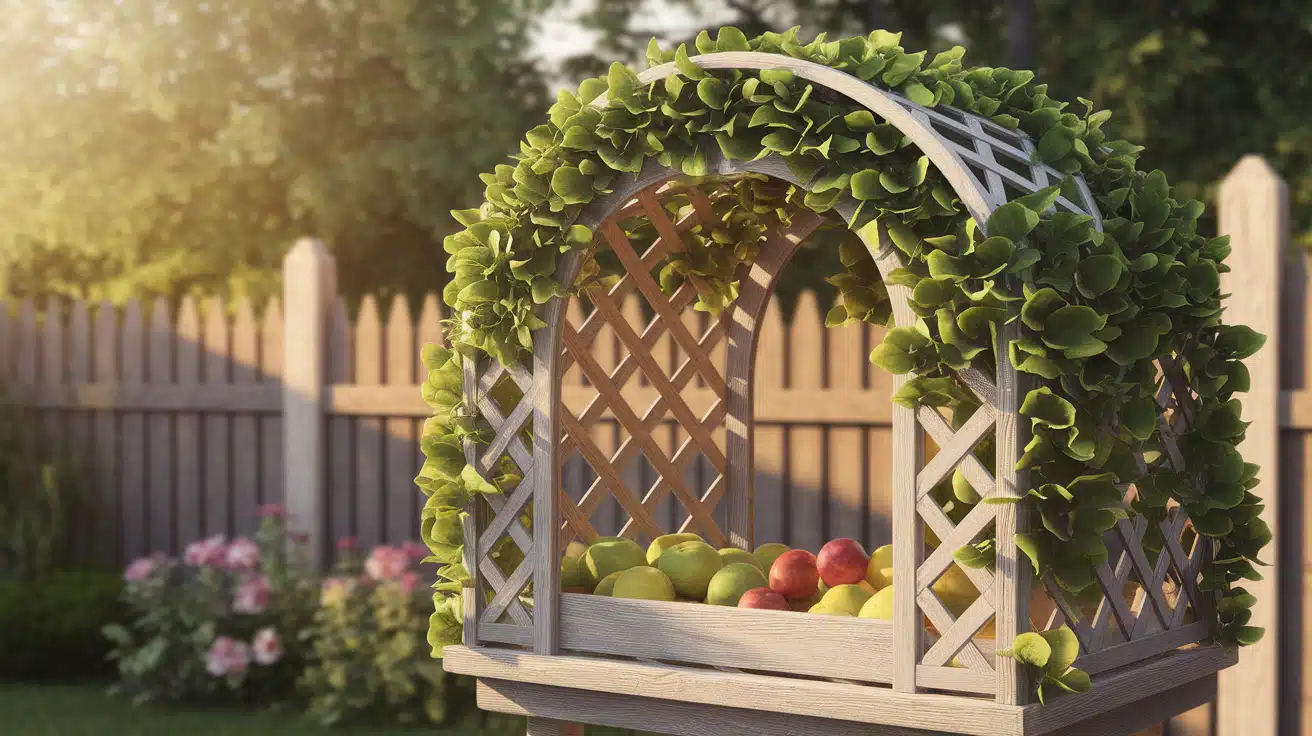
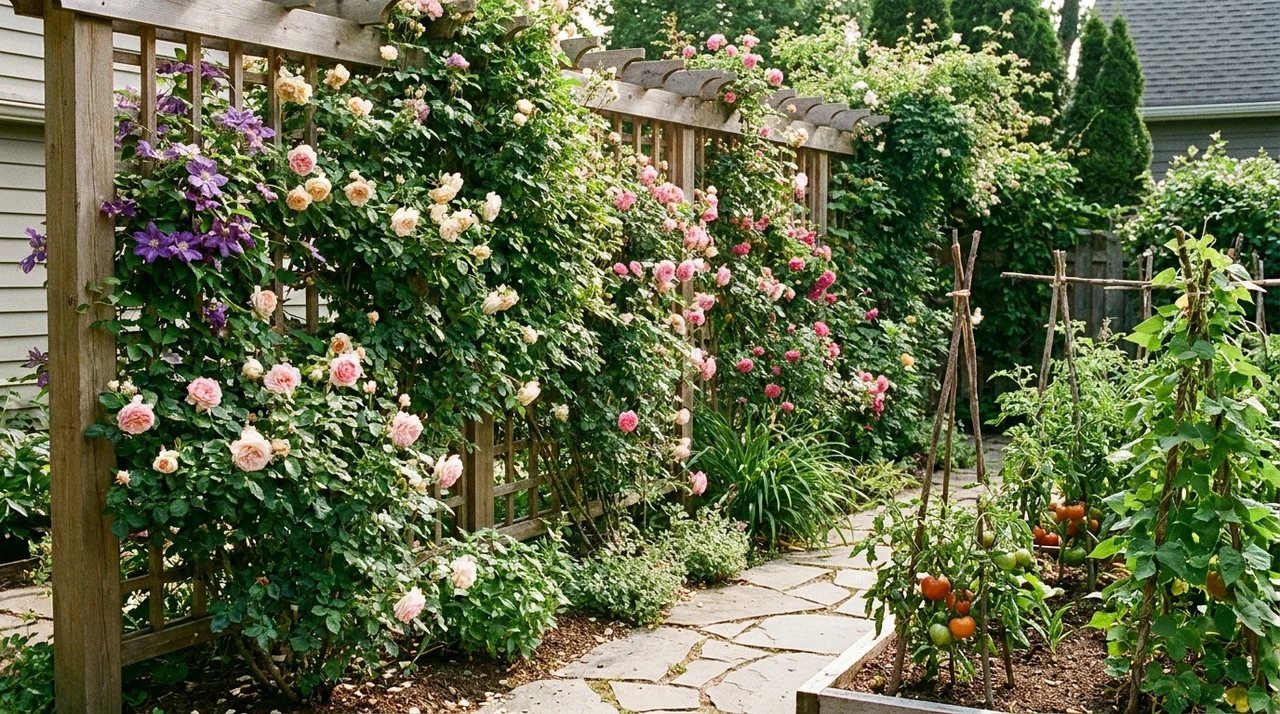
- Arch: A curved shape used over paths or entrances. Works well for climbing roses.
Pick a shape based on the plant’s weight and how much space you have to work with.
What Materials Are Trellises Made From?
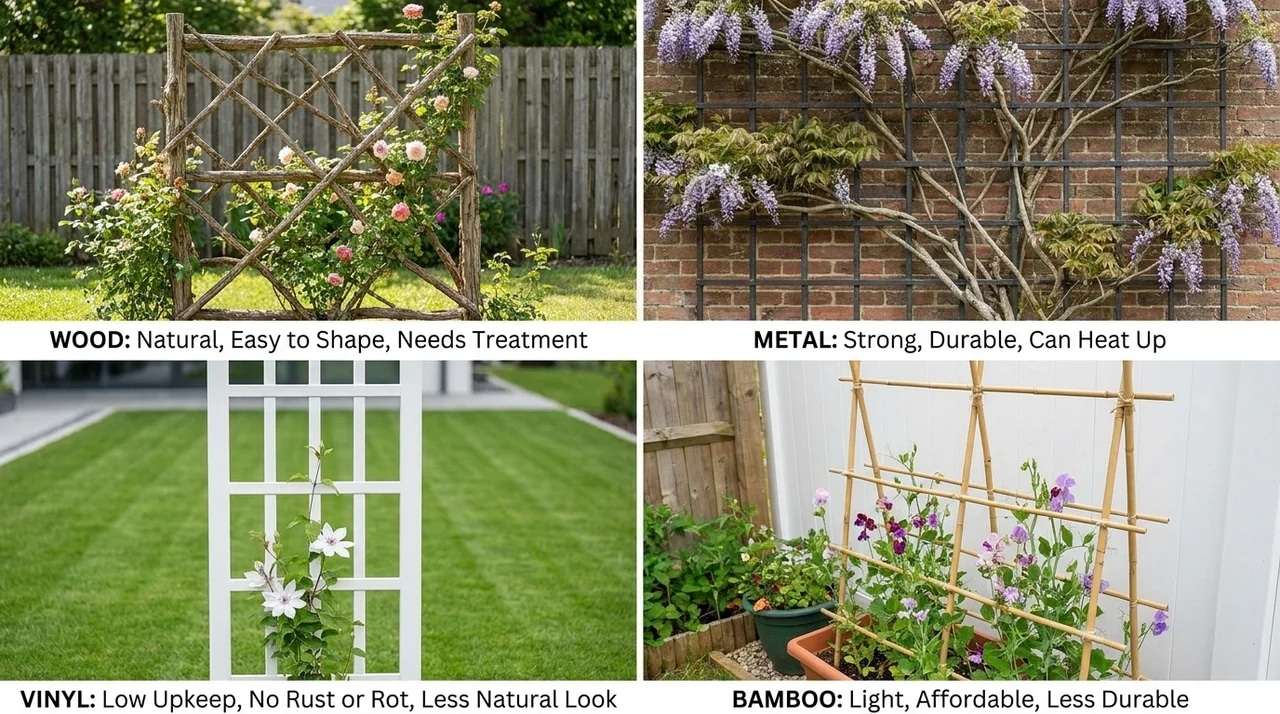
The material of a trellis affects its durability, appearance, maintenance needs, and how well it supports different plants.
Some materials are better for heavy vines, while others work well for small gardens or decorative use.
| Material | Best For | Things to Know |
|---|---|---|
| Wood | Traditional gardens and DIY projects | Needs protection from moisture |
| Metal | Strong support and long-lasting use | May become hot in direct sunlight |
| Vinyl | Low-maintenance outdoor spaces | Has a more manufactured look |
| Bamboo | Lightweight and budget-friendly setups | May wear out faster outdoors |
What Plants Grow Best on a Trellis?
Many different plants can grow successfully on a trellis, but the right choice depends on the plant’s growth habit, the strength of the structure, and what you want to achieve in your garden.
Some plants use trellises for support, while others create a decorative green wall or colorful display.
Flowering Plants
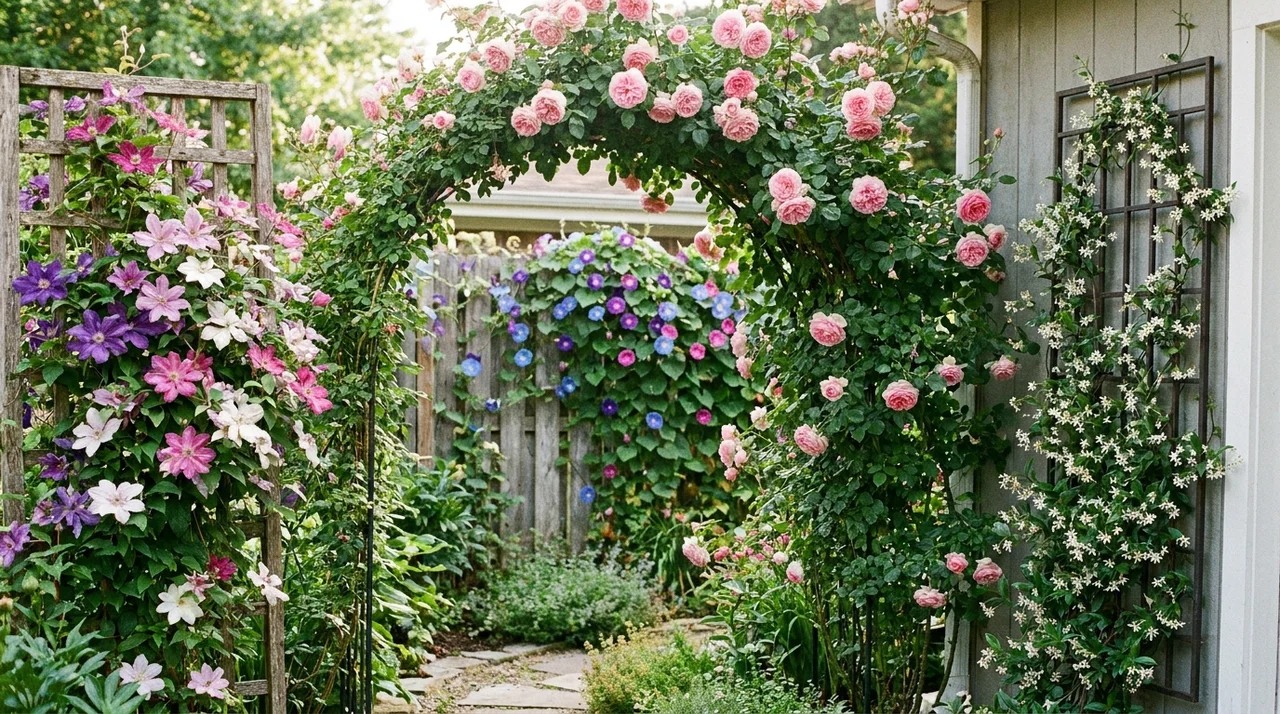
Flowering climbers add beauty, color, and in some cases, fragrance to outdoor spaces.
They are a popular choice for trellises because they can turn a simple structure into an attractive garden feature.
- Roses: Climbing roses are a traditional trellis plant. They work especially well on arches, fences, and wall-mounted trellises where their long stems can be guided upward.
- Clematis: Known for its large, colorful flowers, clematis grows well on trellises with smaller openings where its tendrils can easily grip.
- Jasmine: This lightweight vine produces fragrant flowers and grows nicely on both wood and metal supports.
- Morning Glory: A fast-growing climber that quickly covers trellises with bright blooms, making it a good choice for adding seasonal color.
Vegetable Plants
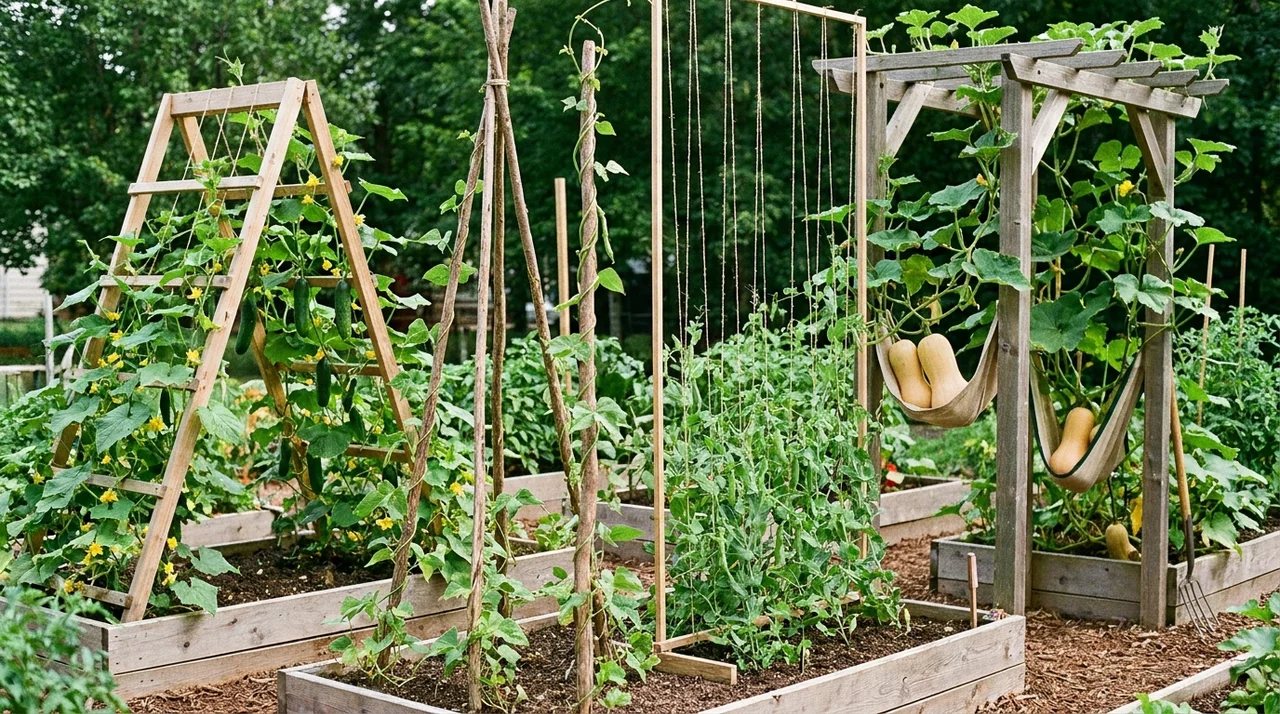
Trellises are not only decorative; they are also useful in vegetable gardens. Growing vegetables vertically can save space, improve airflow, and make harvesting easier.
- Cucumbers: These vines naturally climb and often produce cleaner, straighter fruits when lifted off the ground. Vining varieties need the sturdiest support, so it helps to check which type of cucumber you’re growing before picking a trellis.
- Beans: Pole beans wrap around supports as they grow, making them one of the easiest vegetables to train on a trellis.
- Peas: Their small tendrils grip thin supports, making them suitable for lightweight trellis designs, the same kind used to grow sweet peas for cut flowers.
- Squash Varieties: Some climbing squash can grow vertically, but larger fruits may need extra support to prevent strain on the vine.
Decorative Greenery
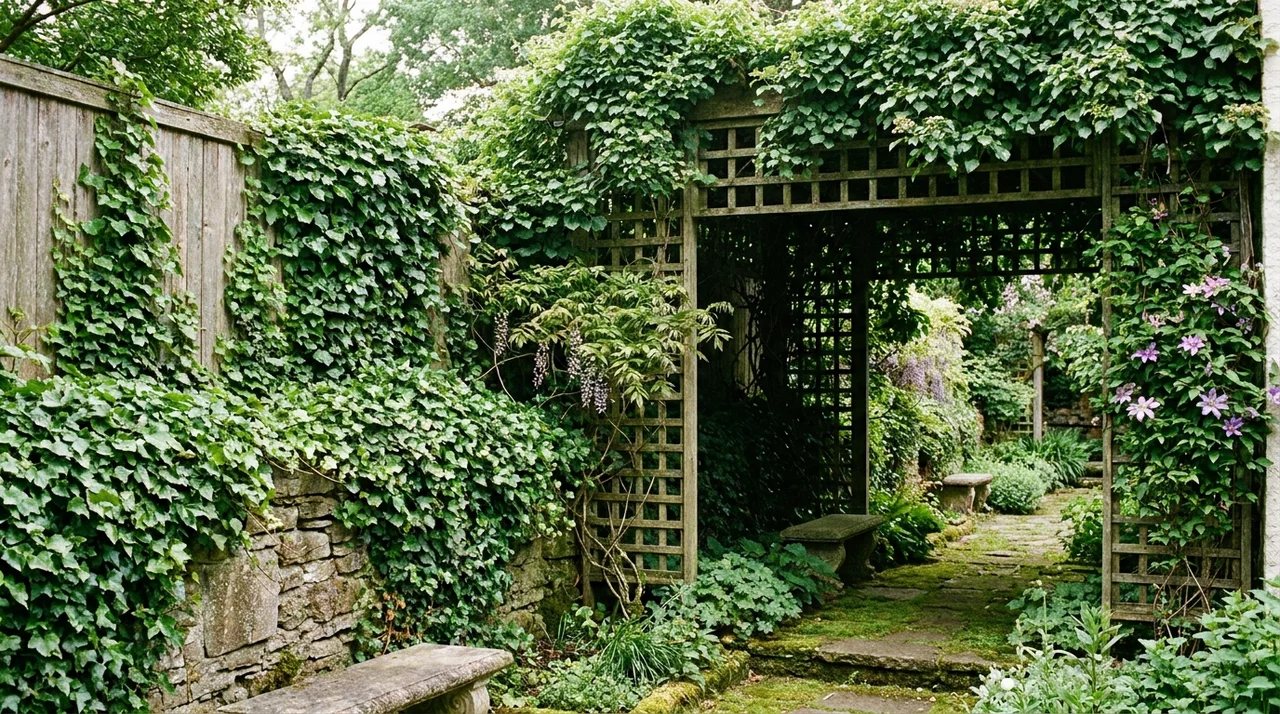
If your goal is to add privacy or create a lush green backdrop, decorative climbing plants are a great option.
- Ivy: Ivy attaches itself to surfaces and gradually spreads, making it useful for covering walls, fences, and large areas.
- Climbing Hydrangea: This slow-growing vine forms a thick cover over time and works well for adding greenery to walls or shaded garden areas.
How to Choose the Right Trellis
The right trellis depends on what you are growing, where you are placing it, and how much upkeep you want.
Consider the Plant Size
Small flowering plants like peas or morning glory need only light support. A bamboo or thin metal frame works fine.
Heavy vines like roses or squash put real weight on a frame over time. These need a solid wood or thick metal trellis that will not bend or tip.
Check the Location
Think about where the trellis will sit before you buy one. A wall-mounted trellis works well in tight spaces but needs a sturdy surface to attach to.
A freestanding trellis needs firm ground. Also check how much sun the spot gets, as this affects both the plant and the material you choose.
Think About Maintenance
Some materials need more care than others. Wood may need annual sealing. Metal can rust without a protective coat.
Vinyl and coated metal need only an occasional wipe-down. Pick a material that fits the amount of time you want to spend on upkeep.
Where Should You Place a Trellis?
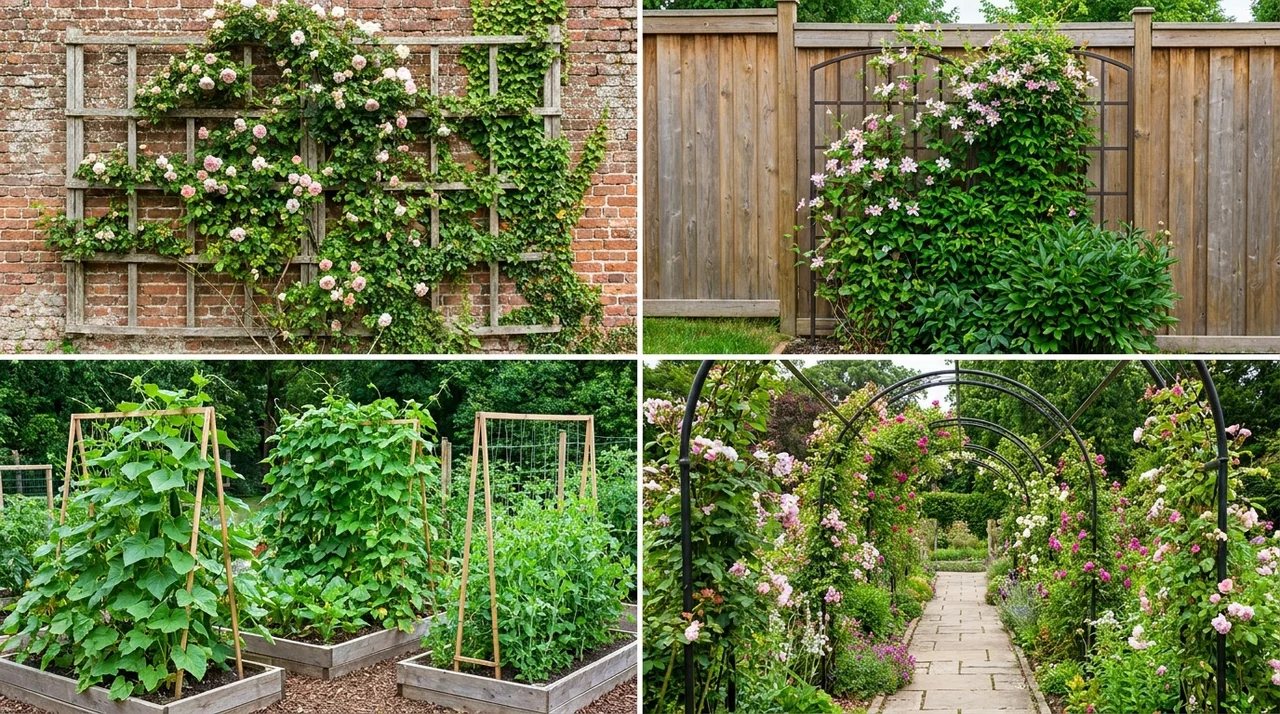
The best place for a trellis depends on the plants you’re growing and the amount of sunlight they need. Proper placement also keeps plants healthy and makes your garden easier to maintain.
- Against a wall: Creates a vertical garden while saving floor space.
- Near a fence: Adds greenery, height, and extra privacy.
- In vegetable beds, supports crops like cucumbers, beans, and peas while making harvesting easier.
- Along pathways: Adds a decorative feature and improves garden design.
Before placing a trellis, consider sunlight, available space, and the plant’s size.
How to Maintain a Trellis?
A trellis lasts much longer with basic, regular care. Here is what to do throughout the year.
- Check for loose connections: Joints and fasteners can loosen over time, especially after strong winds. Tighten any bolts or re-tie any sections that have shifted.
- Remove dead vines: At the end of each growing season, pull off old plant material. Dead vines retain moisture against the frame, accelerating rot or rust.
- Clean dirt and debris: Soil and plant matter build up in the gaps of the frame. A stiff brush and some water are usually enough to clear it out.
- Treat wooden trellises regularly: Apply a wood sealant or outdoor paint every one to two years. This keeps moisture from getting into the wood and causing it to crack or rot.
- Check metal for rust: Look for any orange or brown spots on metal frames. Sand off small rust patches early and apply a rust-resistant coating before the damage spreads.
A few simple checks each season keep your trellis in good shape for years.
Final Thoughts
A trellis earns its space fast. One afternoon of setup pays off with healthier vines, more blooms, and a garden that finally looks organized rather than overgrown.
The type you choose matters less than getting one up before your climbers sprawl out of control.
Pick a shape and material from this guide, then get it in the ground this week. Your roses, cucumbers, or sweet peas will thank you by midsummer.
Frequently Asked Questions
What Is the Difference Between a Trellis and a Pergola?
A pergola is a larger outdoor structure built for shade and seating areas, while a trellis is a smaller framework mainly used to support climbing plants and add privacy.
How Tall Should A Garden Trellis Be?
A garden trellis should usually be 4 to 8 feet tall, depending on the plant type. Taller vines need stronger, higher supports to grow properly.
What Is The Difference Between a Trellis And a Fence?
A trellis supports climbing plants with an open framework, while a fence creates a boundary or barrier. Trellises can add privacy but are not mainly for enclosure.