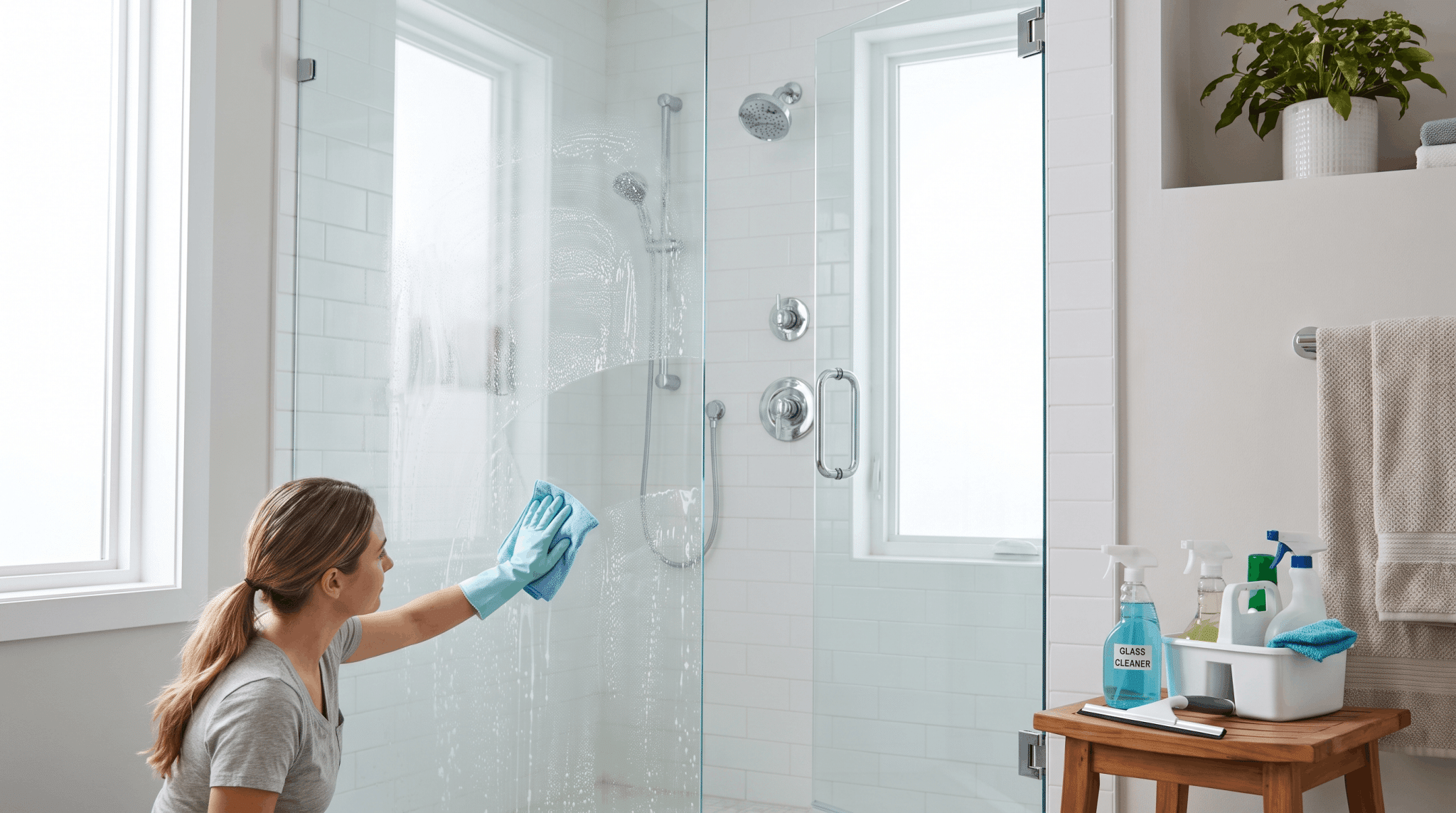

Cloudy shower glass, white water marks, and stubborn soap buildup can turn an otherwise clean bathroom into an eyesore.
Different stains need different cleaners for effective removal and better results.
In renovation work, I’ve seen more shower glass damaged by the wrong cleaner than by hard water itself.
Learning how to clean shower glass starts with identifying the cause of the buildup first.
With the right approach and regular maintenance, you can keep shower doors and screens clear without spending hours scrubbing.
How to Tell What Is Staining Your Shower Glass?
Most guides skip straight to “spray vinegar.” Running a finger over the stain first tells you what you’re actually dealing with, so you don’t scrub the wrong fix onto the wrong problem.
- Soap scum: feels slimy or waxy and tends to form where water drips and pools.
- Hard water or mineral scale: Feels gritty and shows up as white spots or a chalky crust.
- Etching: Texture doesn’t change, but the patch still looks the same after two cleaning attempts, a sign the damage has gone into the glass rather than sitting on top of it.
Quick test: Apply vinegar for one minute, softening suggests mineral buildup, stickiness points to soap scum, and no change may mean etching.
How to Clean Shower Glass Step by Step
Cleaning shower glass becomes easier when you follow the correct order. Start by removing loose residue, then treat the specific type of stain before drying the surface completely.
Step 1: Gather Your Cleaning Supplies
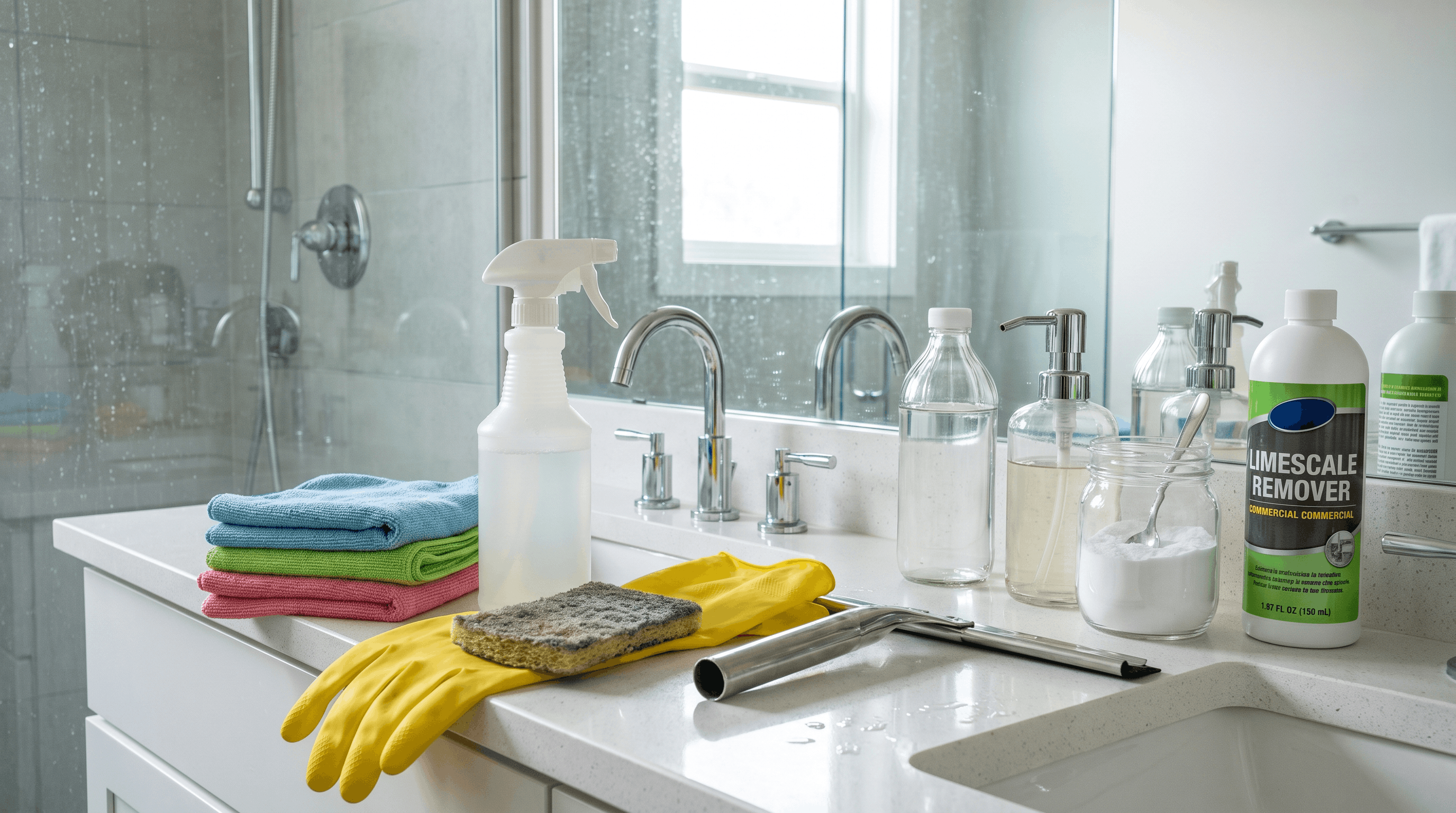
Start by checking whether you have soap scum, mineral deposits, or permanent etching because each requires a different approach.
Gather the following materials before you start cleaning your shower glass:
| Item | Purpose |
|---|---|
| Microfiber cloths | Wipe the glass without leaving streaks or scratches. |
| Spray bottle | Helps apply cleaning solutions evenly. |
| Soft sponge or non-scratch scrub pad | Removes dirt and buildup safely. |
| Squeegee | Clears water and prevents marks. |
| Rubber gloves | Protects hands during cleaning. |
| White vinegar or Citric acid | Breaks down mineral deposits and limescale. |
| Dish soap | Removes grease and surface grime. |
| Baking soda | Helps scrub stubborn stains gently. |
| Commercial limescale remover | Tackles heavy mineral buildup. |
Avoid using abrasive powders, metal scrapers, or rough cleaning pads because they can damage the surface.
Step 2: Rinse the Glass Surface
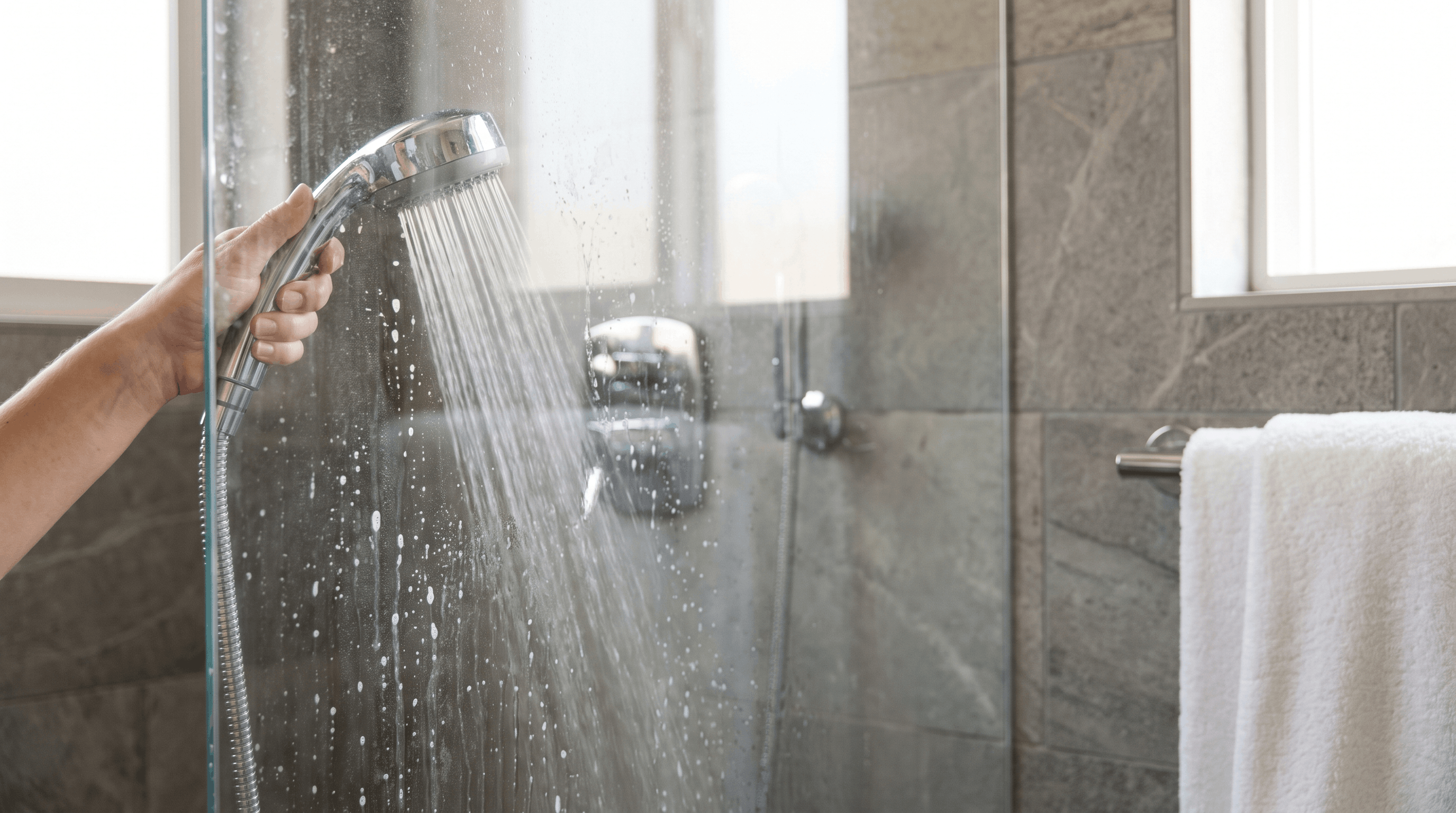
Run warm water over the shower glass to loosen surface dirt, leftover shampoo, and loose soap residue.
Removing this layer first prevents you from spreading grime around while cleaning and allows your cleaner to work directly on stubborn buildup.
Pay extra attention to areas where water and soap collect most often, such as the bottom edges, corners, and areas around the shower door handle.
Use a gentle stream of water rather than high pressure, as the goal is only to soften surface residue.
Step 3: Apply the Right Cleaning Solution
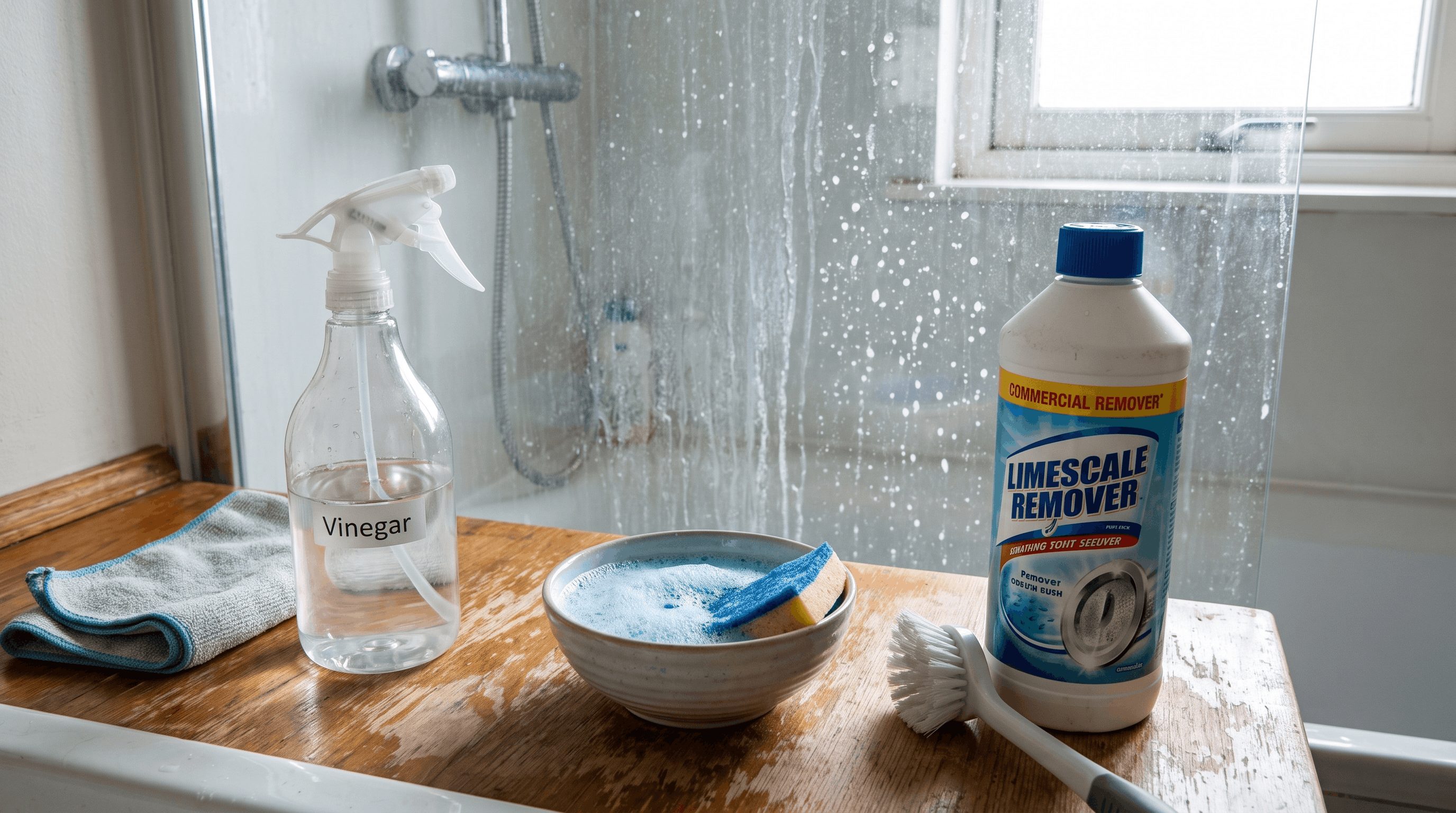
Choose the right cleaner by identifying the type of buildup you need to remove.
- For light water spots: Mix equal parts white vinegar and warm water in a spray bottle.
- For soap scum: Mix warm water with a few drops of dish soap to break down oily residue.
- For heavy limescale: Use a commercial calcium and lime remover designed for bathroom surfaces, or dissolve citric acid in warm water. Citric acid cuts through limescale faster than vinegar and is less likely to dull nearby chrome fixtures.
Step 4: Let the Cleaner Sit
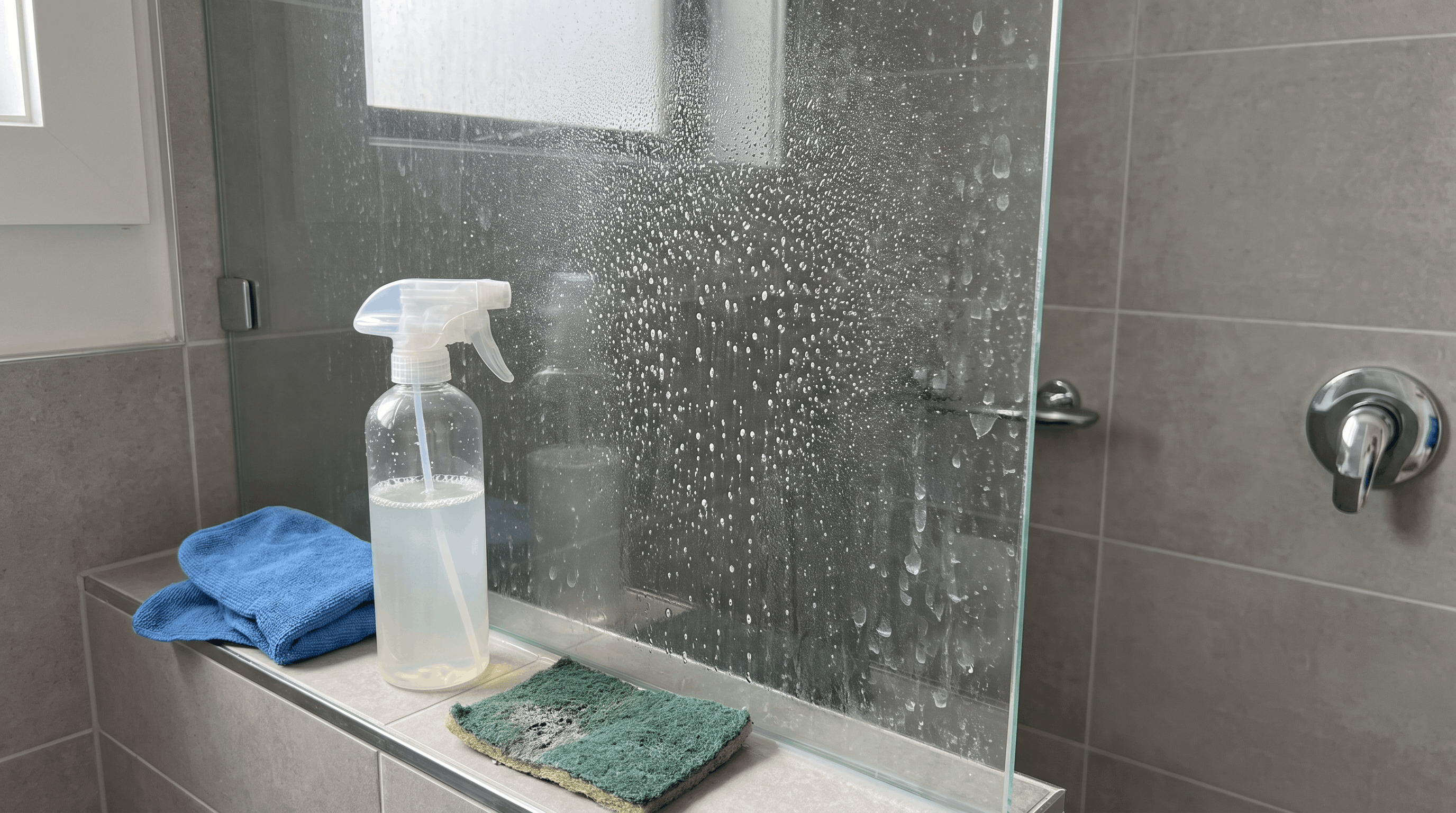
Allow the solution to stay on the glass for several minutes so it can loosen buildup and break down mineral deposits, soap residue, or water spots before scrubbing.
The contact time gives the cleaner a chance to work, rather than relying on high pressure to remove stains.
For light buildup, a few minutes is usually enough, while stubborn limescale may need a longer treatment with a suitable commercial remover.
Do not let cleaning products dry completely on the surface, especially when using stronger commercial cleaners.
Step 5: Scrub Gently
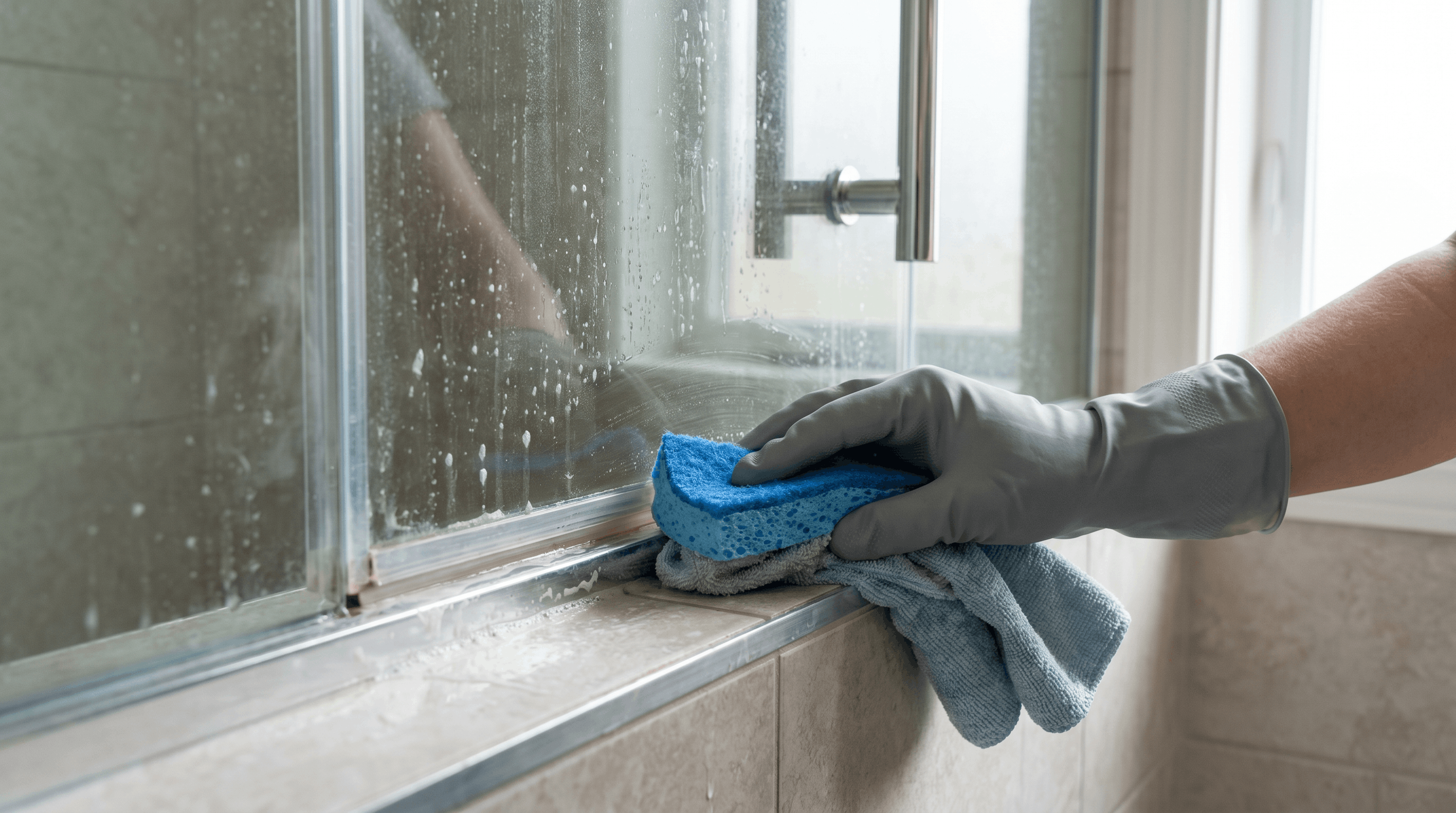
Use a microfiber cloth or soft pad to wipe away residue, focusing on areas where buildup tends to collect.
- Bottom edges of shower doors
- Corners
- Door seals
- Areas near shower handles
Avoid applying excessive pressure because aggressive scrubbing does not remove mineral damage.
Step 6: Rinse and Dry the Glass
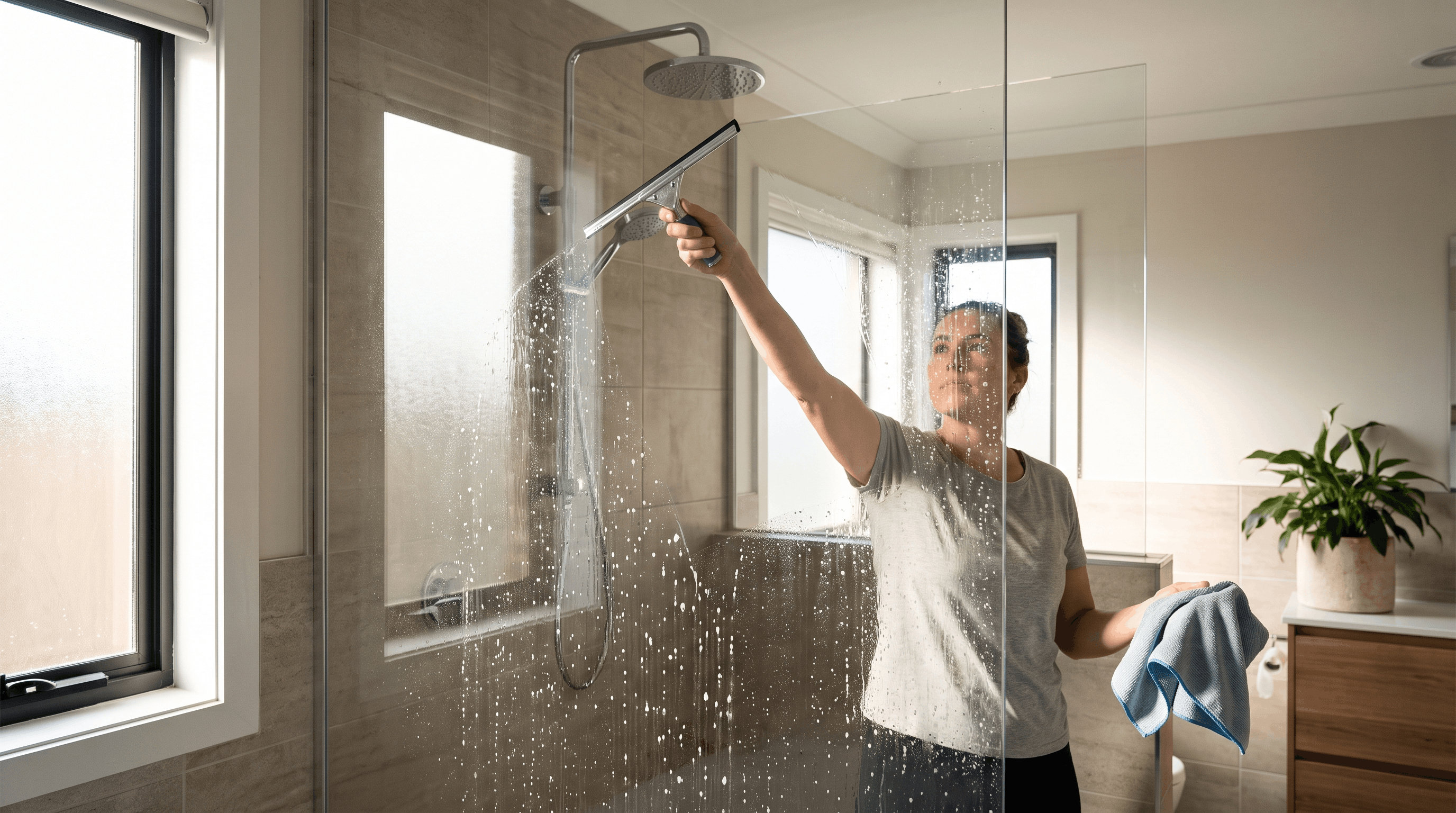
Rinse the glass thoroughly with clean water to remove all remaining cleaning solution and loosened residue.
Any leftover cleaner can leave streaks or a cloudy film if it dries on the surface.
Use a squeegee to remove excess moisture, starting from the top of the glass and working downward in smooth strokes.
Then wipe remaining drops, edges, and corners with a microfiber cloth to prevent water marks. Pay extra attention to the bottom edges and shower door seals, where water tends to collect.
Why Does Shower Glass Get Dirty So Quickly?
Every shower leaves behind water, minerals, and soap residue.
Hard water contains minerals such as calcium and magnesium. When water droplets evaporate on the glass, these minerals remain behind as white marks or chalky deposits.
Soap residue can also combine with minerals and create a sticky layer called soap scum. Over time, these deposits become harder to remove if the glass is not cleaned regularly.
Daily showers, poor ventilation, and skipping drying after use can make buildup appear much faster.
How to Remove Hard Water Stains From Shower Glass
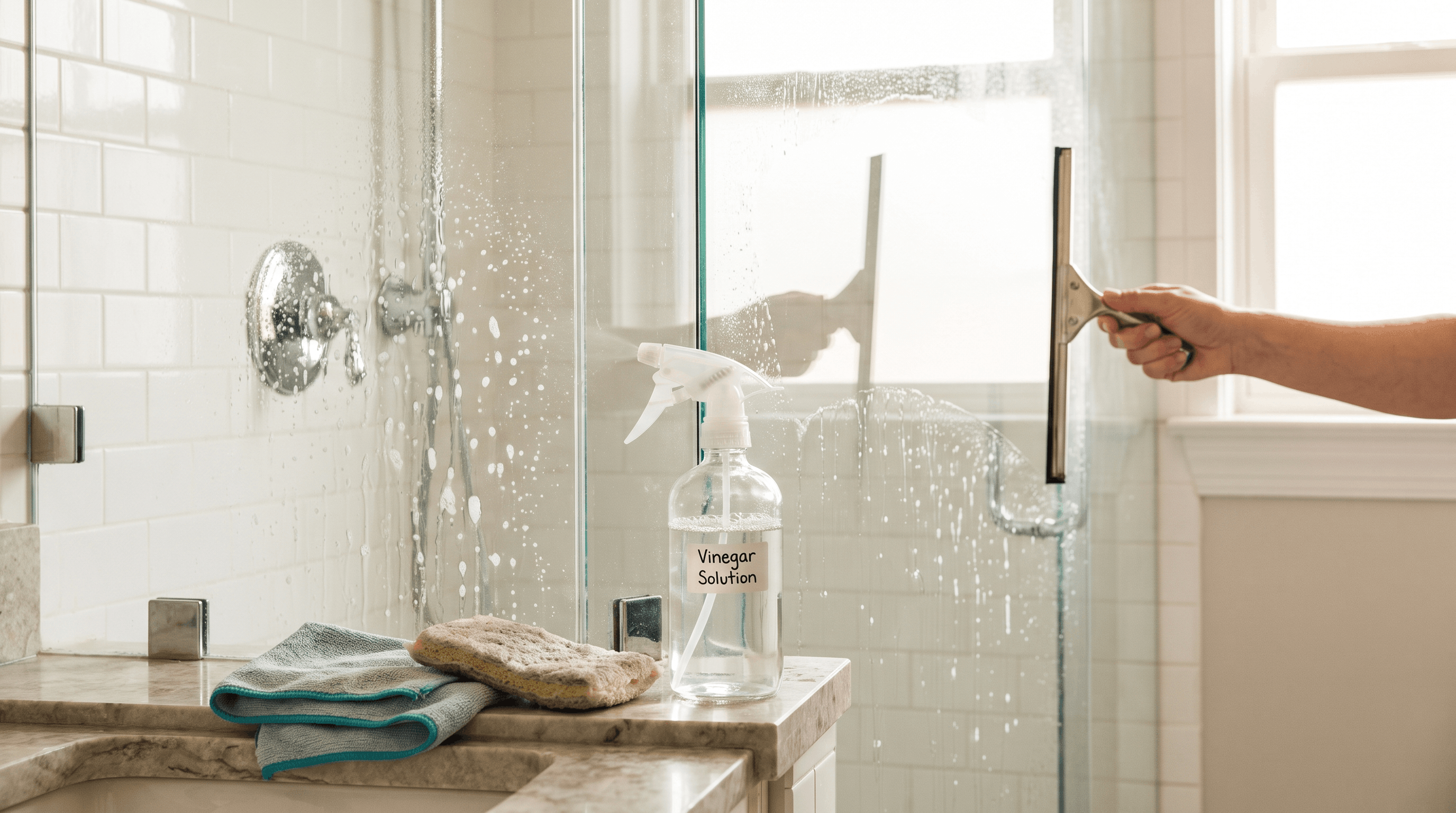
Choose a cleaning method based on how much limescale has built up on your glass surface and how stubborn the stains are.
| Buildup Type | Cleaner | How to Use |
|---|---|---|
| Fresh, light deposits | Equal parts white vinegar and warm water | Spray onto the surface, leave for 10–15 minutes, wipe with a microfiber cloth, then rinse and fully dry. |
| Older, stubborn limescale | Commercial limescale remover (such as CLR Calcium, Lime & Rust Remover) | Apply only to affected areas; follow the label directions. Scrub gently with a soft pad, then rinse thoroughly. |
How to Get Rid of Soap Scum on Shower Glass
Soap scumdifferst from hard water buildup because it is a greasy film formed when soap residue mixes with water minerals.
Acid-based cleaners may not remove it completely. A cleaner that breaks down oils and residue works better.
Soap Scum Removal Method
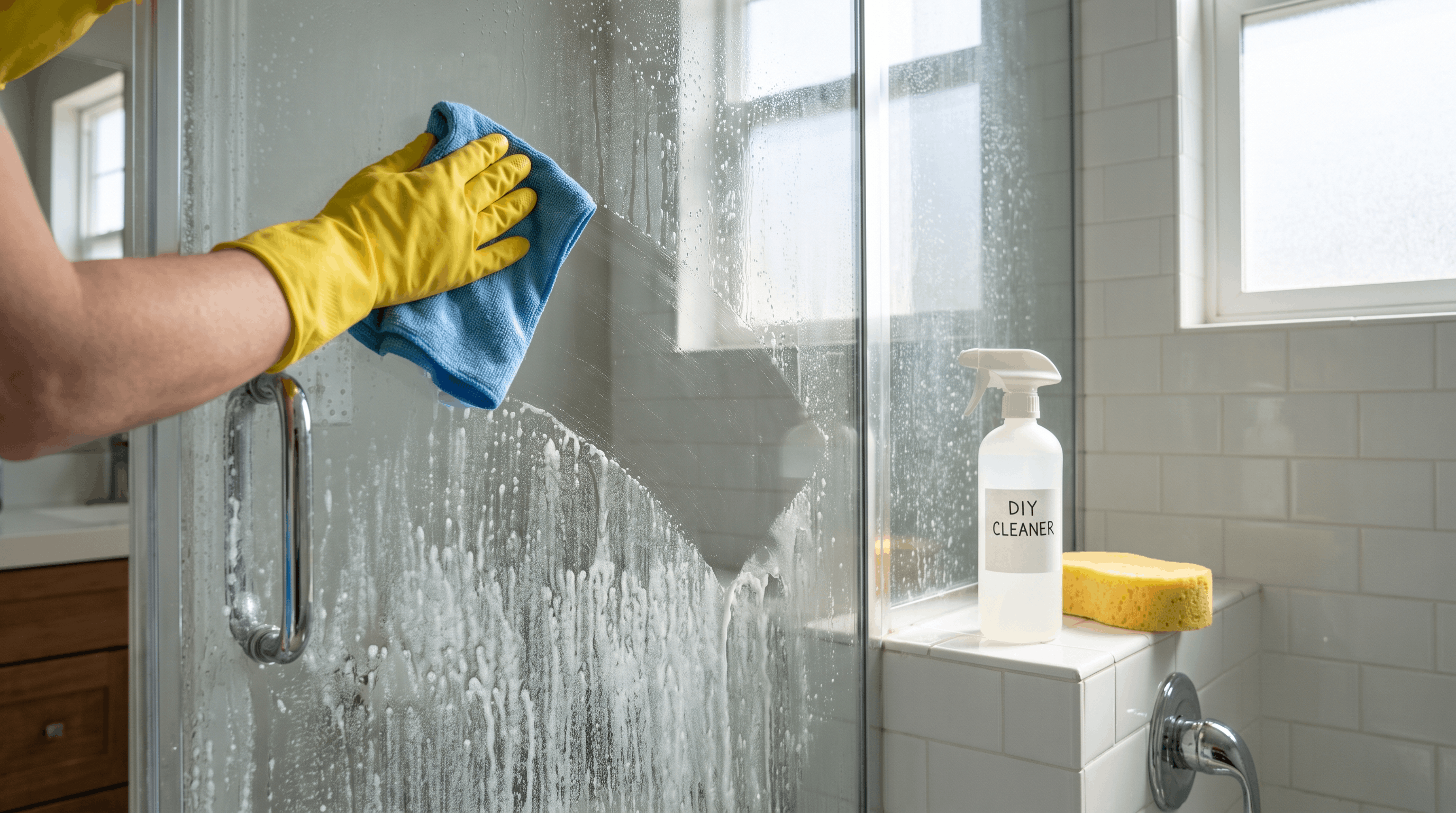
Follow these steps:
- Mix warm water with a few drops of dish soap.
- Apply the mixture using a microfiber cloth or sponge.
- Let it sit for several minutes.
- Gently scrub areas with visible buildup.
- Rinse the glass thoroughly.
- Dry with a squeegee.
For stubborn soap scum, sprinkle a small amount of baking soda on a damp cloth and gently scrub the surface.
Do not use baking soda aggressively, as repeated abrasive cleaning can degrade glass clarity over time.
Homemade Shower Glass Cleaner Recipe
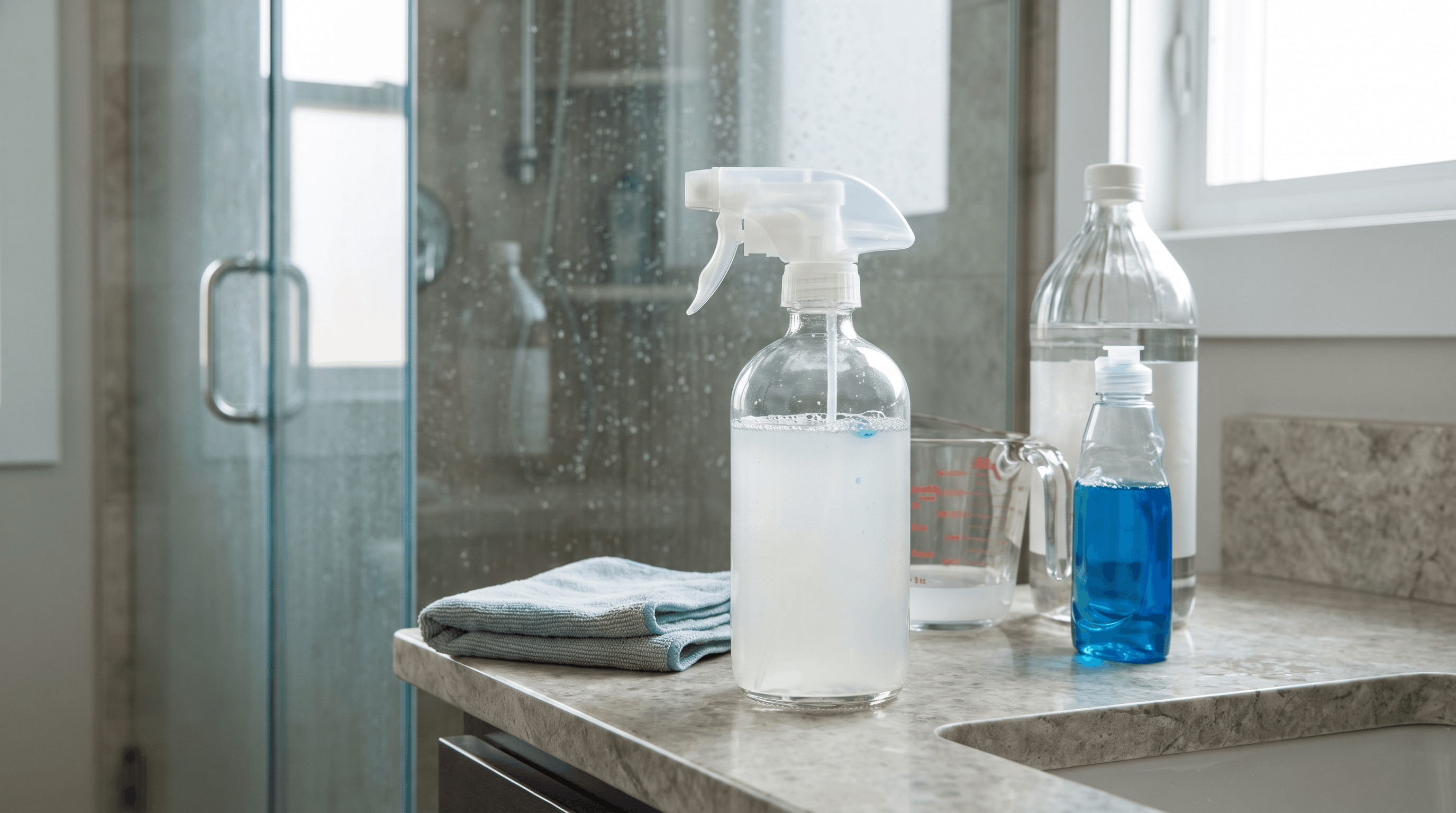
A homemade shower glass cleaner can help remove everyday soap residue, light water spots, and surface buildup using simple ingredients you may already have at home.
You will need:
- 1 cup white vinegar
- 1 cup warm water
- A few drops of dish soap
How to use it:
- Mix the ingredients in a spray bottle and shake gently.
- Spray the solution over the shower glass.
- Let it sit for 5 to 10 minutes to loosen residue.
- Wipe the surface with a microfiber cloth or non-scratch sponge.
- Rinse with clean water and dry using a squeegee.
This homemade cleaner works well for light buildup and routine maintenance, while citric acid offers a gentler alternative to vinegar for mineral residue. Avoid vinegar on coated glass unless approved.
DIY vs Store-Bought Shower Glass Cleaners
Both DIY and store-bought cleaners can keep shower glass clean, but each works best for different types of buildup.
| Cleaner Type | Best For | Benefits | Limitations |
|---|---|---|---|
| DIY cleaners | Light water spots, soap scum, and regular maintenance | Affordable, easy to make, and uses common household ingredients | May not remove heavy limescale or old buildup effectively |
| Store-bought cleaners | Tough mineral deposits and stubborn stains | Stronger formulas that work faster on difficult buildup | Can be harsher and require careful use on treated glass |
How to Remove Water Spots From Shower Glass
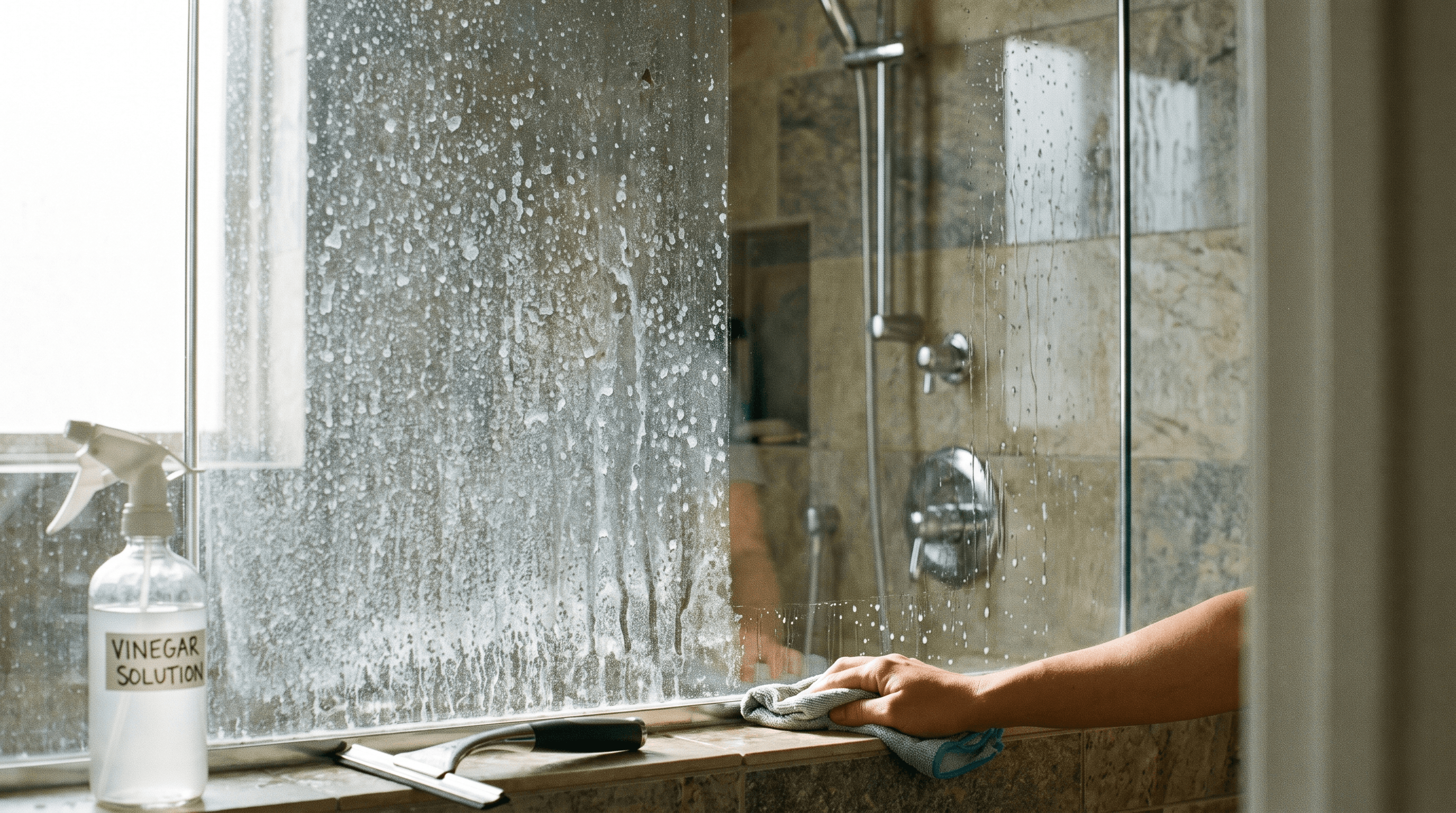
Fresh water spots can often be removed with simple cleaning, while older marks may need stronger treatment.
| Water Spot Type | Cleaning Method | Steps |
|---|---|---|
| Fresh water spots | Vinegar solution | Spray on glass, wait a few minutes, wipe with a microfiber cloth, and dry completely to prevent new marks. |
| Older water spots | Mineral remover or limescale cleaner | Use a longer contact time, apply a commercial product if needed, repeat the cleaning, and check whether the stains have turned into permanent etching. |
How to Clean Shower Glass Without Damage
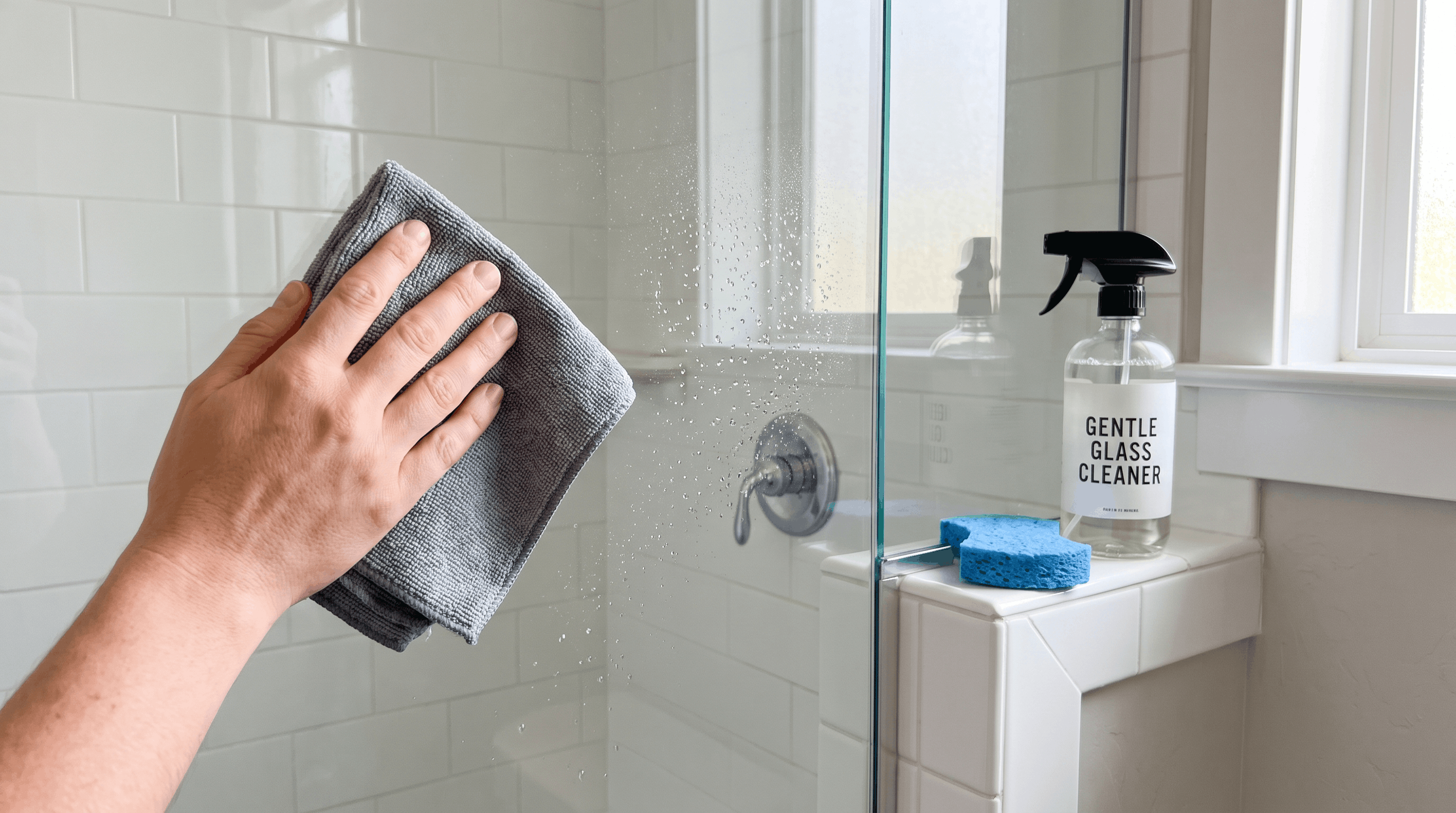
Avoiding common mistakes and using gentle cleaning methods helps protect your shower glass from damage.
- Avoid harsh tools: Do not use steel wool, metal scrapers, or abrasive pads that can scratch the surface.
- Use gentle cleaners: Choose mild, pH-neutral products and avoid strong chemicals on coated glass.
- Clean with care: Wet the glass first, use light pressure, and rinse away all residue.
- Dry after cleaning: Remove excess water to help prevent new spots and mineral buildup.
- Follow instructions: Check the manufacturer’s recommendations before using vinegar or acidic cleaners.
The same acid-based solutions that cut through limescale on glass can also dull nearby brass fixtures, so keep those cleaning routines separate.
Daily vs Weekly Shower Glass Cleaning Routine
A simple cleaning routine keeps shower glass clear and reduces the need for deep cleaning and heavy stain removal over time.
| Frequency | Task |
|---|---|
| Daily | Use a squeegee after showering and allow airflow in the bathroom |
| Weekly | Wipe the glass with a mild cleaner to remove early buildup |
| Monthly | Perform deeper cleaning for soap residue and mineral deposits |
| Every 3 to 6 months | Reapply protective coating if your glass uses one |
Small daily habits can significantly reduce the amount of scrubbing needed later.
How to Keep Shower Glass Clean Longer
Removing stains is only part of keeping shower glass clean. The same daily habits that protect a bathroom vanity from water damage also help stop buildup before it becomes difficult to remove.
Follow these steps:
- Use a squeegee after every shower
- Keep bathroom ventilation running during and after showers
- Wipe standing water from corners and edges
- Clean soap residue regularly
- Consider a protective glass coating, one of the simpler ways to add value to your home while keeping the bathroom looking newer for longer.
- Treat hard water if mineral buildup returns quickly
The shorter the water stays on the glass, the less likely deposits are to form. Keeping the water from sitting too long can help keep your glass clearer and more sparkling!
Signs Your Shower Glass Needs Professional Help
Regular cleaning can remove buildup, but some damage cannot be reversed with household products.
Professional restoration may be needed when:
- Glass remains cloudy after cleaning
- Frosted patches do not change
- Mineral deposits have caused surface damage
- The glass has visible etching
Etching sets itself apart from staining because it involves a permanent change to the glass surface itself, making it a unique and fascinating technique.
Conclusion
Shower glass turns cloudy for one of three reasons: soap scum, hard water, or old age. Match your cleaner to the culprit and skip the guesswork.
Vinegar or citric acid lifts limescale, dish soap breaks down soap scum, and a squeegee stops new marks before they start.
That’s all it takes to clean the shower glass and keep it that way.
Grab a spray bottle and a microfiber cloth today, and give your shower screen the two-minute daily wipe-down that saves you the weekend scrub later.
Frequently Asked Questions
How Often Should You Clean Shower Glass?
Clean shower glass weekly and use a squeegee after each shower to prevent water spots, soap scum, and mineral buildup.
What Is the Best Cleaner for Shower Glass?
The best cleaner depends on the stain. Vinegar works for mineral deposits, while dish soap helps remove soap scum.
Can Vinegar Damage Shower Glass?
Vinegar is safe for many glass surfaces, but coated or treated shower glass may require a gentler cleaner.
How Do You Clean Shower Screen Tracks?
Use warm water, dish soap, and a soft toothbrush to remove soap buildup and dirt from shower screen tracks.
How Do You Remove Stubborn Limescale From Shower Glass?
Use a commercial limescale remover designed for bathroom glass and follow the recommended application time carefully.
Is Citric Acid Better Than Vinegar for Shower Screens?
Citric acid works faster on limescale than vinegar and is gentler on chrome fixtures, though both are safe for most glass and need rinsing afterward.