You planted one lavender bush. Now there are seedlings showing up where you never put them.
Your mind goes straight to mint. That one plant you gave an inch, and it took the whole bed. Lavender is starting to feel like the same story.
It is not. Lavender does not send out underground runners. It does not creep, climb, or divide itself.
It grows slowly, stays within its space, and gives you plenty of time to act if it ever grows beyond what you want.
Most gardeners who ask this question are surprised by the answer.
Below, I’ll break down exactly how lavender spreads, which varieties need the closest attention, and what to do if yours is popping up in places you didn’t plan for.
Does Lavender Spread?
Yes, but only to a point.
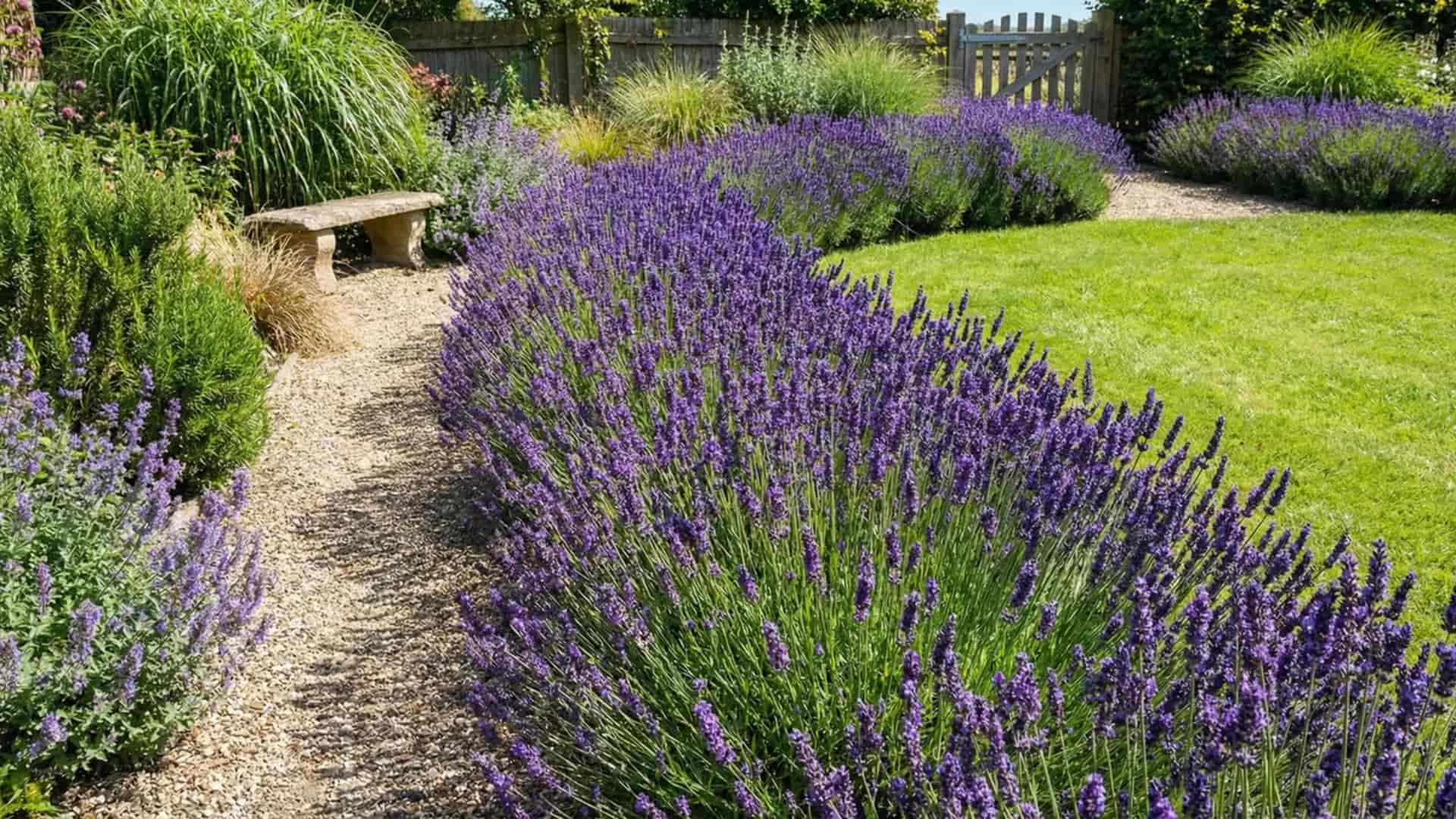
A mature lavender plant grows between one and five feet in both height and width. Once it reaches that size, it stops. It does not keep pushing outward. It does not compete with nearby plants for space.
Unlike mint or bamboo, lavender has no underground runners. It does not creep along the soil or root itself wherever it touches the ground. It grows in one place, forms a clump, and stays there.
Lavender is also not listed as invasive anywhere in the United States. Even in regions with hot summers and sandy soil where it thrives the most, it does not form wild patches or crowd out other plants.
It grows slowly. It stays contained. And basic pruning once a year is all it takes to keep it that way.
The spread you are seeing is not a warning sign. It is just a plant doing what healthy plants do.
I get questions about lavender “taking over” at least a few times every spring. After 12 years of helping home gardeners troubleshoot their beds, I can count on one hand the number of times lavender was the actual problem.
Nine times out of ten, the real culprit is either a misidentified seedling or a care habit that’s easy to fix.
How Does Lavender Actually Grow?
Lavender spreads in two ways. Both are slow, both are manageable, and neither will take over your garden. Understanding how each one works will help you know exactly what to watch for and when to step in.
Seed Dispersal
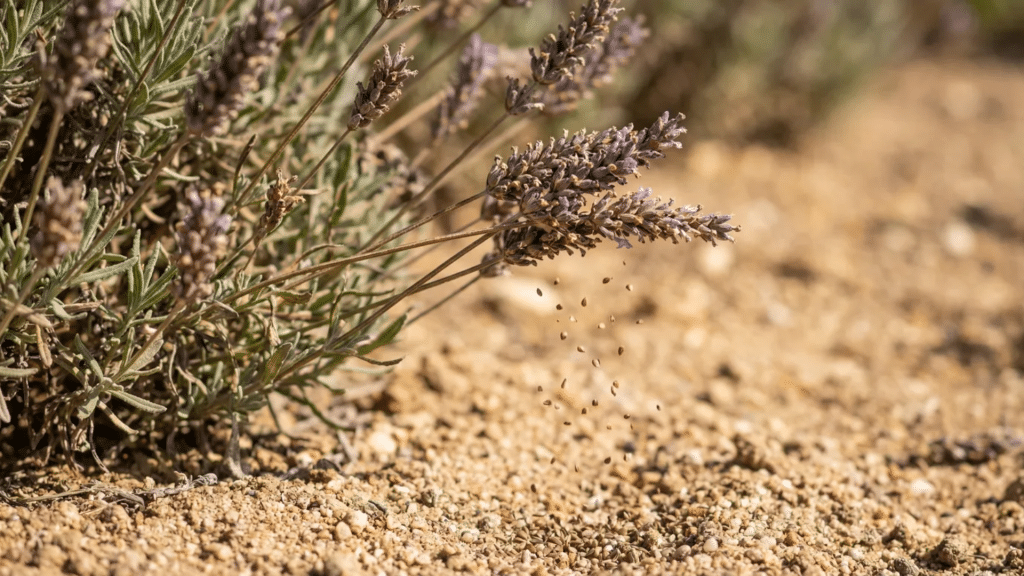
When lavender flowers dry out, they drop seeds into the soil below. Wind carries those seeds up to three feet from the plant. Birds like finches can take them even further, sometimes up to ten feet away.
If the soil is warm and well-drained, some of those seeds germinate. That small seedling appearing out of nowhere is not a sign of invasion. It is just a seed that found a good spot to grow.
Basal Growth
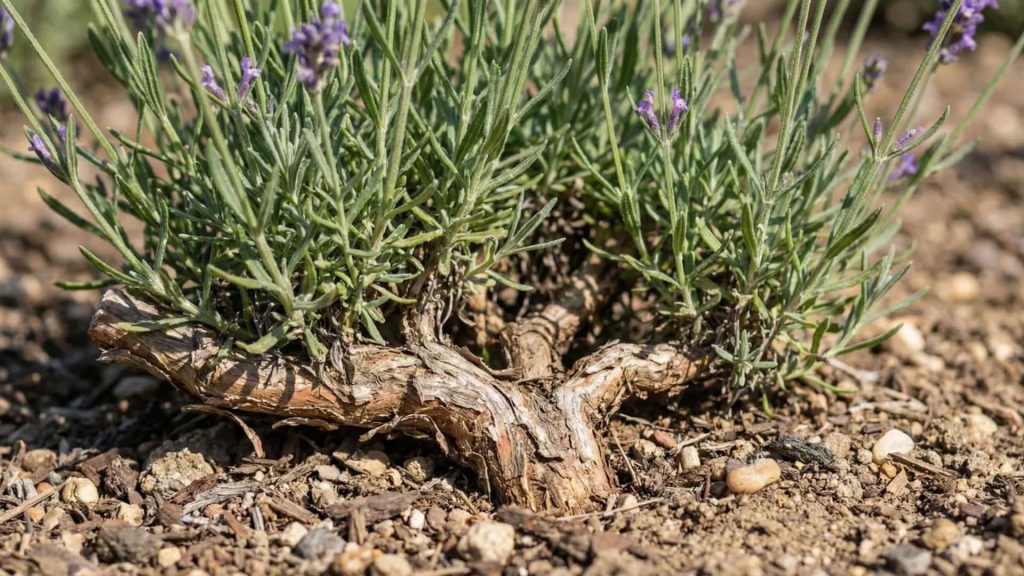
As lavender matures, its woody base slowly widens from the center outward.
It adds roughly three to six inches in diameter each year. This is gradual and visible.
You will see it happening long before it becomes a problem. There is no sudden surge, no overnight takeover. Steady, predictable growth that responds well to pruning.
Does Lavender Spread Underground?
No. This is one of the most common misconceptions about lavender.
Lavender roots grow downward, not outward. They reach a maximum depth of eight to ten inches, pushing deeper into the soil to find moisture in dry conditions. They do not snake under the surface into new territory.
Plants that spread underground do so through rhizomes or stolons. Mint has them. Bamboo has them. Lavender has neither. Its root system stays directly beneath the above-ground plant and goes no further.
When gardeners see new lavender plants appearing nearby, they assume the roots have travelled. It is always a fallen seed that germinates. The roots had nothing to do with it.
That distinction changes everything about how you manage the plant. You’re not battling an aggressive root system. You’re managing seeds, and that’s a far simpler problem to solve.
Which Lavender Variety Spreads the Most?
Not all lavender behaves the same way. The variety you have planted determines how much attention it needs and how often you should be stepping in.
Here is how the four main types compare:
| Variety | Mature Spread | Seed Production | Spread Risk |
|---|---|---|---|
| Lavandin(L. x intermedia) | Up to 40 inches | None, sterile hybrid | Very Low |
| English(L. angustifolia) | 24 to 36 inches | Low | Very Low |
| French(L. dentata) | Up to 36 inches | Moderate | Low |
| Spanish(L. stoechas) | Up to 24 inches | Moderate to High | Low to Moderate |
If spreading is your biggest concern, Lavandin is your answer. It is a sterile hybrid, which means it produces flowers but forms no viable seeds at all. No seeds means no volunteer seedlings, ever.
Spanish lavender needs the most watching. It seeds more freely than the others and benefits from regular deadheading to keep it in check.
Start there. Know your variety, and you are already ahead of the problem.
Which Zones Do These Varieties Grow Best In?
Your USDA hardiness zone also affects how much spreading you’ll deal with. English lavender is cold-hardy and does well in zones 5 through 9.
French and Spanish types prefer zones 7 through 10 and won’t survive harsh winters without protection. Lavandin, the sterile hybrid, thrives in zones 5 through 8 and handles wetter climates better than most.
Warmer zones with long growing seasons tend to see more volunteer seedlings simply because the soil stays warm enough for germination longer. If you garden in zones 8 or 9, deadheading is more of a priority than it would be in zone 5.
What Makes Lavender Spread Faster Than It Should
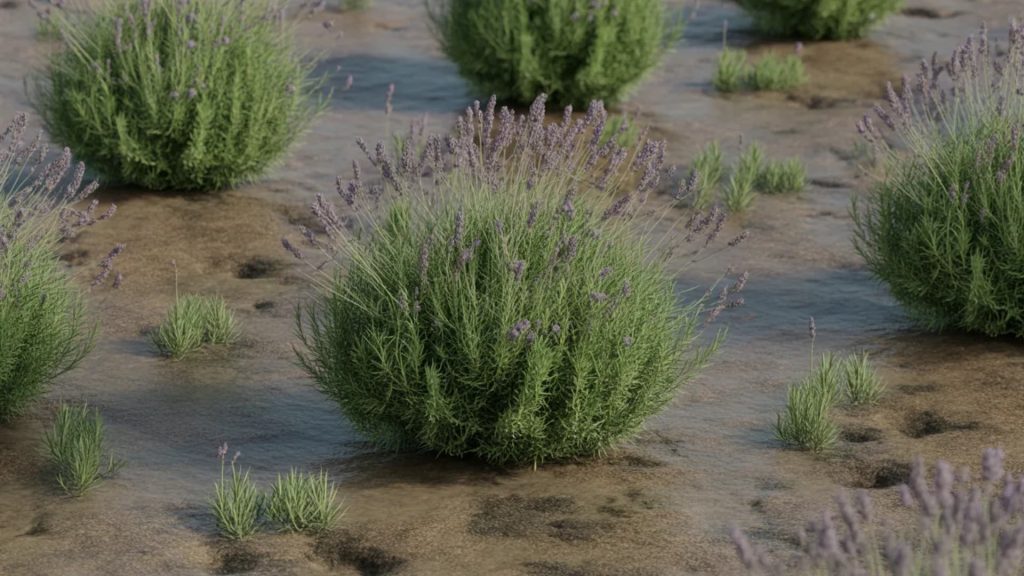
Most of the time, when lavender spreads more than expected, the gardener is the reason. Not intentionally, but through a few habits that quietly encourage more seeding and more growth.
Here are the most common ones to watch out for:
- Skipping deadheading: When spent flowers are left on the plant, they dry out and drop seeds into the soil. French and Spanish varieties are especially prone to this.
- Overwatering: Excess moisture creates ideal conditions for seed germination. More water in the soil means more seedlings showing up where you do not want them.
- Planting too close together: Crowded lavender competes for light. This pushes plants to grow taller and seed more heavily as a survival response.
- Skipping the annual prune: Without pruning, lavender gets leggy and woody. The plant produces more seeds and loses its compact shape over time.
- Using rich or acidic soil: Lavender prefers poor, alkaline soil with a pH between 6.7 and 7.3. Planting in rich, compost-heavy, or peat-based mixes encourages leggy growth and weakens the plant. Stressed lavender tends to produce more flowers (and more seeds) as a survival response.
I worked with a reader last summer who was convinced her English lavender was spreading out of control. Turns out she’d been watering it on the same schedule as her tomatoes. Once we dialed back to deep watering every 10 to 14 days, the volunteer seedlings dropped off within a single season. That’s how responsive this plant is to simple changes.
How to Keep Lavender from Spreading?
| What to Do? | How to Do It? | When? |
|---|---|---|
| Deadhead spent blooms | Cut flowers before they dry and drop seeds | As soon as blooms start to fade |
| Prune annually | Cut back by one-third, never into old woody stems | After the main flowering flush |
| Space plants correctly | 24 inches for English, 30 for French, 36 for Lavandin | At planting time |
| Mulch with gravel | Apply a two-inch layer around the base | Late summer |
| Pull volunteer seedlings | Remove them while still small before they establish themselves | As soon as you spot them |
| Grow in containers | Use pots at least 16 inches wide with drainage holes | Year-round option |
Container growing is worth a special mention. It eliminates seed dispersal into garden beds completely. Plants grown in pots also stay around 20 percent smaller than those planted in the ground, which makes them even easier to manage.
What If You Want Lavender to Spread?
Not every gardener wants to contain lavender. If you’re building a lavender hedge, filling a slope, or creating a cottage garden border, a little spreading is exactly what you’re after.
Here’s how to encourage it:
Let some blooms go to seed: Skip deadheading on a few flower stalks at the end of the season and let them drop seeds naturally.
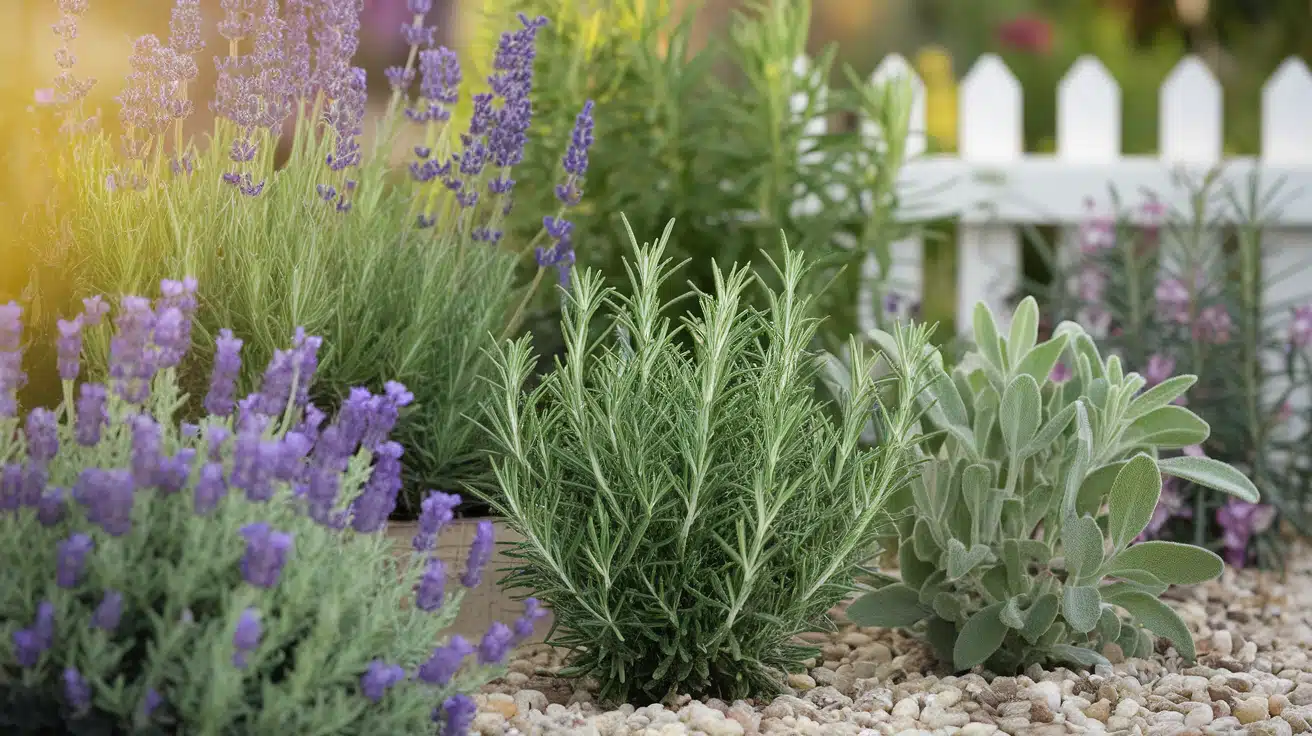
Use gravel or sandy mulch: Lavender seeds germinate best in well-drained, gritty surfaces. A thin layer of gravel provides them with an ideal landing spot.
Take softwood cuttings: In late summer, cut four- to six-inch stems from healthy new growth, strip the lower leaves, and plant them in moist, sandy soil. This is faster and more reliable than waiting on seeds.
Space plants closer: Planting 12 to 18 inches apart (instead of the usual 24 to 36) fills in gaps sooner and creates a denser display within two growing seasons.
Propagation from cuttings is the most predictable method. Seeds can be hit-or-miss, since lavender germination rates are low and uneven, sometimes taking up to three months.
Conclusion
Lavender is not the problem plant most gardeners assume it is. It grows slowly, stays within its footprint, and gives you more than enough time to step in before it ever becomes an issue.
The three habits that matter most: know your variety, deadhead after blooms fade, and prune once a year after flowering. Those alone will keep your lavender exactly where you planted it for years.
If seedlings are already popping up in spots you didn’t plan for, pull them while they’re small. They have shallow roots and come out easily.
Give lavender the right conditions (full sun, sharp drainage, and a light hand with the watering can) and it’ll reward you with color, fragrance, and zero headaches every season. Drop your lavender variety in the comments below.
Frequently Asked Questions
Can Lavender Spread Into a Lawn or Grass Area?
Lavender seeds can land in grass, but they rarely establish there. Grass competes too strongly for light and space, making it hard for seedlings to take hold.
Will Lavender Spread More in a Raised Bed Than in the Ground?
No. Raised beds actually give you more control. The contained space limits seed dispersal and makes it easier to spot and remove volunteer seedlings early.
Does Cutting Lavender Back Hard Stop It from Spreading?
Hard pruning reduces seed production, but should never cut into old woody stems. Always leave some green growth, or the plant may not recover at all.
Is Lavender Considered Invasive in the United States?
No. Lavender does not appear on any US invasive species lists. It lacks the underground runners and aggressive seeding that define truly invasive plants like mint or bamboo.
How Far Apart Should You Plant Lavender?
Space English lavender 24 inches apart, French varieties 30 inches, and Lavandin 36 inches. Correct spacing prevents overcrowding and reduces competition-driven seeding.
Can You Grow Lavender in Containers to Prevent Spreading?
Yes. Containers eliminate seed dispersal into garden beds entirely. Use pots at least 16 inches wide with drainage holes for best results year-round.