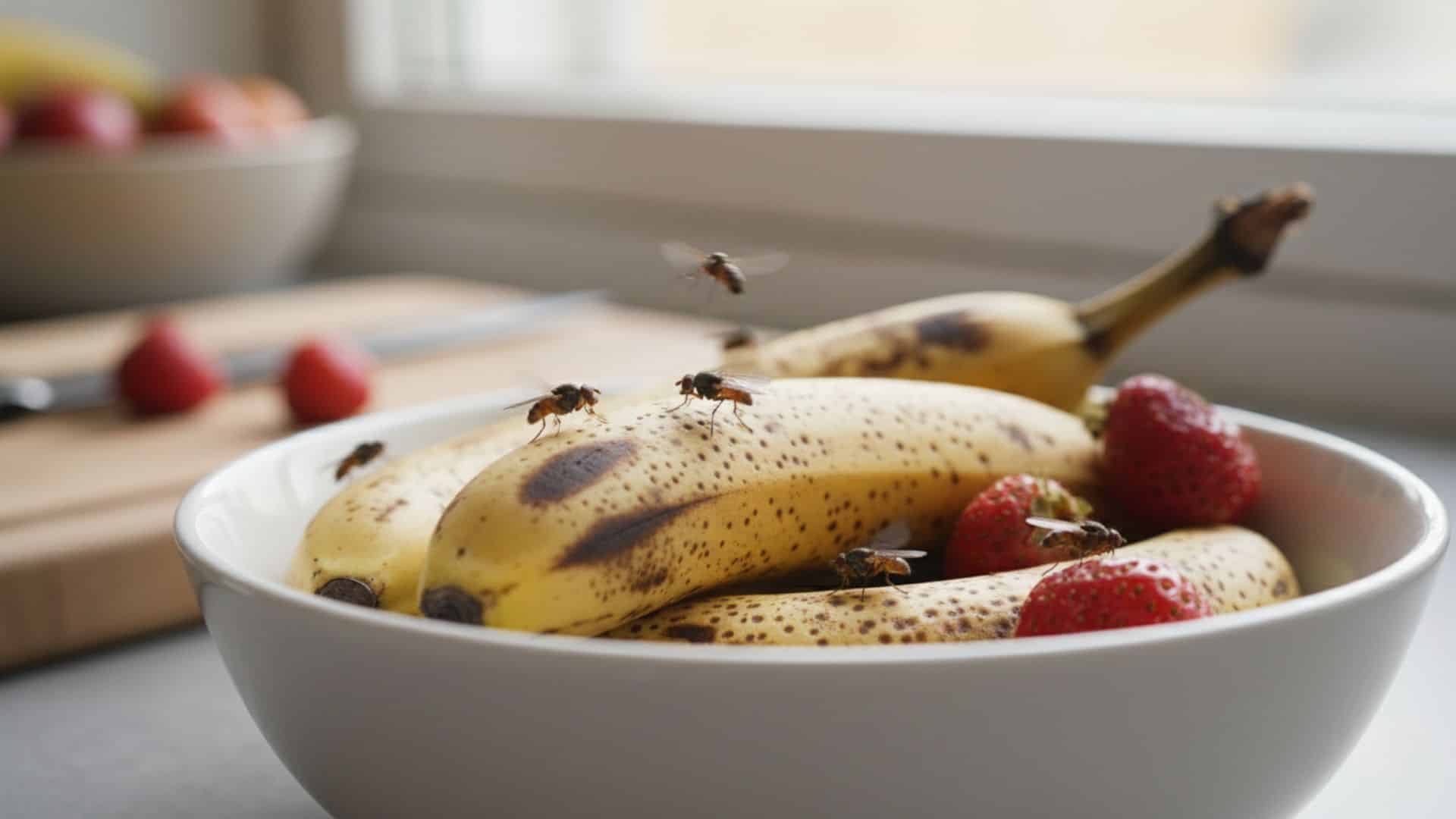

You walk into the kitchen to grab a glass of water, and a tiny cloud lifts off the counter. Fruit flies. Again. They seem to appear from nowhere, multiply overnight, and ignore every half-hearted attempt to shoo them away.
Most people don’t realize the flies buzzing around the fruit bowl are only part of the problem. Their eggs are hiding in drains, trash cans, and possibly a forgotten bag of potatoes in the back of the pantry.
A single female can lay hundreds of eggs at a time, so what starts as two or three flies on a Monday can become a full kitchen takeover by Friday.
Getting rid of them takes more than a single vinegar trap. It takes a real plan, and this guide walks through every step.
First, Make Sure They’re Actually Fruit Flies
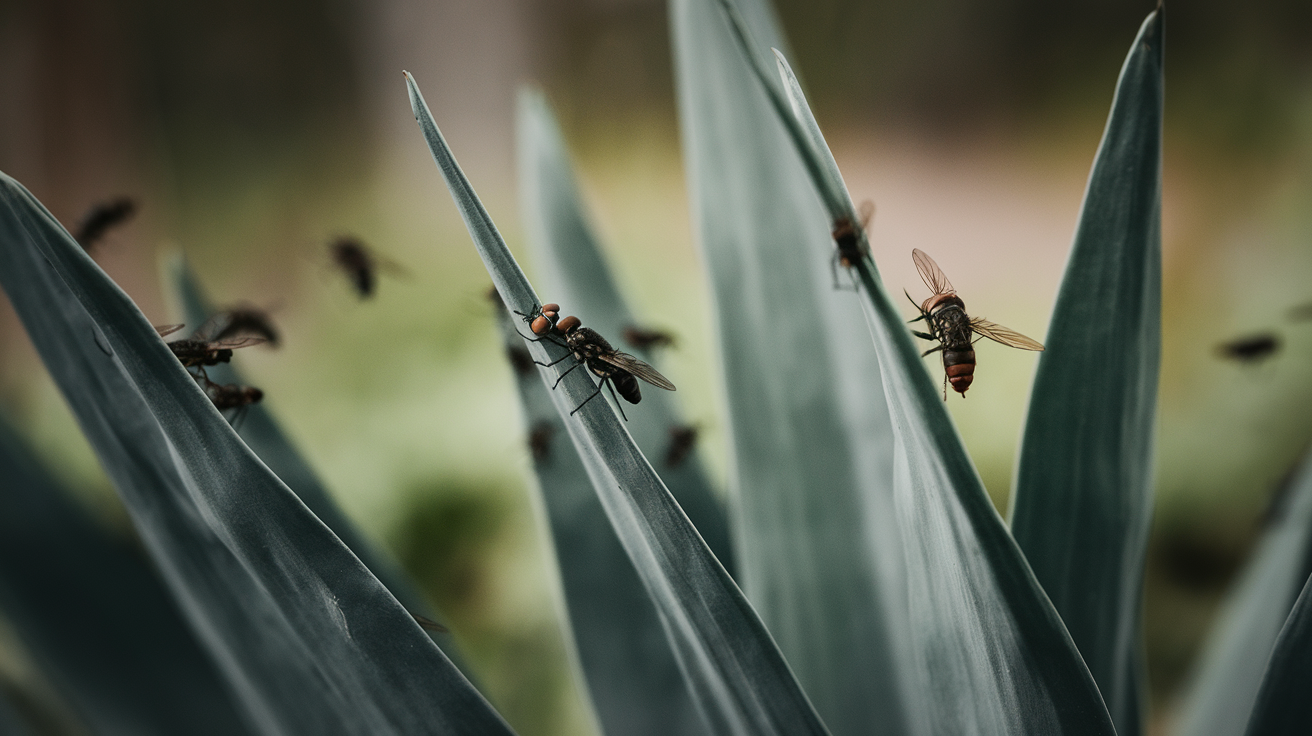
Fruit flies, drain flies, and fungus gnats all look similar at a glance, but each one breeds in different places and responds to different treatments.
Fruit flies are about the size of a sesame seed with smooth bodies and red eyes. They dart quickly near produce and trash cans.
Drain flies are slightly larger and fuzzy, almost moth-like, with broader wings. They hover weakly near sinks and floor drains. Fungus gnats look more like tiny mosquitoes with longer legs and circle the damp soil of houseplants.
If the flies swarm your fruit bowl or recycling bin, they’re most likely fruit flies. If they hang around the sink or bathroom, try the tape test: cover the drain opening with clear packing tape before bed. Flies stuck to the underside by morning means drain flies are breeding inside the pipe. If flies circle your potted plants, you’re dealing with fungus gnats.
This matters because apple cider vinegar traps work on fruit flies but won’t touch drain flies, and drying out potting soil handles gnats but does nothing for a fruit fly problem.
Where Fruit Flies Actually Come From?
Most people assume fruit flies come in through an open window. The more common entry point is the produce you carry home from the grocery store. Fruit fly eggs are microscopic and often sit on the surface of bananas, peaches, and tomatoes before you unpack the bag. Once those eggs hatch in a warm kitchen, a single female can lay hundreds of eggs at a time.
A fruit fly lives between 40 and 50 days and can lay eggs multiple times in that window. The eggs hatch in about a week, which is why a small problem on Monday can become a swarm by the following weekend.
They’re attracted to fermenting sugars, and that goes well beyond the fruit bowl. The residue inside a rinsed but not clean wine bottle. Sticky film at the bottom of the trash can.
Old food is trapped in the garbage disposal. Wet sponges left in the sink. A juice splash under the fridge. Fermented products like kombucha, soy sauce, and sourdough starter. Stagnant flower vase water. Even a rotting potato tucked in a pantry corner can sustain a full colony for weeks.
How to Get Rid of Fruit Flies?
Step 1: Remove the Source Before Setting Any Traps
Traps catch adult flies, but if the breeding source is still active, new flies replace the ones you catch faster than any trap can keep up. Set aside 10 minutes for a targeted blitz.
Toss or refrigerate any overripe produce that’s sitting out. Check inside the fridge for anything that’s gone bad. Open the pantry and inspect potatoes, onions, and garlic in the back corners.
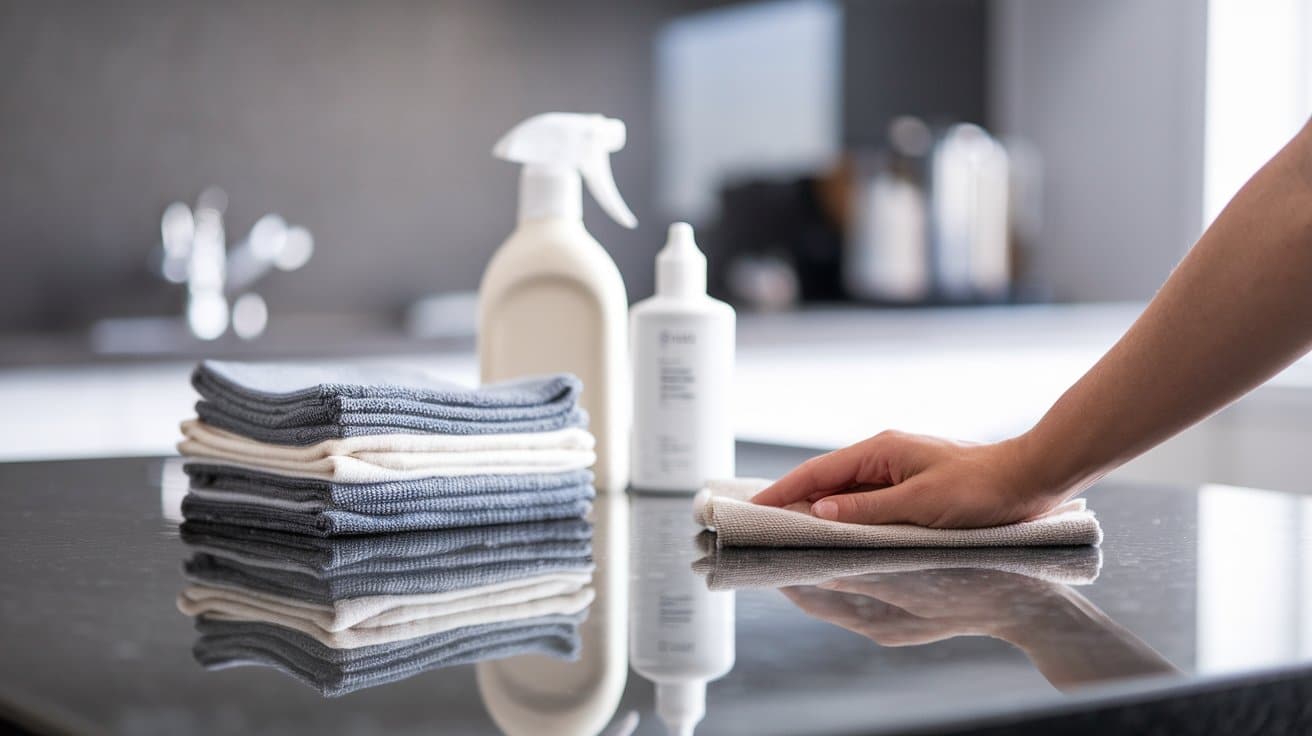
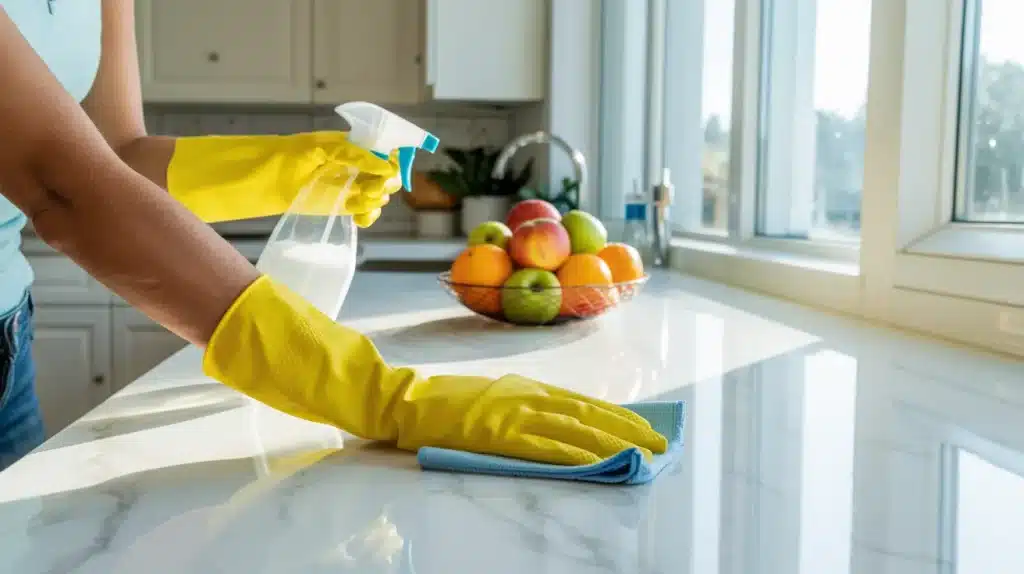
Empty every trash can and wipe the interior with warm, soapy water. Do the same with compost and recycling bins. Wipe down counters, the fruit bowl, and any surface where juice or food residue may have dried.
Run hot water down every sink drain for 30 seconds. If you have a garbage disposal, turn it on with water running to clear trapped food. Swap out the kitchen sponge and rinse mop heads or dish towels. Damp, dirty cleaning tools are a breeding ground nobody thinks about.
This blitz alone can cut an infestation in half.
Step 2: Set DIY Fruit Fly Traps
With food sources cleaned up, traps handle the adults still flying around.
Apple cider vinegar and dish soap (open bowl): Pour a quarter cup of apple cider vinegar into a small bowl, add two or three drops of dish soap, and stir gently. The vinegar mimics fermenting fruit. The soap breaks surface tension, so flies sink on contact. Place it near the highest-traffic area and replace it every 2 to 3 days.
ACV jar with plastic wrap: Fill a Mason jar a quarter full with vinegar and dish soap. Stretch plastic wrap over the top, secure with a rubber band, and poke five or six small holes with a toothpick. Flies enter but can’t navigate back out. Tidier than the open bowl.
Mason jar with holes punched in the lid: Use a hammer and nail to punch small holes in the metal lid. Fill with vinegar and dish soap, screw tight. This was the top performer in The Kitchn’s side-by-side test, catching 50+ flies in a week. Spill-proof and countertop-friendly.
Paper funnel with overripe fruit: Drop a piece of overripe banana or peach into a jar. Roll the paper into a cone and insert it with the narrow end down. Flies follow the scent in but can’t find their way back up. Best option when you’re out of vinegar.
Red wine or beer trap: Pour an inch of leftover wine or flat beer into a glass, then add a few drops of dish soap. The narrow neck of a wine bottle also works as a natural funnel.
For most kitchens, the open ACV bowl is the fastest setup. The punched-lid jar is the strongest long-term performer. Set two or three traps around the kitchen for best results.
Step 3: Deep Clean Your Drains
Some infestations persist because flies breed inside the organic sludge that builds up in sink drains and disposals.
The simplest fix is pouring a full kettle of boiling water down each drain once a day for several days. For a deeper clean, pour half a cup of baking soda into the drain, then follow with half a cup of white vinegar. Let it sit overnight, then flush with boiling water.
For the garbage disposal specifically, drop in a handful of ice cubes with a tablespoon of coarse salt and a few lemon wedges. Run the disposal with cold water for 30 seconds. The ice and salt scour the walls while the lemon cuts grease and odor.
For persistent issues, enzyme-based drain cleaners digest the organic film inside pipes without harsh chemicals. Bleach, on the other hand, usually doesn’t help. It passes through too fast to make contact with the slimy buildup where larvae actually live.
What to Do When Nothing Seems to Work
Go back and double-check the source. Pull the fridge away from the wall. Check behind the toaster and microwave. Open every cabinet and inspect back corners for forgotten produce, leaking containers, or dried spills.
If the source is truly gone, revisit identification. Run the tape test again. You may be dealing with drain flies or gnats, not fruit flies.
When DIY traps aren’t enough, store-bought options can help. Commercial traps like Terro or BEAPCO last about 30 days. Electric UV light traps catch flying insects passively. Mixing equal parts water and isopropyl alcohol in a spray bottle kills fruit flies on direct contact for quick knockdowns.
If the problem persists beyond two to three weeks despite consistent effort, call a pest control professional.
How to Prevent Fruit Flies from Coming Back
Wash all produce the moment you bring it home. A quick rinse removes surface eggs before they hatch. Refrigerate ripe fruits and vegetables whenever possible since fruit flies can’t reproduce in cold temperatures. Store compost scraps in a sealed container in the freezer until trash day. Rinse all bottles and cans before recycling.
Flush kitchen drains with boiling water once a week as a habit. Don’t leave dirty dishes in the sink overnight. Swap out sponges every one to two weeks and wring out mop heads after each use.
Fruit fly activity peaks in late summer and early fall when produce is ripest. If you get infestations at the same time each year, tighten up storage and cleaning routines a few weeks early. A little extra attention in August and September prevents the annual invasion before it starts.
Conclusion
Fruit flies reproduce fast, but they also die fast without a food source.
The approach that works is simple once you commit to it: confirm what you’re dealing with, cut off every food and moisture source you can find, set traps to catch the adults still flying around, and clean the drains where larvae may be hiding.
Most people see a noticeable drop within a few days once the source is gone. The traps handle the rest over the following week.
Going forward, washing produce right away, refrigerating ripe fruit, and flushing drains with boiling water weekly will keep them from returning. It’s not complicated. It just takes consistency for a couple of weeks until the current cycle fully runs its course.
Frequently Asked Questions
How long does it take to get rid of fruit flies?
Most infestations clear within one to two weeks if the food source is fully removed and traps are refreshed regularly.
Can fruit flies make you sick?
They can carry bacteria like E. coli and Salmonella, but the health risk to most people is very low.
What is the difference between fruit flies, drain flies, and fungus gnats?
Fruit flies have red eyes and swarm produce. Drain flies are fuzzy and stay near sinks. Gnats circle houseplant soil.
Why do I have fruit flies when there is no fruit out?
They feed on more than fruit. Drains, trash cans, recycling bins, fermented products, and dirty sponges all attract them.
Does bleach kill fruit flies in drains?
Not effectively. It passes through the pipe too fast to destroy the organic film where larvae live and feed.
What scent keeps fruit flies away?
Peppermint and lemongrass oils are commonly used as repellents, though scientific evidence for their effectiveness is limited.