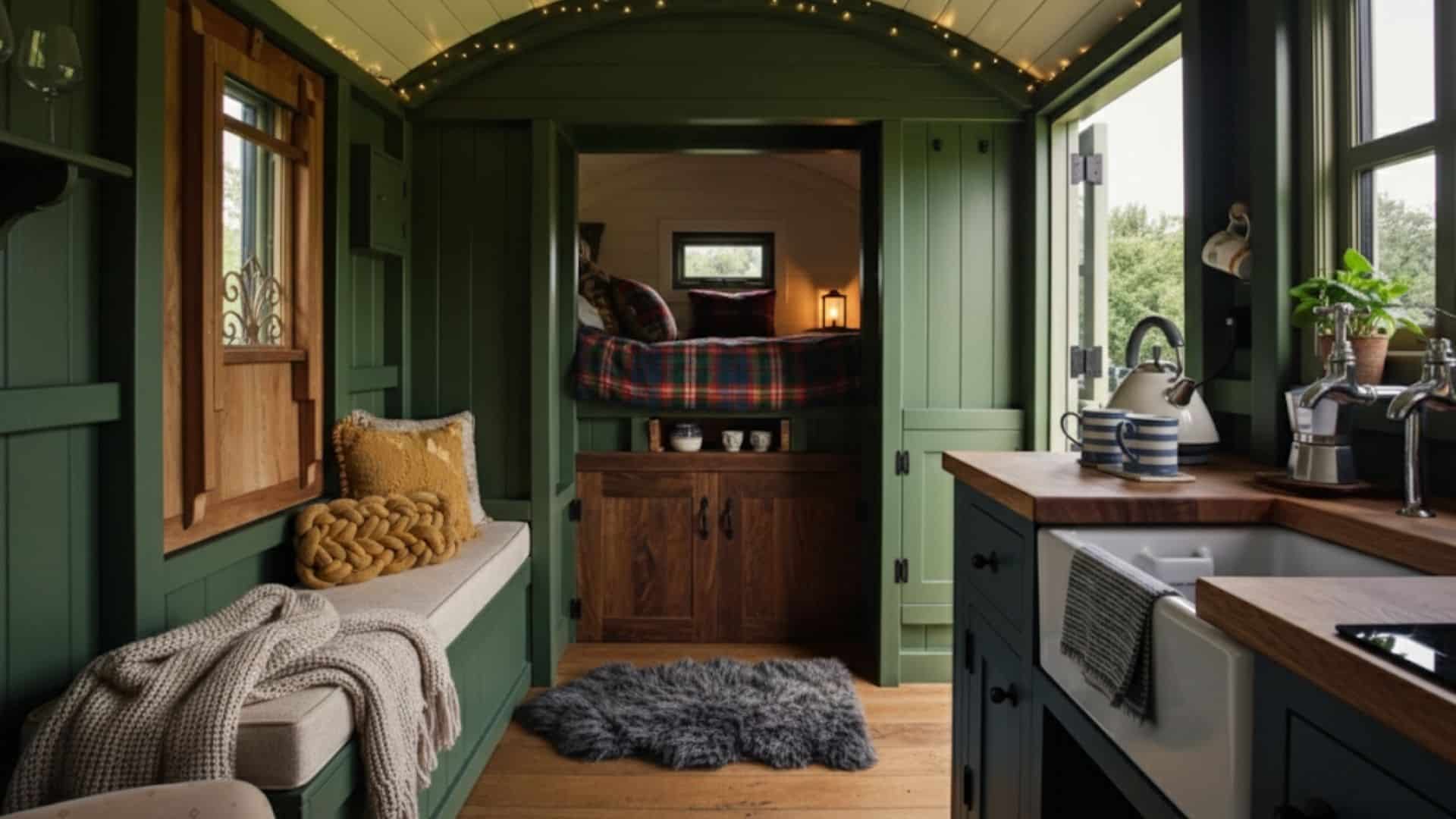

You do not need a big space to have a beautiful home. A well-thought-out shepherd’s hut interior proves that every time. These warm wooden structures have come a long way from their farming roots.
Today, people use them as garden retreats, glamping pods, home offices, and quiet personal getaways.
But getting the inside right takes more than picking nice cushions. It takes a clear plan, the right layout, and smart choices at every step.
This guide covers everything you need. From color schemes and bedroom ideas to lighting and storage, it is all here.
So if you are planning a shepherd’s hut interior for the first time, you are in exactly the right place.
What is a Shepherd’s Hut Interior?
A shepherd’s hut interior is the living space inside a narrow wooden structure that typically sits on cast-iron wheels. Most huts are 8 to 12 feet wide and 12 to 22 feet long.
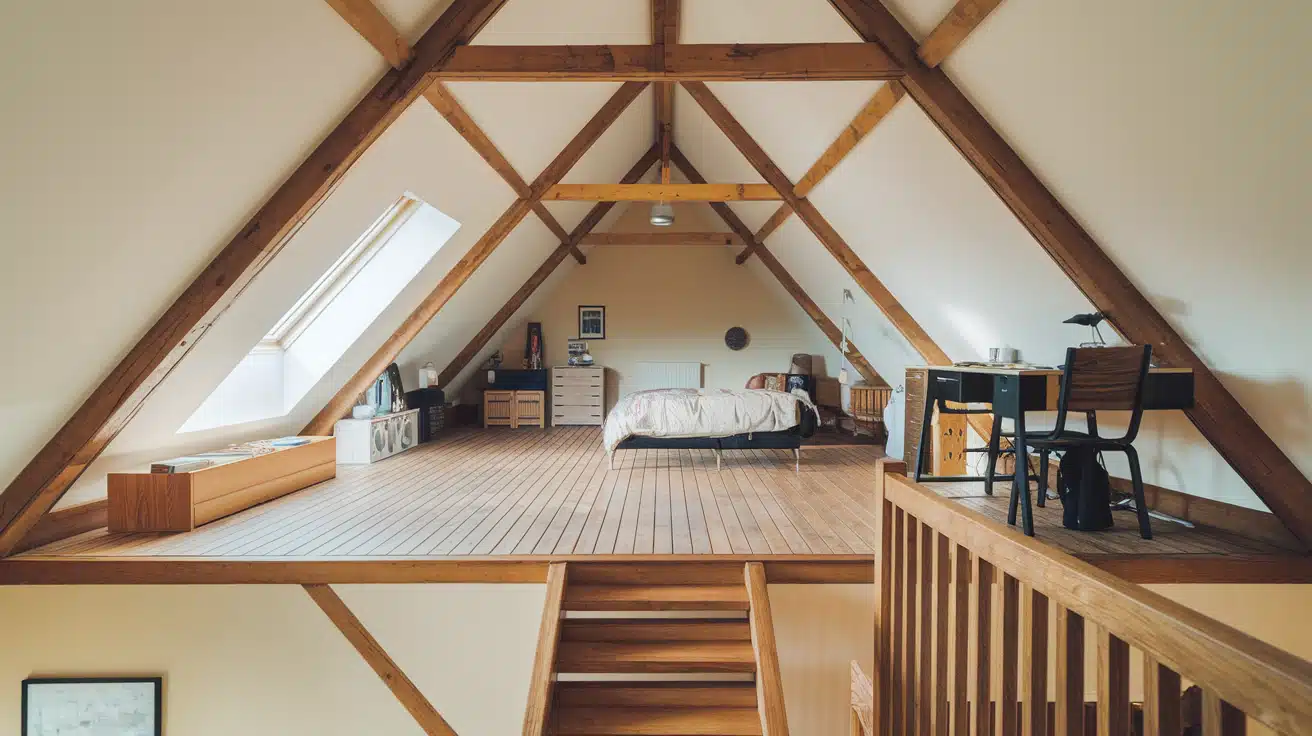
The inside features curved ceilings, tongue-and-groove wood paneling, and small windows on each side. Every design choice works within these fixed features.
That is what makes planning a shepherd’s hut interior different from decorating any other room.
Planning a Shepherd’s Hut Interior Layout
The layout is the most important decision you will make for your shepherd’s hut interior. Get this right first, and everything else falls into place naturally.
The best layout depends on how you plan to use the space. Here is a quick guide:
- Guest room or glamping pod: Place the bed at one end, and the kitchen and seating area at the other.
- Garden office or studio: Position the desk near the largest window and keep the rest of the floor clear.
- Family extra room: Use a bunk bed or a fold-down sofa bed to free up floor space during the day.
- Romantic retreat: Make the bed the centerpiece and keep the surrounding furniture to a minimum.
- Reading or writing room: Set up one quality chair near the stove and use one wall for floor-to-ceiling shelving.
Pro Tip: Always measure your hut before buying a single piece of furniture. What looks right online may not fit the actual space.
Shepherds Hut Interior Ideas
Now that your layout is planned, here are ideas for every part of your shepherd’s hut interior. Each category covers the key decisions with specific, practical options to choose from.
Design Style Ideas
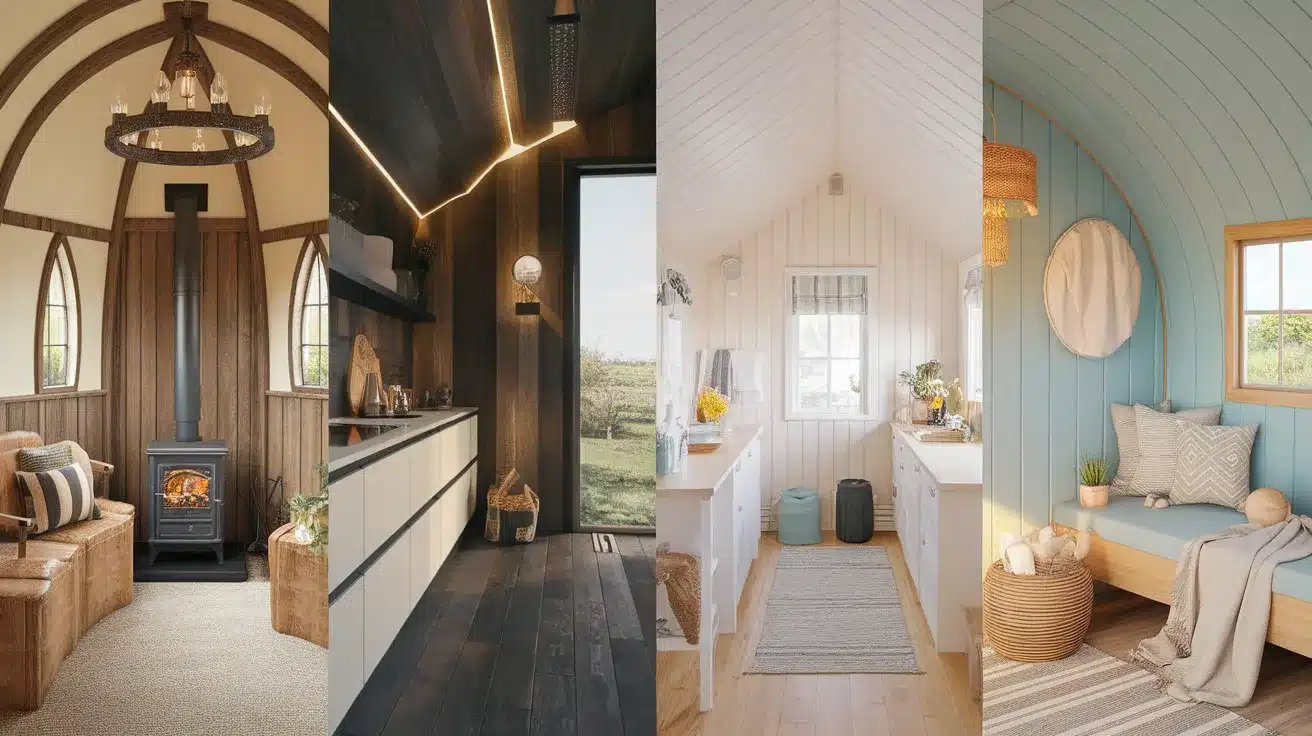
Choosing a clear style gives your hut a consistent, finished look. Here are four styles that work well in a shepherd’s hut interior.
- Rustic and traditional: Warm oak, cream walls, cast-iron fittings, and a wood-burning stove. This style stays true to the hut’s original character and history.
- Modern and contemporary: Dark wood paired with light accents, clean lines, and high-end fixtures. A great choice for luxury glamping or short-term rental.
- Scandi-minimalist: Pale wood, white walls, and simple freestanding furniture with no clutter. Works best for home offices and reading rooms.
- Coastal and cottage: Soft blues, sandy tones, linen textures, and natural materials. Best suited for huts near water or open countryside.
Color Scheme Ideas
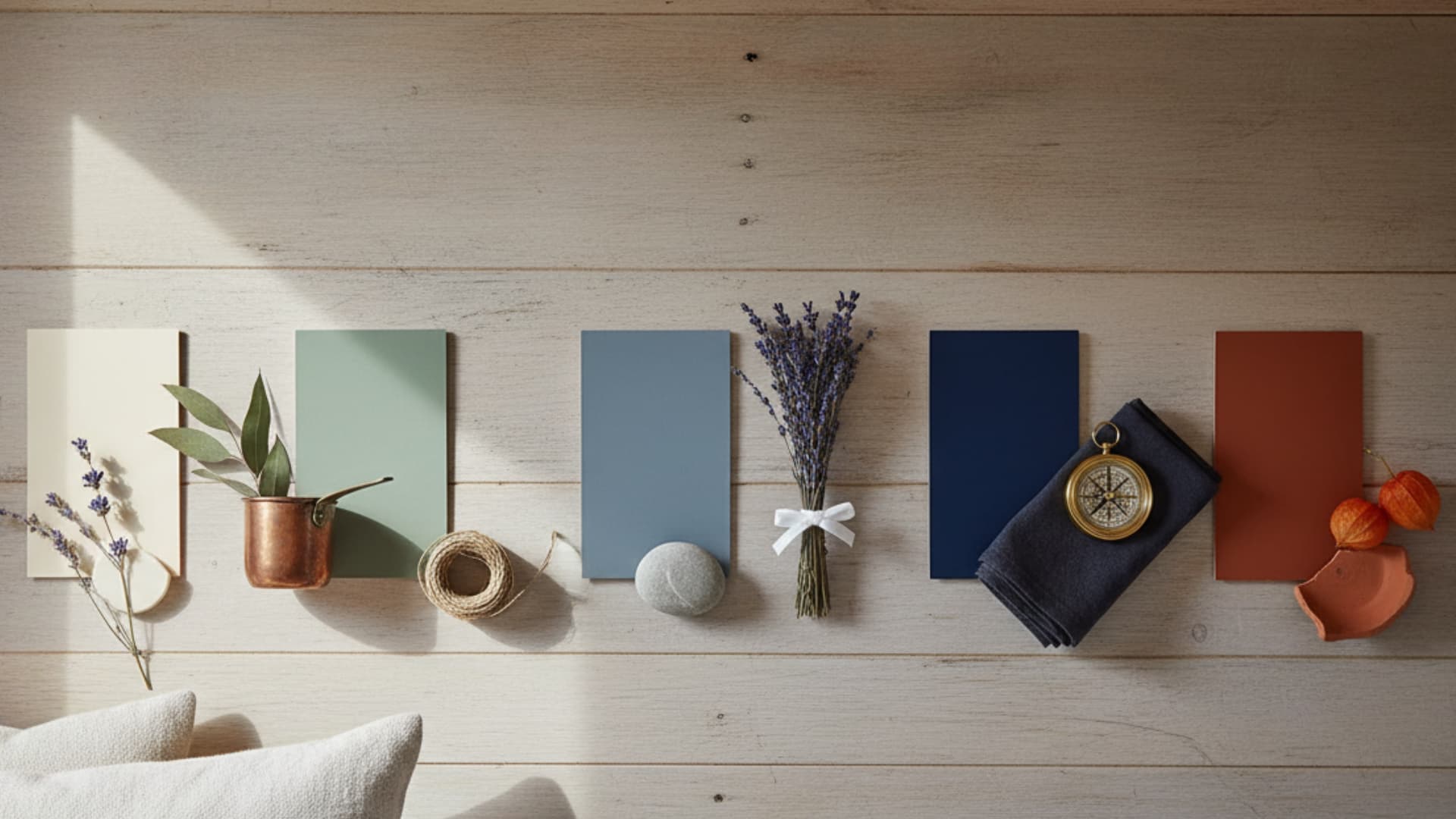
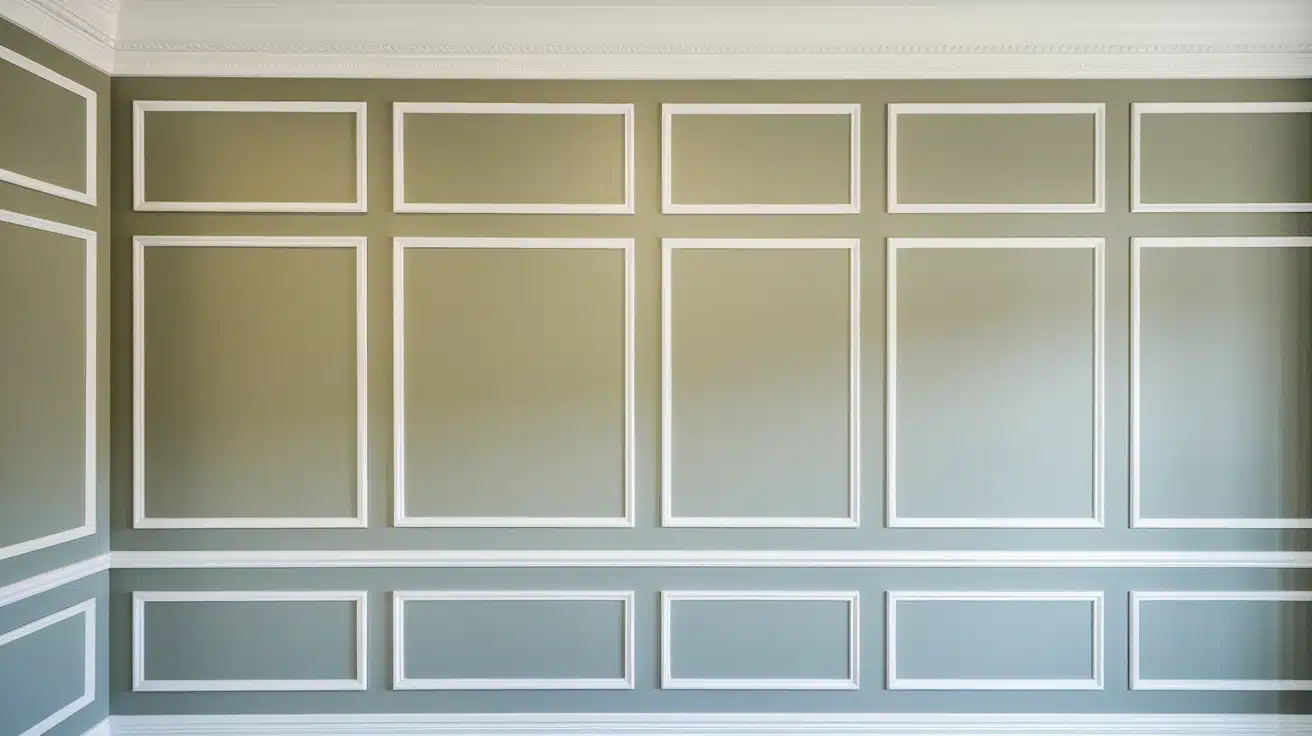
The wood paneling inside your hut is a fixed feature. Pick colors that work with it, not against it.
- Warm white or cream: Reflects light and keeps the space feeling open. Works with almost every design style.
- Country green: A classic that connects the interior to its outdoor surroundings. Farrow and Ball shades like “Mizzle” or “Card Room Green” work well here.
- Soft blue or grey: Calm and clean. Suits both light and dark wood tones equally well.
- Deep navy or charcoal: Bold and striking. Best used on kitchen cabinetry or one feature wall rather than throughout.
- Terracotta or warm rust: Rich and cozy. Pairs well with natural linen and visible wood grain textures.
Keep the ceiling lighter than the walls. This makes the curved roof feel taller. If your hut has small windows, stick with lighter tones so the space does not feel closed in.
Bedroom Ideas
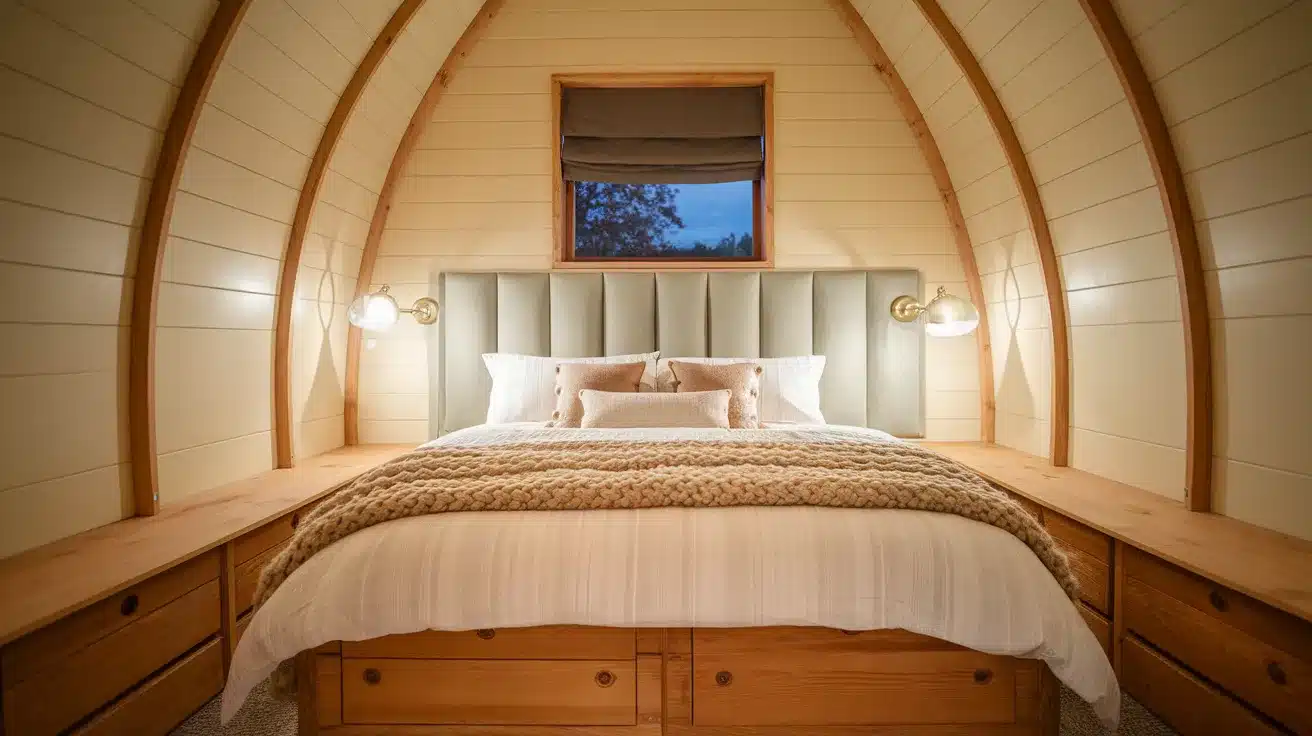
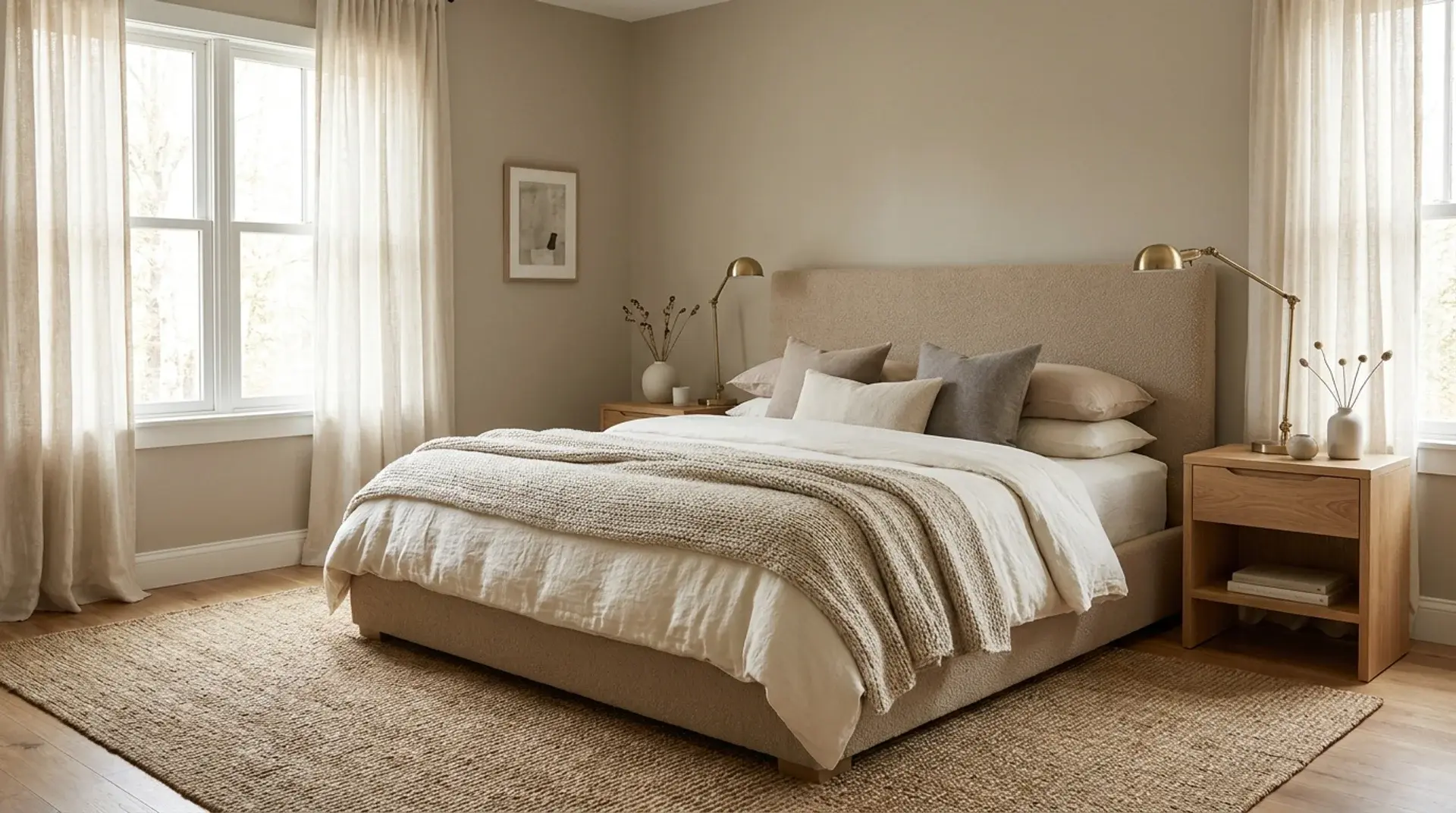
The bed takes up the most floor space in most shepherd’s huts. Make it the star of the room.
- Fixed storage bed with built-in drawers: The smartest sleeping option. Drawers underneath replace the need for a separate chest of drawers.
- Full-width end bed: Placed across one end of the hut, it fits the shape naturally and looks like it was always meant to be there.
- Bunk beds: A practical choice for family huts or any hut with very limited floor space.
- Sofa bed: Works well for a hut used as a studio or office during the day and a bedroom at night.
- Padded wall-mounted headboard: adds warmth and visual softness without taking up any floor space.
- Blackout blinds or curtains: Essential in summer when light comes in early and the hut heats up fast.
Kitchen Ideas
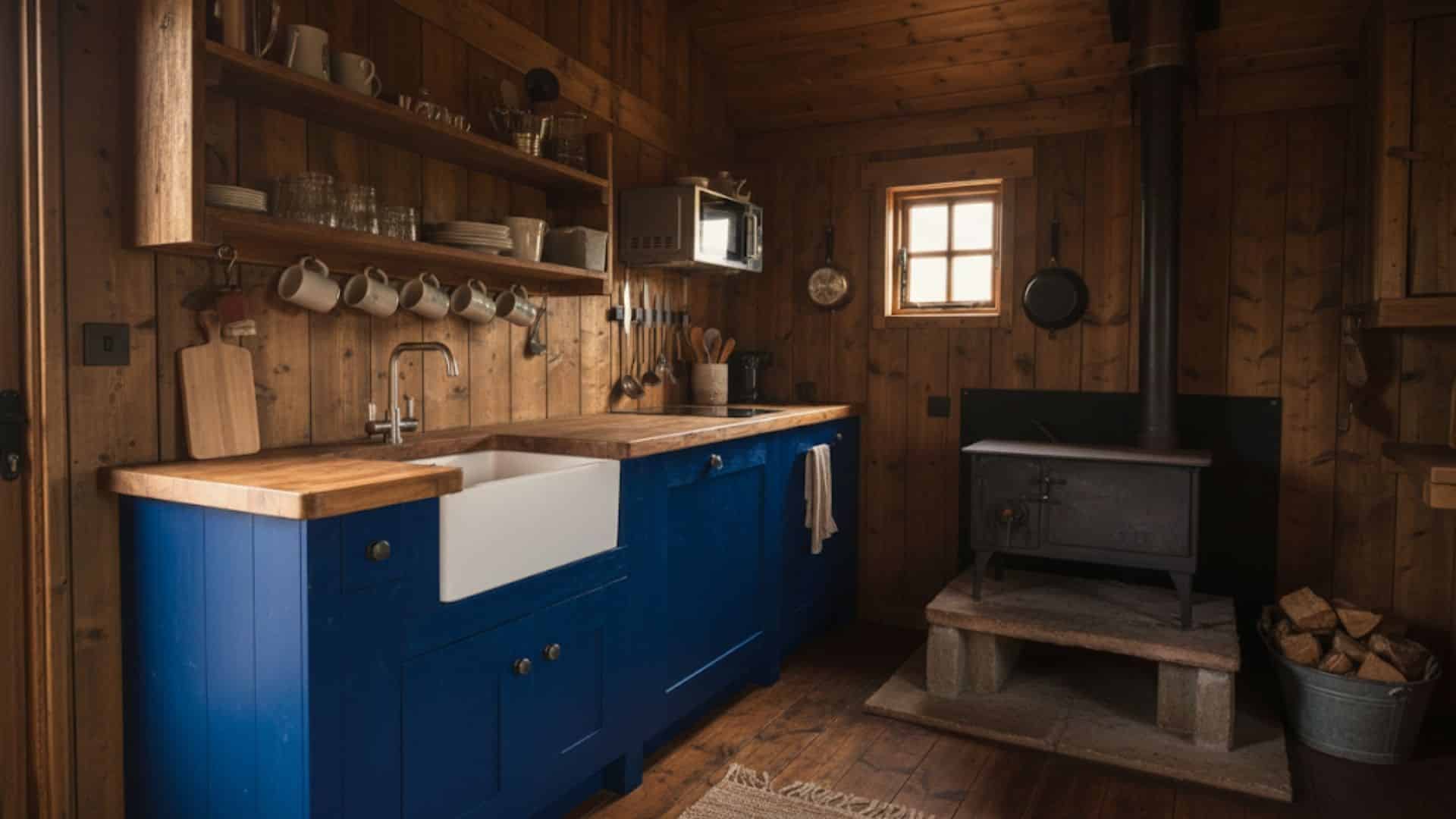
A shepherd’s hut kitchen works best when it runs along one wall like a boat galley. Every item needs to earn its place.
- Compact galley layout: A two-ring induction hob, a small sink, and an under-counter fridge along one wall cover most cooking needs.
- Built-in painted cabinetry: Cabinets painted to match the wall color stop the kitchen from visually splitting the space in two.
- Open shelving above the counter: Stores everyday items and keeps the upper half of the wall feeling open and light.
- Butcher block or wood countertop: Blends naturally with the hut’s wood panelling and is simple to maintain over time.
- Slate or stone tile countertop: A better fit for modern or contemporary style interiors.
- Small extraction fan or vent: Do not skip this step. Without good airflow, a closed hut kitchen traps moisture and heat very fast.
Bathroom Ideas
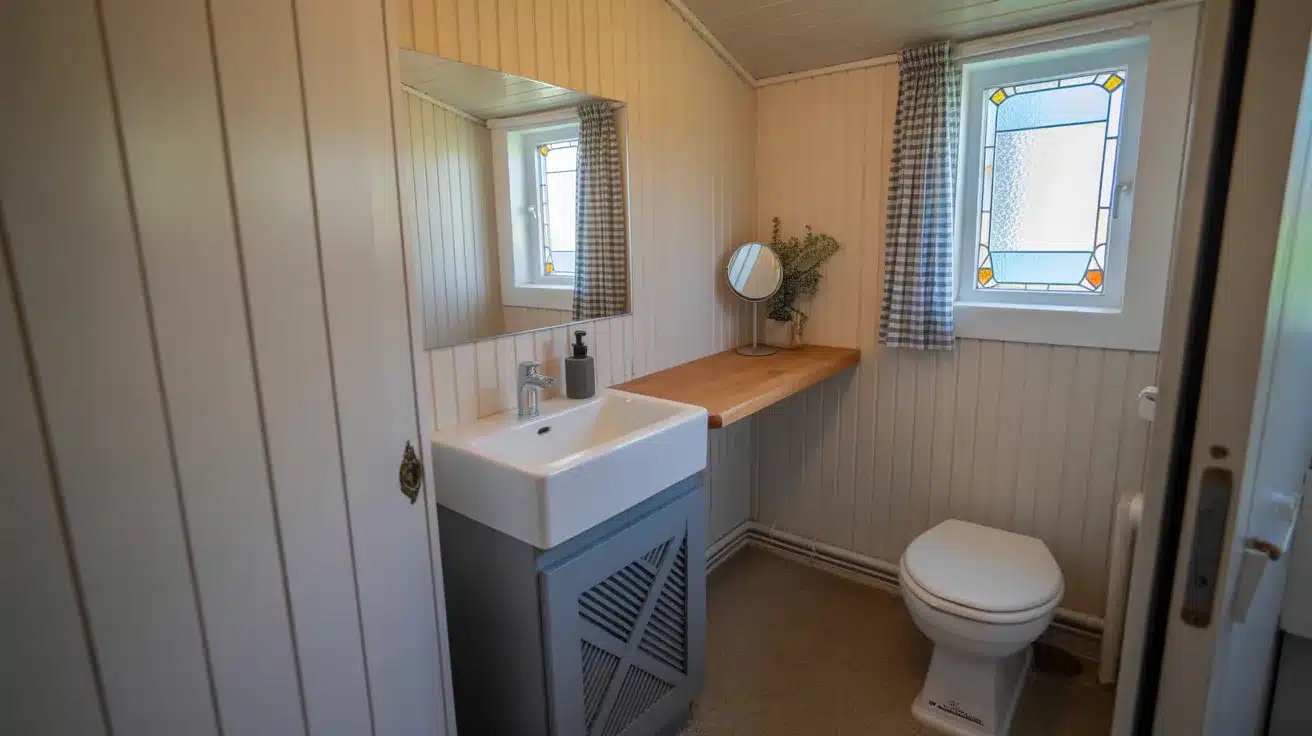
Even a very small bathroom raises the comfort level of a shepherd’s hut significantly.
- Compact wet room: A 3ft by 4ft space can fit a shower, WC, and wash basin without feeling too tight.
- Handmade or metro wall tiles: Add texture and give the bathroom a considered, well-finished look.
- Copper roll-top bath: A luxury option for larger huts. Looks best when positioned below a window with a garden view.
- Wall-mounted fixtures: Keep the floor clear and make the room feel larger than it actually is.
- Barn-style sliding door: Saves the floor space that a hinged door would take up when it swings open.
- Underfloor heating under tile: Makes a real difference to comfort during autumn and winter months.
Storage Ideas
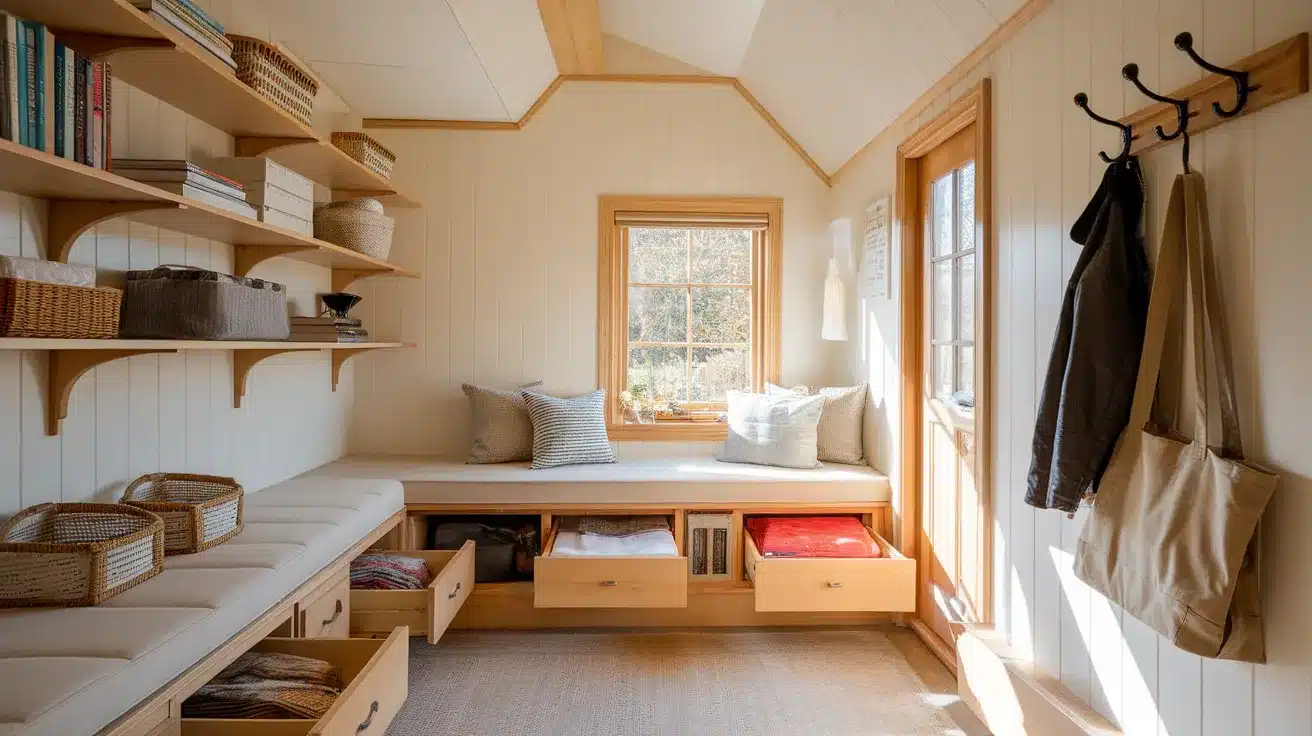
Storage is the biggest practical challenge in a small hut. Plan it before you choose any furniture.
- Floor-to-ceiling shelving on one wall: Uses vertical space fully without taking up any floor area.
- Under-bed drawers or pull-out bins: The most-used storage spot in any shepherd’s hut. Build these in from day one.
- Window seat with a lift-up lid: Gives you hidden storage and a built-in seating spot in a single piece.
- Shallow shelves above the door or kitchen counter: Put wall space to work that would otherwise go unused completely.
- Coat hooks near the entrance: keep coats, bags, and outdoor gear tidy without taking up a full wardrobe.
Lighting Ideas
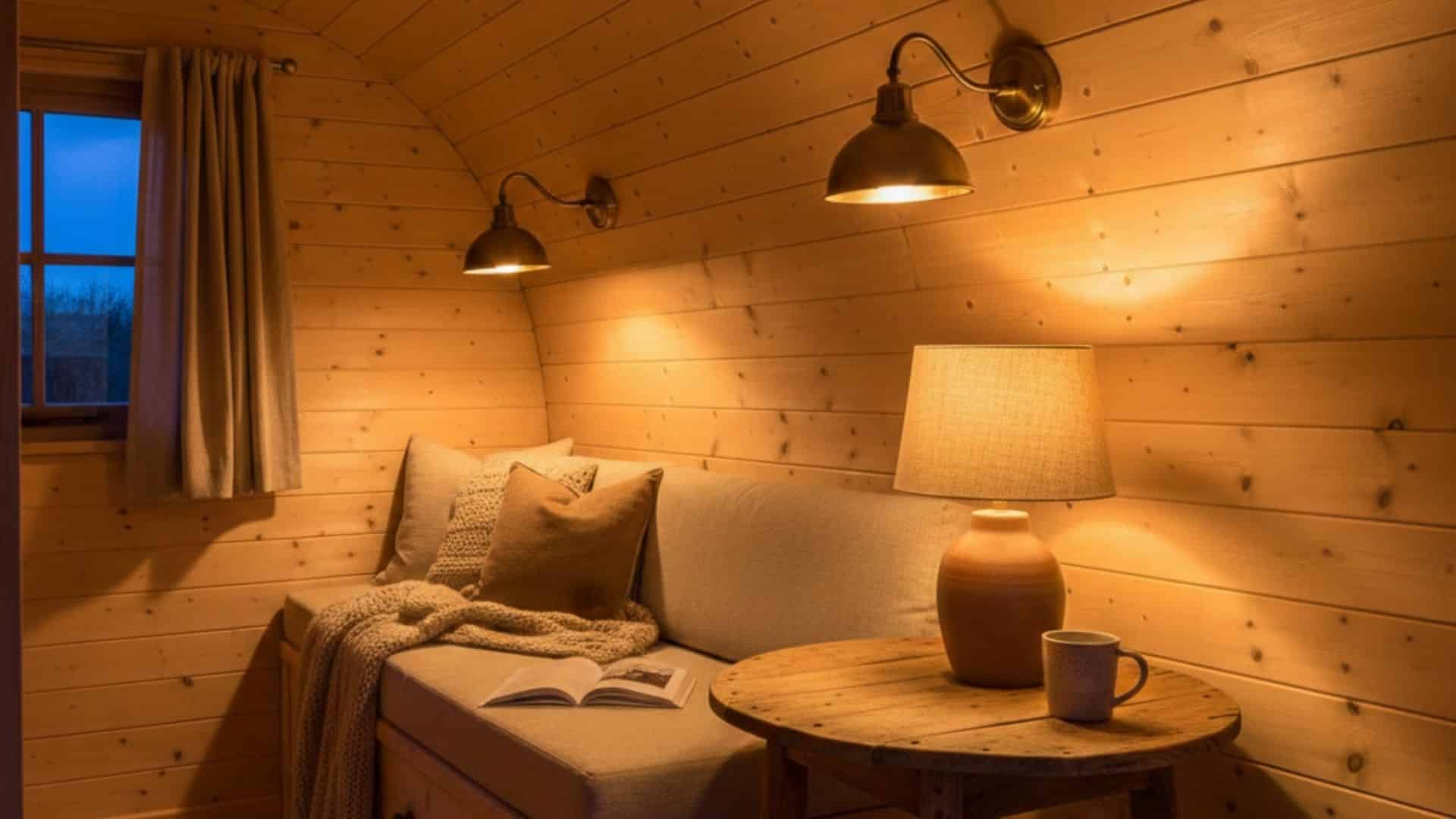
Lighting shapes how warm, open, and welcoming your shepherd’s hut interior feels. It deserves proper attention.
- Warm white bulbs throughout: Stick to bulbs rated between 2700K and 3000K. Cool-toned daylight bulbs make a hut feel cold and uninviting.
- LED strip lights under shelves: Add soft warmth to kitchen and shelving areas without any harsh glare.
- Task lighting over the desk or counter: Bright, focused light exactly where you need it most.
- Low-profile wall sconces work far better than large pendant lights under a curved, low ceiling.
- Festoon lights outside: Echo the warm interior feel and add real character to the outdoor space after dark.
- Dimmable smart bulbs: Let you shift from bright working light to soft evening light with one simple tap.
Mistakes to Avoid in a Shepherd’s Hut Interior
Good design can still go wrong. Small mistakes hit harder in a small space. Here are the ones to watch out for.
| Mistake | Why It Happens | How to Avoid It |
|---|---|---|
| Buying furniture too early | Excitement takes over before measuring | Measure first. Shop second. |
| Ignoring ventilation | It feels less urgent than decor | Add vents in the kitchen and bathroom early |
| Going dark throughout | Dark tones look good in photos | Use light walls. Save dark tones for one wall only. |
| Skipping insulation | It feels invisible, so it gets skipped | Do the floor, walls, and roof before anything else |
| Over-furnishing | More pieces feel like more value | Keep it simple. Fewer, better items always win. |
| Lighting left to last | It seems easy to sort later | Plan all light positions before walls are closed up |
How to Style a Shepherds Hut Interior With Natural Materials
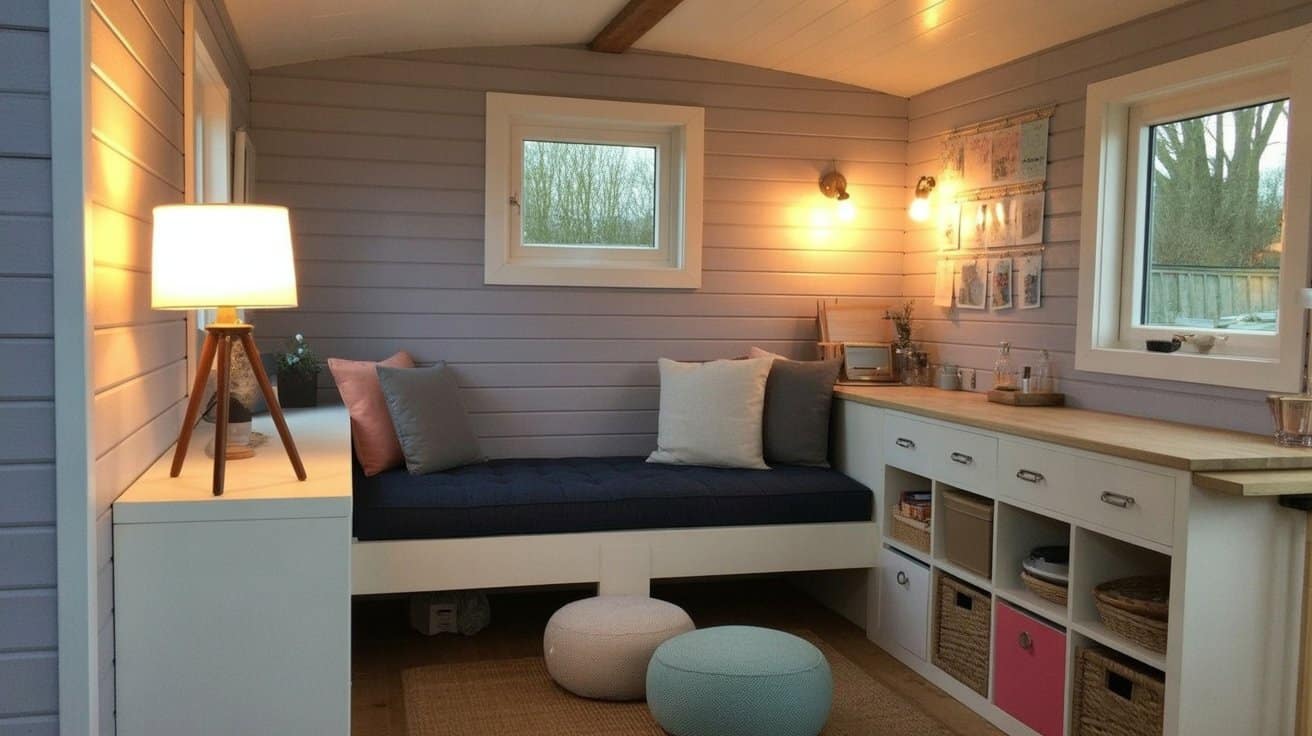
A shepherd’s hut already gives you a head start. The wood paneling, curved ceiling, and cast-iron details are all there from day one. You do not need to reinvent the space.
You just need to build on what it already has. Natural materials are the best way to do that. They work with the hut’s character rather than against it.
1. Wood and Timber
Wood is the heart of any shepherd’s hut interior. The tongue-and-groove paneling on the walls sets the tone for the rest of the space. Work with that base, not against it.
Choose furniture in a similar grain and tone to the paneling. Warm oak, pine, and reclaimed timber all sit naturally in this space. If you want contrast, go slightly lighter or darker than the wall panels. A
2. Stone and Slate
Stone and slate work best near heat sources and in the kitchen area. A slate hearth around the wood-burning stove looks grounded and earthy. Stone tile on a kitchen countertop or splashback adds texture without needing much upkeep.
3. Natural Fiber Textiles
A wood-heavy space can feel hard and cold without the right soft furnishings. Natural fiber textiles solve this quickly. Wool throws, linen cushions, jute rugs, and cotton curtains all add warmth and softness without looking out of place.
4. Exposed Beams
If your hut has visible ceiling beams, leave them exactly as they are. Do not paint over them or box them in. Exposed beams add architectural interest that you simply cannot fake with decoration.
They also draw the eye upward, which makes a narrow hut feel taller and more open. If the beams are bare wood, a light oil or wax finish keeps them looking fresh without changing their natural color.
Conclusion
A well-planned shepherd’s hut interior can turn a small wooden structure into a space you genuinely love spending time in. The size is fixed, but what you do with it is completely up to you.
Start with your purpose, build your layout around it, and then work through each section step by step.
From the right bed and storage to lighting that sets the mood, every small decision adds up to something really special. The ideas in this guide give you a strong starting point for any style or budget.
Have you already started planning your shepherd’s hut interior? Drop your questions or ideas in the comments. We would love to hear what you are working on.
Frequently Asked Questions
How Much Does a Fully Fitted Shepherd’s Hut Cost?
Fully fitted shepherd huts typically range from £15,000 to £35,000, depending on size, materials, and included utilities. Custom builds with premium finishes can exceed £50,000.
Do Shepherd’s Huts Have Toilets?
Some models include composting toilets or connect to external plumbing. Many users add portable facilities or install proper waste connections depending on intended use and available site infrastructure.
Do I Need Permission for A Shepherd’s Hut?
Planning permission requirements vary by location and use. Temporary placement often doesn’t require approval, but permanent installation or commercial use typically does. Check your local regulations first.