
Every spring, gardeners ask me the same question: “Bella, when will my peonies finally flower?”
After eight years of growing these beauties professionally, the honest answer is that it depends on your USDA hardiness zone, your soil, the variety you planted, and how cold your winters get.
Most peonies flower between late April and early June, but the exact window can shift by several weeks depending on where you live.
I’ll walk you through bloom timing by zone, the three main peony types, and when each one flowers, where to plant for the best results, a step-by-step planting process, and the mistakes that stop blooms from showing up.
You will also learn how to extend your peony season to 6 weeks by mixing early-, mid-, and late-blooming varieties.
When Do Peonies Bloom?
Peonies bloom in late spring and early summer. Most varieties flower between late April and early June, and the exact timing depends on your local climate and USDA hardiness zone.
In warmer regions (zones 7-8), blooms often show up as early as late March or April. In moderate climates (zones 5-6), expect peak bloom in May.
In colder areas (zones 3-4), you may not see flowers until late May or even mid-June. For most gardeners across the country, May is the sweet spot when peonies put on their strongest display.
Each individual peony plant flowers for about 7 to 10 days. That window feels short, but you can stretch the season to nearly six weeks by planting a mix of early-, mid-, and late-blooming cultivars.
Peony Bloom Time by USDA Hardiness Zone
Bloom time shifts depending on where you live. Here is what I have seen across different growing zones over the years.
| USDA zone | Bloom window | What to know |
|---|---|---|
| Zones 3-4 (cold regions) | Late May to mid-June | Long, cold winters provide excellent chill hours. Blooms arrive later but tend to last longer in cool air. |
| Zones 5-6 (moderate climates) | May | The longest and most reliable bloom window. These zones offer the best overall conditions for peonies. |
| Zones 7-8 (warm regions) | Late March to early May | Choose early-blooming varieties. Late types may struggle in the heat. Provide afternoon shade in zone 8. |
| Zone 9 (hot climates) | Limited success | Peonies rarely get enough chill hours. Tree peonies and select early hybrids have the best chance. |
No matter your zone, knowing your local climate helps you plan better and get the most out of your peony season.
Three Types of Peonies and When Each One Flowers
Not all peonies bloom at the same time. The three main types flower in a specific order, and planting one of each is the easiest way to extend your display.
| Peony type | Bloom period | Key traits |
|---|---|---|
| Tree peonies | Late April to early May | Woody shrubs that bloom first. Produce huge flowers on sturdy stems. Grow 3-7 feet tall. Do well in zones 4-9. |
| Herbaceous peonies | Mid-May to early June | The classic garden peony. Dies back to the ground each winter. Most fragrant group. Zones 3-8. |
| Intersectional (Itoh) peonies | Late May to mid-June | A cross between tree and herbaceous types. Multiple flushes of bloom over 2-3 weeks. Strong stems that rarely need staking. |
By growing all three types, your garden can have peonies in flower from late April through mid-June.
Where to Plant Peonies?

Choosing the right spot makes all the difference. I have seen many gardeners struggle with peonies simply because of poor placement.
Sunlight is the top priority. Peonies need at least 6 to 8 hours of full sun each day. More sun means more blooms. In zones 8 and warmer, some afternoon shade can help flowers last a few extra days.
For soil, peonies grow best in deep, fertile, well-draining soil. A neutral to slightly alkaline pH (around 6.5-7.0) is ideal. If your soil is heavy clay or very sandy, mix in compost before planting.
Space each plant 3 to 4 feet apart so air moves freely between them. Good airflow is one of the simplest ways to prevent fungal problems like botrytis.
Avoid planting peonies too close to large trees or shrubs. They compete for water and nutrients. Your peonies will lose that fight every time.
Never plant them in a low-lying area where water collects after rain. Waterlogged soil causes root rot fast. Give peonies a sunny, open spot with good drainage, and they will come back stronger each year.
How to plant peonies

Planting peonies is simple when you follow the right steps. Here is the process I use every autumn.
Step 1: Pick the right time
Autumn is the best planting window, specifically September through October in most zones. I always wait for cool soil temperatures before putting bare roots in the ground.
This gives the roots several weeks to settle before the ground freezes. In zones 7-8, you can plant as late as November since winters arrive later.
Step 2: Prepare the soil
About a week before planting, dig a hole roughly 2 feet deep and 2 feet wide. Mix compost and a cup of bone meal into the removed soil, blending them together before planting day.
If your ground is heavy clay or very sandy, add extra compost to improve drainage and fertility. Peonies do best in soil with a neutral to slightly alkaline pH, around 6.5 to 7.0.
Step 3: Plant at the right depth
Set the bare root on a small mound of soil inside the hole with the eyes (the small pink or red buds on top of the root) facing upward.
I always keep the eyes just 1 to 2 inches below the soil surface. Even half an inch too deep can stop blooming entirely. In southern zones, planting the eyes only 1 inch deep gives the best results.
Step 4: Water and mulch
Water the planting hole thoroughly right after backfilling. I use a thin mulch layer only. Too much mulch traps moisture, inviting root rot. Keep mulch a few inches away from the crown of the plant so the eyes are not buried deeper as the mulch settles.
One thing to keep in mind: young peonies planted from bare root often take 2 to 3 years before they bloom at full strength. The first year, you may get no flowers at all. That is normal. The plant is putting energy into root development, and patience here pays off for decades of blooms.
How to extend your peony bloom season
A single peony plant flowers for about a week. But with a bit of planning, you can enjoy peonies for up to six weeks straight.
The easiest method is to plant early, midseason, and late-blooming cultivars together. When one group finishes, the next picks up.
I keep at least two cultivars from each bloom window in my garden beds, and the display runs from late April into mid-June most years.
You can also mix peony types. Tree peonies open first, followed by herbaceous varieties, and intersectional (Itoh) types close out the season.
Itoh peonies are especially good at extending the show because their buds do not open all at once. They produce 2 to 3 flushes of flowers over several weeks.
A few other tricks that help: deadhead spent blooms promptly so the plant focuses energy on remaining buds. Keep roots cool with a light layer of mulch. On hot days, organic garden sprays can protect tender buds from early pest pressure before flowers fully open.
Common Mistakes to Avoid
I’ve seen these mistakes set back even experienced gardeners. Here’s what to watch for and how to fix each one.
1. Planting too deeply
This is the number one reason peonies fail to bloom. The eyes get buried and cannot reach the surface properly. Keep the eyes no more than 1 to 2 inches below the soil surface. I always double-check depth before covering the roots.
2. Choosing the Wrong Spot
Planting in shade or near large trees leaves peonies starved for sunlight and nutrients. Move plants to a spot with at least 6 hours of direct sun daily. Open, airy spots work best.
3. Overwatering
Too much water causes root rot, especially in poorly drained soil. Water deeply but less often. I always check that the top inch of soil has dried before watering again.
4. Not Enough Winter Chill
Peonies need a period of cold dormancy to form flower buds for the following spring. In zones 8 and warmer, some varieties never get the chill hours they need.
Choose early-blooming hybrids bred for lower chill requirements, and consider planting tree peonies or intersectional types, which tend to handle warmer climates better than standard herbaceous varieties.
5. Disturbing Young Plants Too Soon
Newly planted peonies often take 2 to 3 years to bloom fully. Moving them or dividing them too early resets the clock. Once you plant a peony, leave it alone and let the roots establish. Peonies resent being transplanted, so pick your spot carefully the first time.
6. Skipping Support for Heavy Blooms
Double-flowered peonies produce large, heavy blooms that can flop to the ground after rain. A simple peony ring placed over the plant in early spring, before the stems get tall, keeps everything upright.
I set mine in late March each year, and the stems naturally grow up through the support. Gardeners who also grow vegetables, such as tall indeterminate tomatoes, will already be familiar with this kind of early staking.
Best Companion Plants for Peonies
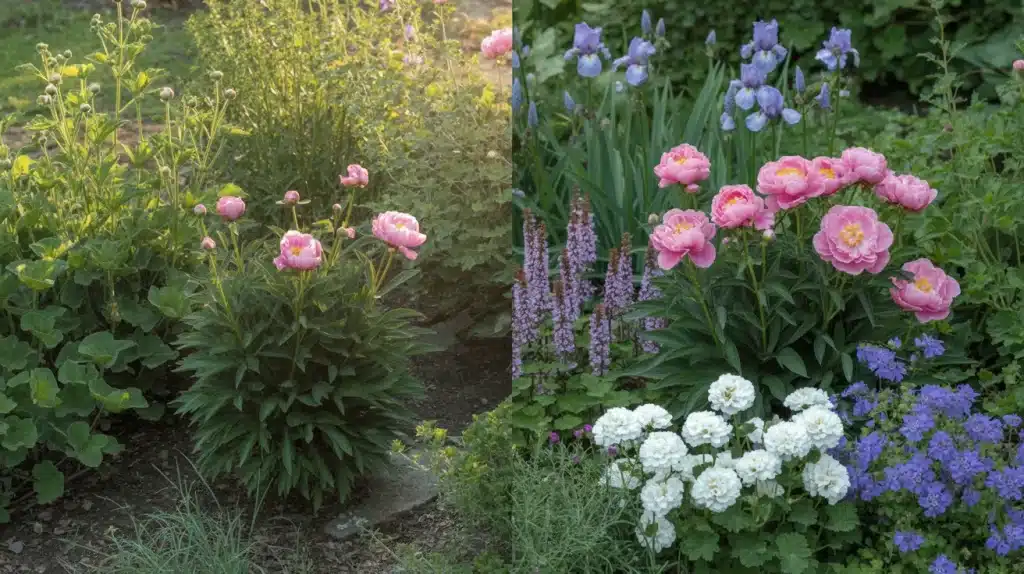
Because peonies only flower for a short window, pairing them with plants that bloom before or after extends the color in your bed all season.
Before peonies flower, spring bulbs like tulips and daffodils fill the gap. After peonies finish, roses, nepeta, lavender, salvia, and coneflowers take over.
Hardy geraniums and catmint make excellent ground-level partners that cover the base of peony plants while adding fresh blooms from June onwards.
In my own beds, I pair mid-season peonies with baptisia and tall bearded irises. They bloom at the same time and the blue and purple tones look stunning next to soft pink peony flowers.
Gardeners looking for plants that hold up well through autumn can also consider pairing peonies with slug-resistant perennials that keep beds tidy once the peony foliage dies back.
Conclusion
Peonies bloom from late April to early June in most gardens, with the exact window depending on your USDA zone and the varieties you grow.
Getting the basics right, full sun, shallow planting depth, good drainage, and a cold winter dormancy period, is all these plants ask for in return for decades of flowers.
The biggest lesson I have learned over eight years of growing peonies professionally is that variety selection matters more than most gardeners realize.
Plant early, mid, and late cultivars together, and you can turn a one-week bloom into a six-week display. Pair them with companion plants that flower before and after, and your garden stays colorful from spring through autumn.
Autumn is the ideal planting window, so start planning your peony layout now and get bare roots in the ground by October. Have questions about your peony garden? Drop them in the comments.
Frequently Asked Questions
What Month Do Peonies Usually Start to Bloom?
Most peonies bloom between April and June. In warmer regions, you may see flowers in late March, while cooler climates typically see peak blooms in May or June.
Why Are My Peonies Not Blooming This Year?
Common reasons include planting the roots too deep, lack of sunlight, or overwatering. Ensure the eyes are only 1 to 2 inches below the soil surface for success.
How Much Sunlight Do Peonies Need for The Best Results?
Peonies thrive in full sun. They require at least 6 hours of direct sunlight daily to produce the large, healthy blooms that gardeners love to see every spring.
Can I Grow Peonies in A Very Warm Climate?
Peonies need a winter chill to go dormant and produce flowers. If you live in a warm zone, choose specific varieties bred to handle lower chill requirements.
When Is the Best Time of Year to Plant Peonies?
The ideal time to plant is in autumn, specifically September or October. This allows the roots to settle in cool soil before the spring growing season begins.