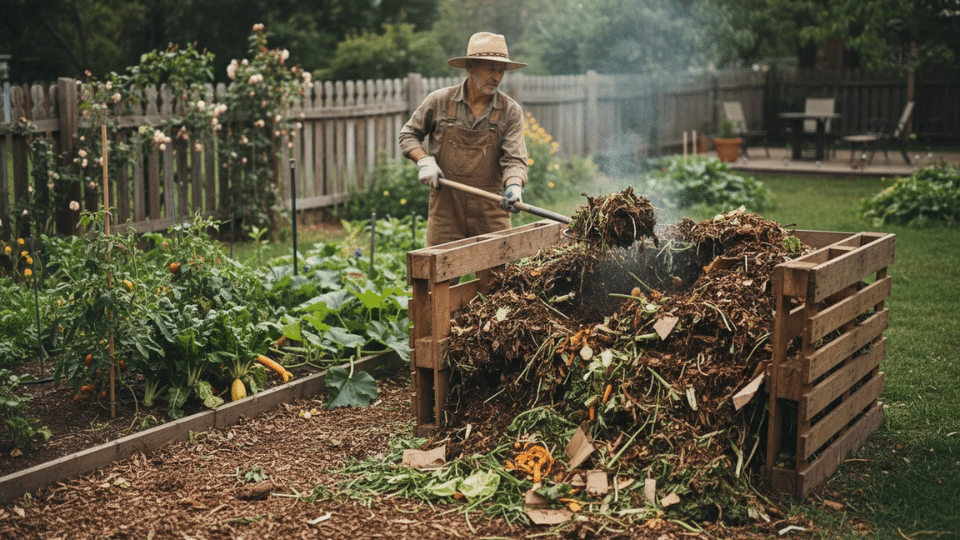

Starting a compost pile sounds simple until you toss in the wrong item and end up with a messy, smelly mess that attracts pests.
I learned this the hard way early in my gardening career.
After 14 years in the field and a degree in agricultural science from Texas A&M, I can tell you that composting failures almost always come down to one thing: not knowing the rules before you start.
This blog covers the composting do’s and don’ts in plain, practical language.
Whether you have a backyard bin, a tumbler, or a simple heap in the corner of your yard, the same core principles apply.
By the time you finish reading, you will know what belongs in your pile, what to keep out, and how to handle problems before they get out of hand.
What Is Composting?
Composting is the natural process of breaking down organic waste such as food scraps, leaves, and yard trimmings into a nutrient-rich material called humus.
This process is carried out by microorganisms like bacteria and fungi that decompose the waste in the presence of oxygen and moisture.
Over time, these materials transform into a dark, soil-like substance that can be added back to gardens to improve soil structure, retain moisture, and support healthy plant growth.
In simple terms, composting is a controlled way of recycling organic waste into natural fertilizer.
Composting Basics You Must Understand
Before you start adding waste to a compost pile, it is important to understand the core principles that control how fast and effectively organic matter breaks down.
| Key Factor | What It Means | Why It Matters |
|---|---|---|
| Greens (Nitrogen) | Food scraps, grass clippings, fresh plant waste | Feeds microbes and drives decomposition |
| Browns (Carbon) | Dry leaves, cardboard, paper, straw | Prevents smell and adds structure |
| Carbon-to-Nitrogen Ratio | Balance of browns and greens (ideal ~2–3:1 browns to greens) | Ensures fast, odor-free composting |
| Moisture Level | Damp like a wrung-out sponge | Too wet causes rot, too dry slows breakdown |
| Airflow (Oxygen) | Turning and spacing materials | Prevents anaerobic conditions and bad smell |
Composting Do’s You Should Follow
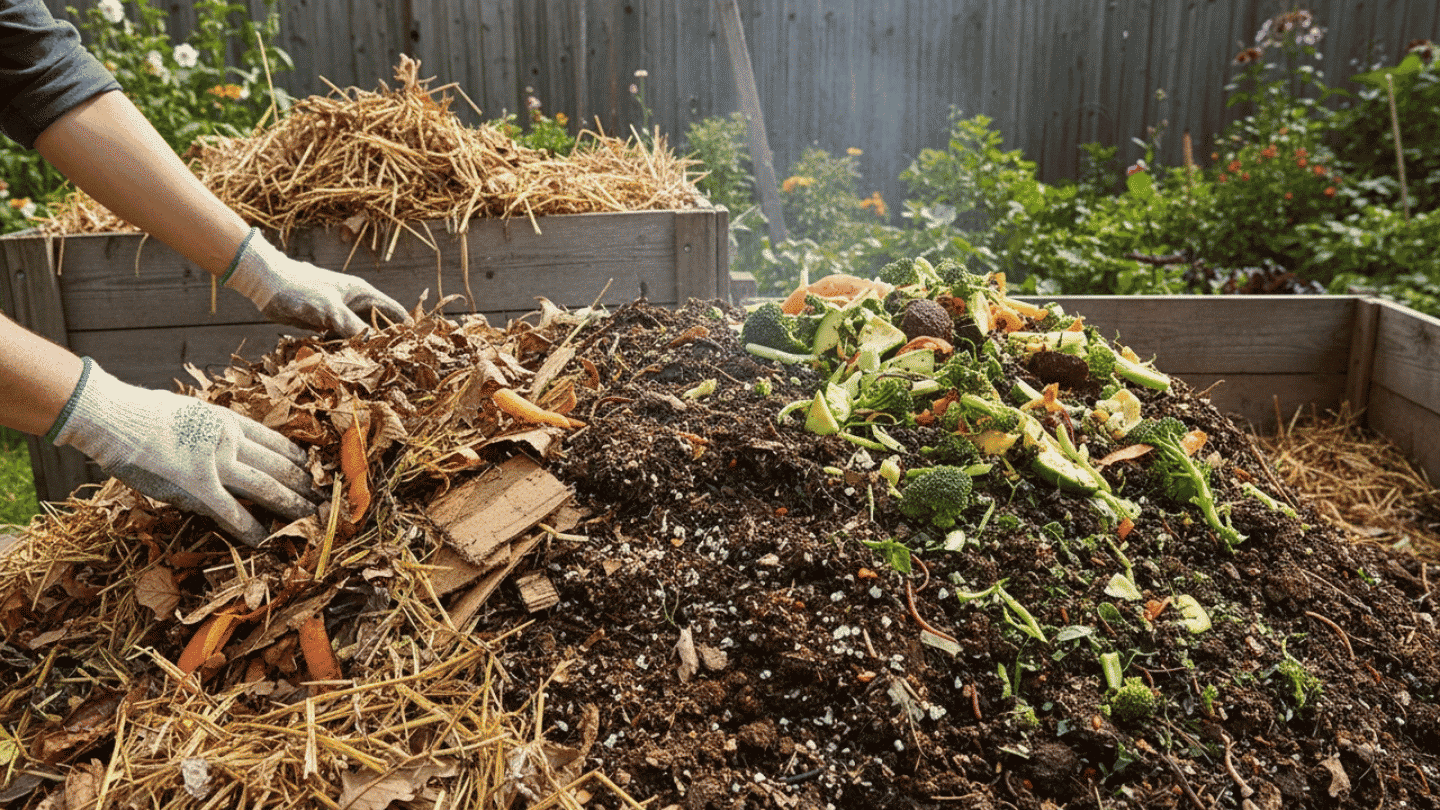
A healthy compost pile runs on the right combination of materials, moisture, and air. Without all three, decomposition slows or stops completely. These four practices form the base of every productive pile I have built.
1. Add the Right Browns for Carbon
Browns are carbon-rich materials. They provide structure, improve airflow, and help absorb excess moisture in the pile. They also prevent the compost from becoming too dense or smelly.
A lack of browns often leads to a wet, compact pile with slow decomposition.
Good browns to add freely:
- Dried leaves (shredded when possible)
- Torn cardboard and paper bags (remove tape and staples)
- Plain newspaper and brown paper towels
- Straw or hay
- Wood chips or sawdust from untreated lumber (use in small amounts)
- Paper egg cartons
Shredding or tearing materials speeds up decomposition and improves airflow throughout the pile.
2. Greens That Keep Decomposition Moving
Greens are nitrogen-rich materials that fuel microbial activity in the compost pile. They help generate heat and support active decomposition when balanced properly with browns.
However, greens alone do not create a stable pile. They must always be balanced with carbon materials.
Effective greens to add:
- Fruit and vegetable scraps
- Coffee grounds and unbleached paper filters
- Tea bags (remove staples and plastic parts)
- Fresh plant and flower trimmings (disease-free only)
- Eggshells (rinsed and crushed; considered slow-decomposing and mineral-rich)
- Fresh grass clippings (add in thin layers to prevent clumping)
3. Get the Carbon to Nitrogen Ratio Right
This step is one of the most important for successful composting. A healthy pile needs a balanced mix of carbon and nitrogen to maintain microbial activity and prevent odor issues.
The ideal ratio is approximately 25–30 parts carbon to 1 part nitrogen.
In practical terms, aim for 2–3 parts browns for every 1 part greens by volume.
Composting research, including studies cited by Cornell University, shows that maintaining this balance improves the rate of decomposition and reduces odor problems.
Quick reference guide:
| Material | Type | Approx. C: N Ratio |
|---|---|---|
| Cardboard | Brown | 350:1 |
| Dried leaves | Brown | 60:1 |
| Straw | Brown | 75:1 |
| Coffee grounds | Green (nitrogen-rich) | 20:1 |
| Vegetable scraps | Green | 15:1 |
| Grass clippings | Green | 15:1 |
4. Turn the Pile and Keep It Moist
Oxygen and moisture are essential for composting. Without them, decomposition slows, and the pile can become compact and smelly.
Turning the pile introduces oxygen, which supports aerobic microbes that break down organic matter efficiently.
I turn my piles about once a week during warm months for best results.
The moisture level should feel like a wrung-out sponge, damp but not dripping.
- If too dry, add water lightly and mix in fresh greens
- If too wet: add dry leaves, cardboard, or paper
- During heavy rain, cover the pile to prevent waterlogging
A compost tumbler helps maintain balance more easily by improving airflow and moisture control.
5. Layer Materials Instead of Dumping Everything at Once
Adding all materials in layers helps maintain balance and prevents uneven decomposition. A structured layering system improves airflow and ensures that greens and browns break down together rather than forming separate clumps.
A simple layering method:
- Start with a base of coarse browns (twigs or straw)
- Add alternating layers of greens and browns
- Finish with a top layer of dry browns to reduce odor and pests
This method also makes it easier to maintain the correct carbon-to-nitrogen balance throughout the pile without constant correction.
The Composting Don’ts That Protect Your Garden
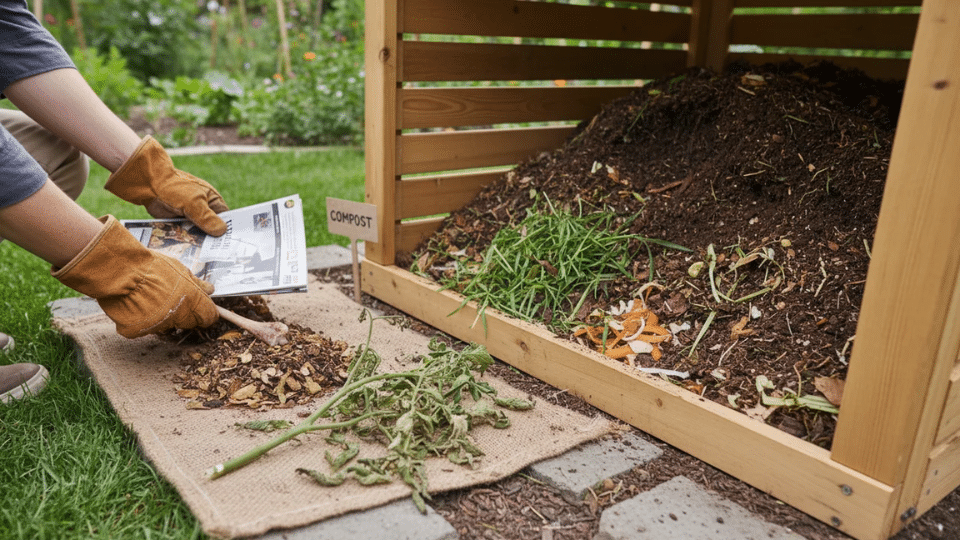
The wrong materials introduce pests, pathogens, and chemicals that can damage both the pile and your soil over time. These are the items I keep out without exception, no matter how convenient it might seem to toss them in.
1. Leave Out Meat, Dairy, and Oily Foods
Meat, fish, dairy, and oily foods will eventually break down, but they decompose slowly in home compost systems and often create strong odors that attract rodents, raccoons, and flies.
Once pests find the pile, keeping them out becomes difficult and persistent.
Avoid adding:
- Meat, fish, or bones of any kind
- Cheese, butter, milk, or cream
- Cooked foods with oil, sauce, or grease
- Salad dressings or fatty spreads
If you want to compost cooked food scraps, a sealed bokashi system is a better option.
It works through fermentation rather than decomposition, which helps control odor and allows the breakdown of items that traditional compost piles cannot handle safely.
2. Diseased Plants and Seeding Weeds Stay Out
This is one of the most commonly overlooked composting mistakes. If a plant shows signs of disease such as powdery mildew, rust, or root rot, it should not go into a home compost pile.
Most backyard compost systems do not consistently reach temperatures high enough to destroy plant pathogens.
Adding infected material can spread disease back into your garden when compost is applied.
The same rule applies to weeds that have already gone to seed. Many weed seeds can survive in cooler compost piles and may germinate later in garden beds.
Healthy, disease-free plant trimmings are perfectly safe to compost. Always inspect material before adding it.
Also avoid adding black walnut leaves, roots, or husks, as they contain juglone, a compound that can inhibit plant growth.
3. Avoid Treated Wood and Synthetic Materials
Not all wood-based or paper-based materials are safe for composting. Pressure-treated, painted, or chemically treated wood may contain preservatives that do not break down safely in compost systems.
Glossy or coated paper products can also contain inks, plastics, or finishes that resist decomposition and may contaminate finished compost.
Keep these out:
- Pressure-treated, painted, or stained wood and sawdust
- Glossy magazines or coated paper
- Laminated cardboard
- Synthetic fabrics, foam, or rubber
- Coal ash (small amounts of untreated wood ash can be used sparingly, but in moderation only)
4. Pet Waste Needs a Separate System
Dog and cat waste can contain harmful bacteria such as E. coli and Salmonella, which standard home compost piles are not designed to eliminate safely.
For this reason, pet waste should not be added to compost intended for gardens, especially food-growing areas.
The U.S. Environmental Protection Agency (EPA) recommends keeping pet waste separate from traditional compost systems used for edible plants.
If composting pet waste, use a dedicated pet waste digester or specialized system that is completely separate from your garden compost.
Never mix the two systems.
5. Avoid Adding Invasive or Problem Plants
Not all plant waste is safe to compost, even if it looks natural. Some plants can regrow or spread aggressively even after being added to a compost pile.
In particular, avoid adding invasive species or tough perennial weeds that can survive incomplete decomposition. In cooler home compost systems, these plants may regrow when compost is later used in your garden.
Avoid adding:
- Invasive plant species (local aggressive weeds)
- Persistent perennial weeds with strong root systems
- Any plant material that can regrow from fragments (like bindweed or couch grass)
Instead, dispose of these in yard waste collection or systems that guarantee high-temperature processing.
What Happens When Compost Goes Wrong
Not every compost pile works perfectly, and small mistakes can quickly turn into bigger issues.
Below are the common problems to watch for and how they appear.
- Bad Smell from the Pile: A bad or sour smell usually means too many greens or not enough oxygen. The pile becomes anaerobic, which slows proper decomposition.
- Wet or Slimy Compost: Too much moisture removes airflow and turns the pile soggy. This stops healthy breakdown and creates a sticky, rotting texture.
- Nothing Is Breaking Down: A “cold” pile usually lacks nitrogen, moisture, or mixing. Without microbial activity, decomposition slows or completely stops.
- Pests Around the Pile: Flies, rats, or ants may appear when food waste is exposed or when meat or dairy is added. This disrupts the compost and spreads mess.
- Weeds Growing Later: Weed seeds can survive low-heat composting. When added to soil, they may sprout again and spread in the garden.
How Long Does Compost Take?
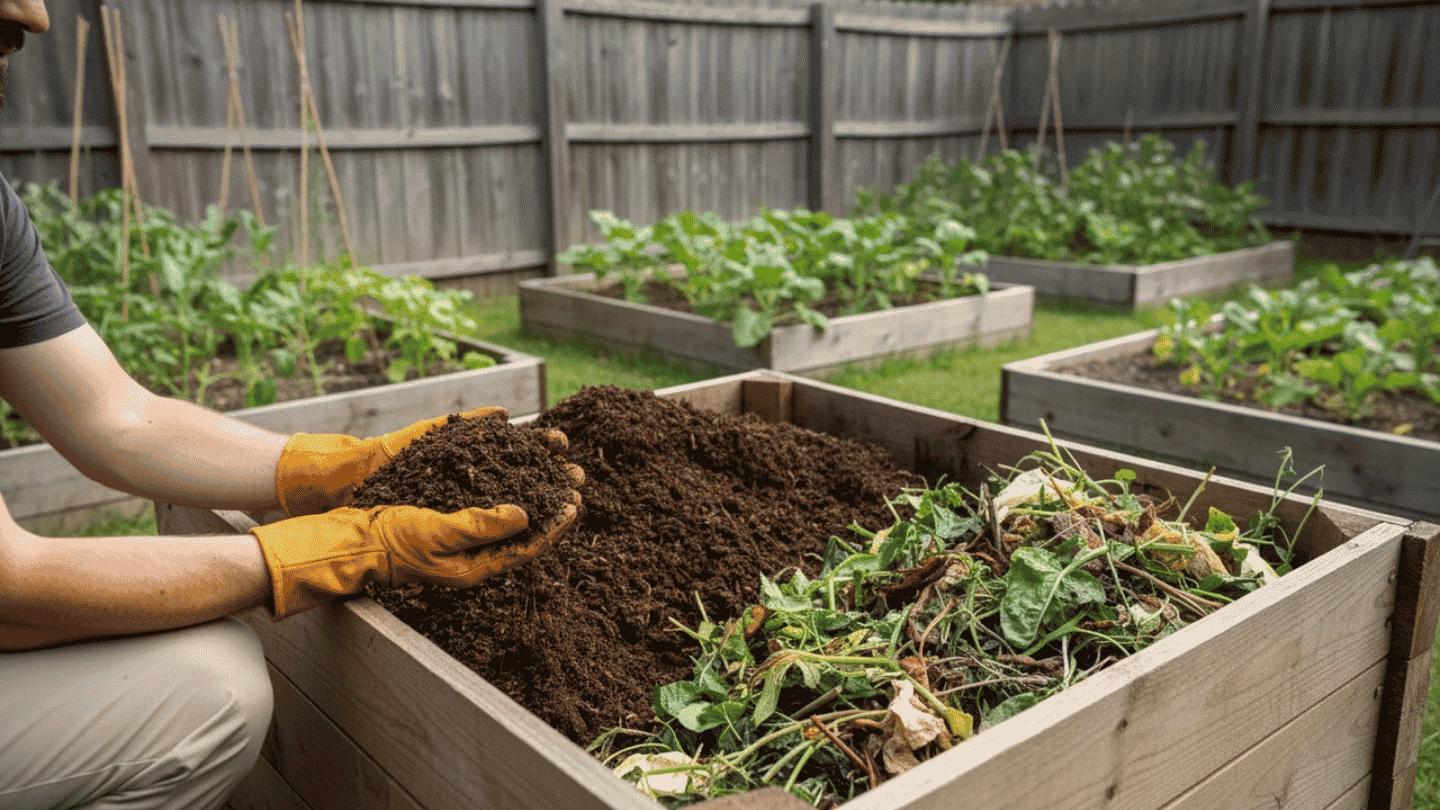
Composting typically takes anywhere from 2 months to 1 year, depending on how the pile is managed, the method used, and environmental conditions.
A well-maintained hot compost pile that is regularly turned and properly balanced with greens and browns can break down in as little as 6–8 weeks, while a standard backyard pile usually takes 3–6 months to produce usable compost.
Slower or passive compost systems, where materials are simply left to decompose without frequent turning, may take 6–12 months or longer.
Factors like temperature, moisture level, oxygen flow, and the size of the materials all play a major role, with smaller, well-shredded waste and consistent maintenance leading to significantly faster results.
Composting Methods Compared
Different composting methods vary in speed, space requirements, and maintenance needs. Choosing the right system depends on your available space, time, and how quickly you want results.
| Method | Best For | How It Works | Pros | Cons |
|---|---|---|---|---|
| Compost Pile (Open System) | Large yards | Organic waste is layered in an open heap | Low cost, natural process, large capacity | Slower, needs space, can attract pests if unmanaged |
| Compost Bin (Enclosed System) | Small to medium gardens | Waste is contained in a fixed bin structure | Cleaner, better odor control, tidy appearance | Limited capacity, slower than tumblers |
| Compost Tumbler | Beginners and quick results | The sealed drum is rotated regularly to mix materials | Fast decomposition, easy turning, pest-proof | Smaller volume, can dry out easily |
| Vermicomposting (Worm Bin) | Indoor or small spaces | Worms break down food waste into castings | Very nutrient-rich compost, low odor, compact | Requires care, temperature sensitive |
| Bokashi System | Kitchen waste users | Fermentation process using microbes in a sealed bucket | Handles cooked food, fast pre-composting, odor controlled | Needs a burial or a secondary composting stage |
Conclusion
Composting is one of those skills that rewards consistency more than anything else. The composting do’s and don’ts covered here give you a solid foundation to build on.
Over time, you will develop a feel for what your specific pile needs based on your climate, your kitchen habits, and how often you turn it.
Start small. A basic bin, a handful of kitchen scraps, and a pile of dried leaves are all you need to get going.
Check the moisture level regularly, turn the pile each week, and stay consistent about what goes in.
Within a season or two, you will have finished compost that genuinely transforms your garden soil in a way no store-bought product can fully replicate.
The effort is minimal. The results speak for themselves.
Frequently Asked Questions
Can I Put Toilet Paper Rolls in My Compost?
Yes, toilet paper rolls can be composted if they are made of plain, uncoated cardboard without plastic or heavy dyes.
Can Ziploc Bags Go in Compost?
Standard Ziploc bags are made of petroleum-based plastic (polyethylene) and cannot go in any type of compost.
Do Potato Peelings in Compost Attract Rats?
Yes, potato peelings do attract rats. They are a rich source of carbohydrates and starches, making them an appealing food source.