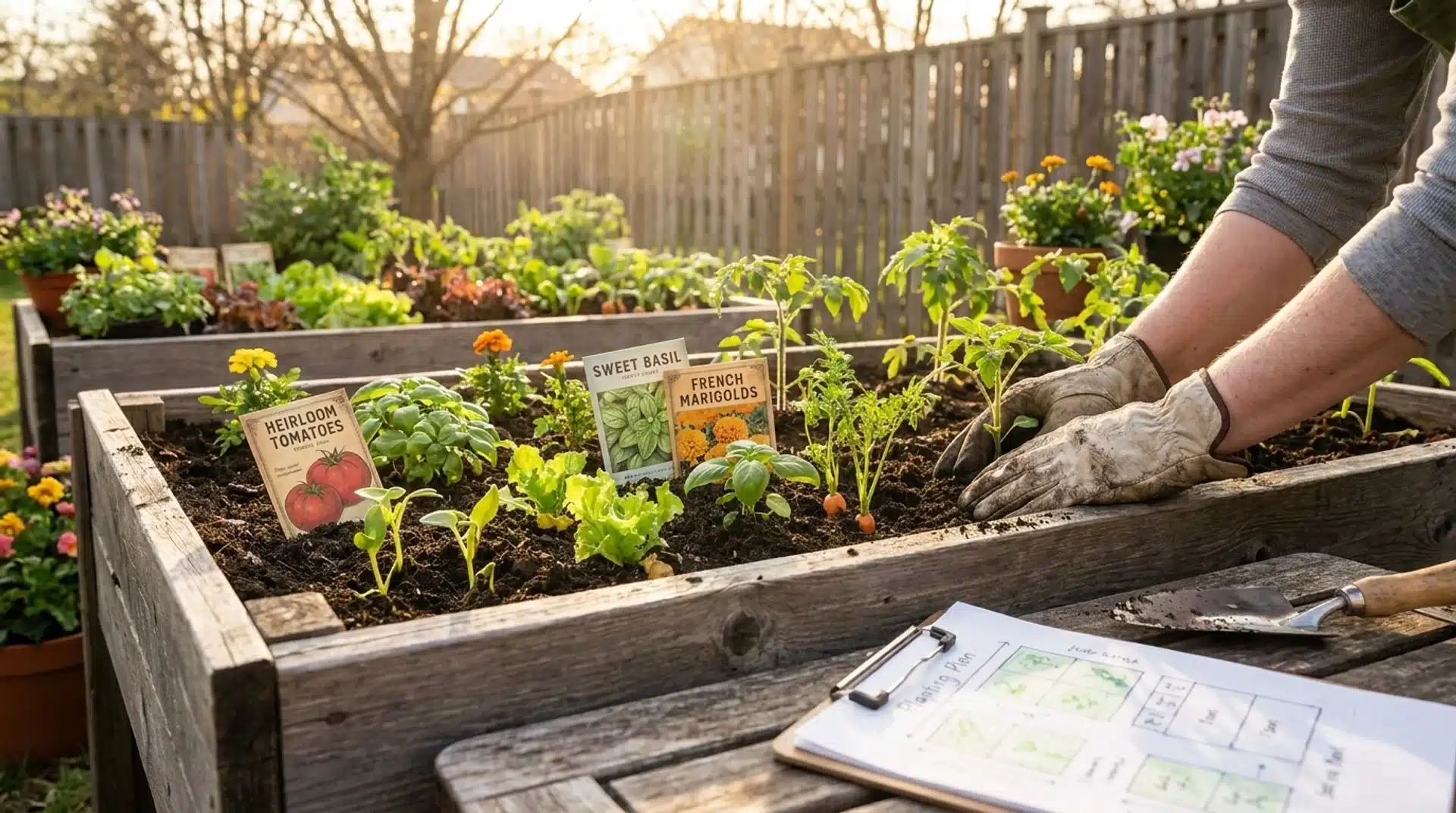

I almost made this mistake myself in my early twenties: I see first-time gardeners buy seeds, dig up a patch, and expect it to work out. Sometimes they get lucky.
They end up with a weedy, waterlogged mess. Gardening isn’t hard; it just needs the right order.
Pick the wrong spot, and no amount of effort saves you. Skip weed control, and you spend the whole season losing ground.
After 14 years of gardening across climates and soil types, I’ve learned one thing.
The setup decisions you make before planting a single seed are what decide whether this garden actually produces food.
Tools and Materials for Starting a Vegetable Garden
Before breaking ground, gather everything you need so that setup day runs smoothly from start to finish.
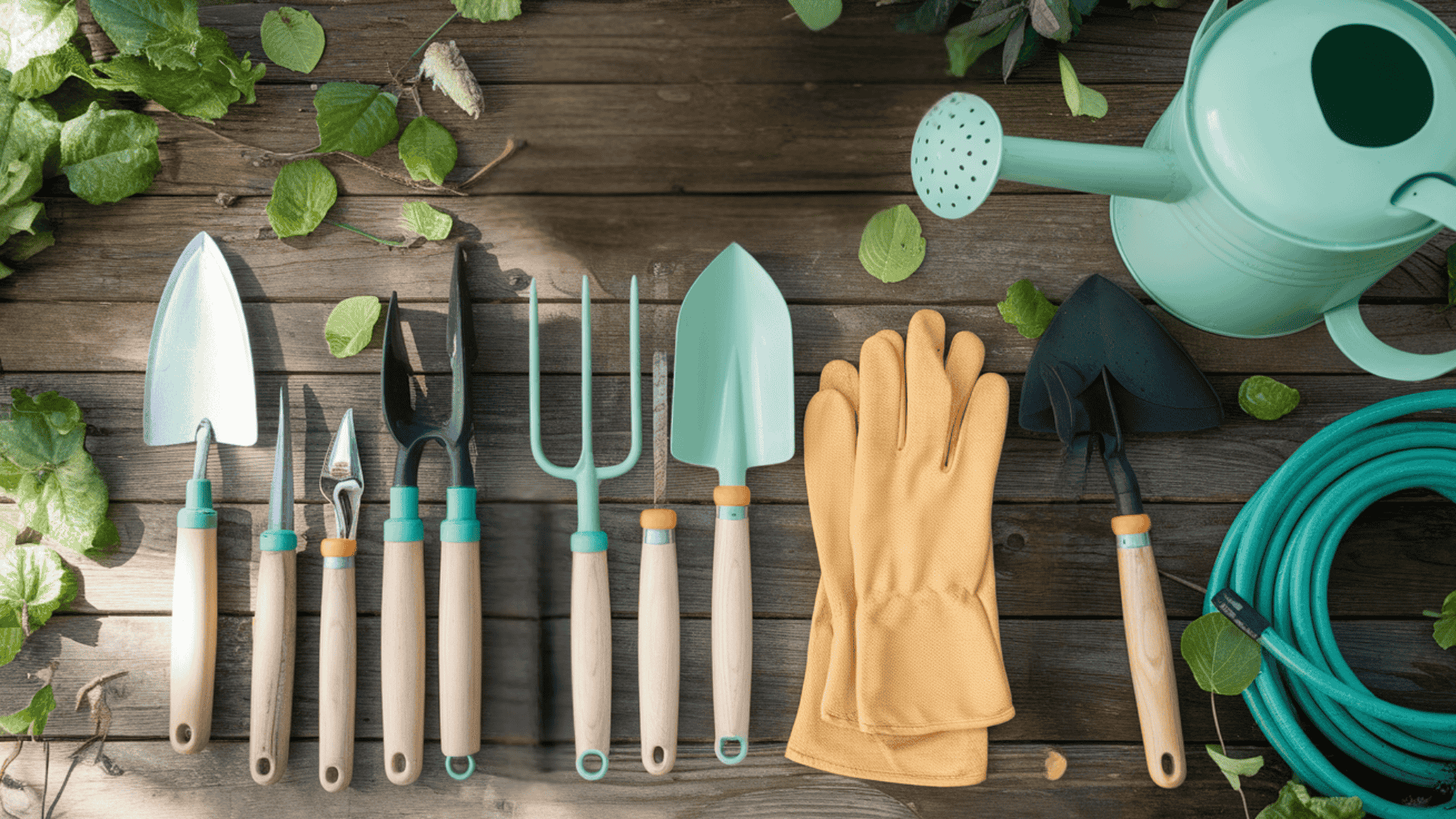
| Materials | Tools | Quantity |
|---|---|---|
| Compost or well-rotted manure | Garden spade or fork | 4–6 bags or 1 cubic yard per 4×8 bed |
| Cardboard (weed barrier) | Raised bed frame (optional) | Enough to cover your growing area fully |
| Wood chips or mulch | Tape measure | 2–3 inches deep on paths |
| Seeds or starter transplants | Garden hoe or hand cultivator | Based on the planting plan |
| Fertilizer or soil amendment | Wheelbarrow | As needed per soil test |
| Rain barrel or soaker hose | Quality hose with adjustable nozzle | 1 per growing zone |
| Plant markers or stakes | Trowel | 1 per crop variety |
| Garden fabric or polythene | Kneeling pad | As needed for weed suppression |
I still craft several of my own hand tools in my home workshop, but you do not need custom equipment to get started.
A solid spade, a dependable hoe, a good hose, and enough compost to work into your soil will carry you through the first season just fine.
Setting Up Your Vegetable Garden: A Step-by-Step Guide
Follow these steps to establish a vegetable garden that yields a genuine harvest from the very first season.
Step 1: Choose the Right Location for Your Vegetable Garden
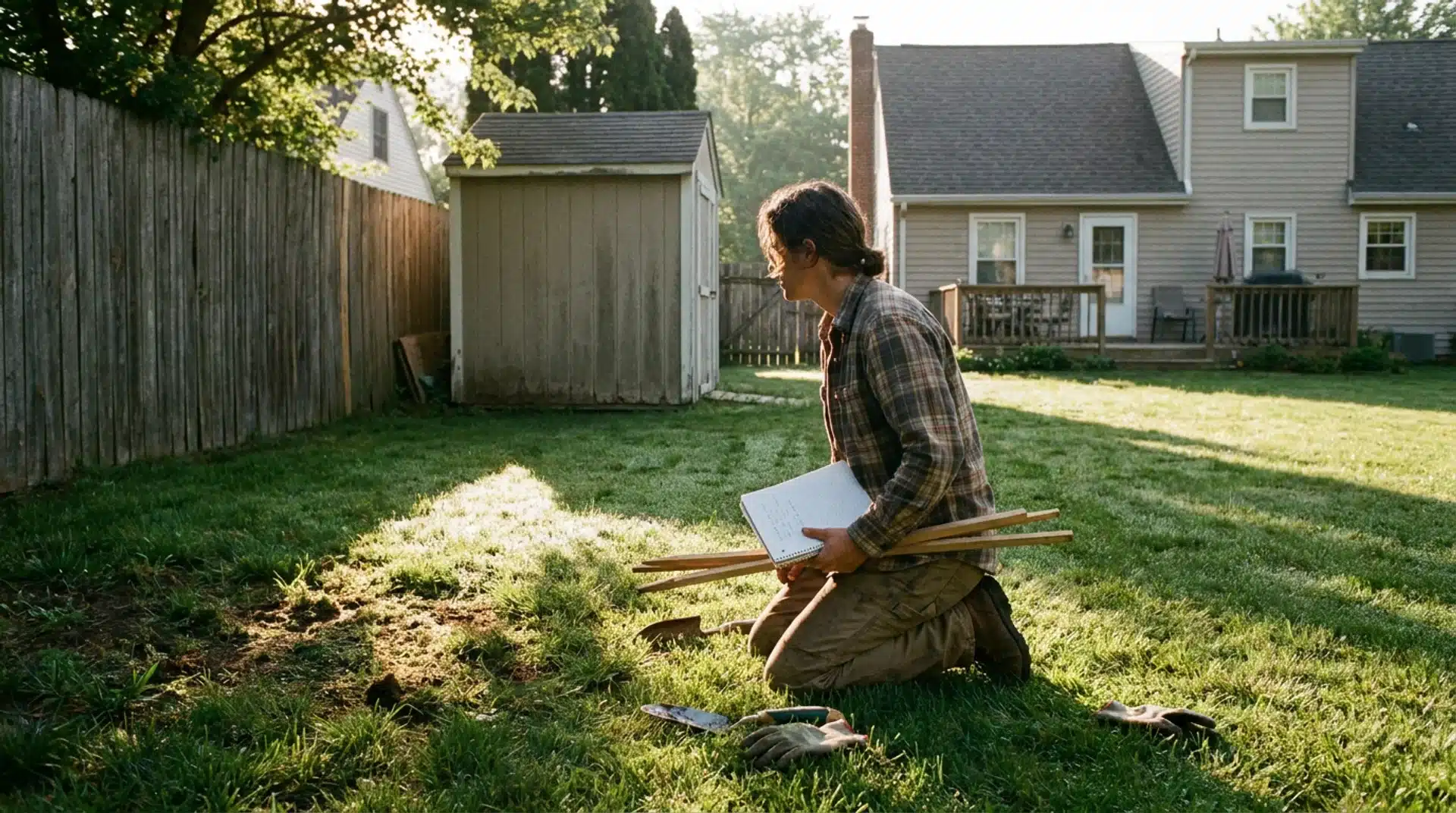
Since this decision impacts everything else, consider taking your time to think it through.
Most vegetables need six to eight hours of direct sun each day. In hot southern states, afternoon shade helps crops like spinach and cabbage survive summer.
Watch where shade falls before picking a spot. Buildings and fences stay put, but branches can be trimmed. Pick the spot with the most sun and the least wind.
Step 2: Test and Improve Your Garden Soil Before Planting
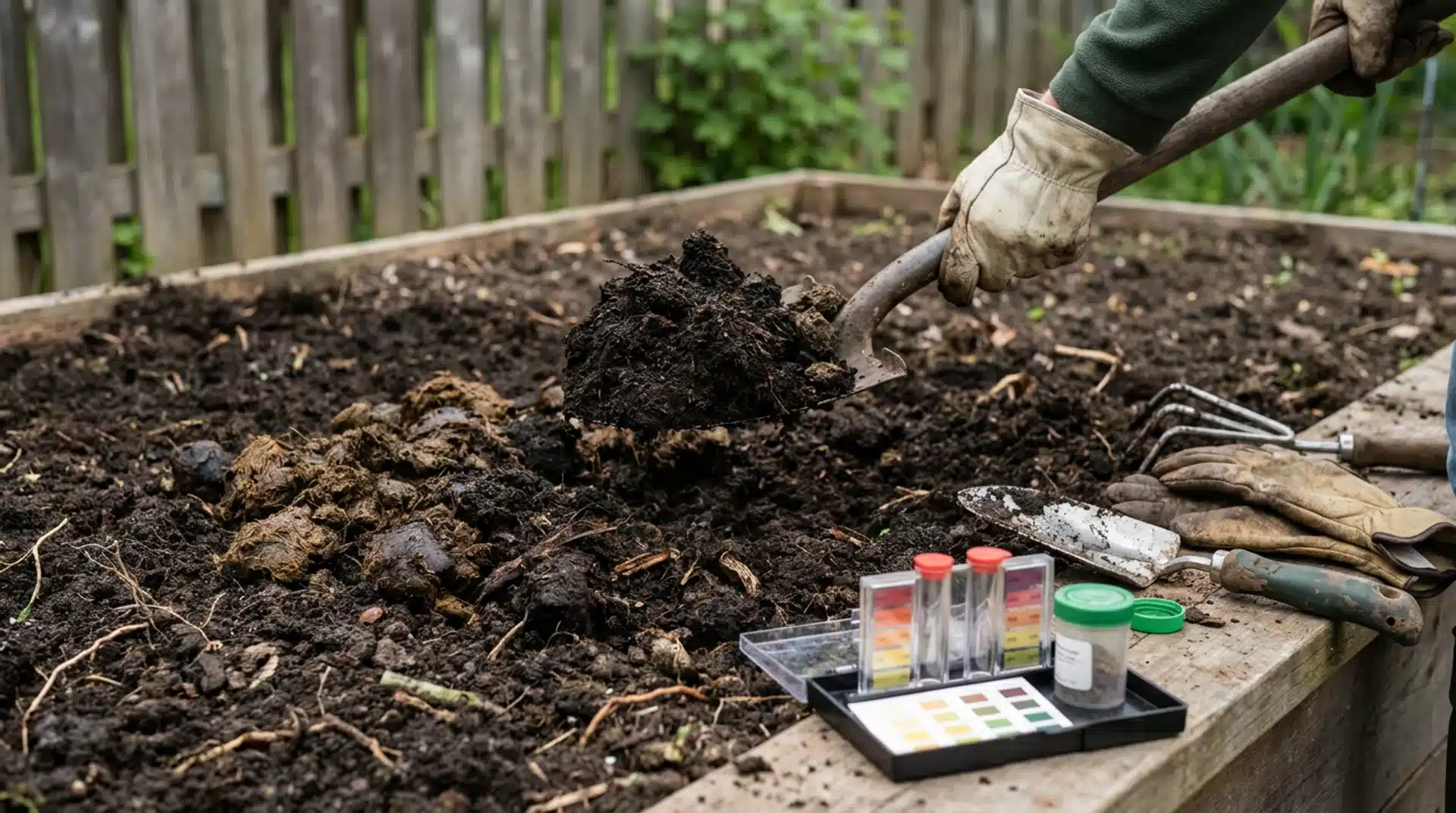
Most yards do not have great garden soil at first, and that is normal. You want soil that drains well but still holds some moisture.
If your spot floods after rain, move uphill or use raised beds. A basic soil test from your county extension office costs under $20 and measures pH and nutrient levels.
The fix is almost always the same: add compost or aged manure early so it has time to settle.
Step 3: Plan Your Vegetable Garden Layout Before You Dig
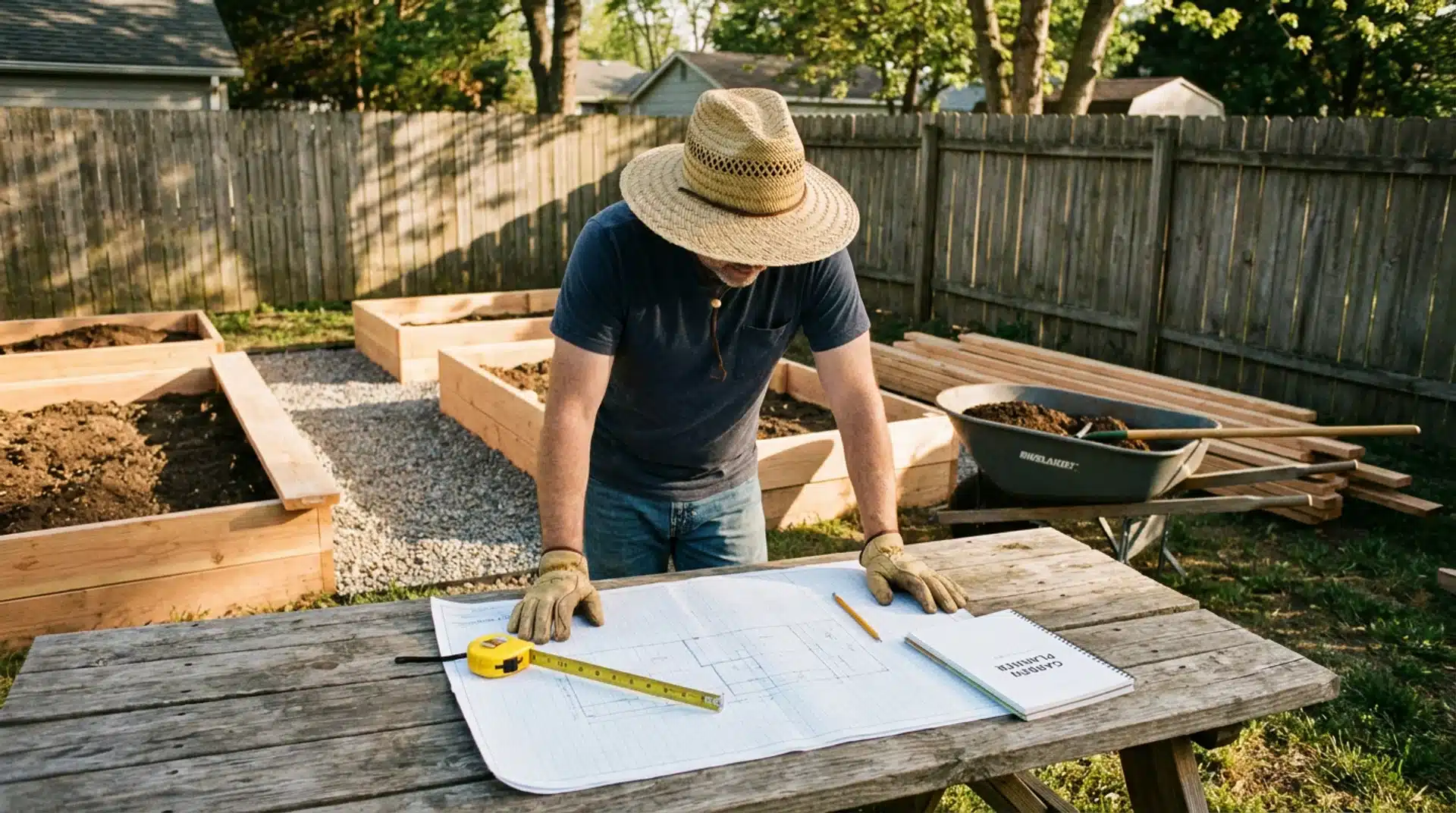
Grab graph paper or a free garden planner app and sketch your layout before you touch a shovel. Raised beds work well in most backyards.
They drain better, warm up faster in spring, and keep your growing areas clear.
Keep beds no wider than 4 feet so you can reach the center from either side. Make paths at least 18 inches wide, or 24 inches for a wheelbarrow.
Step 4: Clear Weeds Before Starting Your Vegetable Garden
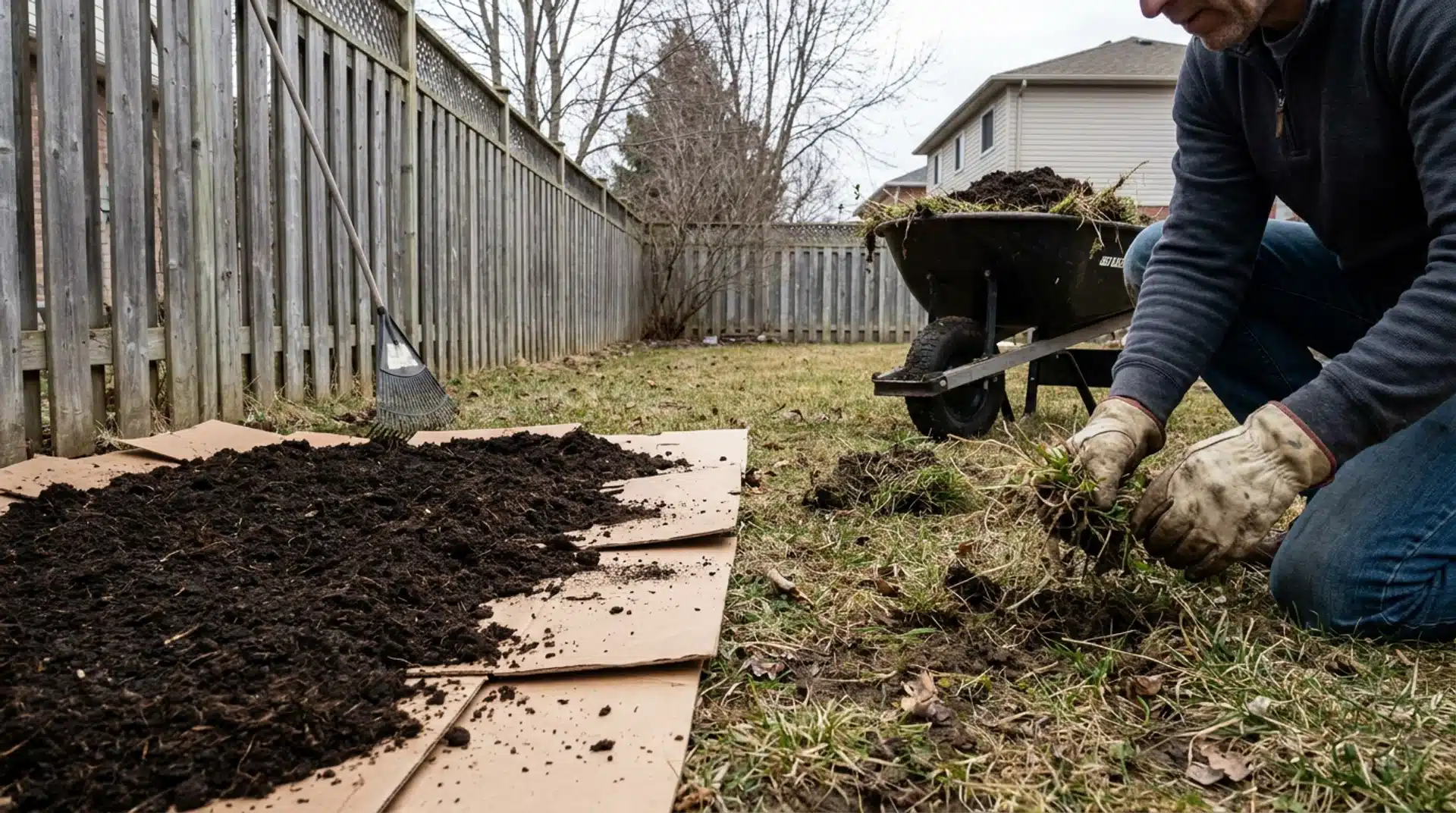
Do not skip this step or rush it. Common garden weeds left in the ground will outcompete your vegetables for water and nutrients.
The easiest method for most yards is smothering: mow weeds low, lay overlapping cardboard on top, and cover with four inches of compost.
Light cannot get through, and the cardboard breaks down over time. For tough weeds with deep roots, use dark plastic sheeting for several weeks. Winter works well for this task.
Step 5: Set Up a Composting Area for Your Vegetable Garden
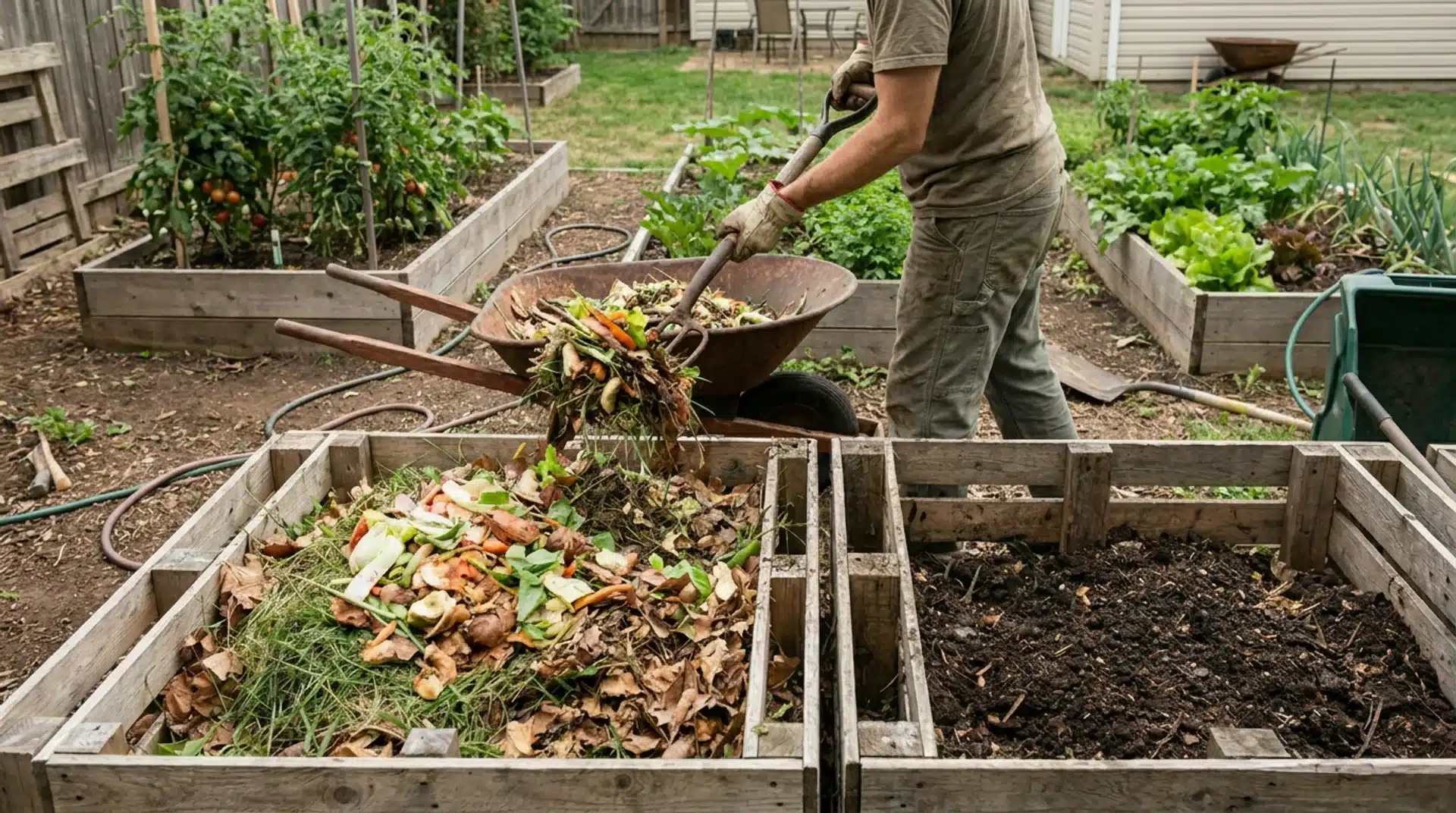
A productive vegetable garden uses a lot of compost each season. Buying bags works, but building your own two-bin system pays off.
One bin holds fresh material like weeds, kitchen scraps, grass clippings, and leaves.
The other holds material already breaking down. Keep your compost area close to the garden so hauling material feels easy. The closer it is, the more often you will use it.
Step 6: Install a Water Source Close to Your Vegetable Garden
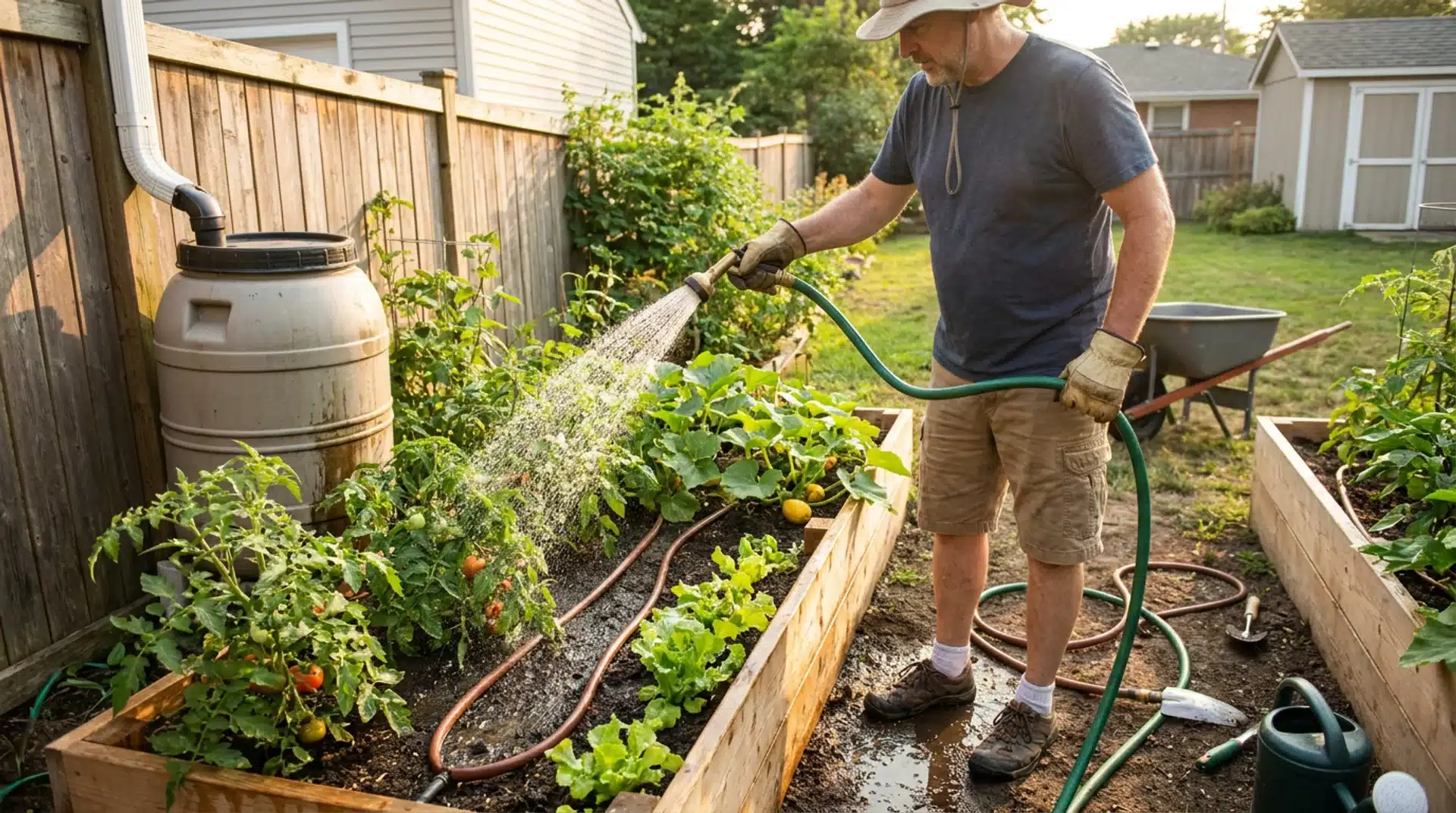
Water access matters more than most beginners expect. In mid-summer, you may water every day. If your hose bib sits far away, watering becomes a chore fast.
Install a rain barrel under a downspout near the garden. Rainwater is free and better for plants than tap water.
Buy a hose long enough to reach every bed without dragging it around corners, plus a nozzle with adjustable spray settings.
Step 7: Plant Perennial Vegetables and Fruit Before Annual Crops
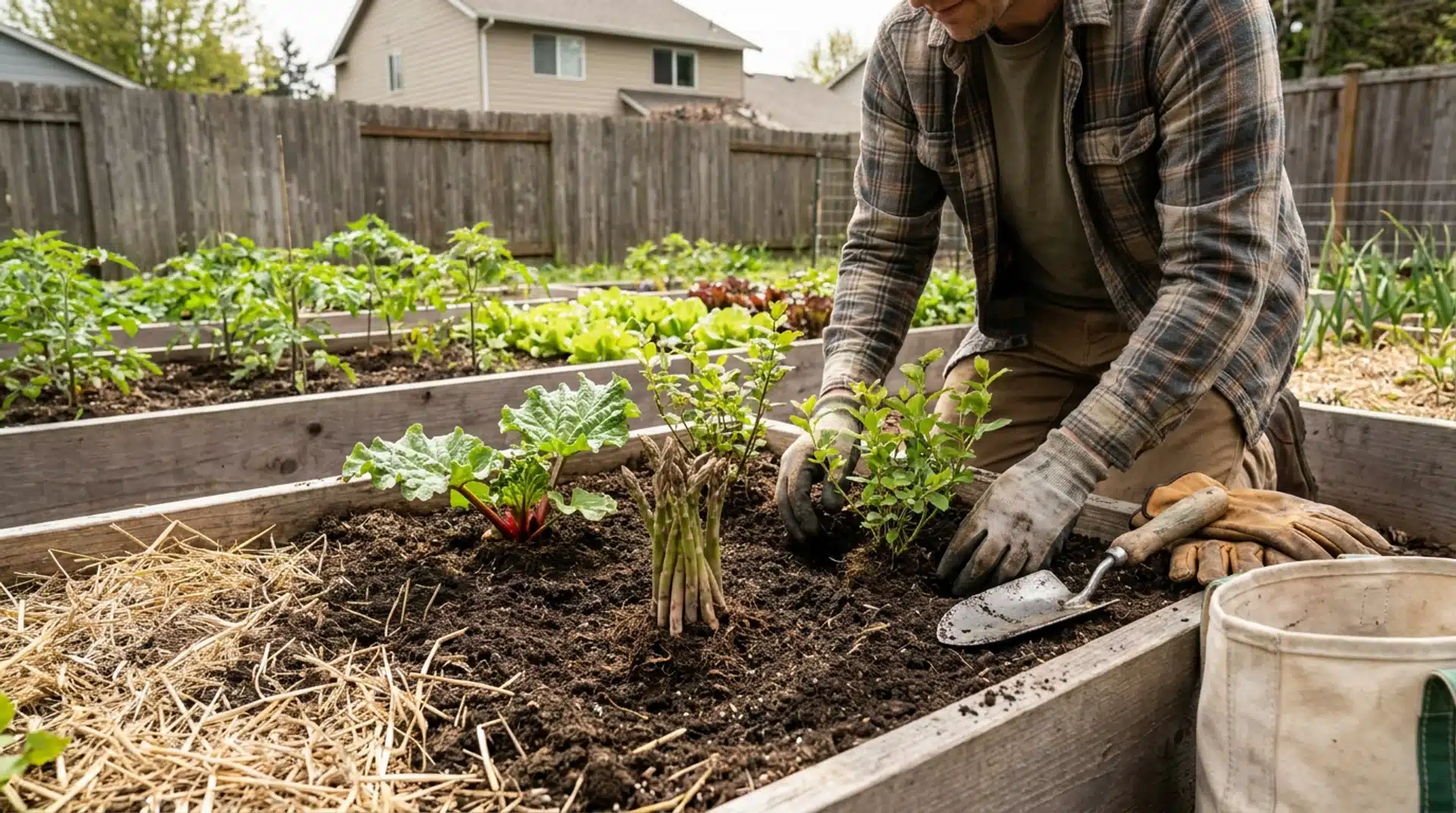
Asparagus, rhubarb, and fruit bushes go in the ground first because they stay in the same spot for years.
Once planted, you will not move them again. Place them along the edges or one end of the garden so they will not shade shorter crops later.
Asparagus takes two to three years before you get a real harvest, so plant it early and eat sooner.
Step 8: Choose What Vegetables to Grow Based on Your Space
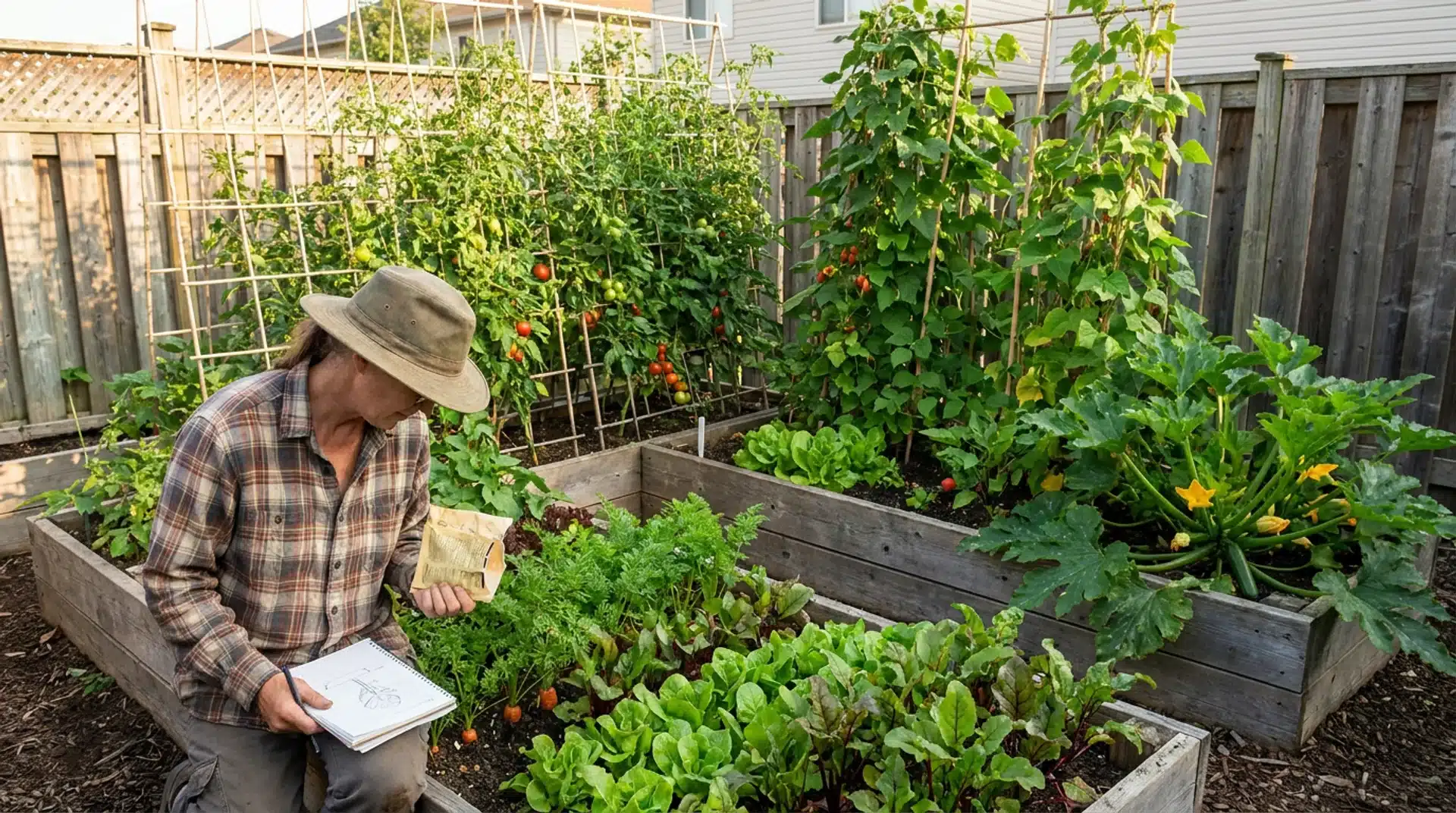
Start with what your family actually eats, then think about space. In a small garden, climbing beans, zucchini, tomatoes, salad greens, carrots, and beets give the best return per square foot.
Beans and tomatoes grow vertically, which saves space on the ground. Salad greens can be cut again and again.
One or two zucchini plants will feed more than most families can eat. Skip space-hungry crops like corn unless you have room to spare.
Step 9: Use a Planting Plan to Avoid Overcrowding
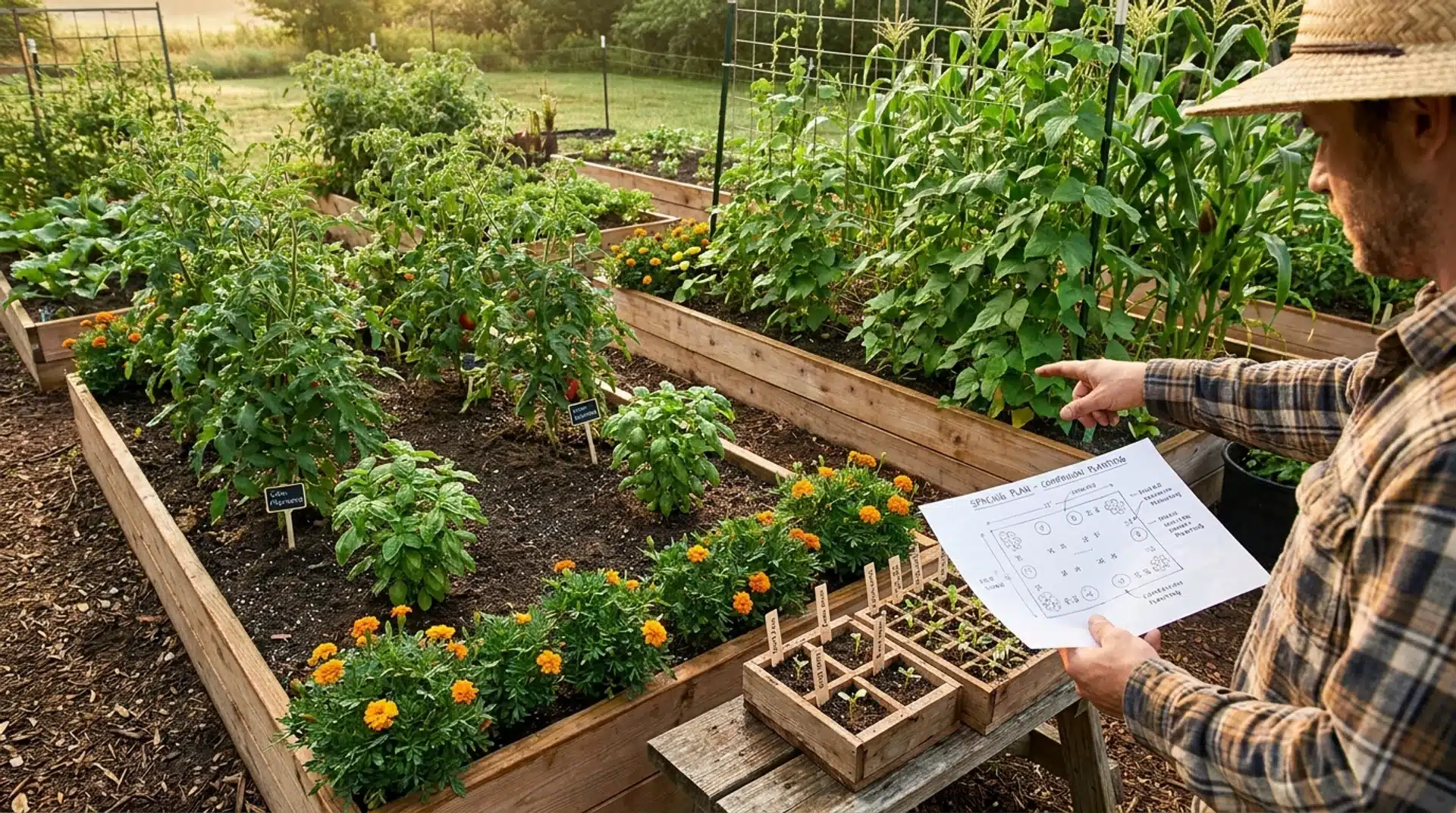
Overcrowding is the most common beginner mistake. Plants look small in trays at the garden center, but two months later, they fight each other for light and air.
Use the spacing listed on the seed packet or transplant tag, and stick to it.
A simple grid sketch showing where each crop goes, with spacing noted, takes twenty minutes and saves trouble later. Companion planting helps too, like basil near tomatoes.
Step 10: Sow, Plant, and Set Your Harvest Timeline
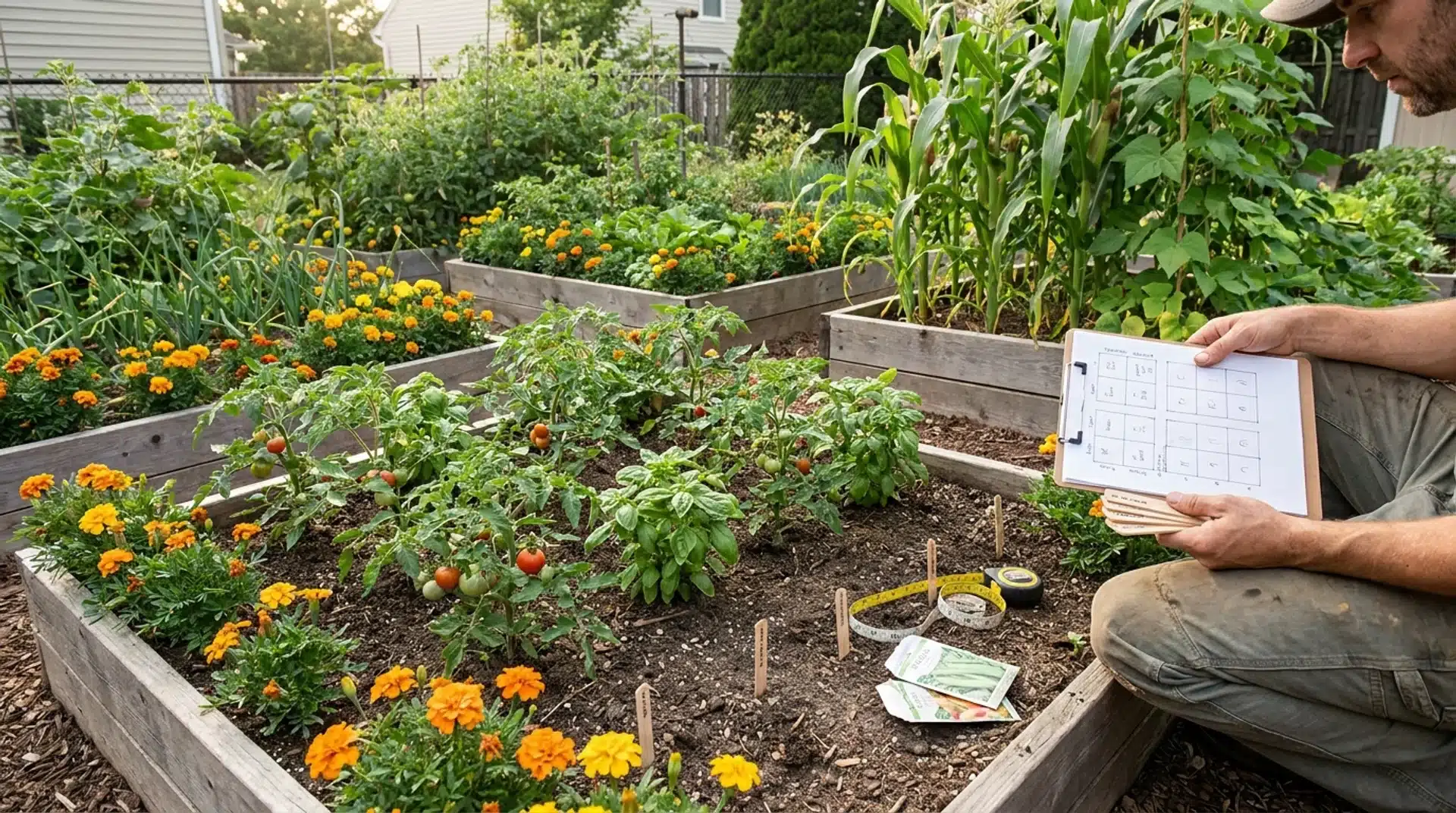
Know your last frost date for your growing zone before you sow anything. Your local extension office or almanac can give you this by zip code.
Cold-tolerant crops like lettuce, peas, and kale go in early. Warm-season crops like tomatoes, peppers, and beans wait until after the last frost.
Write down your sowing dates and harvest windows on a calendar so you avoid planting too early.
Video Reference
I’d like to give credit to GrowVeg for their informative video, which served as a reference for this guide.
Cost and Budget Breakdown for Starting a Vegetable Garden
Starting a vegetable garden does not have to cost a lot. Here is a realistic breakdown. For most US households, a first-year vegetable garden runs between $100 and $300, depending on size and setup choices:
| Item | Cost Range |
|---|---|
| Basic seed-starting supplies | $20 – $40 |
| Soil and compost | $40 – $80 |
| Raised bed frame | $30 – $100 |
| Watering setup | $25 – $60 |
| Tools | $40 – $80 |
| Total (estimated) | $155 – $360 |
Year two costs drop by half or more since most tools last many seasons, and your own compost starts replacing bought bags. The payback in fresh produce typically covers the initial investment by midsummer.
Common Mistakes When Starting a Vegetable Garden
Avoid these beginner errors to give your vegetable garden the best possible start.
- Picking the wrong location: A shady spot with poor drainage will not produce a good harvest, no matter how much effort you put in. Get the location right first.
- Skipping weed control before planting: Weeds that are already in the soil will grow faster than your vegetables. Deal with them before you plant, not after.
- Overplanting in the first year: A smaller, well-managed garden produces more food and less stress than a large, neglected one. Start with two or three raised beds maximum.
- Ignoring soil preparation: Seeds and transplants planted into compacted, nutrient-poor soil struggle from the start. Soil prep is not optional.
- No water plan: Going into summer without a reliable, convenient water setup leads to inconsistent watering and stressed plants. Sort this out before it gets hot.
Pro Tips for Starting a Vegetable Garden the Right Way
These small habits separate gardens that thrive from ones that struggle; pick them up before you plant your first seed.
- Start in winter: Planning and prepping beds in late fall or winter means you are ready to plant the moment your last frost date passes.
- Use the no-dig method: Leaving soil structure intact by layering compost on top rather than tilling it protects soil biology, reduces weed germination, and saves real physical effort.
- Track sunlight before you commit to a spot: Walk your yard at 9 AM, noon, and 3 PM on a clear day and note where the sun actually falls. Do this before you build anything.
- Keep your paths wide enough for a wheelbarrow: Tight paths sound fine in planning and become aggravating fast once you are hauling compost and harvests through them all season.
- Build compost from day one: Every kitchen scrap, grass clipping, and pulled weed that goes into a compost bin is a free soil amendment for next season. Start the habit immediately.
Seasonal Maintenance Schedule for Your Vegetable Garden
A vegetable garden needs year-round maintenance like soil prep, seed planting, protecting plants, and enhancing beds to stay healthy and fruitful.
Use this seasonal schedule as a simple guide to know what to focus on and keep your garden thriving with less stress.
| Season | Key Tasks |
|---|---|
| Winter | Plan the garden layout, order seeds, improve the soil, start composting, and prepare the water systems. |
| Early Spring | Start seeds indoors and plant cool-weather crops like peas, lettuce, and spinach. |
| Late Spring | Transplant warm-season plants, add mulch, and prepare beds for summer growth. |
| Summer | Water regularly, harvest often, control pests, and feed heavy crops with compost. |
| Fall | Remove old plants, add compost, protect soil with mulch, and save seeds. |
Additional Resources for New Vegetable Gardeners
Here are some helpful starting points if you’d like to look any of the steps further:
- USDA Plant Hardiness Zone Map: Look up your zone by zip code to pin down accurate frost dates.
- USDA National Agricultural Library: Vegetable Gardening: Factsheets on site selection, soil prep, and planting basics.
- University of Maryland Extension: How to Start a Vegetable Garden: State extension guidance on soil testing and bed prep.
- The Old Farmer’s Almanac: Vegetable Gardening for Beginners: A simple beginner’s plan with regional planting charts.
Conclusion
Starting a vegetable garden is one of the most rewarding projects you can take on as a homeowner.
You do not need a large yard, a big budget, or any prior experience. What you need is the right location, decent soil, and a weed-control plan executed in the right order.
The gardeners I have seen struggle most are the ones who skipped the planning stage and tried to figure it out as they went.
Success comes down to a few hours of winter planning before you ever break ground.
Follow the ten steps in this guide, avoid the common mistakes, and your first harvest will come faster and heavier than you expect. Start this weekend.
Frequently Asked Questions
How Deep Should a Raised Bed Be for a Vegetable Garden?
Most vegetables grow well in 10 to 12 inches of soil depth, though root crops like carrots and potatoes need at least 18 inches to develop properly.
What Vegetables Grow Best Together in a Raised Bed?
Tomatoes pair well with basil and carrots, beans fix nitrogen that benefits corn and squash, and marigolds planted along borders deter common pests across most crops.
When is the Best Time to Start a Vegetable Garden in the US?
Most US gardeners start seeds indoors 6 to 8 weeks before their last frost date, with outdoor planting beginning in March through May, depending on the USDA hardiness zone.