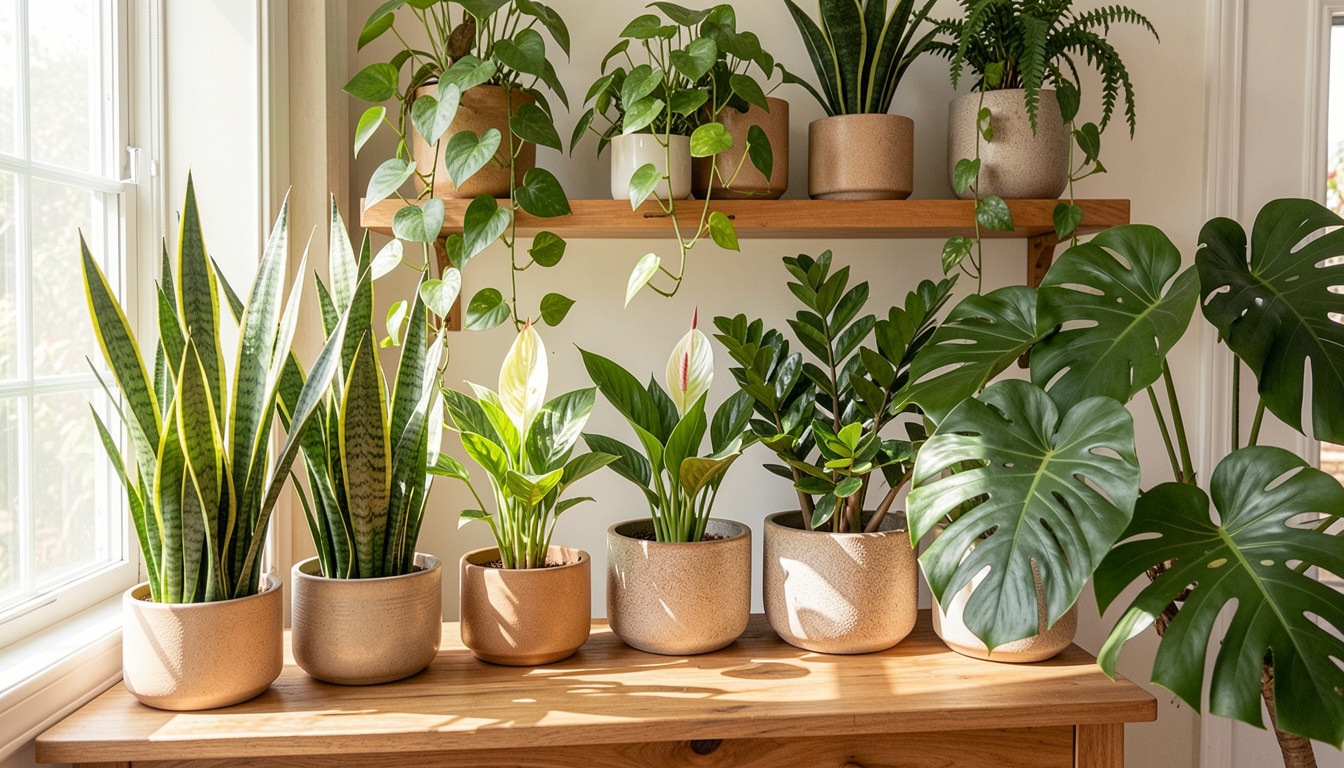
Choosing the best house plants depends on real home conditions rather than appearance alone. Light levels, humidity, space, and daily routines directly decide plant survival.
Indoor plants often fail when selection is based on looks instead of environmental compatibility. A plant thriving in one space may decline in another due to differences in light exposure, watering patterns, or airflow.
The best house plants are those that adapt to indoor settings, tolerate irregular care, and maintain steady growth with minimal intervention.
This post presents community-recommended indoor plants and reliable options that align with different home conditions and care levels.
Best House Plants for Beginners
These plants are forgiving of irregular watering, adaptable to a range of light conditions, and resilient enough to survive the learning curve. Start here.
1. Snake Plant
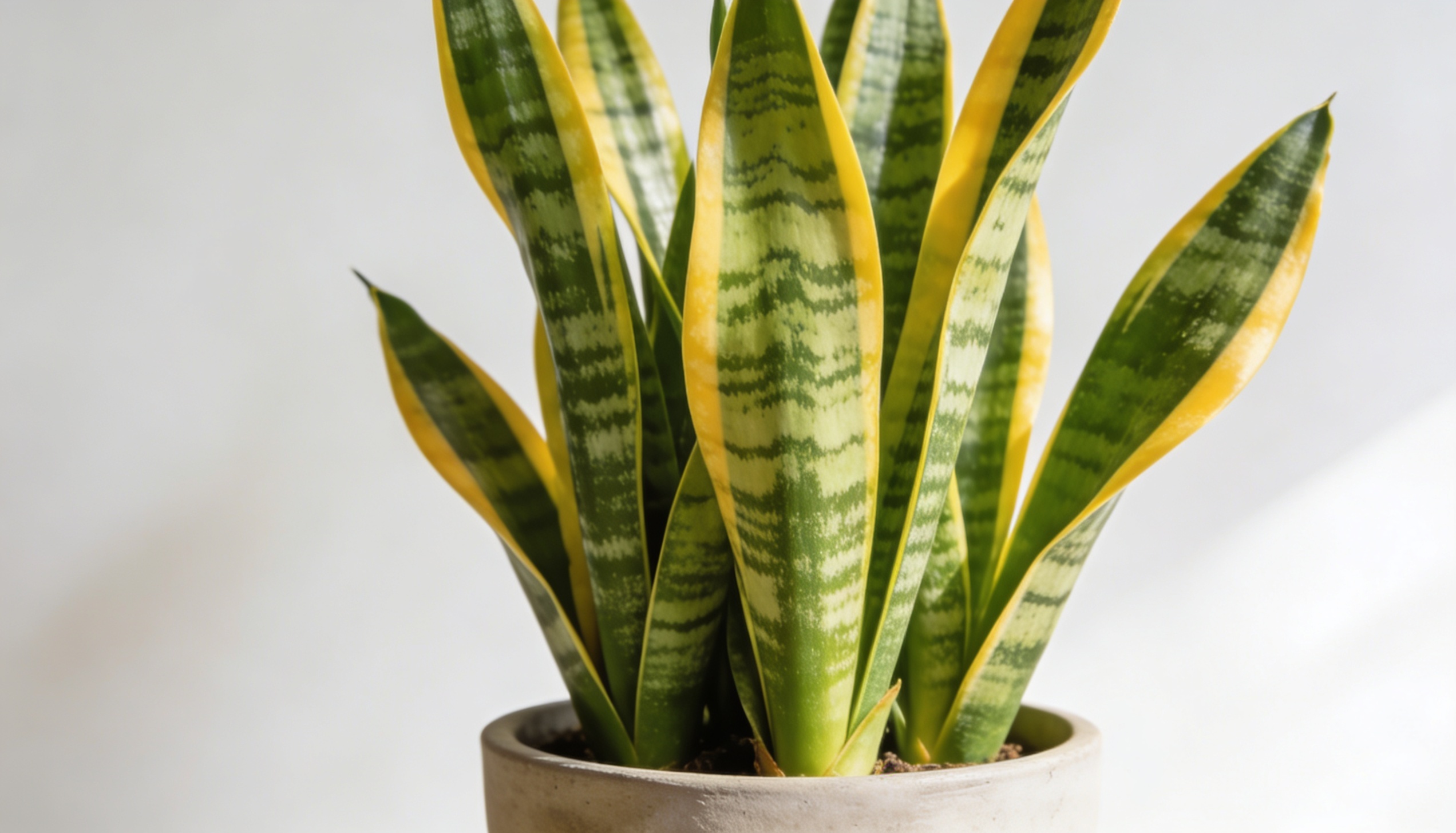
- Botanical Name: Dracaena trifasciata (reclassified, though still widely sold as Sansevieria)
- Light: Low to bright indirect light
- Water: Every 3–6 weeks; reduce further in winter.
- Humidity: Tolerates dry air well.
- Growth Rate: Slow to moderate
- Toxicity: Mildly toxic to cats and dogs (causes nausea/vomiting).
- Difficulty: ★☆☆☆☆
Snake Plant stores moisture in its thick leaves, allowing it to survive long dry periods without visible stress. It remains stable even in low-light corners where many plants struggle to grow.
Its upright structure makes it suitable for compact spaces, entryways, and modern interiors where minimal maintenance is preferred.
2. Zz Plant
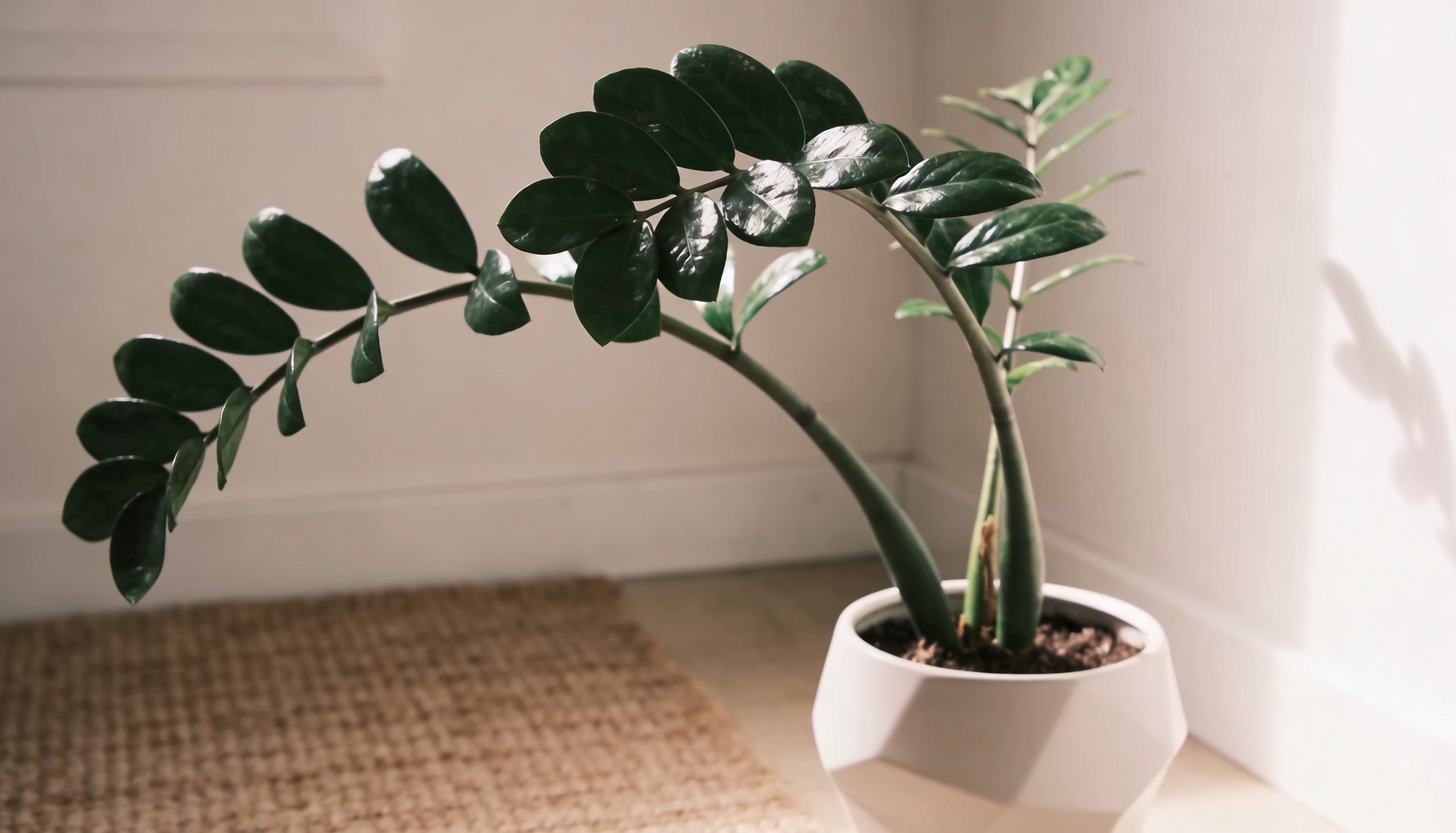
- Botanical Name: Zamioculcas zamiifolia
- Light: Low to bright indirect light
- Water: Every 2–4 weeks; stores water in underground rhizomes
- Humidity: Tolerates dry air
- Growth Rate: Slow
- Toxicity: Mildly toxic. Wash hands after handling; keep away from children and pets.
- Difficulty: ★☆☆☆☆
ZZ Plant survives on very little water thanks to its thick rhizome system, which efficiently stores moisture. It remains healthy even when watering schedules are irregular.
Its glossy leaves maintain visual appeal in low-light interiors, making it suitable for offices and shaded rooms.
3. Pothos
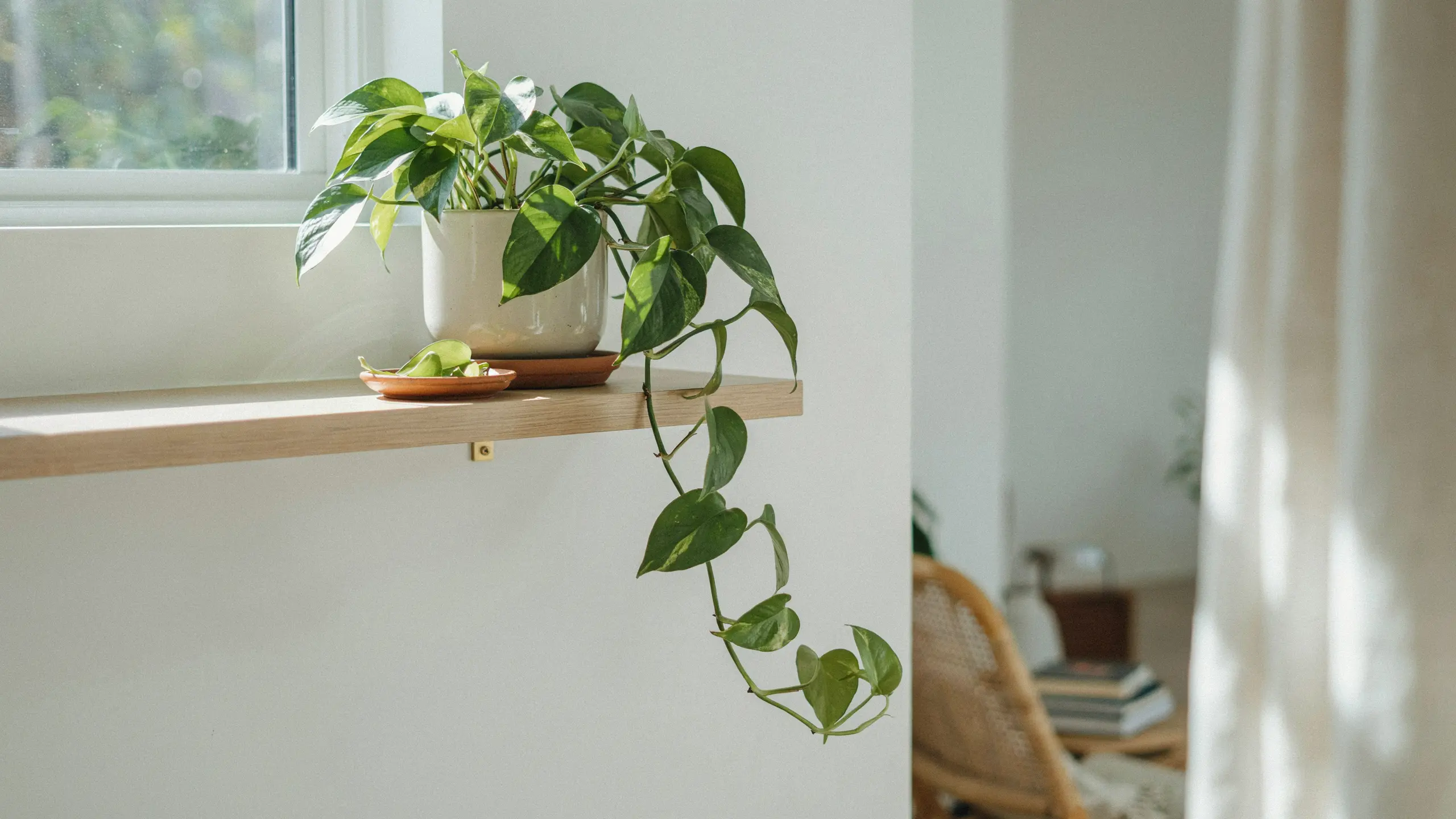
- Botanical Name: Epipremnum aureum
- Light: Low to bright indirect light
- Water: Every 1–2 weeks; let soil dry out between waterings.
- Humidity: Adaptable; not fussy
- Growth Rate: Fast
- Toxicity: Mildly toxic to cats, dogs, and humans if ingested.
- Difficulty: ★☆☆☆☆
Pothos grows in long trailing vines that adjust easily to shelves, hanging pots, or wall displays. It continues to grow steadily even when care conditions fluctuate.
Its ability to propagate quickly in water or soil makes it useful for expanding indoor greenery without additional cost.
4. Spider Plant
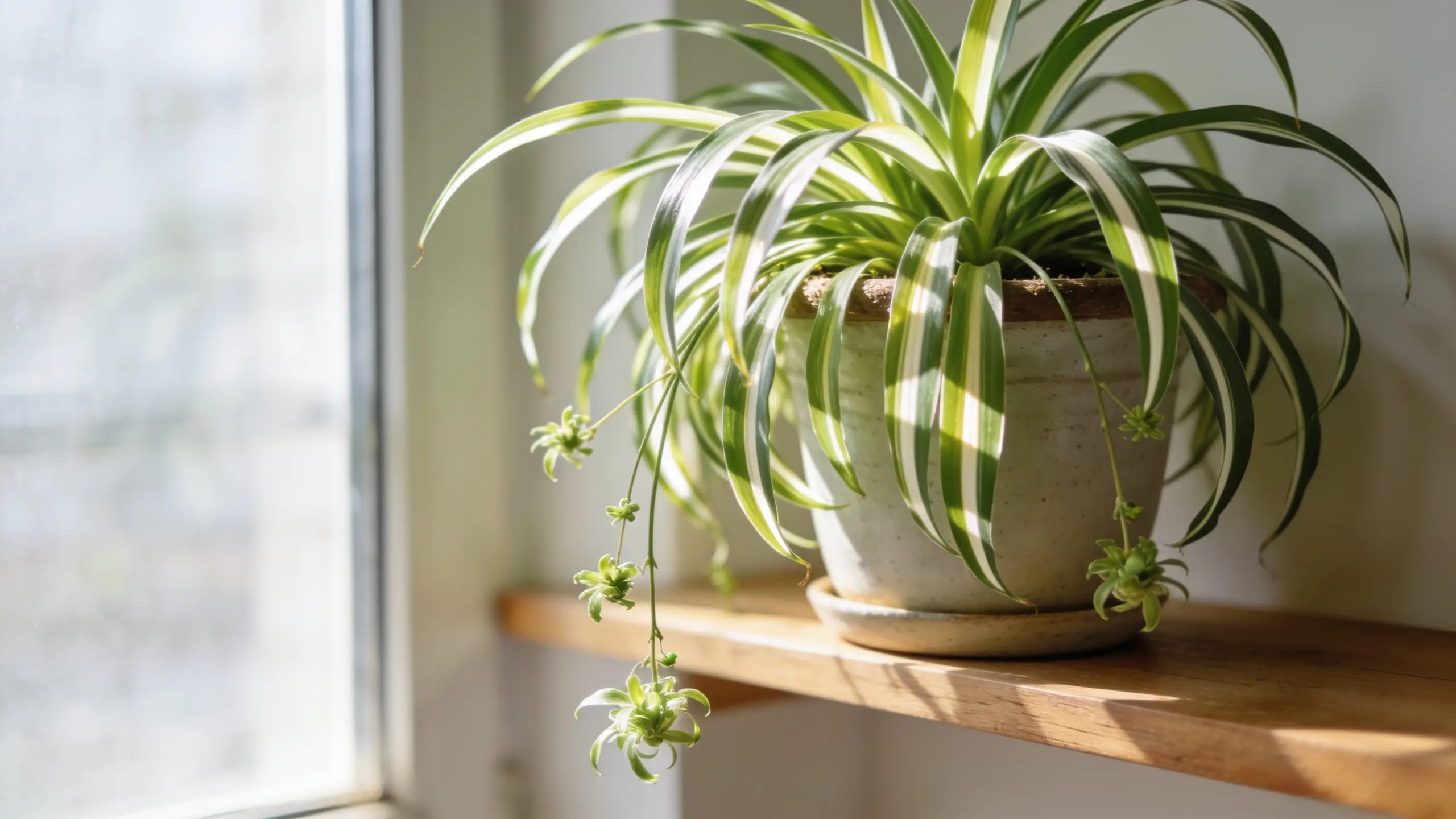
- Botanical Name: Chlorophytum comosum
- Light: Indirect light; tolerates low light
- Water: Every 1–2 weeks; tolerates irregular watering
- Humidity: Adaptable
- Growth Rate: Moderate to fast
- Toxicity: Non-toxic to cats and dogs
- Difficulty: ★☆☆☆☆
Spider Plant produces arching leaves and small plantlets that grow naturally from the mother plant. It adapts well to indoor environments with changing light and humidity levels.
Its fast reproductive cycle makes it visually rewarding, especially for beginners who can see visible growth.
5. Rubber Plant
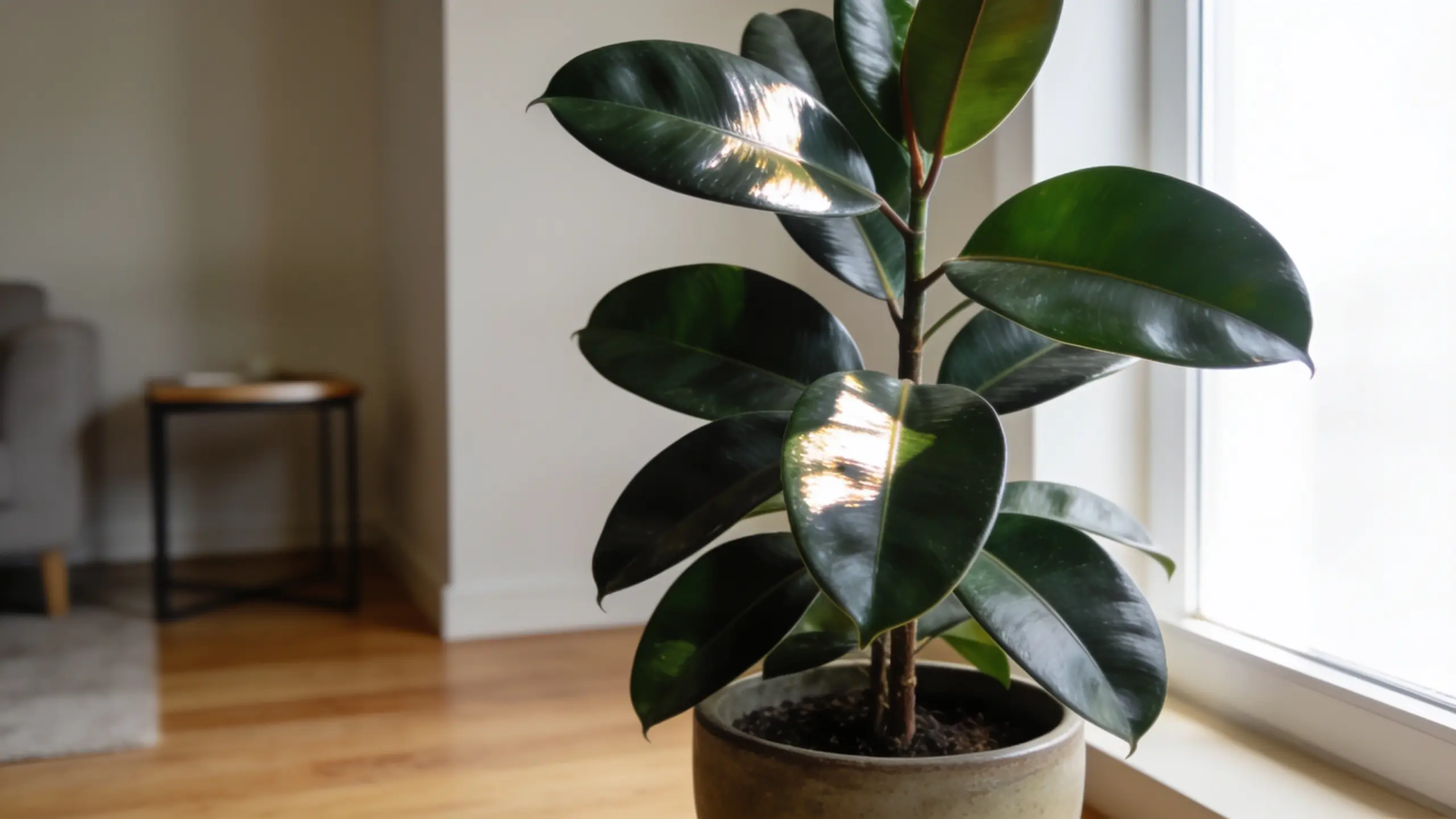
- Botanical Name: Ficus elastica
- Light: Bright indirect light; some direct morning light is fine
- Water: Every 1–2 weeks; let the top inch of soil dry out
- Humidity: Average household humidity is fine
- Growth Rate: Moderate
- Toxicity: Mildly toxic to pets and humans
- Difficulty: ★★☆☆☆
Rubber Plant develops large, glossy leaves that give a structured, tree-like appearance indoors. It responds well to stable lighting and consistent but moderate watering.
When placed in bright indoor corners, it develops into a strong focal plant that adds height and depth to interiors.
Best House Plants for Low-Light Rooms
No plants grow well in total darkness. What exists are plants that slow down gracefully rather than die fast. These are the best of them.
6. Cast Iron Plant (Aspidistra Elatior)
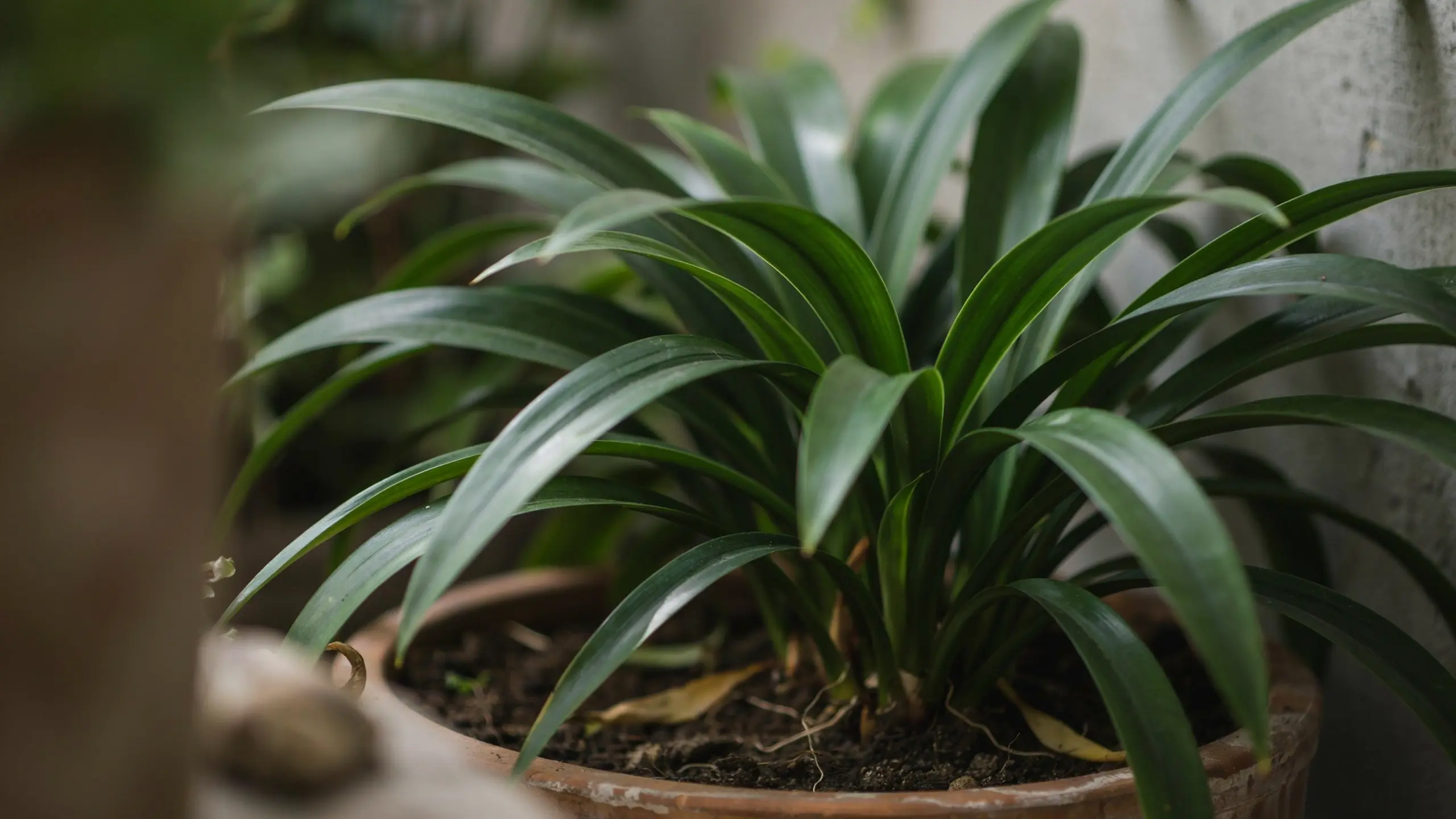
- Botanical Name: Aspidistra elatior
- Light: Very low light; tolerates near-darkness
- Water: Every 2–3 weeks; highly tolerant of irregular watering
- Humidity: Tolerates dry, cold air
- Growth Rate: Very slow
- Toxicity: Non-toxic to cats and dogs
- Difficulty: ★☆☆☆☆
Cast Iron Plant survives where most indoor plants gradually lose strength, making it suitable for corners, hallways, and low-exposure rooms. Its growth pattern remains steady even under neglect.
Its foliage remains consistent in color and structure, helping maintain visual greenery in spaces with minimal natural light.
7. Aglaonema (Chinese Evergreen)
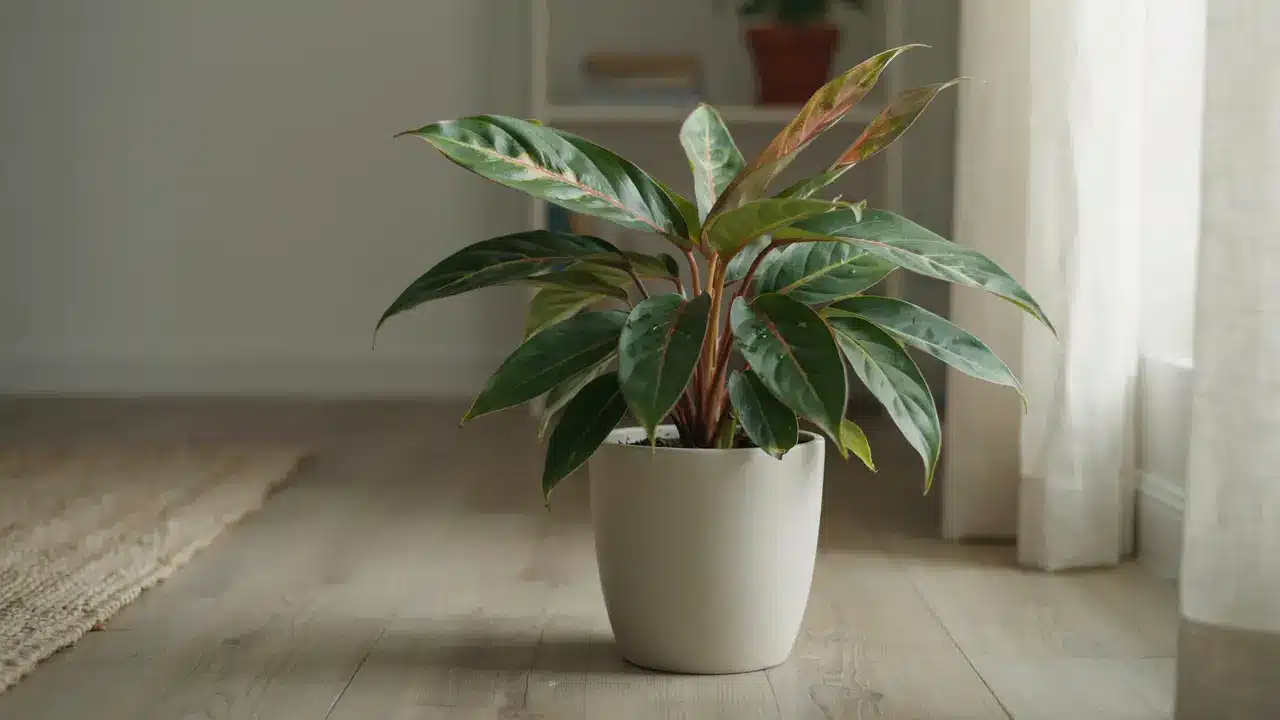
- Botanical Name: Aglaonema spp.
- Light: Low to medium indirect light (darker-leaved varieties handle the lowest light).
- Water: Every 1–2 weeks; tolerates some drought
- Humidity: Prefers moderate humidity; tolerates average
- Growth Rate: Slow to moderate
- Toxicity: Toxic to cats and dogs
- Difficulty: ★★☆☆☆
Aglaonema is known for patterned foliage that retains color even in dim interiors. It adapts well to shifts in indoor lighting without a rapid decline.
Its decorative leaf structure makes it a common choice for interior styling in offices and shaded living areas.
8. Dracaena
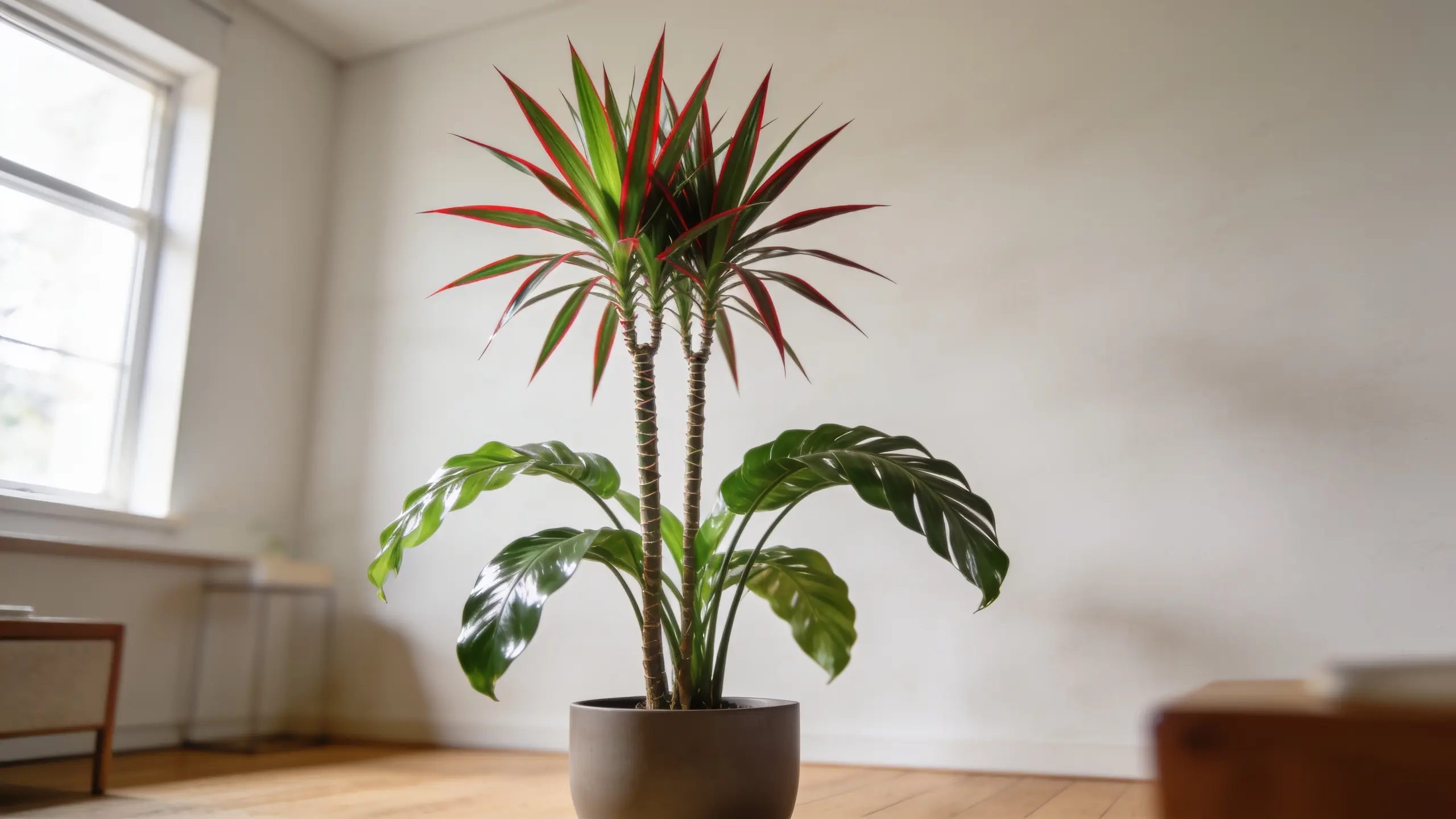
- Botanical Name: Dracaena marginata, Dracaena fragrans
- Light: Low to medium indirect light
- Water: Every 2–3 weeks; very drought-tolerant
- Humidity: Tolerates dry air
- Growth Rate: Slow
- Toxicity: Toxic to cats and dogs, causes vomiting, weakness, dilated pupils; avoid in pet households
- Difficulty: ★★☆☆☆
Dracaena grows upright, making it useful for adding height to rooms with limited space and light. It maintains structure even when growth conditions are not ideal.
Its slow growth reduces maintenance needs, making it suitable for long-term indoor placement.
9. Parlor Palm
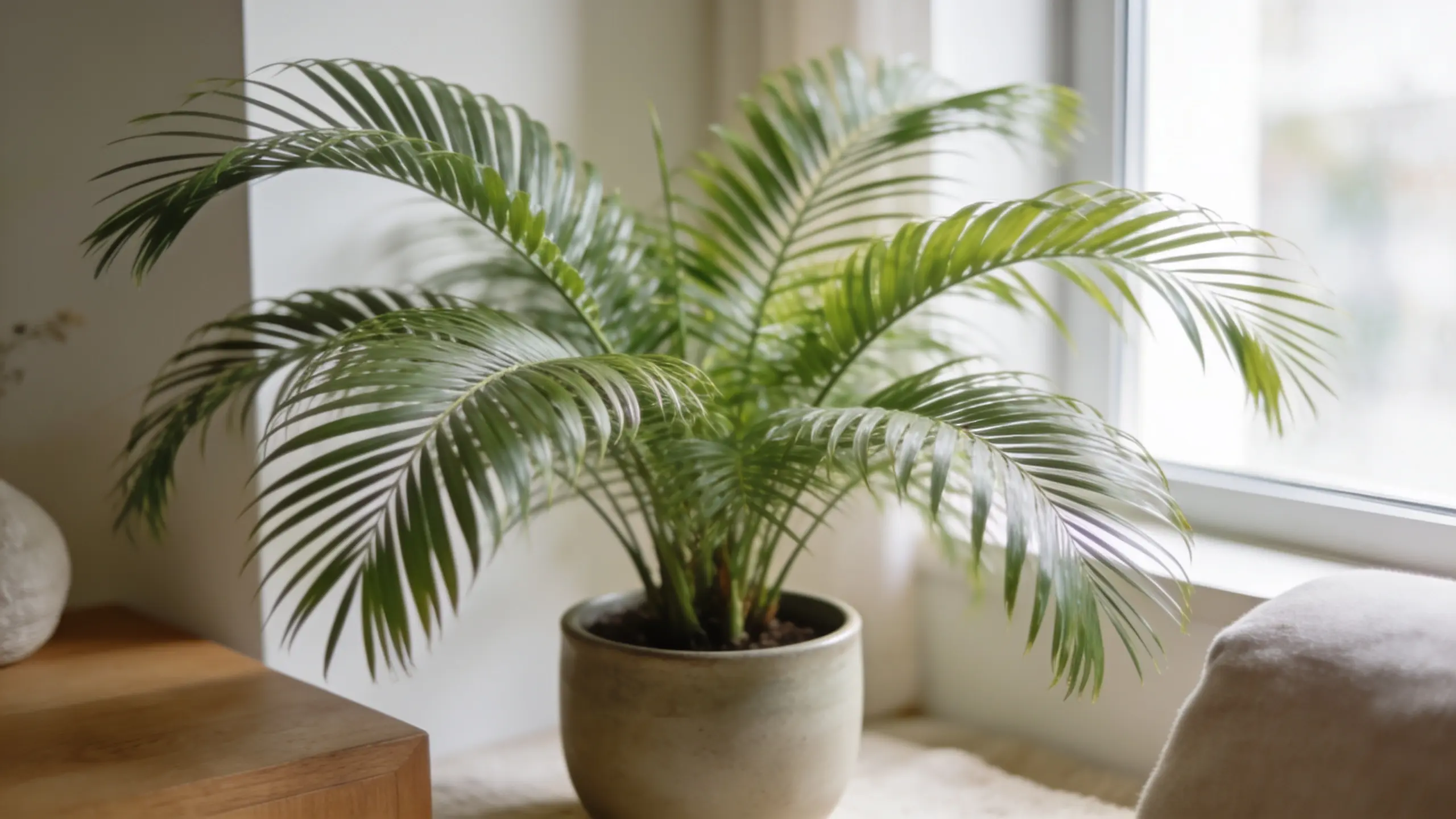
- Botanical Name: Chamaedorea elegans
- Light: Low to medium indirect light
- Water: Every 1–2 weeks; do not let roots sit in water
- Humidity: Prefers moderate to high humidity
- Growth Rate: Slow
- Toxicity: Non-toxic to cats and dogs
- Difficulty: ★★☆☆☆
Parlor Palm brings a soft tropical appearance that works well in shaded corners and interior spaces. It maintains steady leaf growth without requiring frequent intervention.
Its structured fronds make it a popular indoor decorative plant for calm, natural-looking spaces.
10. Haworthia
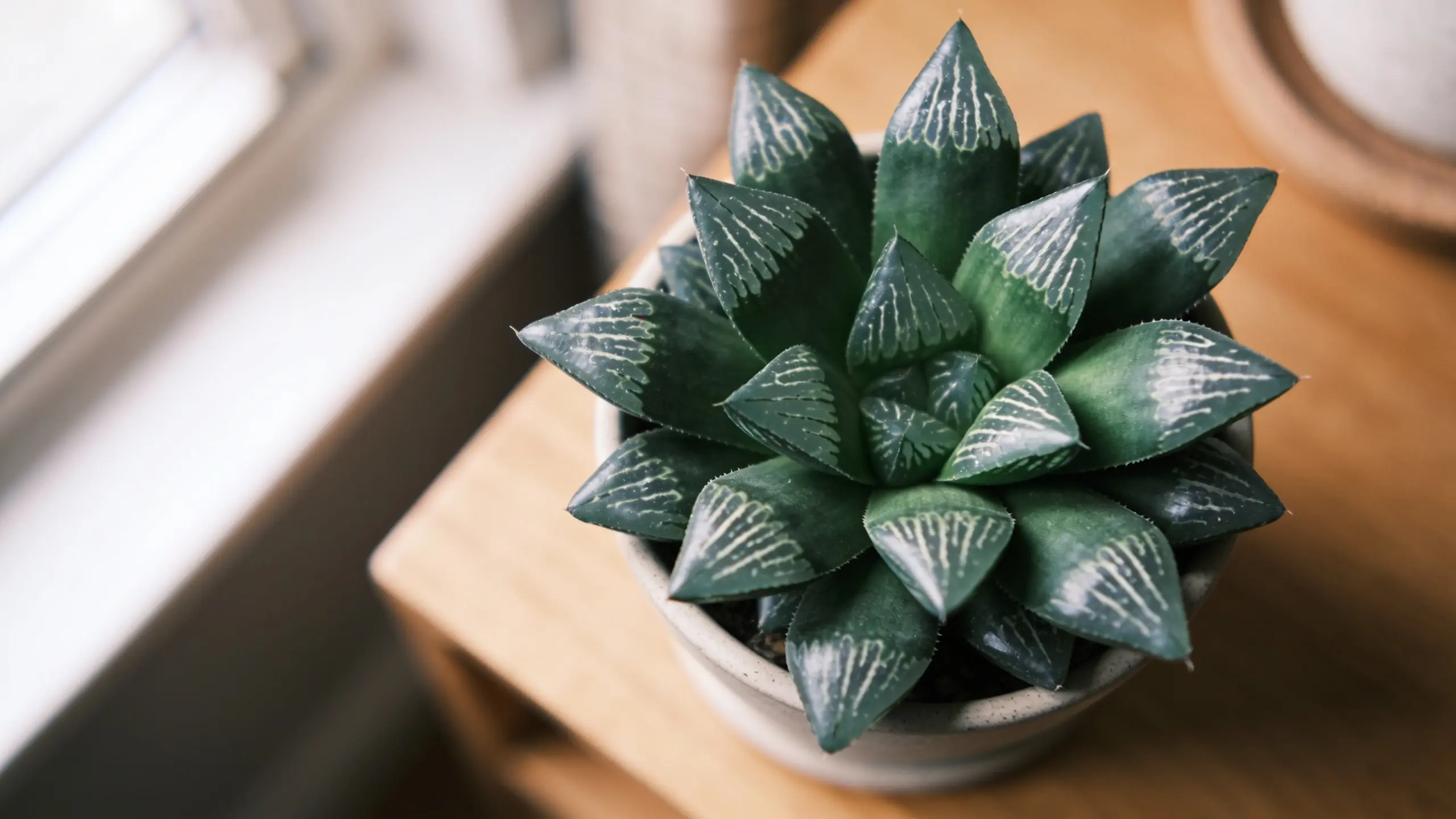
- Botanical Name: Haworthia attenuata and related species
- Light: Bright indirect light; tolerates a windowsill with minimal direct sun
- Water: Every 3 weeks at most; drought-tolerant
- Humidity: Tolerates dry air
- Growth Rate: Very slow
- Toxicity: Non-toxic to cats and dogs
- Difficulty: ★☆☆☆☆
Haworthia is a compact succulent that stores water efficiently, allowing it to survive long dry periods. It performs reliably in indoor lighting near windows.
Its small size makes it ideal for desks, shelves, and tight spaces where larger plants cannot fit.
Best House Plants for Busy People
These plants can handle irregular watering, low attention, and the kind of benign neglect that comes from a full schedule.
11. Hoya
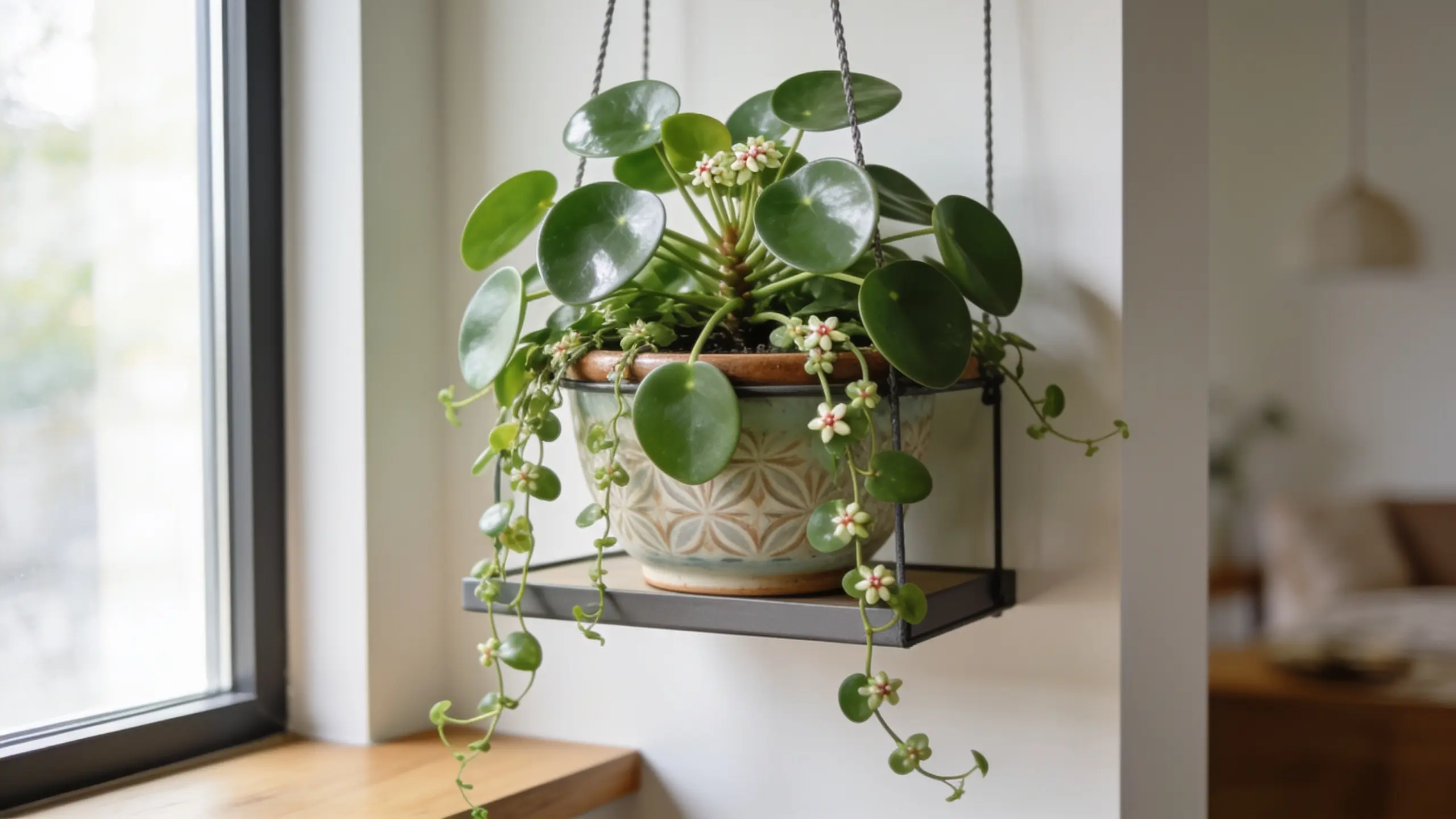
- Botanical Name: Hoya carnosa, Hoya kerrii, Hoya pubicalyx, and many others
- Light: Bright indirect light; tolerates medium light
- Water: Every 2–3 weeks; very drought-tolerant once established
- Humidity: Tolerates average household humidity
- Growth Rate: Slow to moderate; faster in brighter light
- Toxicity: Non-toxic to cats and dogs
- Difficulty: ★★☆☆☆
Hoya develops thick, waxy leaves that store moisture, allowing it to withstand long gaps between watering. It continues to grow steadily without frequent maintenance demands.
Once established, it adapts well to indoor environments and rewards patience with trailing vines and occasional flowering under good light.
12. Aloe Vera
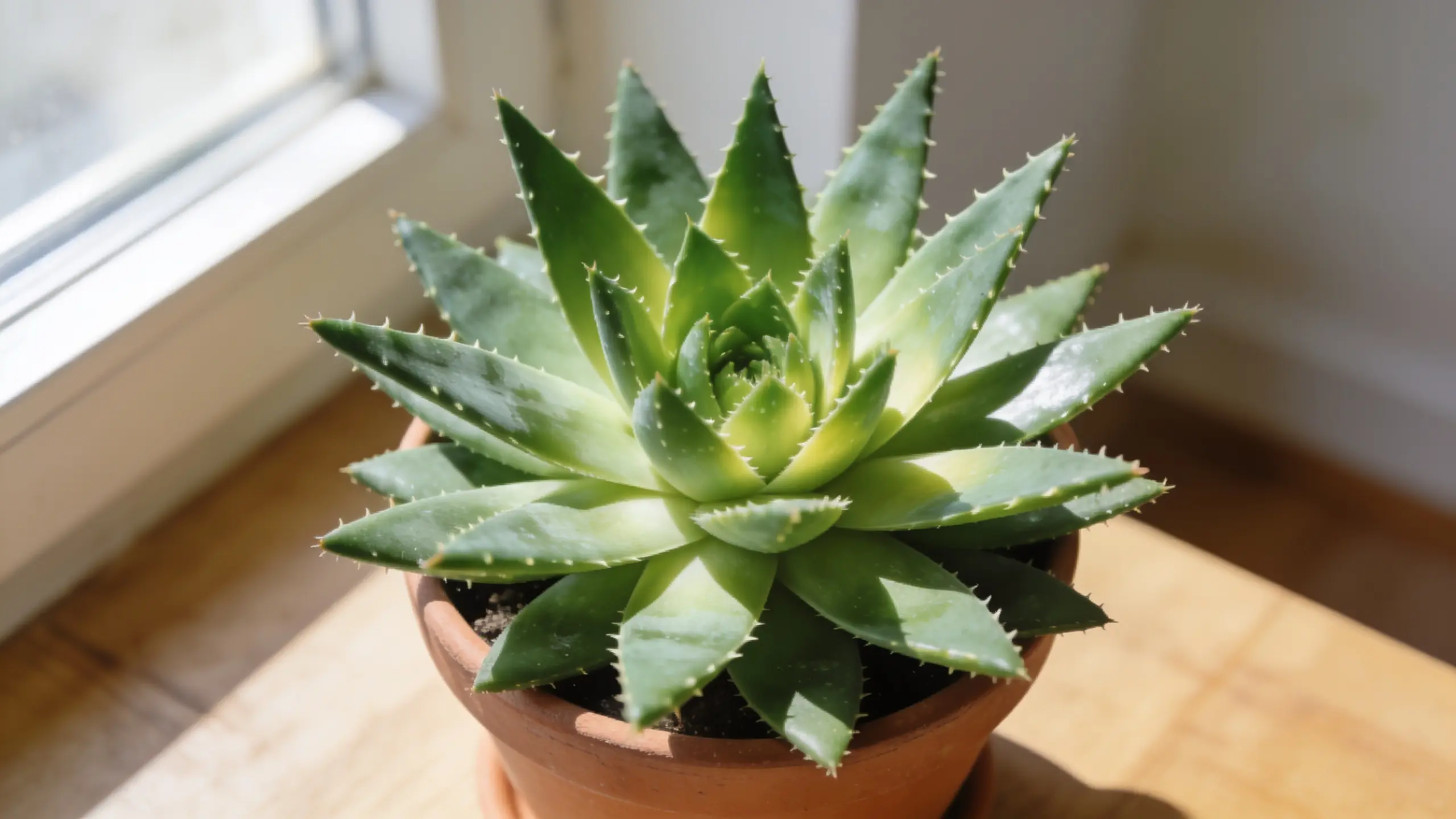
- Botanical Name: Aloe barbadensis Miller
- Light: Bright indirect to some direct light
- Water: Every 2–3 weeks; allow soil to dry completely between waterings
- Humidity: Tolerates dry air
- Growth Rate: Slow to moderate
- Toxicity: Toxic to cats and dogs if ingested; gel is safe for human skin use
- Difficulty: ★☆☆☆☆
Aloe Vera stores water in its fleshy leaves, allowing it to survive extended dry periods without visible stress. It requires minimal intervention once placed in a suitable bright spot.
It is also commonly kept for its gel, which is used for minor skin soothing purposes, adding functional value beyond aesthetics.
13. Ponytail Palm
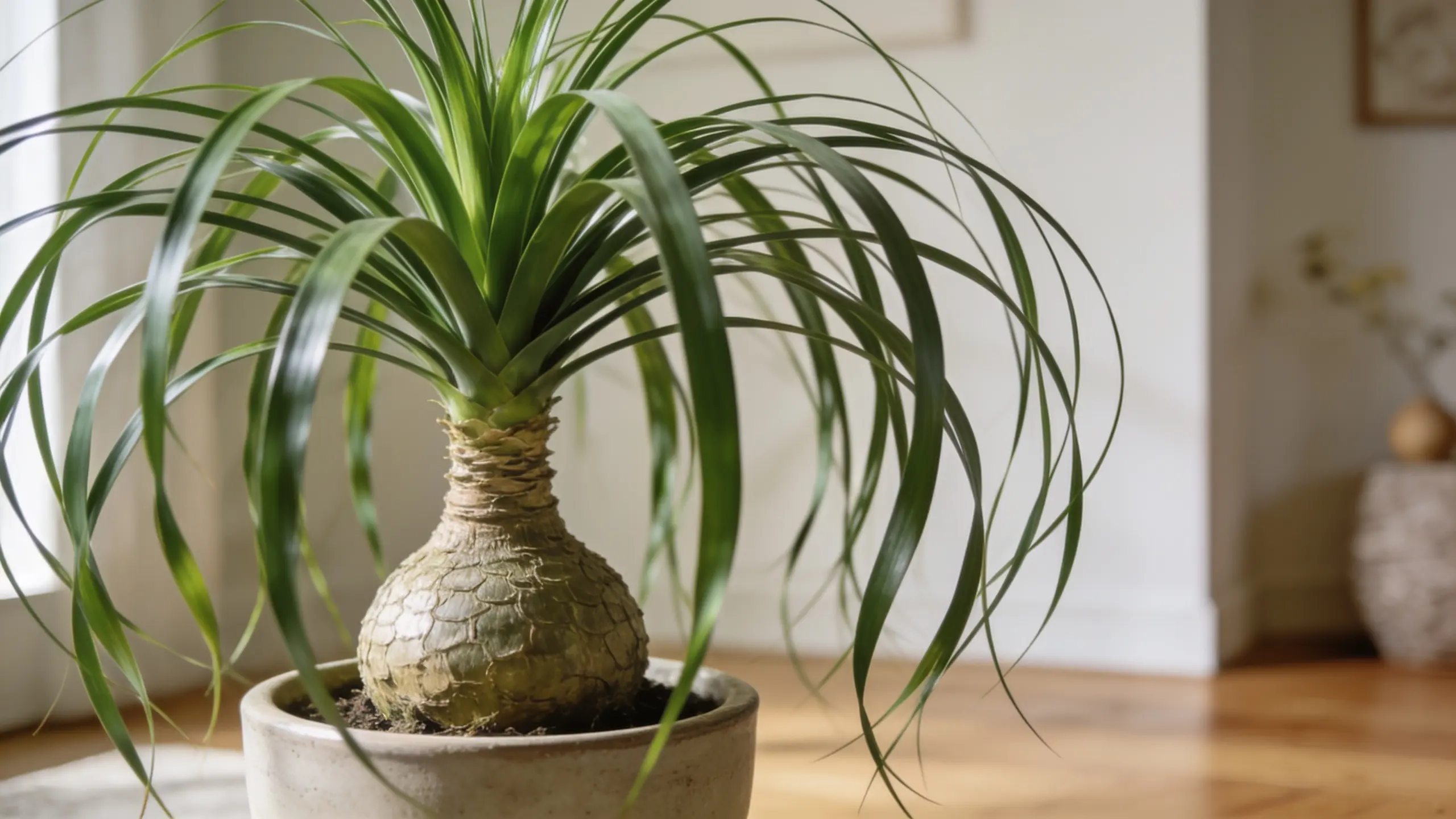
- Botanical Name: Beaucarnea recurvata
- Light: Bright indirect to direct light
- Water: Every 3–4 weeks; stores water in its bulbous trunk
- Humidity: Tolerates dry air
- Growth Rate: Very slow
- Toxicity: Non-toxic to cats and dogs.
- Difficulty: ★☆☆☆☆
Ponytail Palm stores moisture in its swollen trunk, which helps it survive long periods without watering. It maintains a stable structure even in low-maintenance environments.
Its sculptural form makes it suitable for modern interiors where visual impact is needed without frequent care requirements.
Best Fast-Growing House Plants
Fast-growing plants are perfect when you want quick results in your garden or indoor space. These plants establish themselves rapidly, producing fresh leaves, vines, or flowers in a short time.
14. Rhaphidophora Tetrasperma
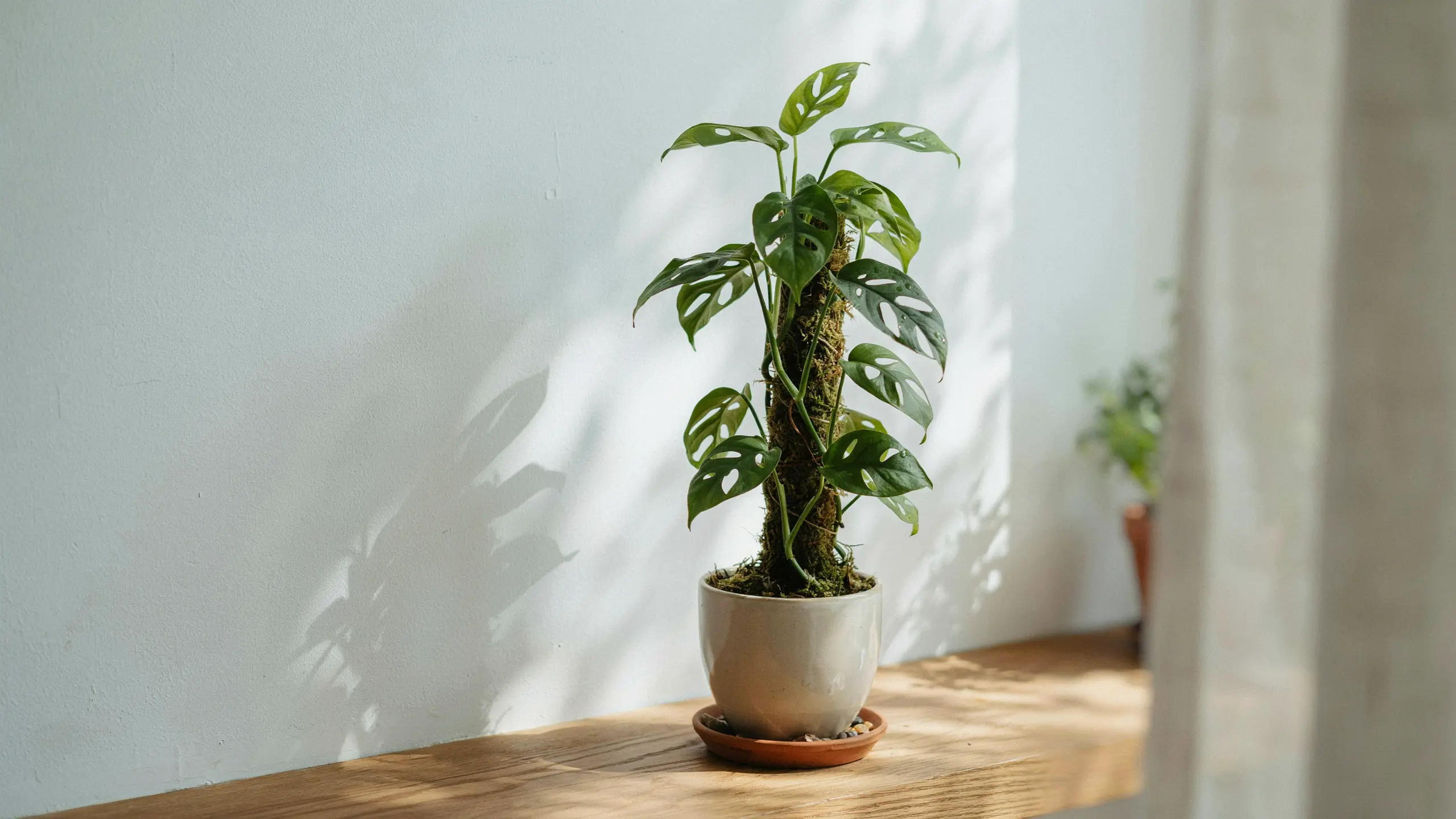
- Botanical Name: Rhaphidophora tetrasperma
- Light: Bright indirect light
- Water: Every 1–2 weeks; do not let roots sit in water
- Humidity: Prefers moderate to high humidity
- Growth Rate: Very fast
- Toxicity: Mildly toxic to pets and humans if ingested
- Difficulty: ★★☆☆☆
Rhaphidophora tetrasperma features split-leaf foliage resembling a miniature Monstera, making it highly desirable for modern interiors. It expands quickly when placed in stable lighting conditions.
Its climbing nature allows it to cover vertical space efficiently, making it suitable for trellises and indoor plant walls.
15. Tradescantia
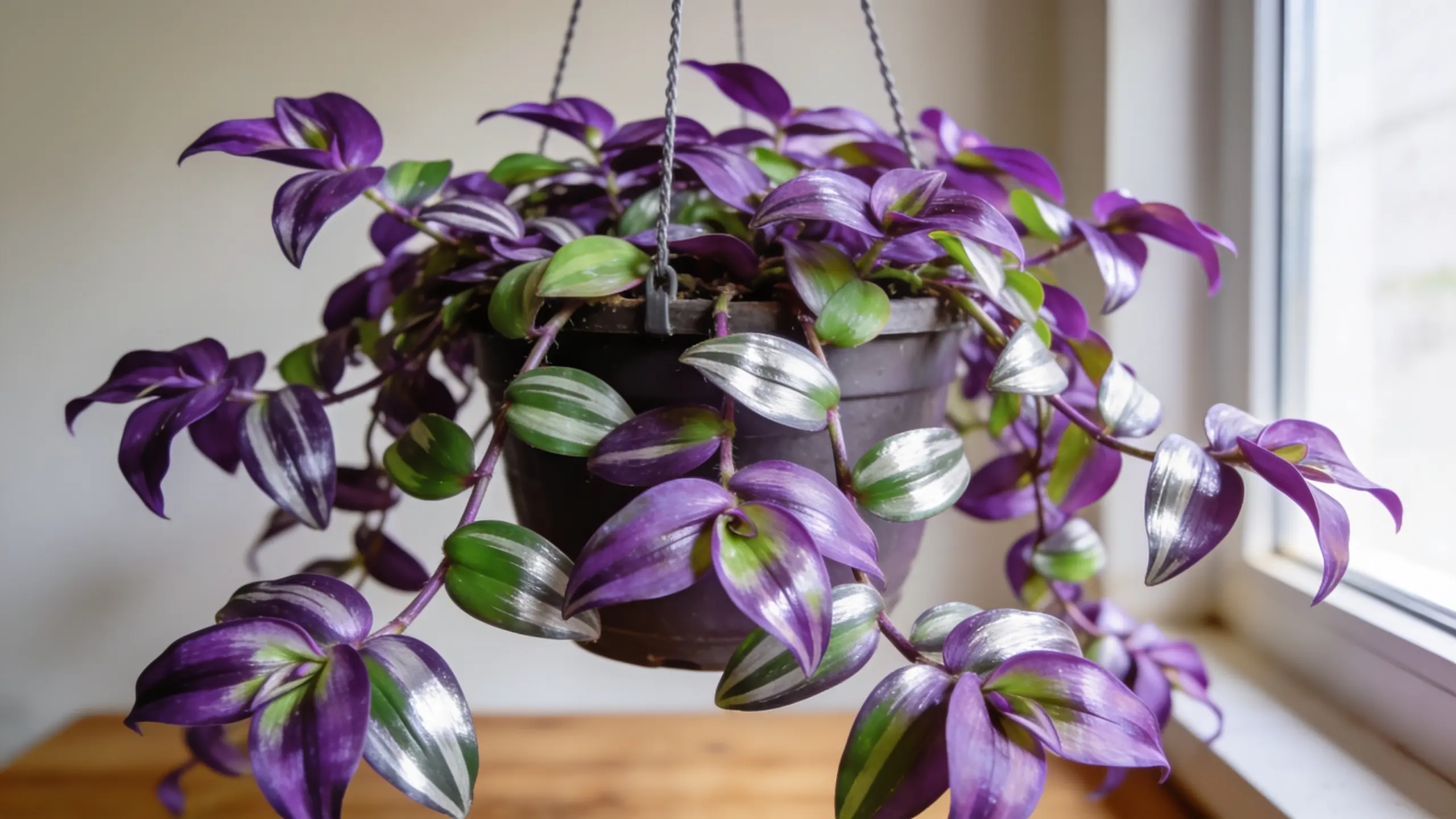
- Botanical Name: Tradescantia zebrina, T. fluminensis, T. pallida
- Light: Bright indirect light; tolerates some lower light
- Water: Every 1 week; keep soil lightly moist
- Humidity: Adaptable
- Growth Rate: Very fast
- Toxicity: Mildly toxic to cats and dogs; causes skin irritation in sensitive individuals
- Difficulty: ★☆☆☆☆
Tradescantia grows rapidly into dense trailing vines with striking leaf colors and patterns. It quickly fills hanging baskets and shelves, making it a popular decorative plant.
Its fast propagation ability allows new growth from cuttings in a short time, making it easy to expand indoor greenery.
16. African Violet
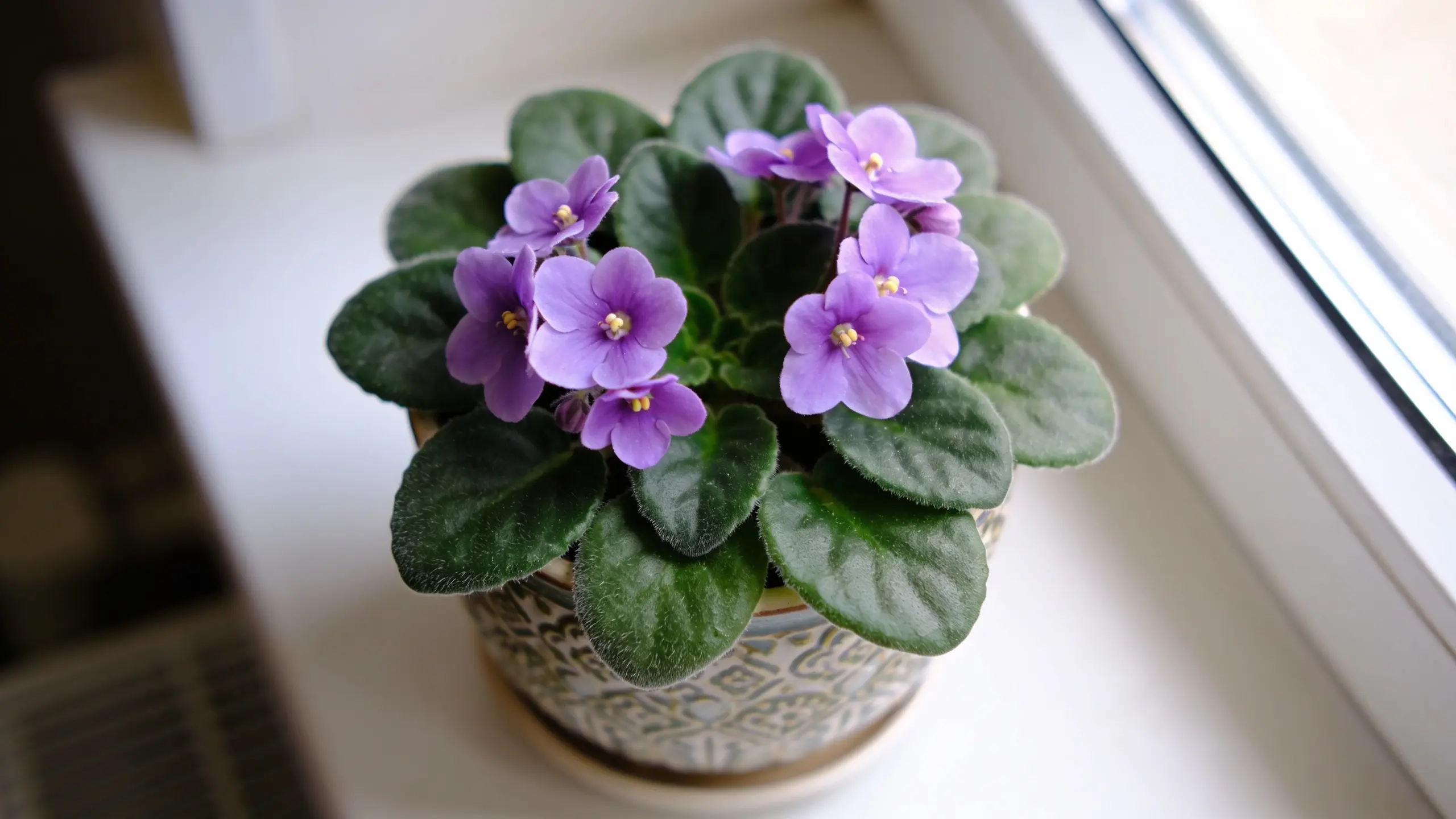
- Botanical Name: Saintpaulia ionantha
- Light: Bright indirect light; no direct sun
- Water: Every 1 week from the bottom (avoid wetting leaves)
- Humidity: Prefers moderate to high humidity
- Growth Rate: Moderate; blooms prolifically
- Toxicity: Non-toxic to cats and dogs
- Difficulty: ★★★☆☆
African Violet produces frequent blooms under stable indoor conditions, adding color to spaces where foliage plants dominate. It grows steadily when care conditions remain consistent.
Its compact size and flowering cycle make it ideal for tabletops and decorative indoor arrangements.
Best House Plants for Small Apartments
Compact in form, big in impact. These plants won’t outgrow a windowsill, shelf, or small room.
17. String of Turtles
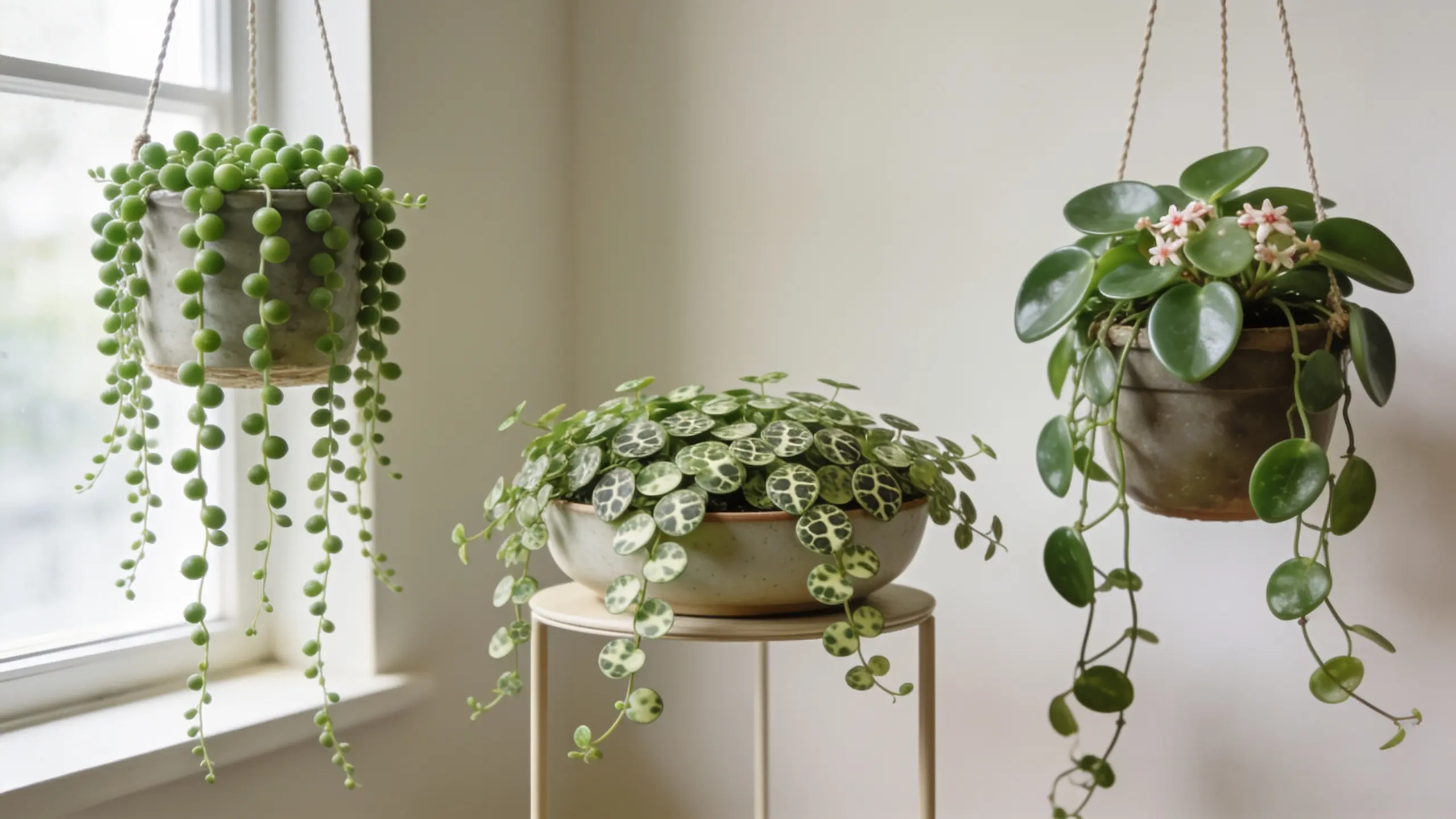
- Botanical Name: Peperomia prostrata
- Light: Bright indirect light
- Water: Every 2 weeks; allow soil to dry slightly between waterings
- Humidity: Average household humidity; appreciates occasional misting
- Growth Rate: Slow
- Toxicity: Non-toxic to cats and dogs
- Difficulty: ★★☆☆☆
String of Turtles develops delicate trailing vines with patterned leaves, creating a subtle decorative effect in small spaces. Its compact growth habit prevents overcrowding, making it suitable for shelves and hanging pots.
Its slow growth ensures it remains manageable indoors without frequent trimming or repotting.
18. Peperomia
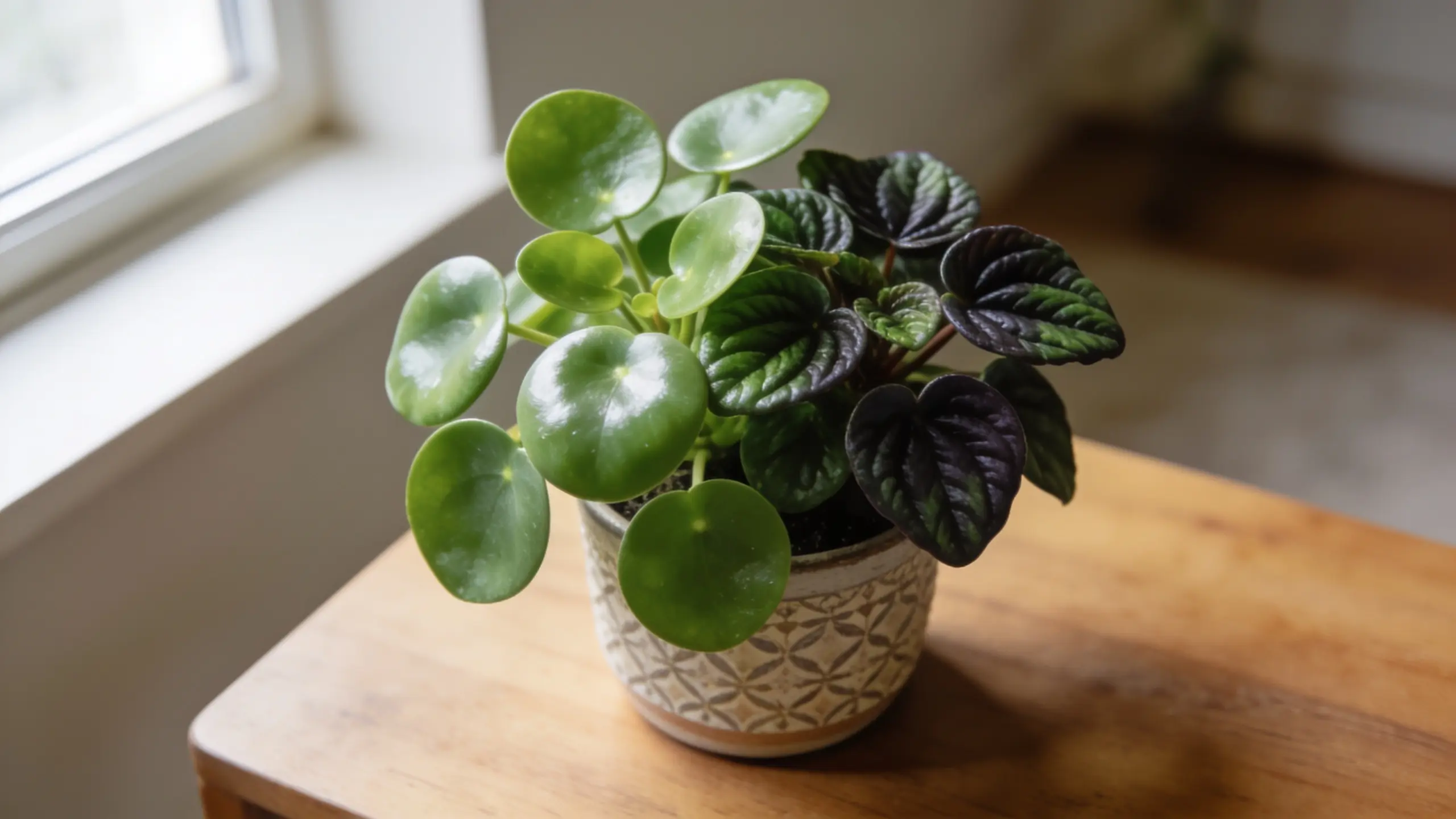
- Botanical Name: Peperomia obtusifolia, P. caperata, and many others
- Light: Medium to bright indirect light
- Water: Every 1–2 weeks; allow soil to dry between waterings
- Humidity: Tolerates average household humidity
- Growth Rate: Slow
- Toxicity: Non-toxic to cats and dogs
- Difficulty: ★★☆☆☆
Peperomia varieties are valued for their compact size and diverse leaf textures, making them ideal for small indoor arrangements. They adapt well to tabletops, desks, and narrow shelving spaces.
Their low-maintenance nature allows them to stay healthy without frequent intervention, making them suitable for apartment living.
19. Nerve Plant
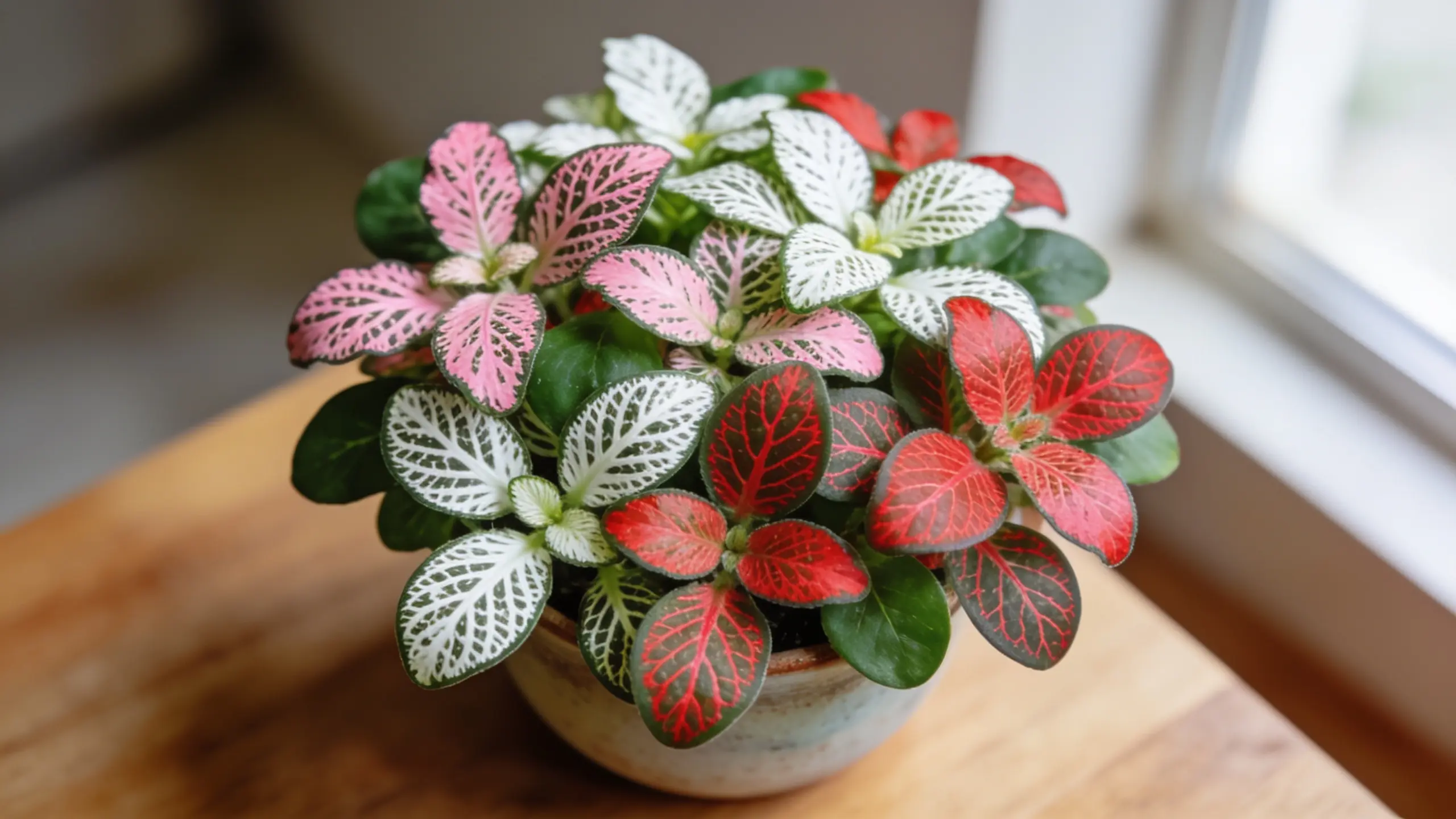
- Botanical Name: Fittonia albivenis
- Light: Low to medium indirect light
- Water: Every 3–5 days; keep soil consistently moist
- Humidity: High humidity is required
- Growth Rate: Slow
- Toxicity: Non-toxic to cats and dogs
- Difficulty: ★★★☆☆
Nerve Plant stands out for its intricate vein patterns, adding striking visual detail even in compact spaces. It performs well in enclosed environments where humidity levels remain stable.
Its small footprint makes it suitable for terrariums, desks, and decorative indoor corners where larger plants would feel overwhelming.
Best Trailing House Plants for Shelves and Hanging Baskets
These plants look best when they can spill downward over a shelf edge, hang from a basket, or drape along the top of a cabinet.
20. String of Hearts
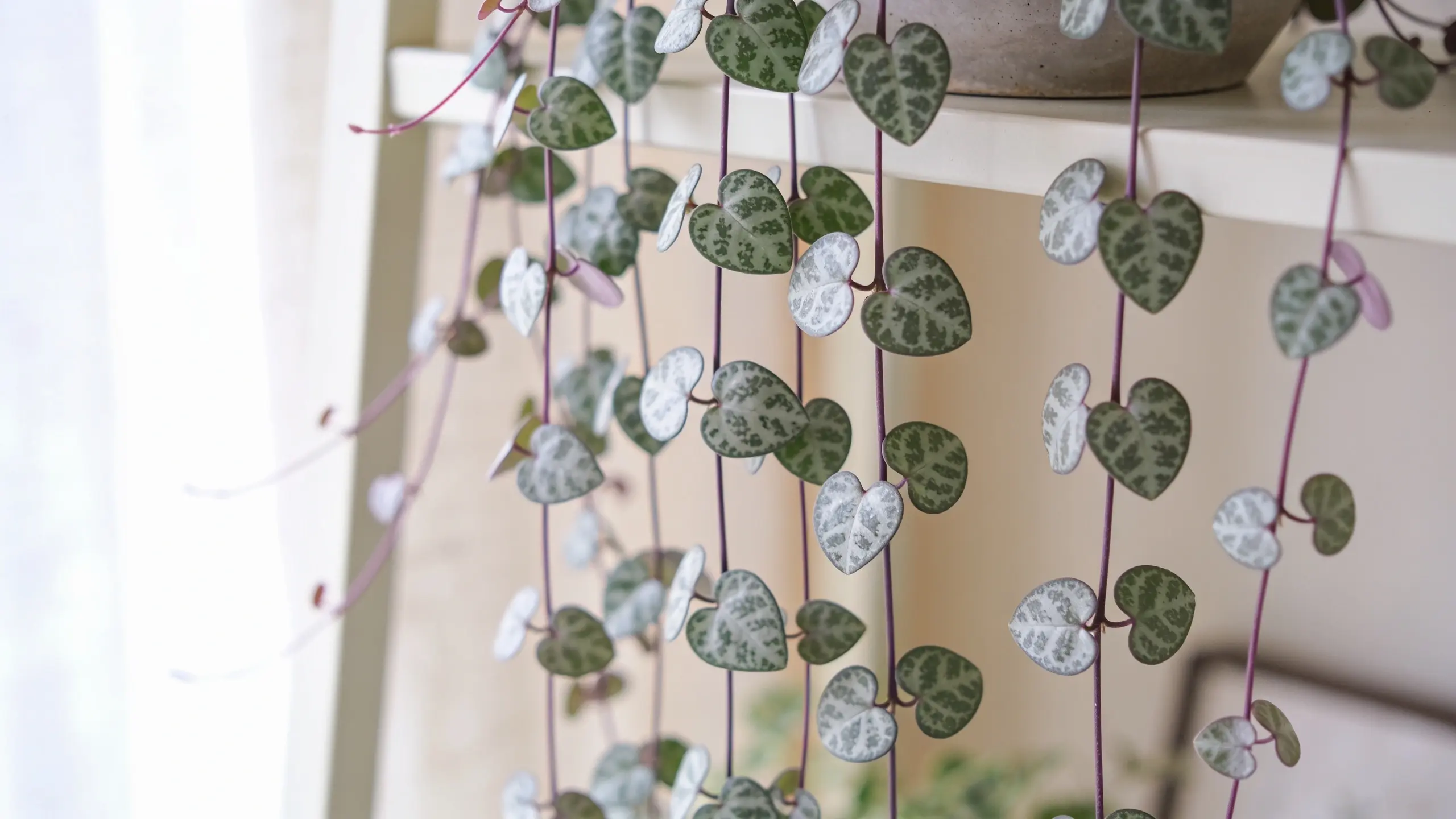
- Botanical Name: Ceropegia woodii
- Light: Bright indirect light
- Water: Every 2–3 weeks; highly drought-tolerant
- Humidity: Tolerates dry air
- Growth Rate: Moderate
- Toxicity: Non-toxic to cats and dogs
- Difficulty: ★★☆☆☆
String of Hearts produces thin trailing vines with small patterned leaves that create a delicate cascading effect. It remains visually light, making it ideal for shelves and hanging displays without overwhelming the space.
Its drought tolerance helps it maintain structure even with infrequent watering, making it suitable for low-maintenance setups.
21. Heartleaf Philodendron
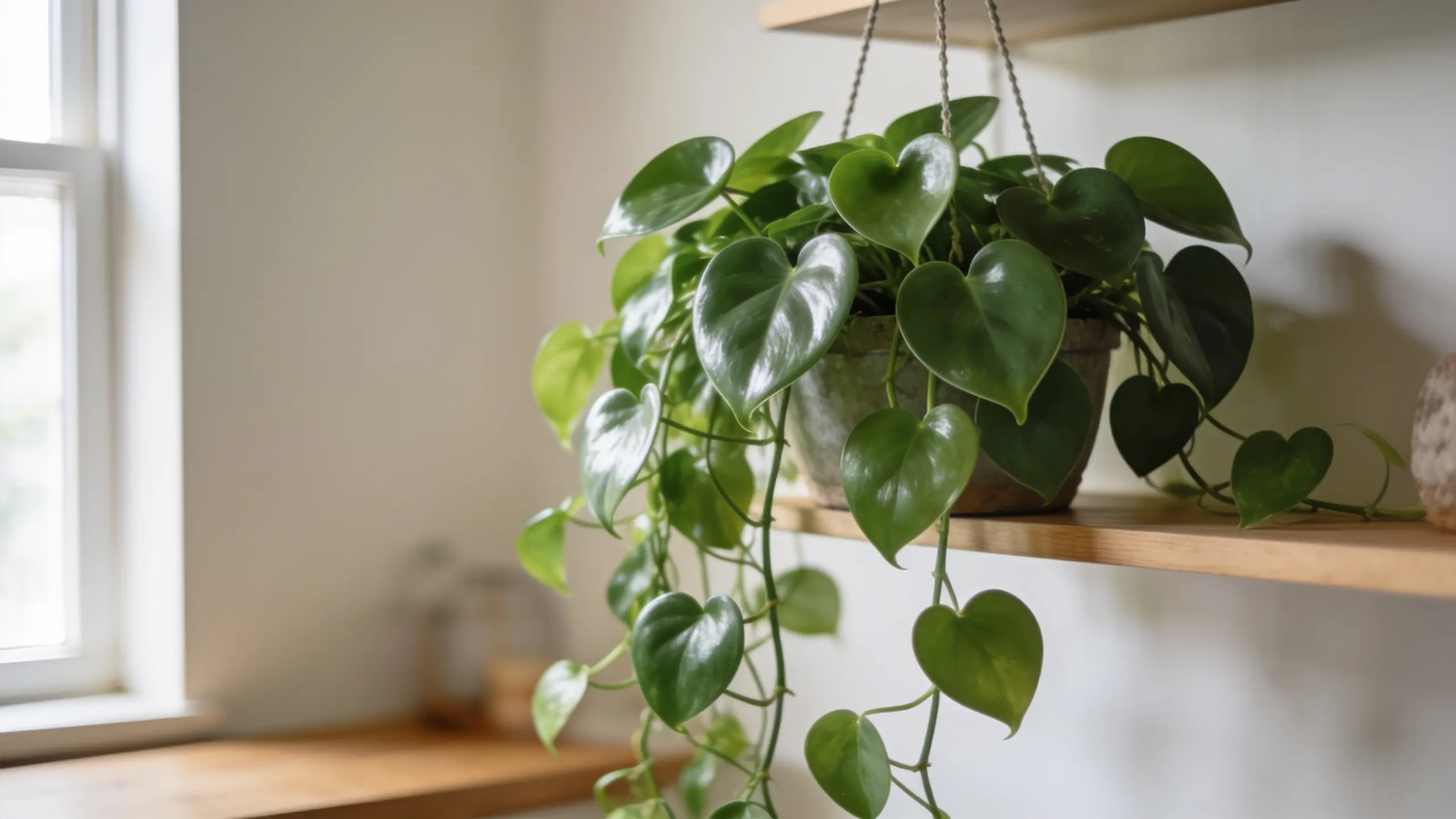
- Botanical Name: Philodendron hederaceum
- Light: Low to bright indirect light
- Water: Every 1–2 weeks; allow the top inch to dry out
- Humidity: Tolerates average humidity; appreciates some moisture
- Growth Rate: Fast
- Toxicity: Mildly toxic to cats and dogs, causing oral irritation
- Difficulty: ★☆☆☆☆
Heartleaf Philodendron grows into long, flexible vines that adapt easily to hanging baskets or high shelves. It quickly fills empty vertical space, creating a lush trailing effect indoors.
Its fast growth and adaptability make it one of the most reliable trailing plants for beginners and compact homes.
22. Boston Fern
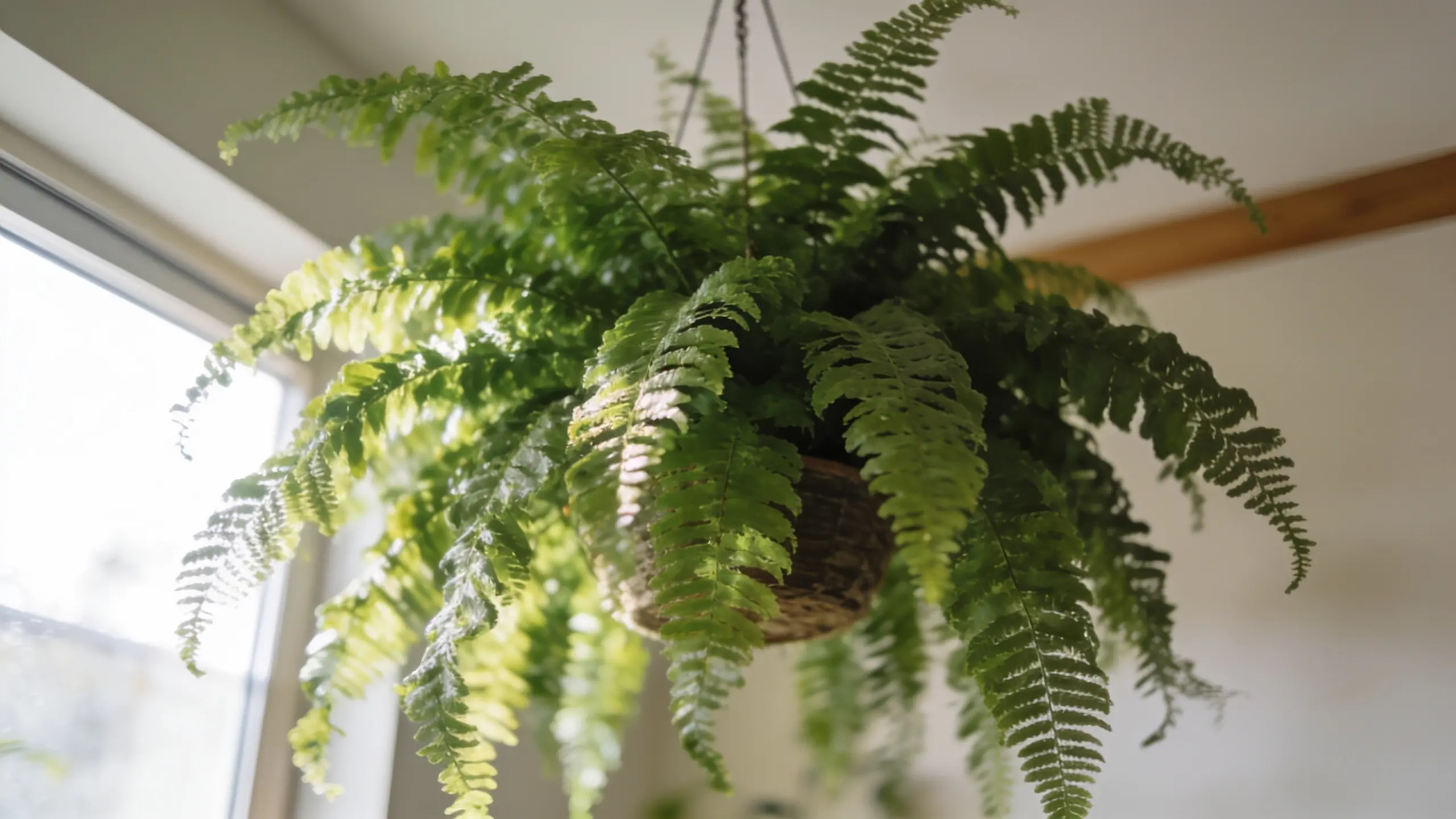
- Botanical Name: Nephrolepis exaltata
- Light: Bright indirect light; no direct sun
- Water: Every 3–5 days; keep soil consistently moist
- Humidity: High humidity is required, preferably in a bathroom with a window
- Growth Rate: Moderate
- Toxicity: Non-toxic to cats and dogs
- Difficulty: ★★★☆☆
Boston Fern produces dense, feathery fronds that create a soft cascading shape ideal for hanging baskets. It performs best in humid environments where moisture levels remain stable.
Its fuller growth habit adds volume and texture to indoor greenery arrangements, especially in bathrooms or shaded corners.
23. Burro’s Tail
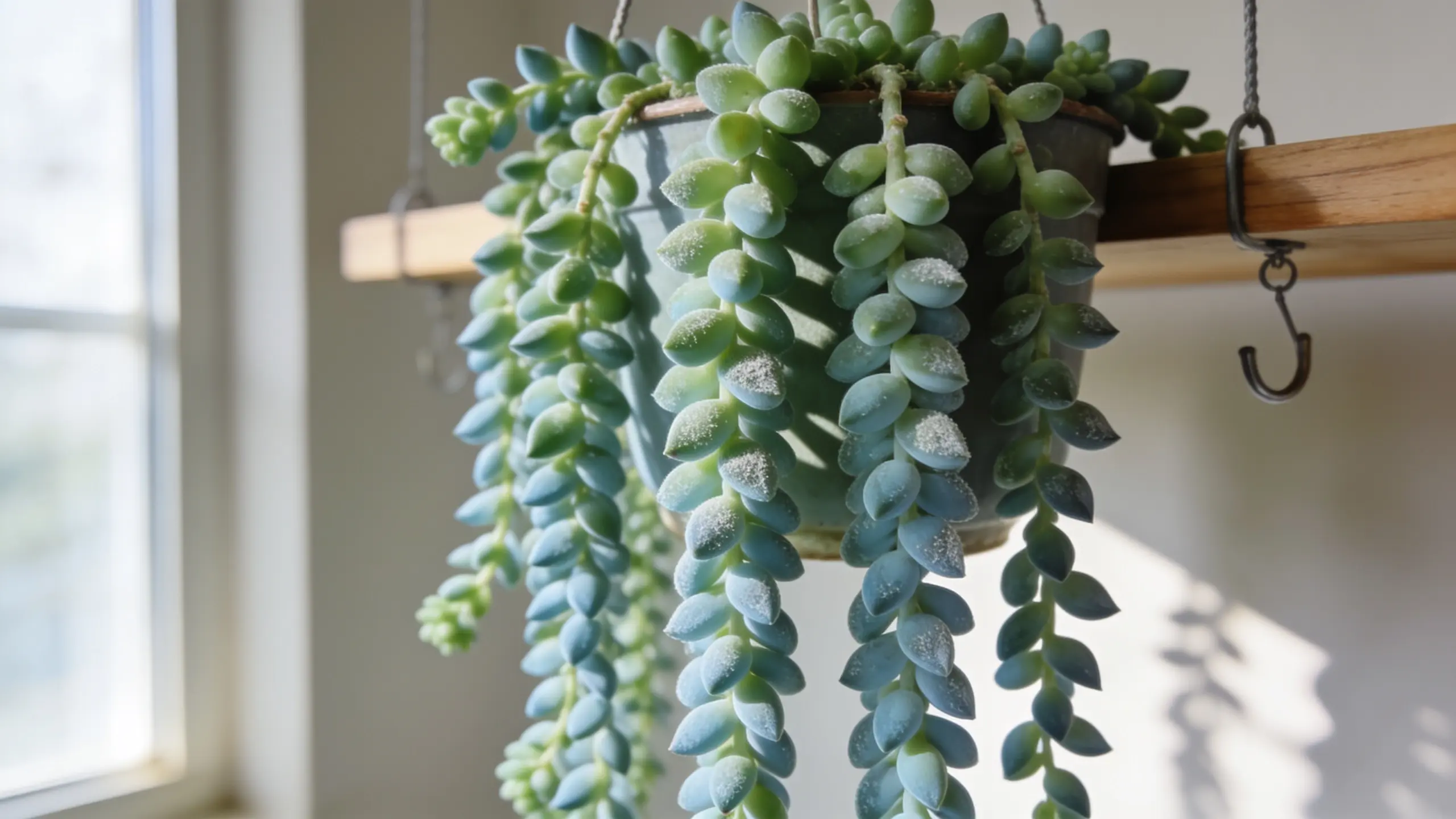
- Botanical Name: Sedum morganianum
- Light: Bright indirect to some direct light
- Water: Every 2–3 weeks; highly drought-tolerant
- Humidity: Tolerates dry air
- Growth Rate: Slow
- Toxicity: Mildly toxic to cats and dogs
- Difficulty: ★★☆☆☆
Burro’s Tail develops thick, bead-like trailing stems that hang heavily over the edges of pots, creating a sculptural, cascading effect. Its unique texture makes it a standout plant in decorative indoor setups.
Because of its slow-growing, succulent nature, it requires minimal upkeep while maintaining strong visual appeal in bright indoor spaces.
The Most Overrated House Plants And Better Alternatives
This Section Will Irritate Some People. That’s Fine.
1. Fiddle Leaf Fig → Try Ficus Audrey Instead
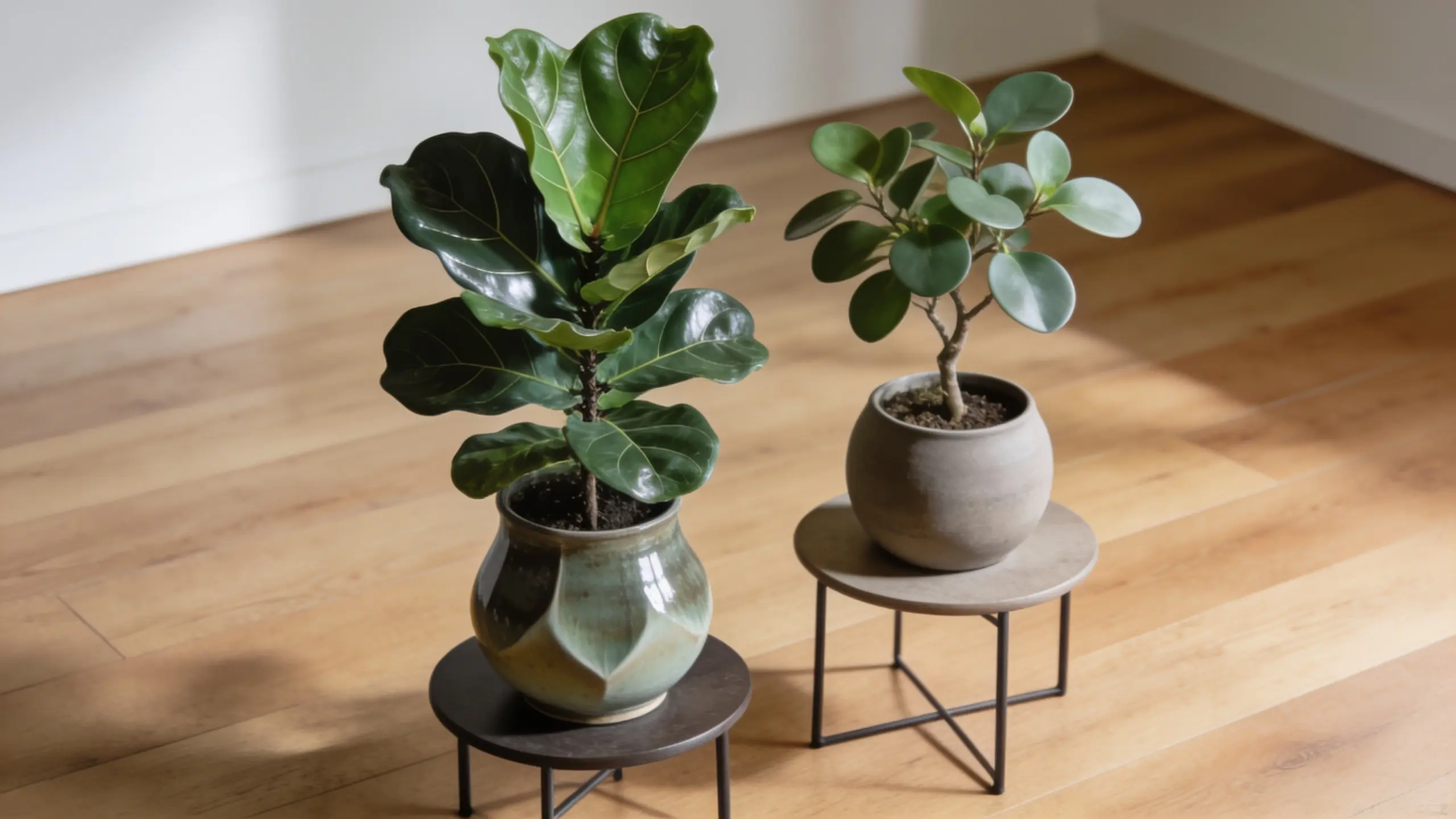
The Fiddle Leaf Fig Drops Leaves when You Move it, when You Change Its Watering Schedule, when it Feels a Draft, when it Senses Your Disappointment.
It Can be Kept Alive, but it Requires Consistent Conditions that Most Homes Can’t Provide. The Ficus Audrey is More Forgiving and Looks Equally Good.
2. Calathea for Beginners → Try Maranta Instead
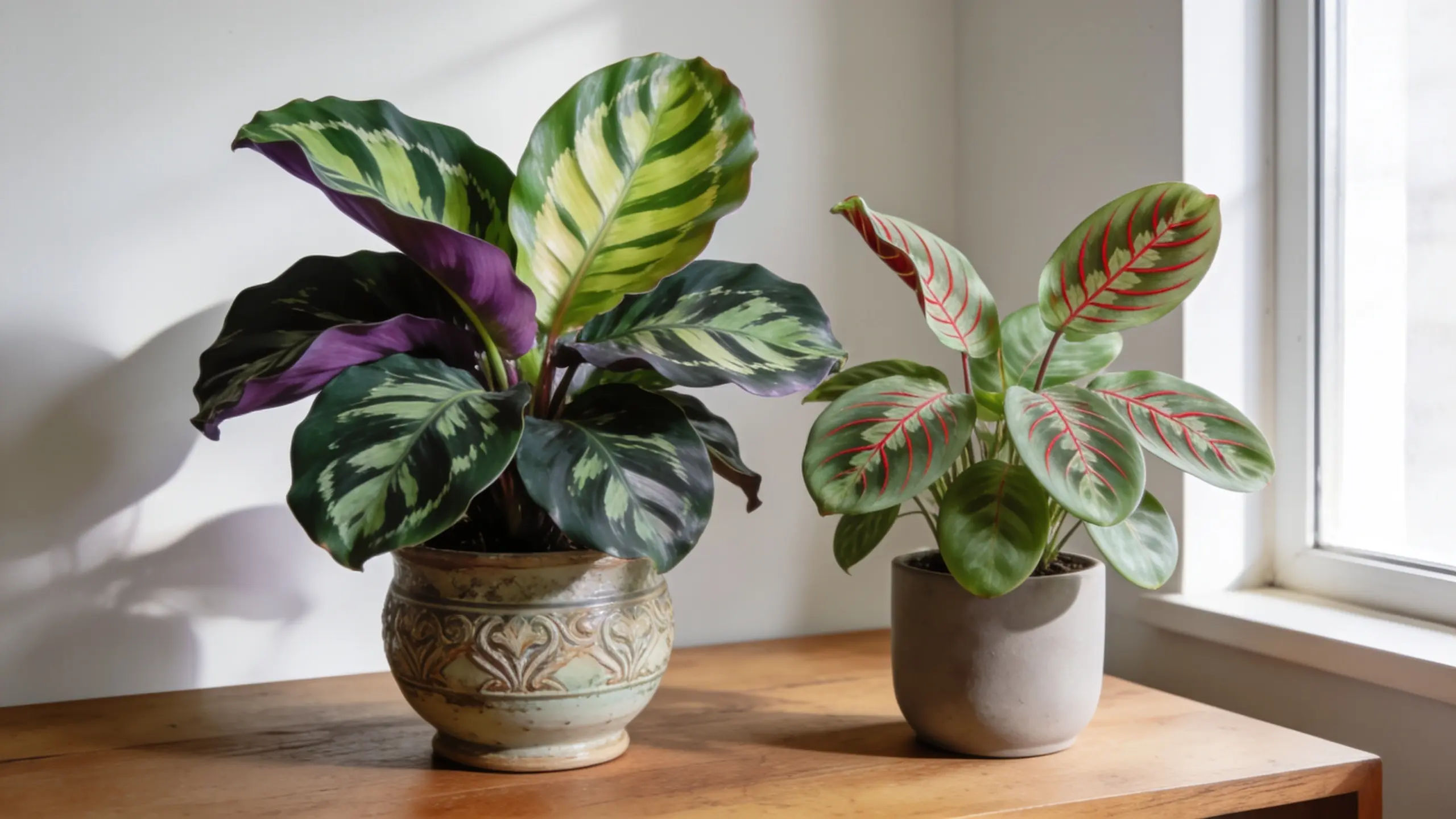
Calatheas are Sold Everywhere as Easy Houseplants. They’re Not. They Need Distilled or Rainwater (tap Water Causes Brown Leaf Tips), High Humidity, Consistent Temperatures, and Indirect Light.
The Maranta (prayer Plant) Does Most of the Same Things: Patterned Leaves that fold at Night, and it is Far More Tolerant of Normal Household Conditions.
3. Peace Lily in a Dark Room → Try Cast Iron Plant Instead
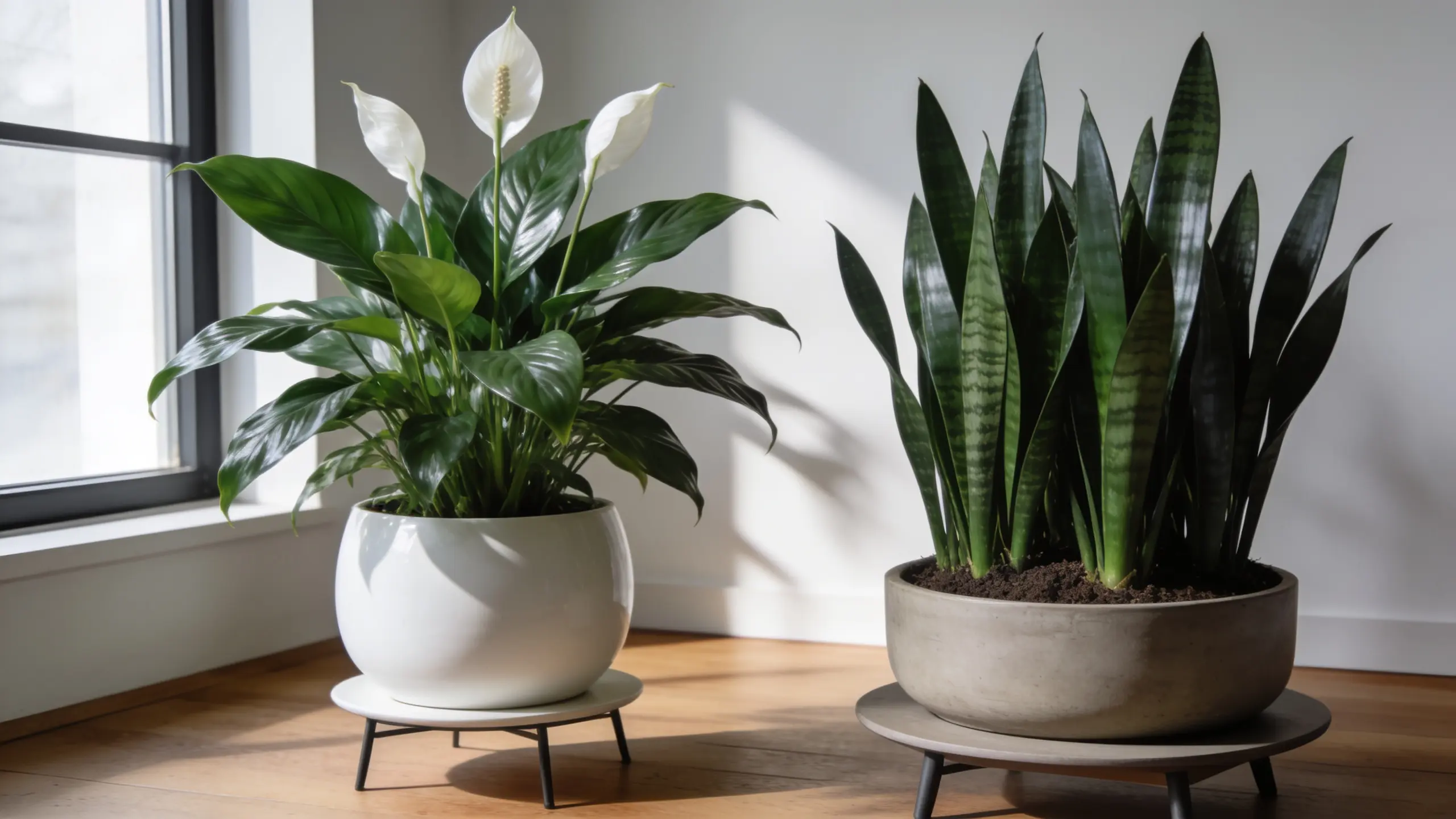
Peace Lilies Tolerate Low Light, but “tolerate” is the Right Word. In Genuinely Dim Rooms, They Rarely Flower, and They Collapse Dramatically when Underwatered. The Cast-Iron Plant Doesn’t Do That.
Common Mistakes That Kill Indoor Plants
Indoor plants decline when care decisions are based on routine instead of plant needs. Small mistakes in watering, light placement, and pot choice often lead to gradual damage that goes unnoticed early on.
The following errors appear most frequently in indoor plant failures and can be corrected easily once identified.
| Mistake | What Goes Wrong | Simple Fix |
|---|---|---|
| Overwatering | Roots stay wet too long and begin to rot | Water only when the topsoil feels dry |
| No drainage holes | Water accumulates at the bottom of the pot | Always use pots with drainage |
| Wrong light placement | The plant weakens or stops growing | Match plant type with light level |
| Oversized pots | Soil holds excess moisture for too long | Increase pot size gradually |
| Ignoring humidity needs | Leaves dry, curl, or brown at the edges | Adjust placement or mist when needed |
| Using hard tap water | Leaf tips burn or turn brown | Use filtered or rested water |
Which House Plant is Worth Buying Right Now
The plant worth buying right now depends on reliability in real home conditions, but a consistently safe choice is Pothos or Snake Plant because both adapt to low light, tolerate irregular watering, and maintain steady growth without demanding much maintenance.
For slightly more visual impact with the same ease, the ZZ Plant is also a strong option, as it tolerates neglect and stays visually clean in modern interiors. If the goal is fast growth with visible change, Heartleaf Philodendron stands out due to its rapid trailing vines.
Overall, these plants remain popular because they perform well in typical indoor environments rather than controlled nursery conditions, making them practical long-term choices for most homes.
Conclusion
The Best House Plant is the One Still Alive Six Months from Now, Not the One that Looked Good in the Nursery.
Plant Failures Come Down to Three Things: Wrong Light, No Drainage, and Watering on a Schedule Instead of Reading the Soil. Fix Those, and Almost Anything Grows.
If You’re Starting, a ZZ plant or Snake Plant Will Survive While You Learn Your Space. If You’ve Been at it a While, a Hoya or Rhaphidophora Will Reward You without Punishing Every Small Mistake.
Skip the Trending Lists. Buy What Fits Your Actual Conditions. And if a Plant Starts Struggling, check the Basics Before Assuming it’s Hopeless; it Usually Isn’t.
Plants are forgiving. Most need to be in the right place.