Most gardeners give up on rhubarb too soon. They plant it in year one, wait through a full season, and still pull no decent stalks.
The problem is not the plant. It is the missing information. After years of working with home gardeners in my horticultural practice, I have seen this pattern repeat more times than I can count.
Rhubarb rewards patience and a solid start. This guide covers everything you need to know to grow rhubarb, from picking the right spot and preparing your soil to caring for the plant and knowing exactly when to harvest for the best flavor and yield.
What Is Rhubarb and Why Grow It?
Rhubarb is a hardy perennial vegetable grown for its long, thick stalks. It shows up early each spring, making it one of the first fresh crops of the season. The stalks work well in pies, jams, crumbles, and cordials.
One thing every gardener must know before planting: rhubarb leaves are toxic. They contain high concentrations of oxalic acid. Never eat them.
Only the stalks are edible. Compost the leaves or use them to make a natural garden spray.
A healthy rhubarb plant can live and produce for 10 to 15 years. Once it settles in, it asks for very little. That long lifespan makes it one of the most rewarding plants you can add to a home garden.
Best Rhubarb Varieties to Grow
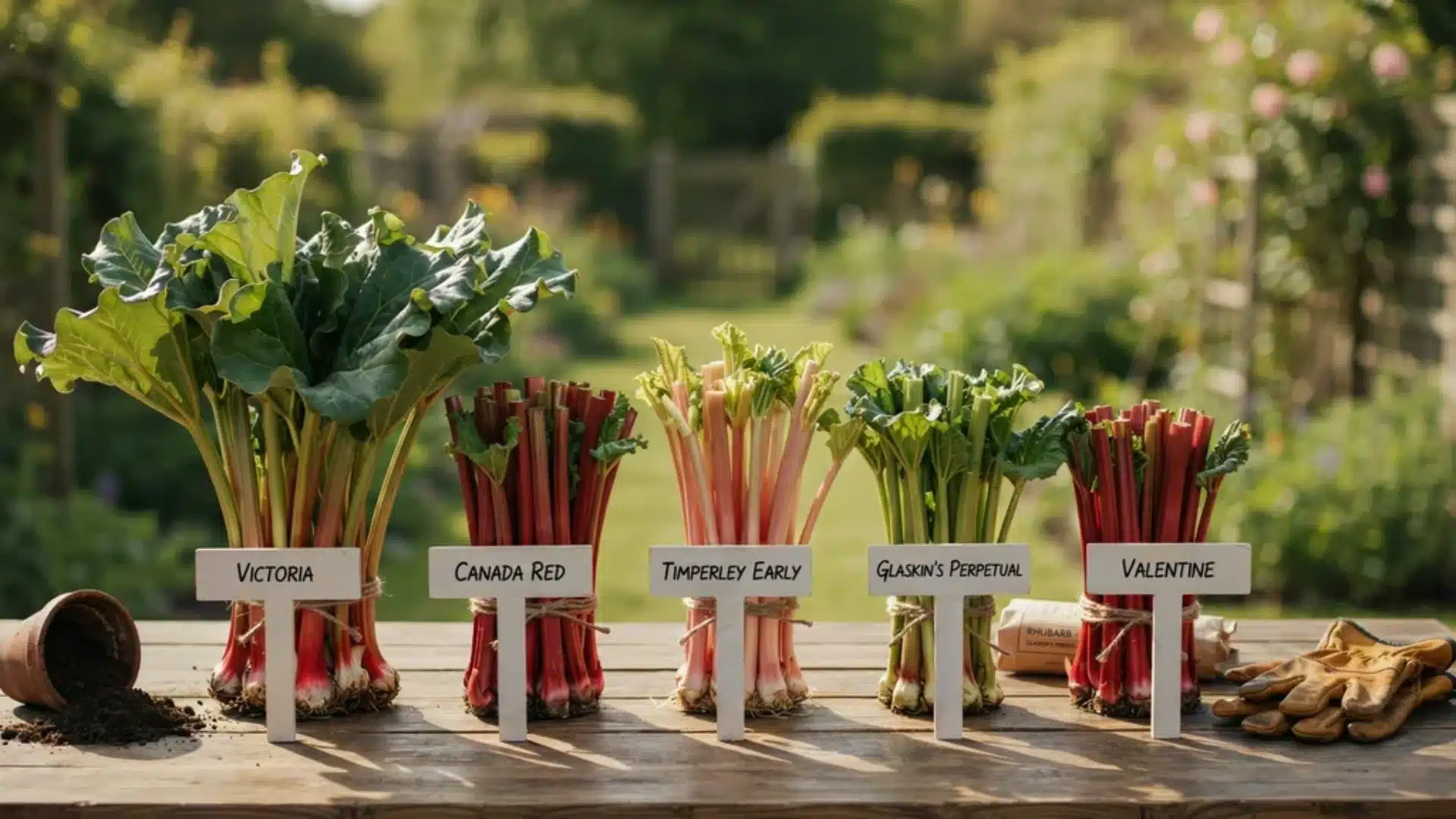
Not all rhubarb plants perform the same way. The variety you choose affects stalk color, flavor, harvest time, and how well the plant fits your garden space. Here are the best options for home gardeners.
1. Victoria is one of the most widely grown varieties. It produces large, red-green stalks and spreads generously across a garden bed. It works well for pies, jams, and crumbles.
If you want a high-yield plant with a long track record, Victoria is a solid choice.
2. Canada Red grows more compactly than Victoria. Its stalks are deep red and have a sweet flavor. It also has strong disease resistance, which makes it a good pick for gardeners who want less maintenance.
It performs well both in the ground and in containers.
3. Timperley Early is the top choice for forcing rhubarb indoors. It produces stalks earlier in the season than most other varieties.
Cover it with a bucket or bin in mid-winter, and you can expect tender, pale stalks within 4 to 8 weeks.
4. Glaskin’s Perpetual is the best option for growing rhubarb from seed. Most varieties take 2 to 3 years before you can harvest properly.
Glaskin’s Perpetual can give you a light harvest just one year after sowing. The stalks are red-green and slightly less bitter than other types. It also stays compact, which suits container growing.
5. Valentine produces deep red stalks with a sweeter-than-average flavor. It stays compact and does well in large pots. If you have limited garden space, Valentine is worth considering.
One thing to keep in mind across all varieties: stalk color does not tell you when rhubarb is ready to pick. A green stalk on a green variety can be perfectly ready.
A red stalk on a red variety may still need more time. Always judge by stalk length and firmness, not color.
Picking the Right Spot and Preparing the Soil for Rhubarb
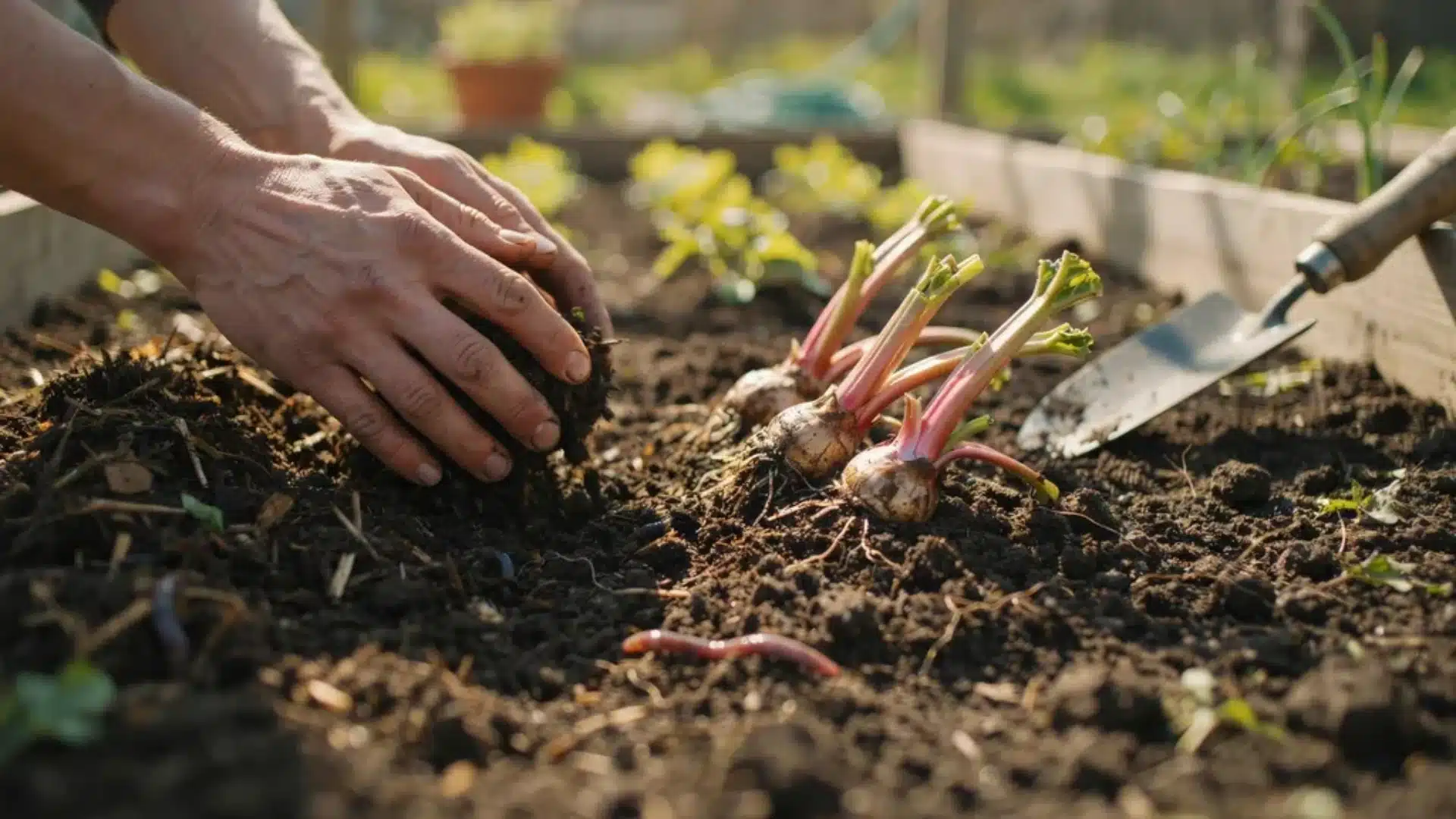
The two things that matter most before you plant are location and soil. Get both right from the start, and your rhubarb will settle in fast and stay productive for years.
Choosing the Right Location:
Picking a permanent spot before you plant is one of the most important steps. Rhubarb does not like being moved.
- Give each plant at least 4 square feet of space. Plants can grow up to 4 feet wide and tall.
- Choose a site that gets at least 6 hours of direct sunlight daily. Rhubarb tolerates light shade but produces less.
- Avoid areas with poor drainage or standing water. Waterlogged soil leads to crown rot.
- Keep plants away from frost pockets. Late frosts can damage young stalks.
If your soil drains poorly, grow rhubarb in raised beds or large containers instead.
Preparing the Soil:
Rhubarb grows best in soil that is deep, loose, and rich in organic matter. Before planting, work in a good layer of well-rotted compost or horse manure.
- Aim for slightly acidic to neutral soil (pH 6.0 to 6.8).
- Make sure the bed drains well. Rhubarb crowns rot in wet conditions.
- Do not fertilize in the first year of planting. Let the roots establish without added nutrients.
For clay-heavy or compacted soil, build a raised bed with fresh compost-mixed growing media before planting rhubarb crowns.
How to Plant Rhubarb: Crowns vs. Seeds
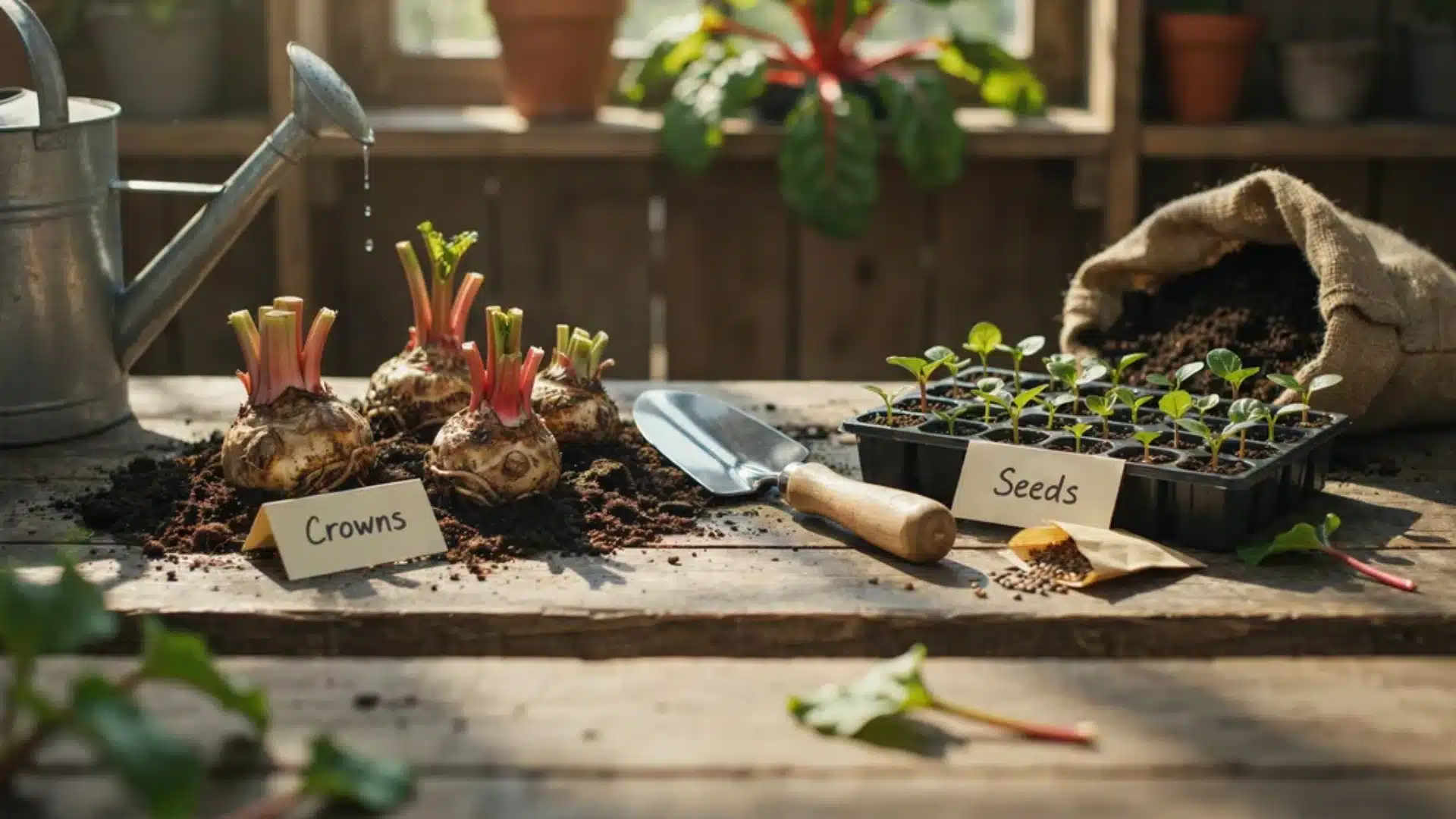
Crowns are the better choice for most home gardeners. Here is a side-by-side comparison to help you decide:
| Factor | Crowns | Seeds |
|---|---|---|
| Best for | Most home gardeners | Patient growers with extra time |
| When to plant | Early spring or autumn | Indoors in early spring |
| Planting depth | 1 inch below soil, bud facing up | Sow shallow, transplant after 1 year |
| Spacing | 3 feet apart, rows 4 feet apart | Same once transplanted |
| First harvest | Year 2 (light), Year 3 (full) | Year 3 (light), Year 4 (full) |
| True to the parent variety | Yes | Not always |
| Availability | Widely sold in spring | Available year-round online |
| Difficulty | Easy | Moderate |
Planting tip: Whether you use crowns or seeds, firm the soil well around the base after planting and water thoroughly. Never plant crowns deeper than 1 inch. Planting too deep delays growth and can kill the crown entirely.
Watering and Feeding the Rhubarb
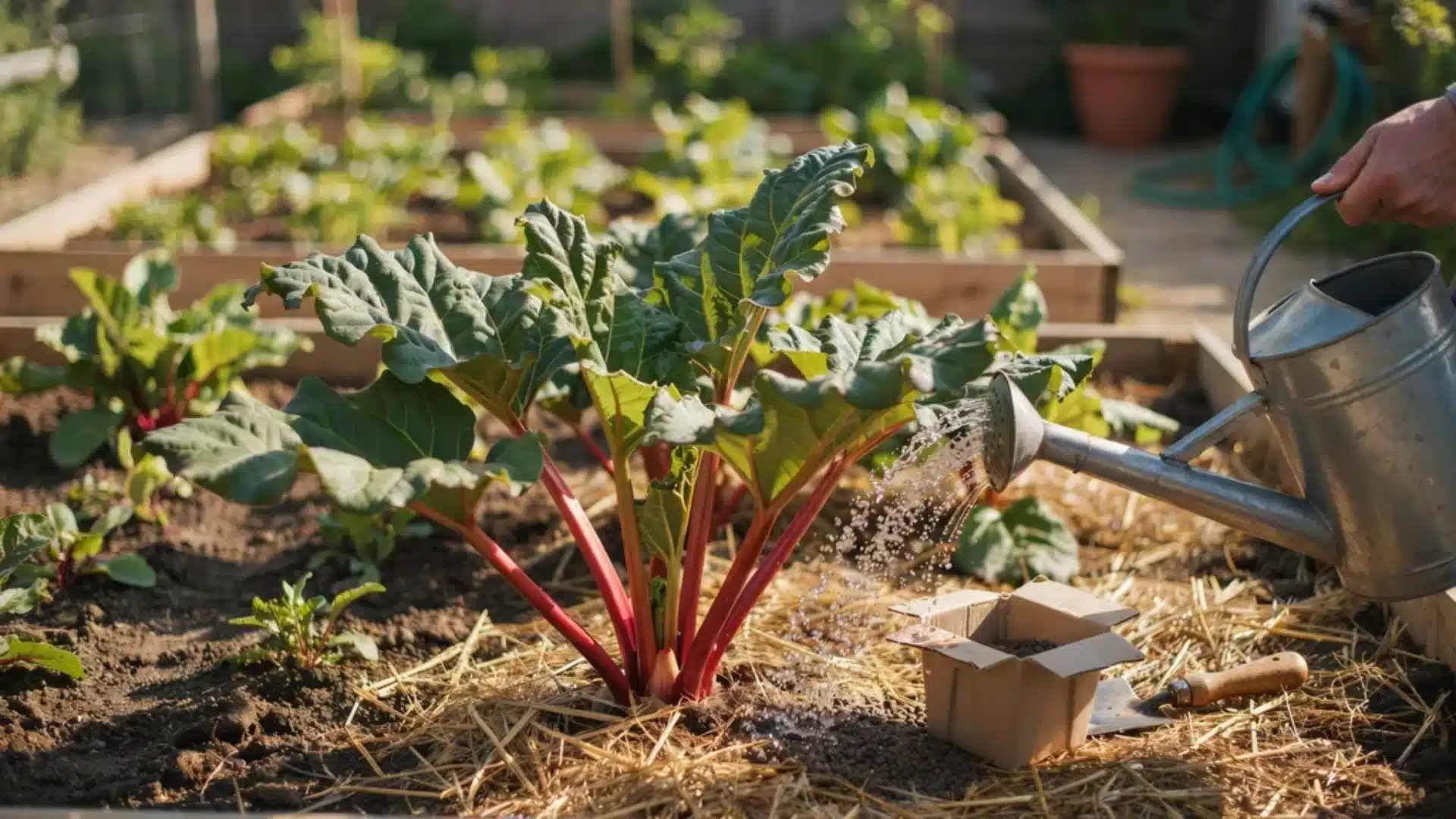
Consistent moisture is key during the first two to three years after planting.
- Water once or twice a week so moisture reaches 6 to 12 inches deep.
- Mulch around plants with straw, bark chips, or grass clippings. This holds moisture, regulates soil temperature, and keeps weeds down.
- From year two onwards, apply a balanced fertilizer (such as 16-16-16) in early spring, just before leaves emerge. Use about half a cup per plant and lightly work it into the surface soil.
- Fertilize a second time after the harvest ends in late June.
- Skip all fertilizer in year one. The roots need time to settle before receiving extra nutrients.
Ongoing Care: What to Do Each Season
Rhubarb is low-maintenance once established, but a few tasks keep it healthy and productive:
1. Remove flower stalks immediately: When a tall central stalk appears and begins to elongate, cut it off at the base.
Flower production pulls energy away from the edible stalks, reducing your harvest. The tendency to flower varies by variety and grows more common with older plants.
2. Keep watering all summer, even after harvesting stops. The plant needs moisture to build up energy reserves for next year’s growth.
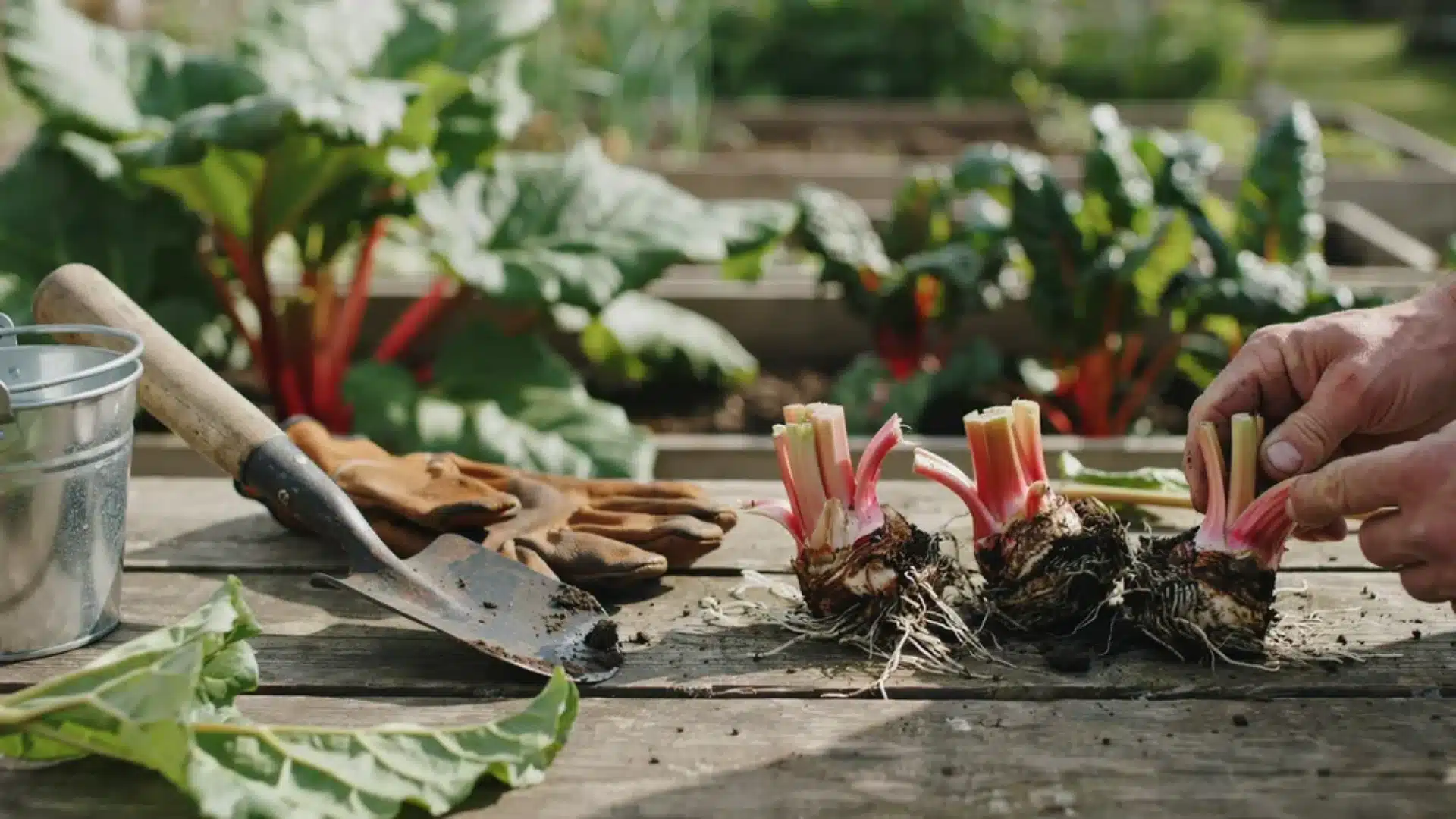
3. Divide crowns every 5 to 10 years: In early spring, before new growth begins, dig up the entire crown and divide it into sections.
Each section should have one large healthy bud and attached root. A mature crown typically produces 5 to 10 new plants. Replant divisions 3 feet apart in a fresh area of the garden.
How to Pick Rhubarb the Right Way
The picking method matters. Doing it wrong can leave the plant open to disease.
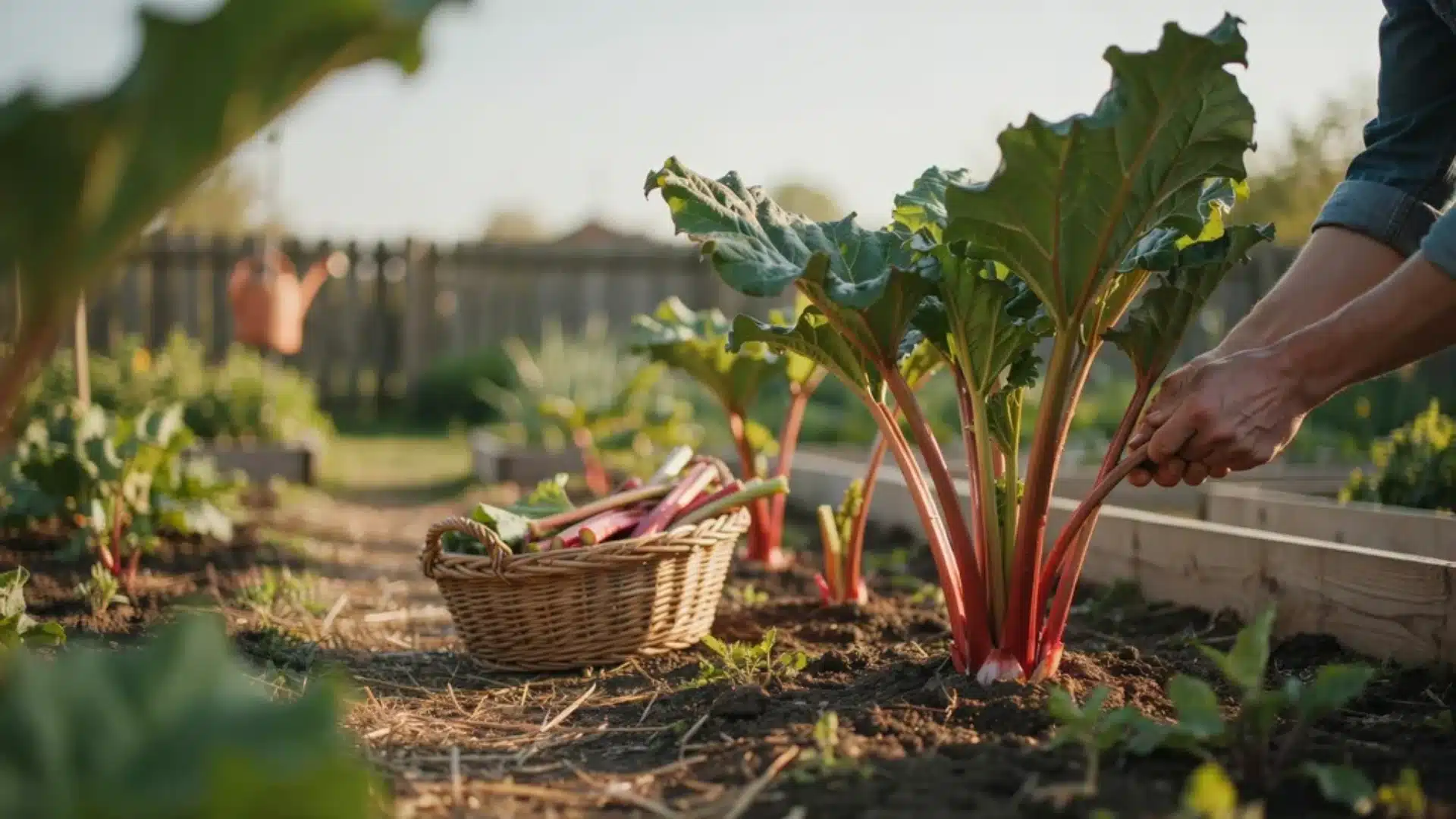
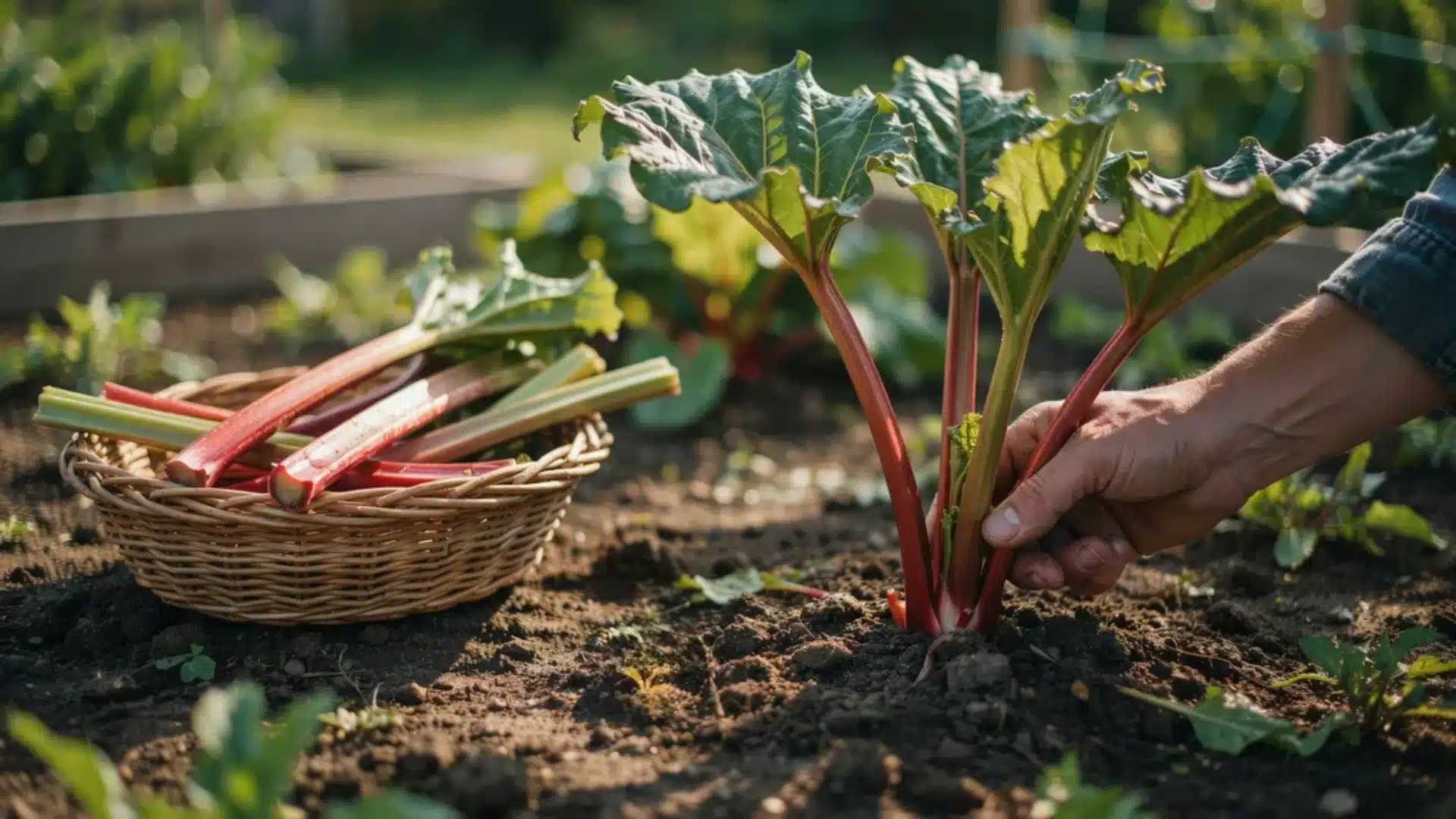
- Grip the base of a stalk firmly with your hand.
- Pull it downward and twist gently to snap it cleanly from the base.
- Avoid using a knife if possible. A knife can carry disease from plant to plant. If you must use one, sanitize it before cutting.
- Remove the leaves immediately after picking; composting them, not leaving them attached, speeds up the wilting of the stalk.
- Leave at least one-third of the stalks on the plant each time you harvest.
If stalks start coming through thin (less than three-quarters of an inch), stop picking right away. Thin stalks are a sign that the plant’s energy reserves are low.
Tip: Stop picking by the end of July at the latest. The stalks left on the plant after the harvesting season ends play a key role in fueling next year’s growth.
When to Harvest Rhubarb: A Year-by-Year Guide
This is the part most gardeners get wrong, and it is the reason so many plants underperform.
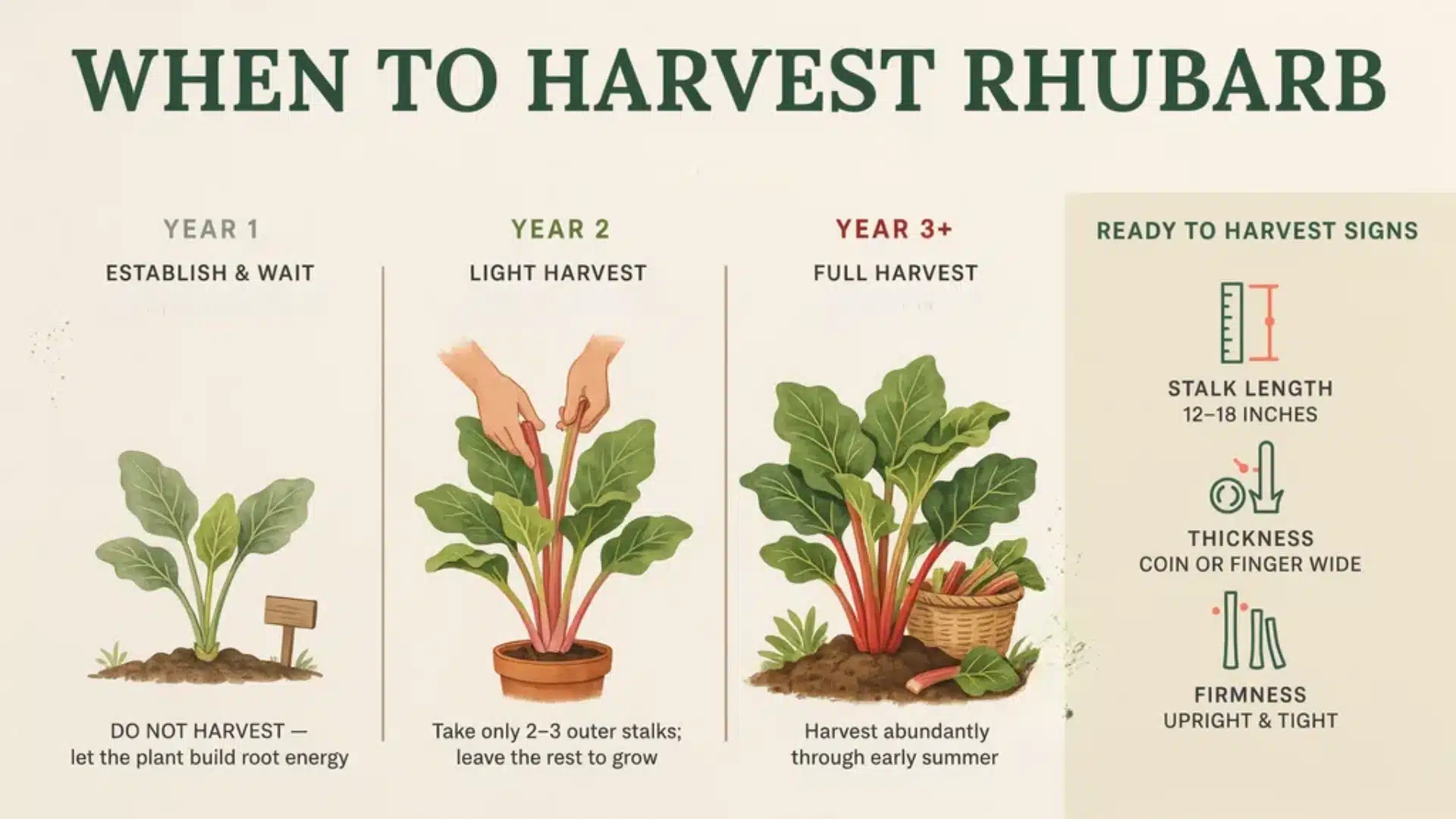
Year 1: Do not pick a single stalk. The plant needs this entire season to build its root system.
Year 2: Pick sparingly. Take no more than two or three stalks per plant. This allows the crown to continue developing.
Year 3 and beyond: You can harvest fully for an 8 to 10-week period running from late spring through mid-summer.
Signs your rhubarb is ready to pick:
- Stalks are 12 to 18 inches long
- At least three-quarters of an inch thick
- Firm to the touch, not soft or limp
Stalk color alone is not a reliable guide. A green stalk on a green variety is perfectly ready. A red stalk on a red variety can still be underripe. Judge by length and firmness.
Common Rhubarb Problems
Rhubarb is a tough plant. It rarely invites serious trouble. But a few issues can show up, and catching them early makes a big difference.
1. Crown rot is the most damaging problem you will face. The base of the plant turns soft and brown, and the stalks begin to wilt. It almost always comes down to poor drainage.
If your soil holds water for too long, the crown suffocates. Remove any badly affected plant and improve drainage before replanting in that spot.
2. Leaf spot shows up as discolored or spotted patches on the leaves. It is a fungal issue and spreads in wet conditions.
The fix is simple: remove infected leaves after the first hard frost each autumn to stop it returning the following season.
3. Rhubarb curculio is a dark, snouted beetle about half to three-quarters of an inch long. It damages stalks by boring into them.
The best way to keep this pest away is to control the weeds growing around your plants. Curculio beetles shelter and breed in surrounding weeds, so clearing them significantly reduces the problem.
4. Slugs are a common nuisance, especially in wet springs. They chew holes through the leaves. Organic slug pellets or simple beer traps placed near the base of the plant work well.
Worth noting: slug-related leaf damage does not affect the stalks at all. Since you remove and compost the leaves at harvest anyway, holey leaves are not a reason to abandon the crop.
5. Aphids occasionally settle on young emerging leaves in small clusters. Direct application of horticultural oil to the affected area quickly clears them without harming the plant.
Conclusion
Learning how to grow rhubarb comes down to three things: the right location, healthy soil, and patience in the early years.
Skip the harvest in year one, pick sparingly in year two, and by year three, you will have a plant that produces reliably for well over a decade.
Knowing when to pick rhubarb, and equally when to stop, keeps the plant strong season after season. Remove flower stalks as they appear, feed in spring, and divide the crown every few years.
Give your rhubarb these basics, and it will reward you with years of fresh, flavorful stalks.
Have you grown rhubarb before, or are you planting your first crown this season? Share your experience in the comments below.
Frequently Asked Questions
Does Rhubarb Come Back Every Year?
Yes, rhubarb is a cold-hardy perennial that comes back every year and can produce for decades.
Why Do You Put a Bucket Over Rhubarb?
Putting a bucket over rhubarb in late winter or early spring is a gardening technique called “forcing”.
Why Can’t You Eat Rhubarb the First Year You Plant It?
You shouldn’t harvest or eat rhubarb in its first year, so the plant can direct all its energy toward developing a strong, healthy root system.