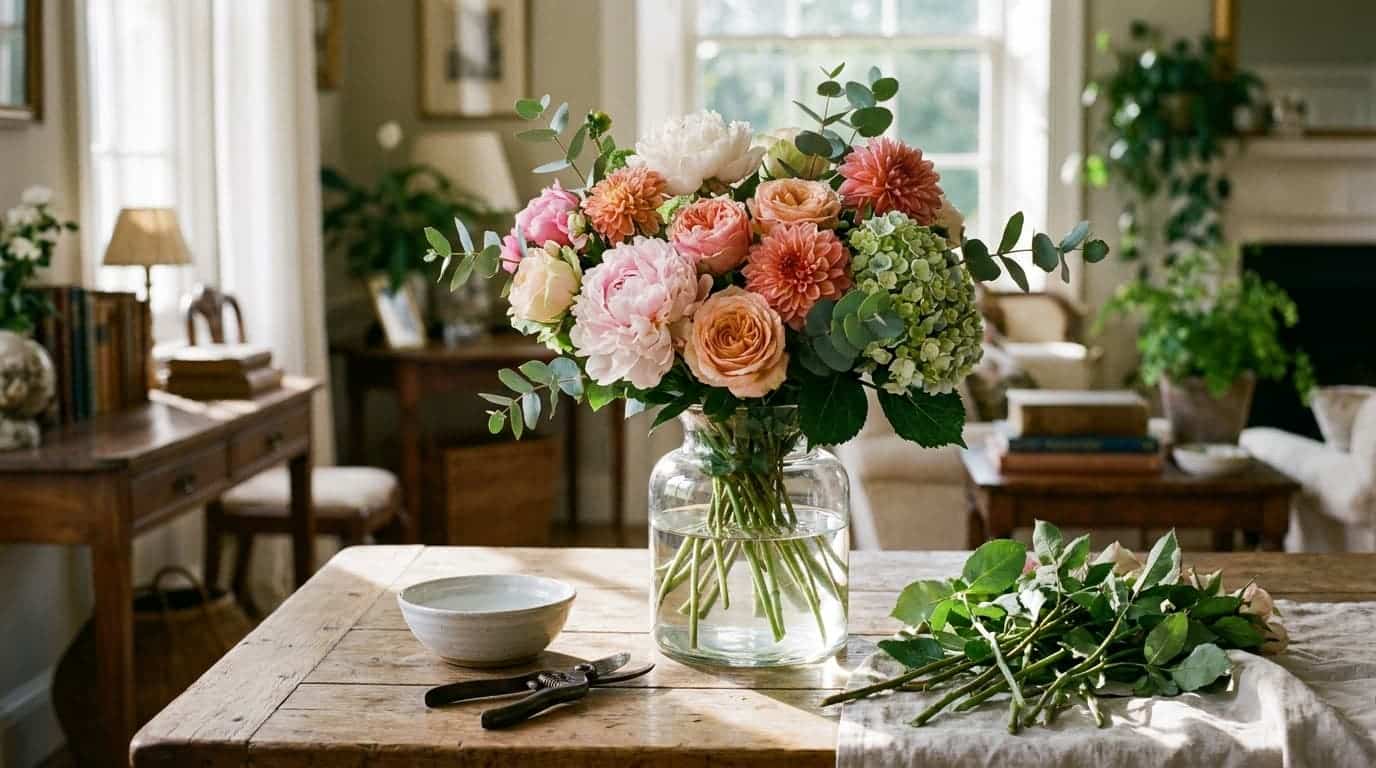

Cut flowers start losing water the moment they leave the plant. Without the right care, blooms can wilt within days.
A few simple steps can keep cut flowers fresh for much longer.
After eight years working with cut stock for weddings and events, I’ve realized the key differences are a clean cut, clean water, and a cool spot.
Florists rely on specific methods to protect their arrangements. They trim stems at the right angle, strip leaves that sit below the waterline, and keep tools and containers clean.
These small habits stop bacteria from building up in the water, which is one of the biggest reasons flowers wilt early.
How Long Do Cut Flowers Usually Stay Fresh?
Most cut flowers stay fresh for one to two weeks, though it varies by type; carnations can last up to three weeks, while tulips often fade in five to ten days.
Care matters too: a cold-kept florist bouquet hits the high end, a grocery-store bunch sits in the middle, and one with no care at all rarely lasts past 3 to 5 days.
| Flower Type | Average Vase Life |
|---|---|
| Roses | 5–12 days |
| Tulips | 5–10 days |
| Lilies | 7–14 days |
| Daisies | 7–14 days |
| Sunflowers | 6–12 days |
| Carnations | 2–3 weeks |
What Affects How Long Flowers Stay Fresh
Several factors decide whether flowers reach the higher or lower end of their vase life.
- Flower maturity at cutting: Buds cut too early or too late tend to fade faster.
- Water quality: Dirty or chlorinated water can shorten a flower’s lifespan.
- Temperature: Warm rooms speed up water loss and wilting.
- Stem preparation: Clean, angled cuts help stems absorb water more easily.
- Bacterial growth: Bacteria in the water block stems and cause flowers to droop early.
Each of these factors plays a role, but they also work together. A flower cut at the wrong stage may struggle even in clean water.
And clean water alone will not help if the stems are crushed. The next sections break down exactly how to manage each one.
How to Keep Cut Flowers Fresh for a Long Time
Keeping flowers fresh comes down to a handful of habits repeated consistently. Florists rely on these steps for every arrangement they build.
None of them take much time, but skipping even one can cut a flower’s lifespan short. Below are eight methods that make the biggest difference.
Step 1: Cut Stems at an Angle Before Placing Them in Water
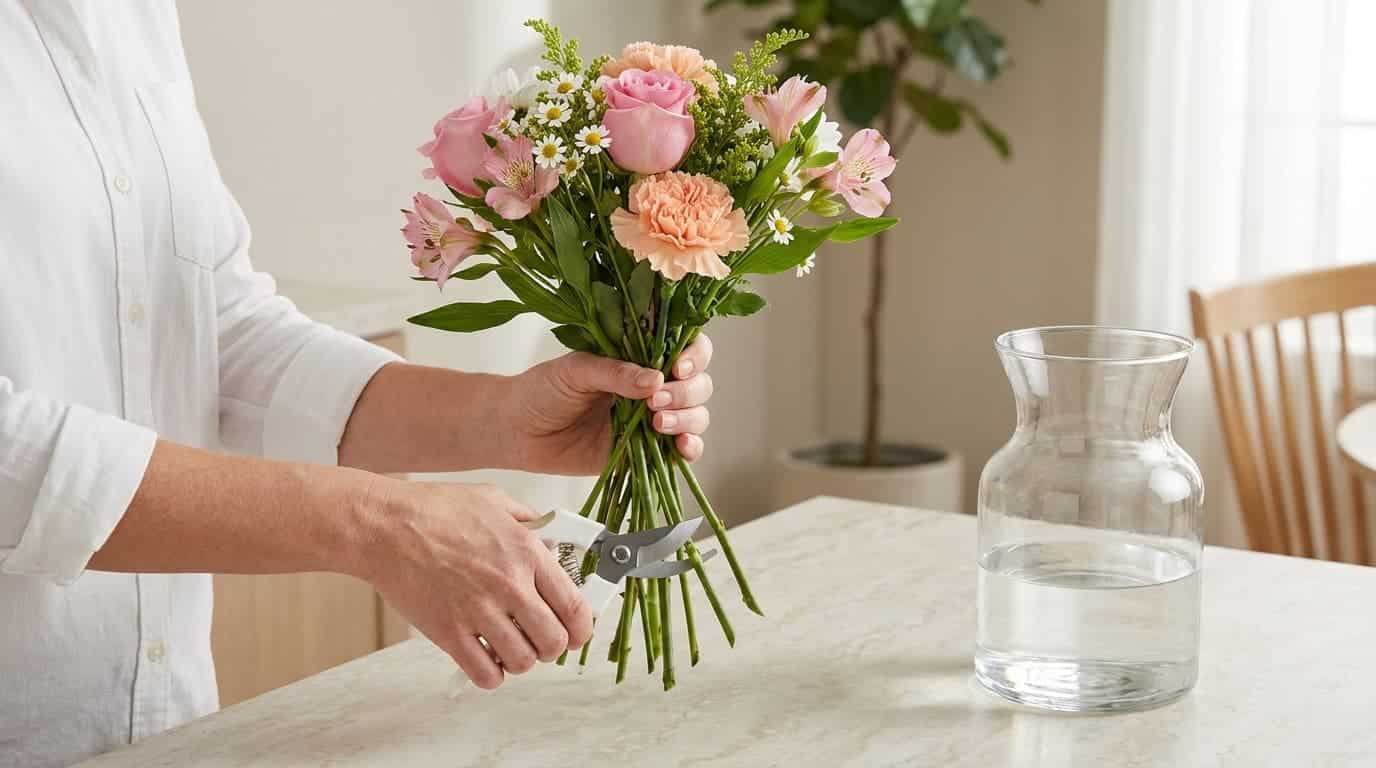
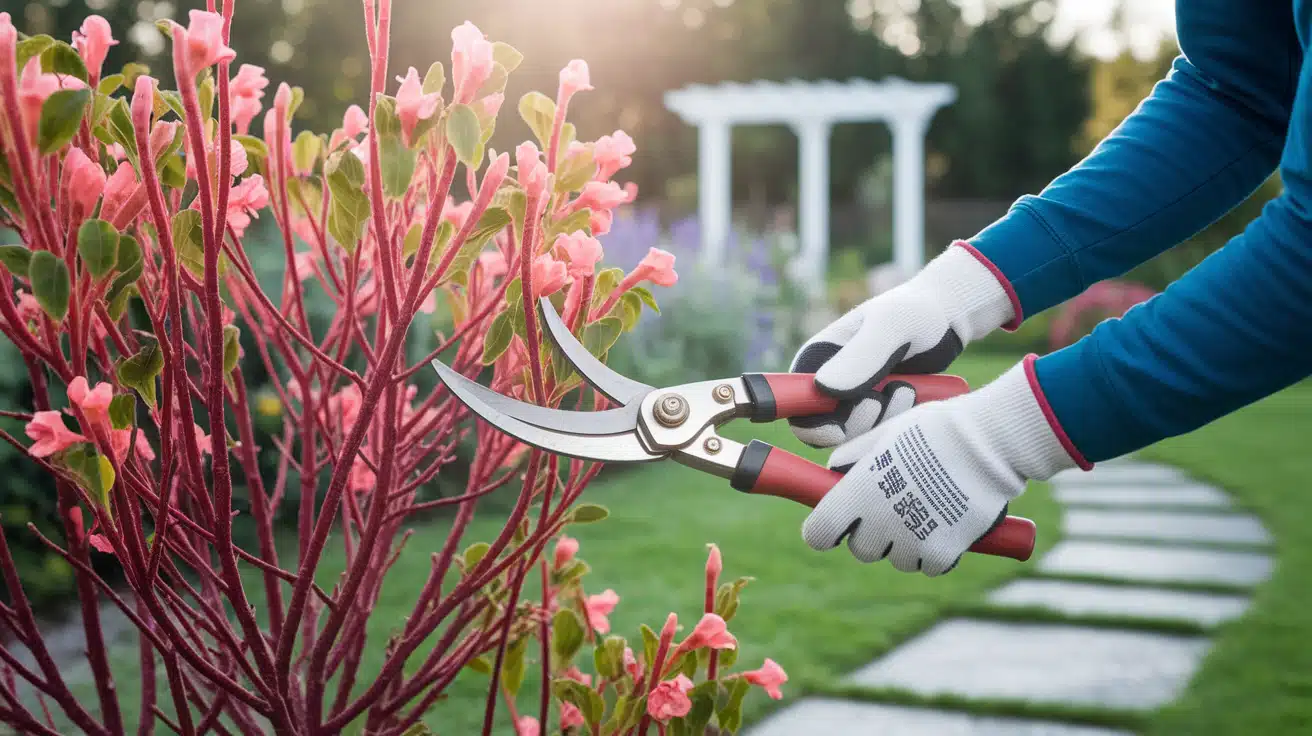
An angled cut helps a stem drink water faster. It creates a larger surface area than a flat cut, so the stem can pull in more water at once. A flat cut can also press against the bottom of the vase, blocking water flow almost entirely.
Follow these steps for the best results:
- A dedicated pair of floral shears, kept separate from your other essential gardening tools, stays sharper longer since it isn’t used on wire or bark.
- Cut half an inch to one inch off the bottom of each stem.
- Recut stems every time you change the water in the vase.
Florists often trim stems the moment flowers arrive, before doing anything else. This step, known as conditioning, matters because a damaged or crushed stem struggles to absorb water.
Step 2: Remove Leaves Below the Water Line
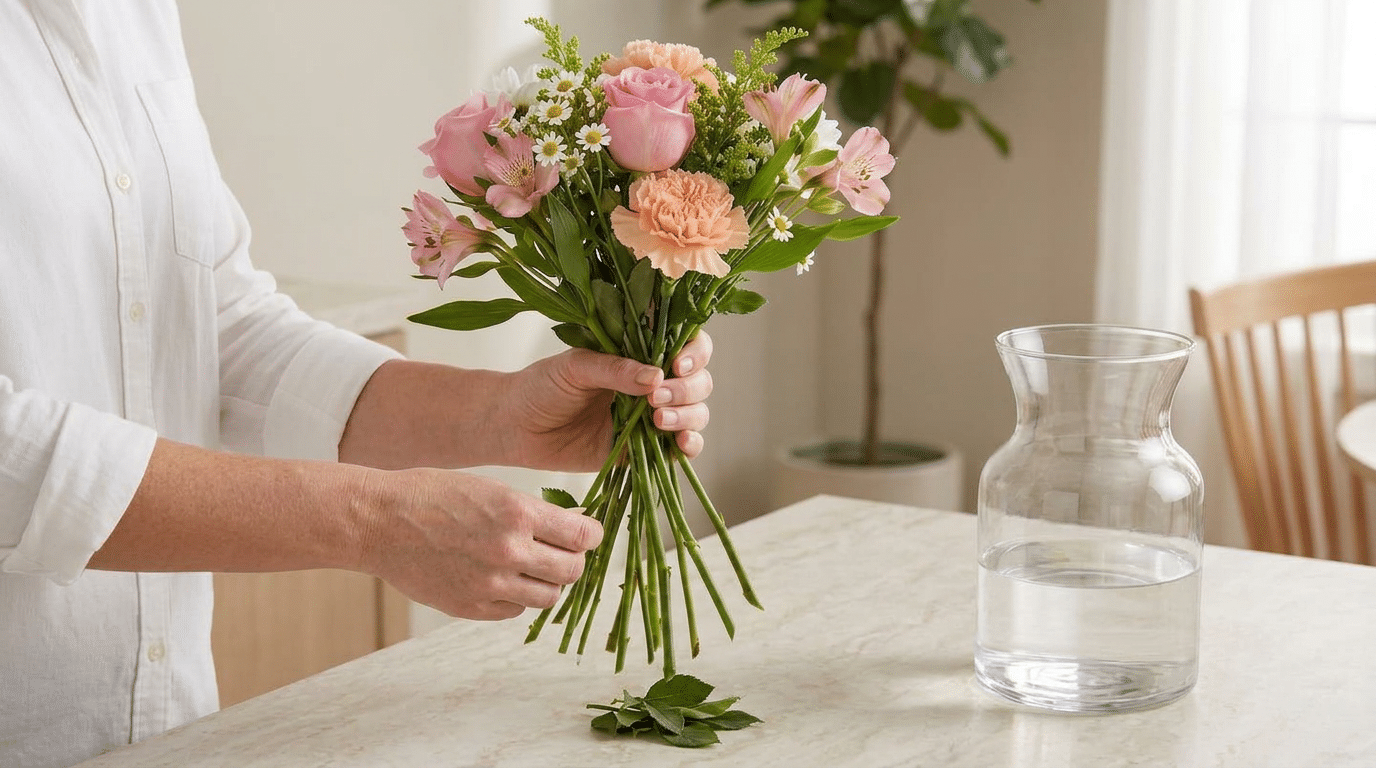
Any leaf sitting underwater will start to break down within a day or two. As it decays, it feeds bacteria in the vase. That bacteria spreads through the water and clogs the stems, which blocks the flow of water to the petals above.
This is one of the simplest fixes, yet it gets skipped often. A few minutes of prep can add real days to a flower’s life.
Here is what to check before placing stems in water:
- Strip off any leaves that would sit below the waterline.
- Keep only the healthy leaves that stay above the water.
- Check the vase daily for fallen petals or loose leaf debris.
Even one stray leaf floating in the water can start the decay process. Fallen petals do the same thing, so a daily check matters as much as the initial prep work.
This habit alone can keep water cleaner for longer, which means fewer full water changes down the line.
Step 3: Use a Clean Vase and Fresh Water
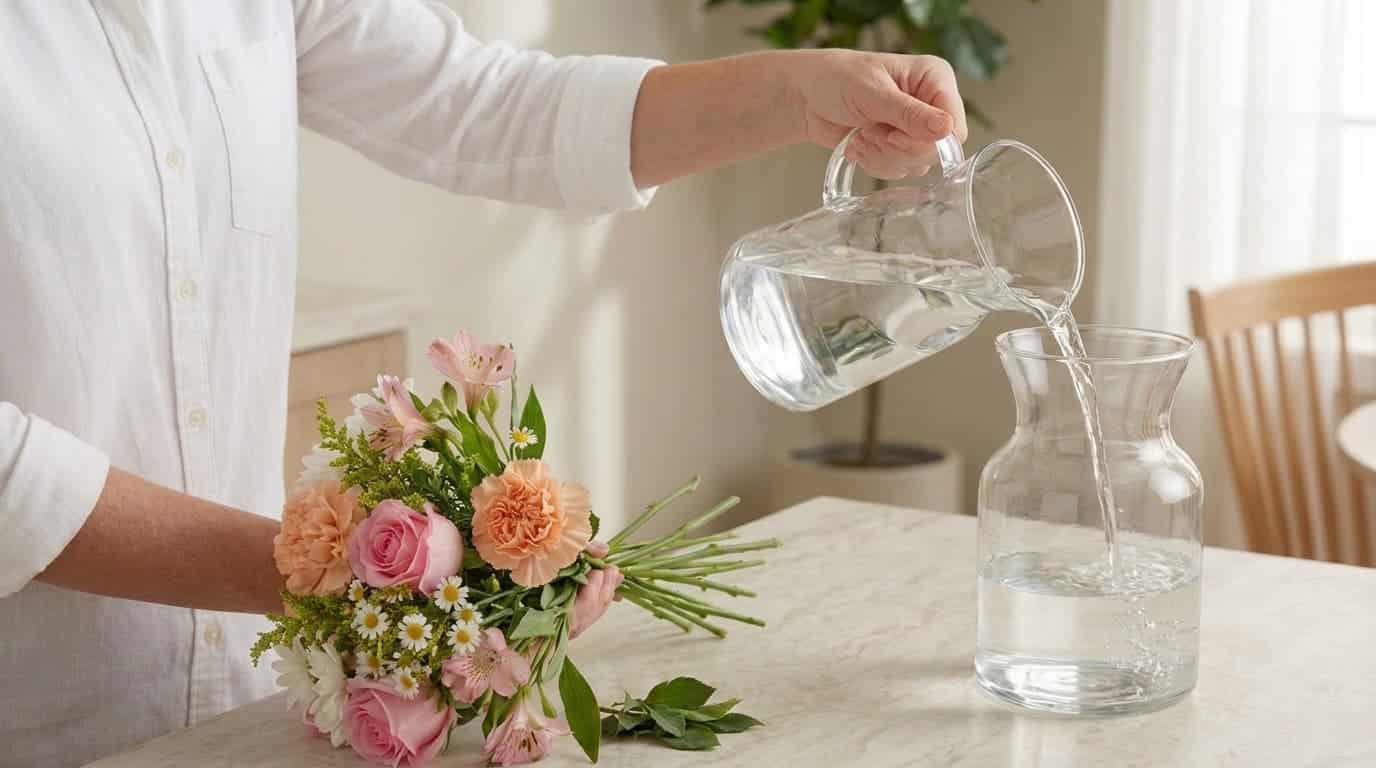
Bacteria are one of the biggest reasons cut flowers wilt early. They build up fast in a dirty vase, even if the water looks clear.
A vase that held flowers last week can carry leftover residue that speeds up bacterial growth in a new batch.
Starting with a clean container gives flowers the best possible chance. Keep these steps in mind before arranging:
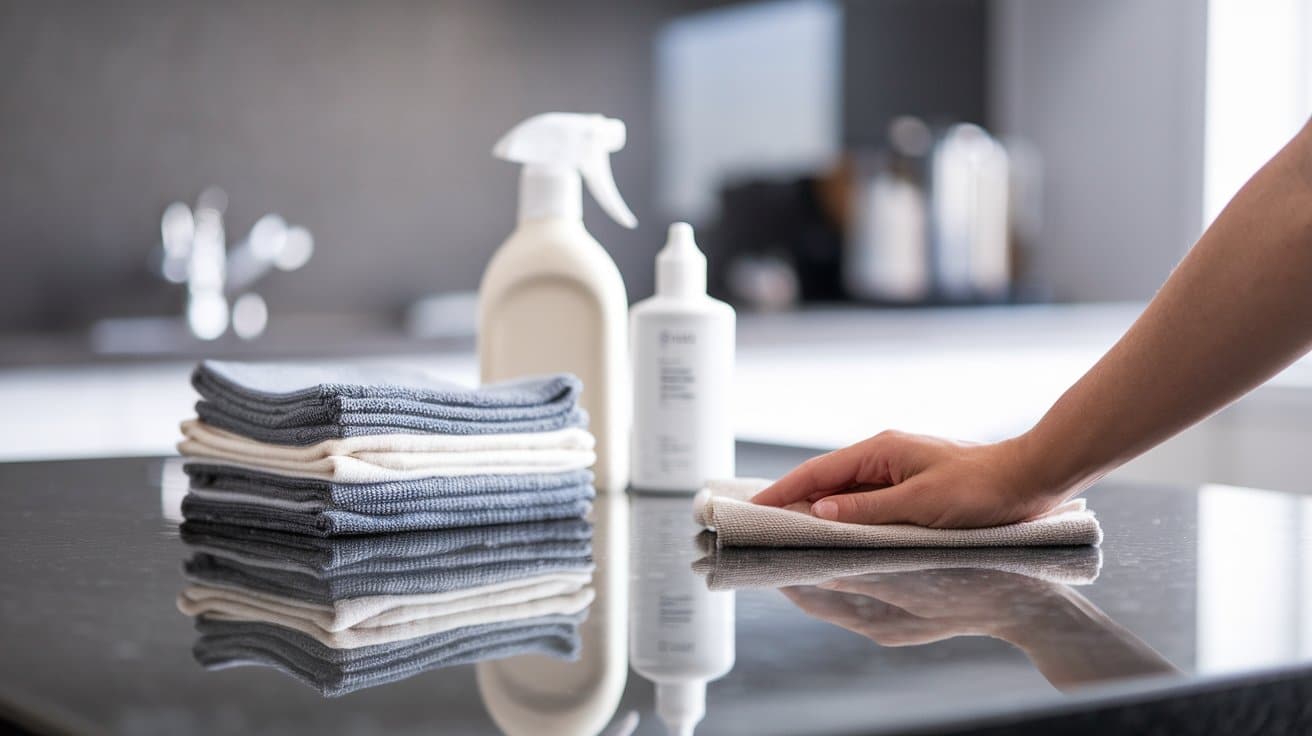
- Wash the vase with warm, soapy water before each use.
- Fill it with fresh, room-temperature water.
- Never reuse old vase water without cleaning the container first.
Room-temperature water is easier for stems to absorb than cold water straight from the fridge. Cold water can shock some stems, slowing their ability to take in moisture right when they need it most.
Step 4: Change Water Regularly
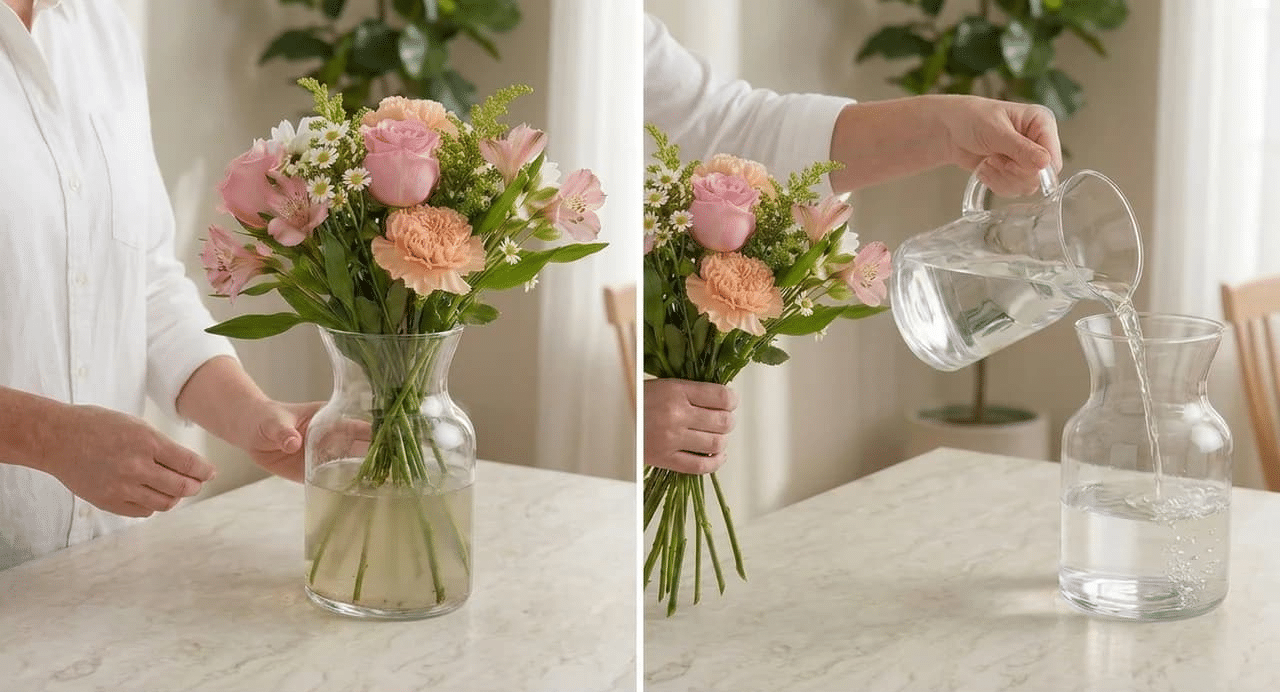
Water left sitting in a vase does not stay clean for long. Bacteria multiply quickly once the water turns still, and that growth speeds up flower decay. Fresh water is one of the easiest ways to keep cut flowers fresh for longer.
Follow these steps to stay ahead of bacterial buildup:
- Replace the water every one to two days.
- Rinse the vase each time, not just the water inside it.
- Trim the stems slightly before placing flowers back in fresh water.
A quick rinse matters because bacteria cling to the sides of the vase, not just the water itself. Skipping this step means new water gets contaminated almost right away.
Step 5: Add Flower Food or a Homemade Preservative
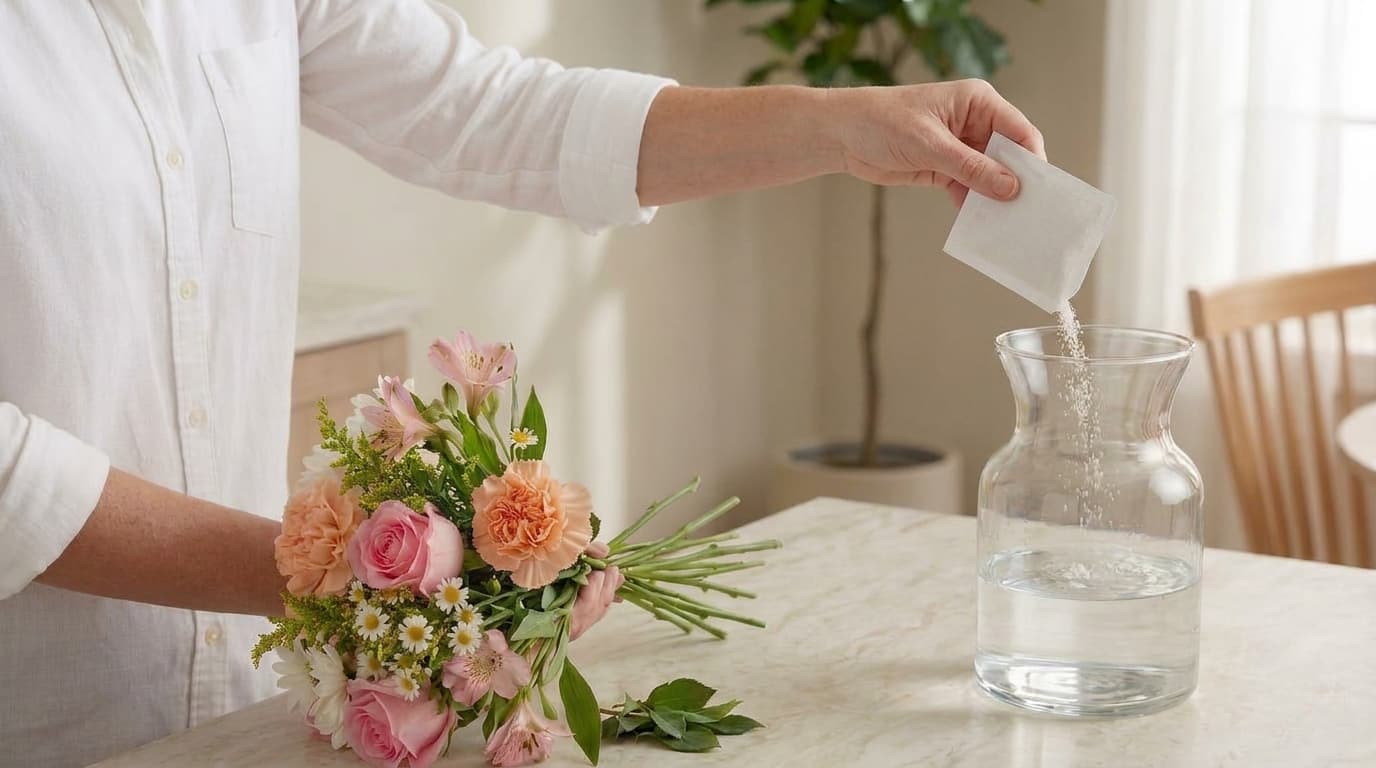
It combines three things flowers need to stay fresh: sugar for energy, an acidifier to help water move up the stem, and an antibacterial ingredient to slow bacterial growth.
Most bouquets come with a small packet of commercial flower food. These packets are already balanced correctly, so following the instructions on the label works best.
Keep these points in mind when using flower food:
- Use the commercial packet included with store-bought flowers when possible.
- Mix it at the correct dilution listed on the packet.
- Avoid adding extra sugar on top of the packet, since too much sugar feeds bacteria instead of the flowers.
A homemade preservative can work in a pinch, but balance matters more than people expect. A small amount of sugar helps flowers, while too much creates the opposite effect.
Commercial packets remove the guesswork, which is why florists rely on them for consistent results across different flower types.
Step 6: Keep Flowers Away From Heat and Direct Sunlight
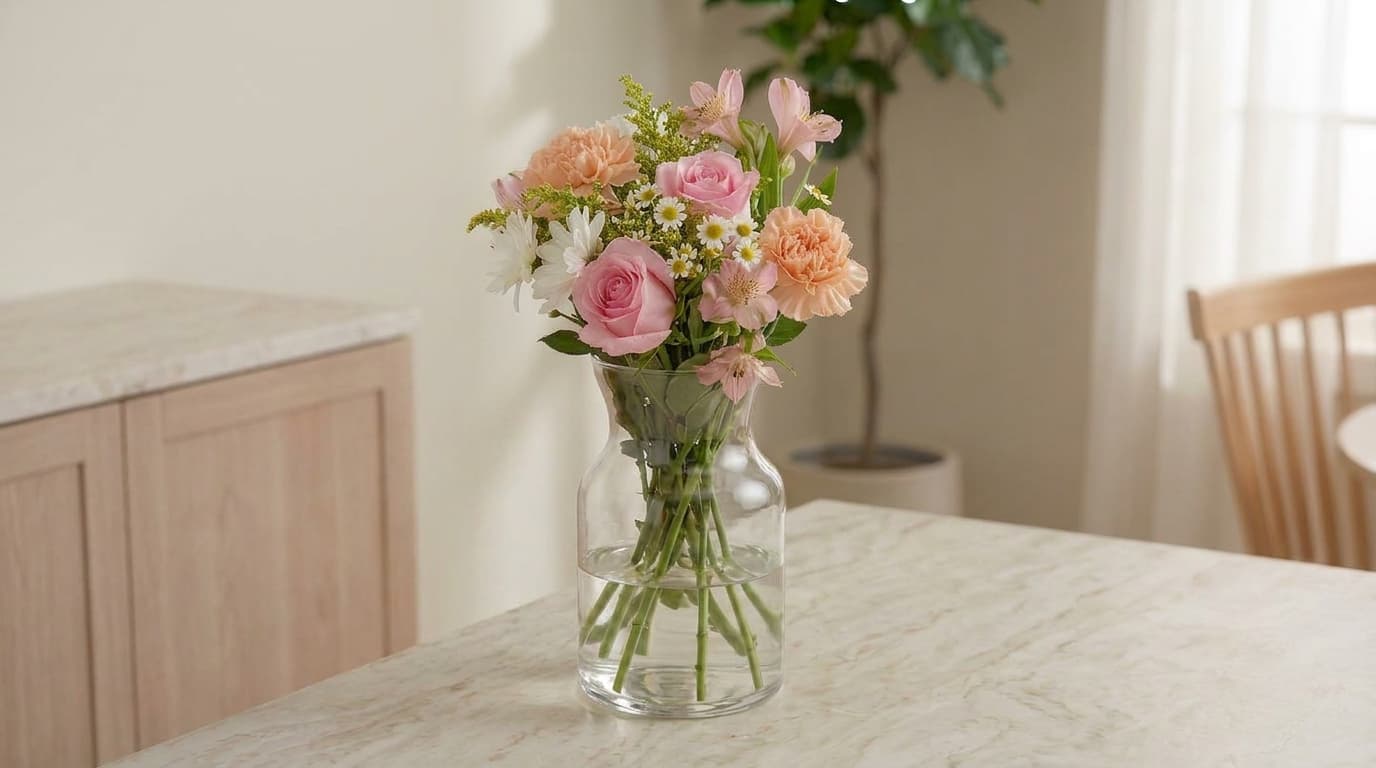
Warm conditions pull moisture out of petals faster than stems can replace it. Direct sunlight adds even more heat, which speeds up wilting no matter how well the flowers were prepped beforehand.
Avoid placing arrangements near these common heat sources:
- Sunny windows
- Radiators
- Kitchen appliances
- Heating vents
Choose a cool, stable spot with indirect light to keep flowers longer than near warm windows or busy counters.
Mix your own solution with 1 tsp sugar, 1 tsp vinegar, and a few drops of bleach per quart to feed stems, balance pH, and prevent bacteria.
Avoid direct sun and heat sources, as even a few hours can shorten a flower’s vase life.
Step 7: Mist and Maintain Flowers Properly
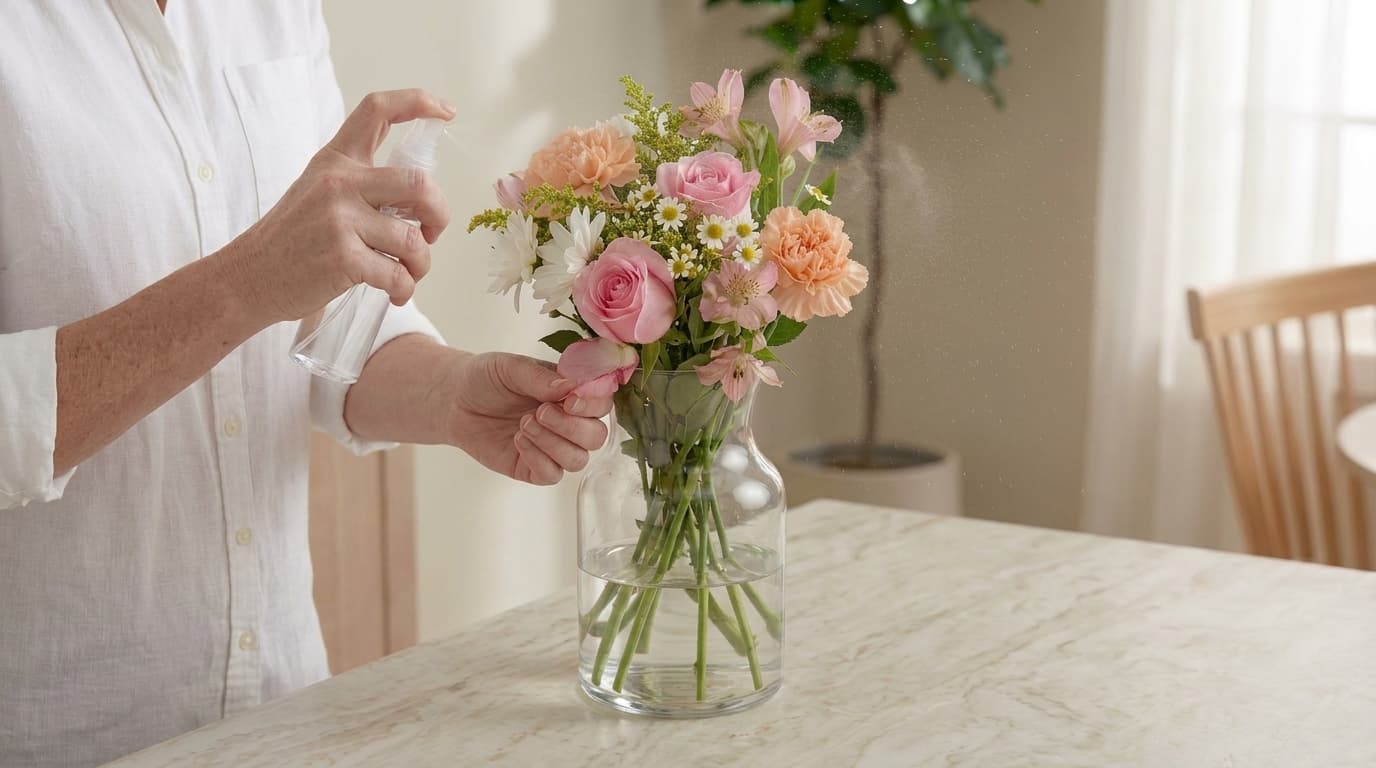
Misting helps some flowers and harms others, so it pays to know which type is in the vase before reaching for a spray bottle.
Flowers that prefer humidity benefit from a light mist now and then. Others, especially those prone to fungal issues, do better when kept completely dry.
Keep these points in mind:
- Lightly mist flowers that thrive in humid conditions.
- Remove wilted petals as soon as you notice them.
- Keep petals dry on flowers that are prone to fungal spots.
A build-up of moisture in a closed space can do more harm than good, since it creates the same damp conditions that encourage mold and fungal growth.
I’ve had the best luck reserving misting for hydrangeas and other big-petaled blooms, and skipping it entirely on anything with soft, papery petals like ranunculus.
Store Fresh-Cut Flowers Correctly Before Arranging
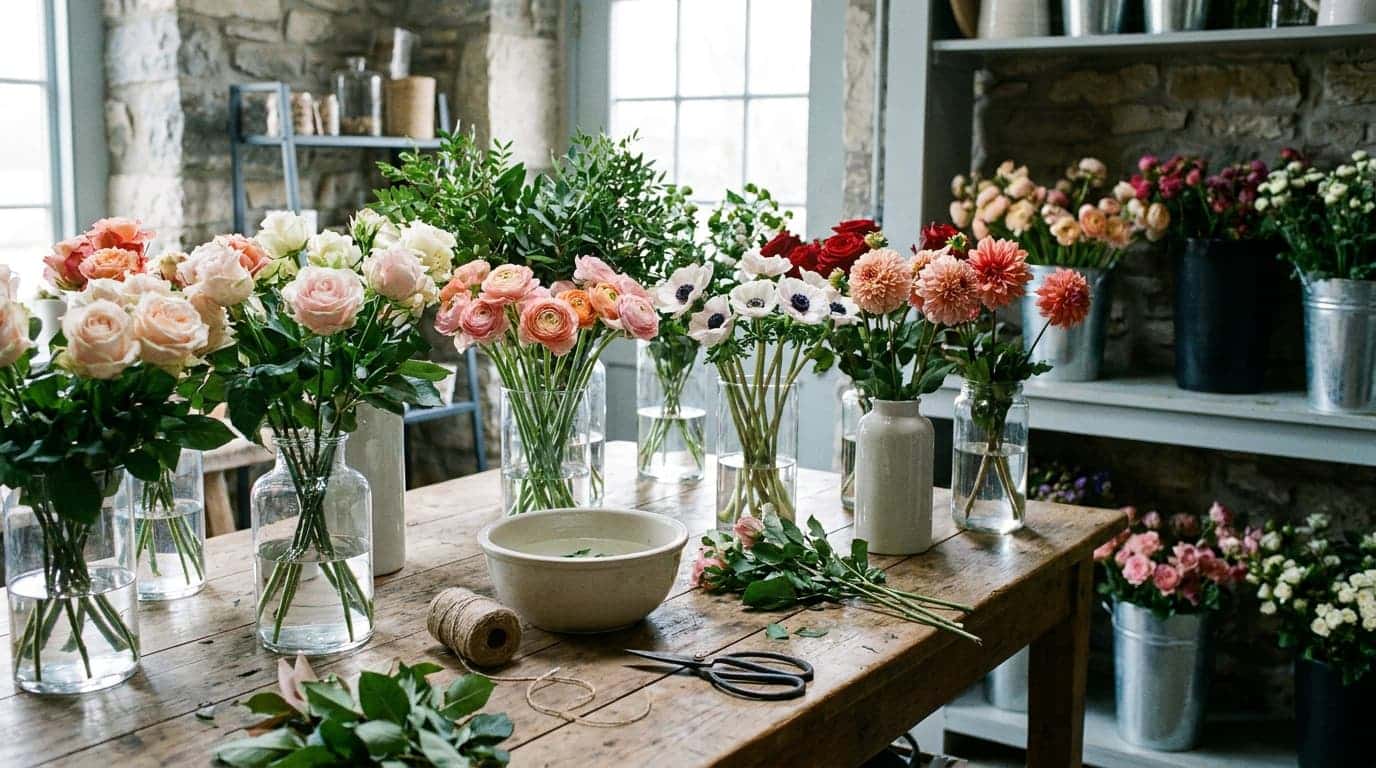
What happens in the first few hours matters as much as anything done later; flowers left out of water, even briefly, lose the head start gained from a clean cut.
- Water immediately: Place stems in clean water as soon as you get them home.
- Keep it cool: Store flowers in a cool spot before arranging.
- Give them room: Avoid overcrowding stems in one container.
- Let them hydrate: Give flowers several hours to drink before arranging.
- Remove damaged blooms: Pull any bruised or broken stems before building the display.
Crowded stems compete for water and space, which bruises petals and blocks flow for whatever’s packed in the middle, so even at this early stage, room to breathe keeps the whole batch healthier.
How to Condition Fresh-Cut Flowers Like a Florist
Conditioning is the step many guides skip, yet it makes the biggest difference in how flowers hold up over time. It is the process of preparing flowers right after cutting so they can recover and absorb water more easily.
Here is how florists condition flowers before any arrangement takes shape:
- Prepare clean tools and containers before touching the flowers.
- Remove any damaged or bruised foliage first.
- Cut stems underwater when working with flowers that wilt easily.
- Let flowers hydrate fully before arranging them.
- Keep flowers in a cool location during this process.
- Check water quality daily, even before arranging begins.
Common Mistakes That Make Cut Flowers Wilt Faster
Even careful arrangers make small mistakes that shorten a flower’s vase life. Most of these mistakes are easy to fix once you know what to look for.
Here are the most common ones:
- Using dirty vases: Leftover bacteria from a previous arrangement spreads fast in new water.
- Leaving leaves underwater: Submerged foliage decays and feeds bacteria within a day or two.
- Placing flowers near fruit bowls: Ripening fruit releases ethylene gas, which speeds up wilting in nearby blooms.
- Forgetting to change the water: Stagnant water becomes a breeding ground for bacteria within a few days.
- Cutting stems with dull scissors: A crushed stem cannot absorb water as well as a clean, angled cut.
- Adding too much homemade preservative: Extra sugar or acid can do more harm than good.
- Keeping flowers in hot rooms: Heat pulls moisture from petals faster than stems can replace it
Do Different Flowers Need Different Care?
General care tips work for most flowers, but some blooms need a little extra attention. Knowing these small differences can help specific flowers last much longer in the vase.
| Flower | Specific Care Tips |
|---|---|
| Roses | Remove outer petals if they look damaged or bruised, the same instinct you’d use when pruning roses in the garden. Change the water frequently to keep bacteria levels low. |
| Tulips | Trim stems regularly, since tulips continue growing even after being cut, the same restless growth habit that makes timing tulip bulb planting each fall so important. |
| Hydrangeas | Give extra hydration due to their large, water-hungry blooms, and recut the stems often- the same attentiveness that pays off when pruning hydrangeas for the best blooms. |
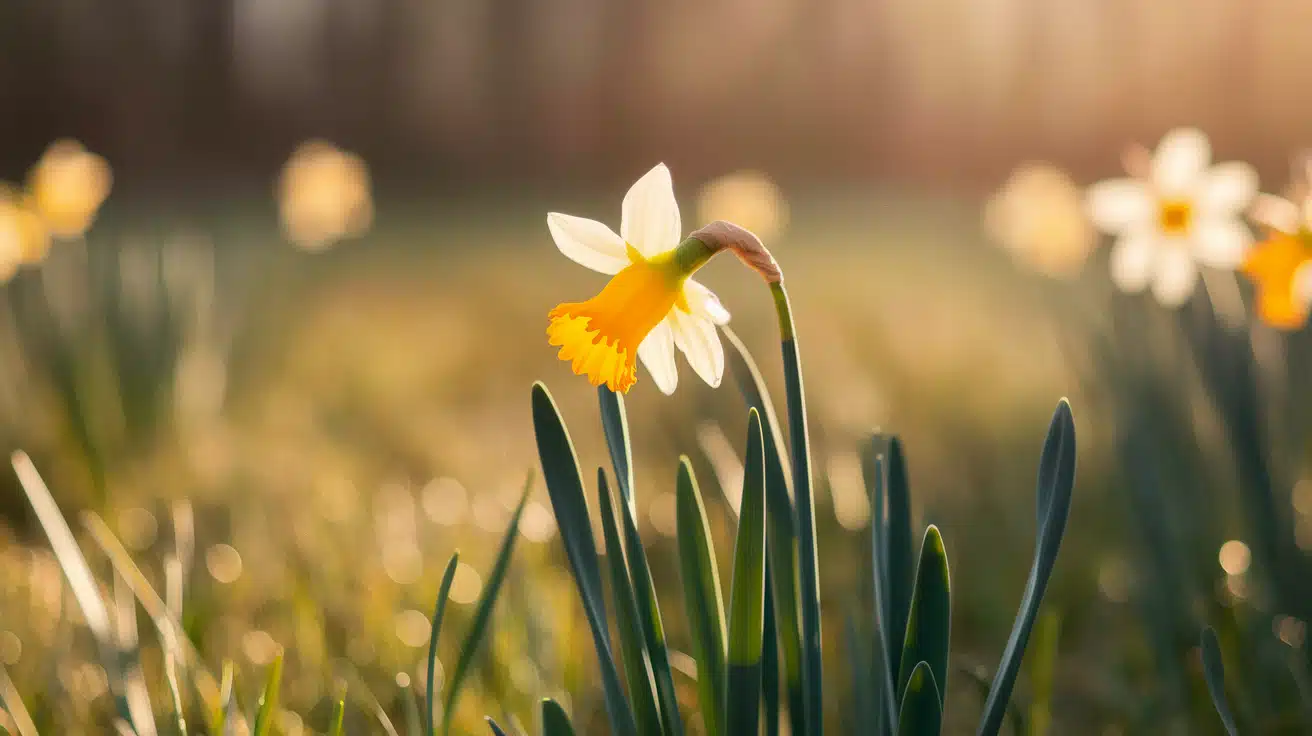
| Daffodils | Keep separate from other flowers at first, since their sap can affect nearby stems. |
Wrapping It Up
Keeping cut flowers fresh comes down to a few repeated habits: clean water, an angled cut, and a cool spot do most of the work. The rest is just checking in every couple of days.
Different flowers need slightly different care, but the basics stay the same across nearly every type I’ve worked with.
A little conditioning before arranging, paired with regular upkeep, keeps flowers looking their best for as long as possible.
None of this takes more than a few minutes. It’s often the difference between a bouquet you discard after three days and one that remains on the table for a week.
Try these steps with your next bouquet and enjoy extra longevity.
Frequently Asked Questions
How Do You Make Cut Flowers Last Longer?
Yes, with basic care. The habits that matter most are a fresh angled cut, clean water changed often, and a spot away from heat. Each is covered in detail above.
Does a Copper Penny Keep Flowers Fresh?
Only slightly; copper has mild antibacterial properties, but most pennies made after 1982 are zinc with a thin copper coating, so the effect is weak and inconsistent.
Should You Refrigerate Cut Flowers Overnight?
It can help; florists store flowers around 34-38°F to slow aging between uses. At home, an unused fridge shelf overnight works, but avoid it if the fridge holds fruit.
Does Sugar Make Cut Flowers Last Longer?
Yes, but only in small amounts. Sugar feeds the stems, but without something to control bacteria alongside it, sugar alone can speed up cloudy water instead of preventing it.
Does Aspirin Help Keep Flowers Fresh?
Aspirin is not a reliable flower preservative. Proper hydration, clean water, and commercial flower food work better.