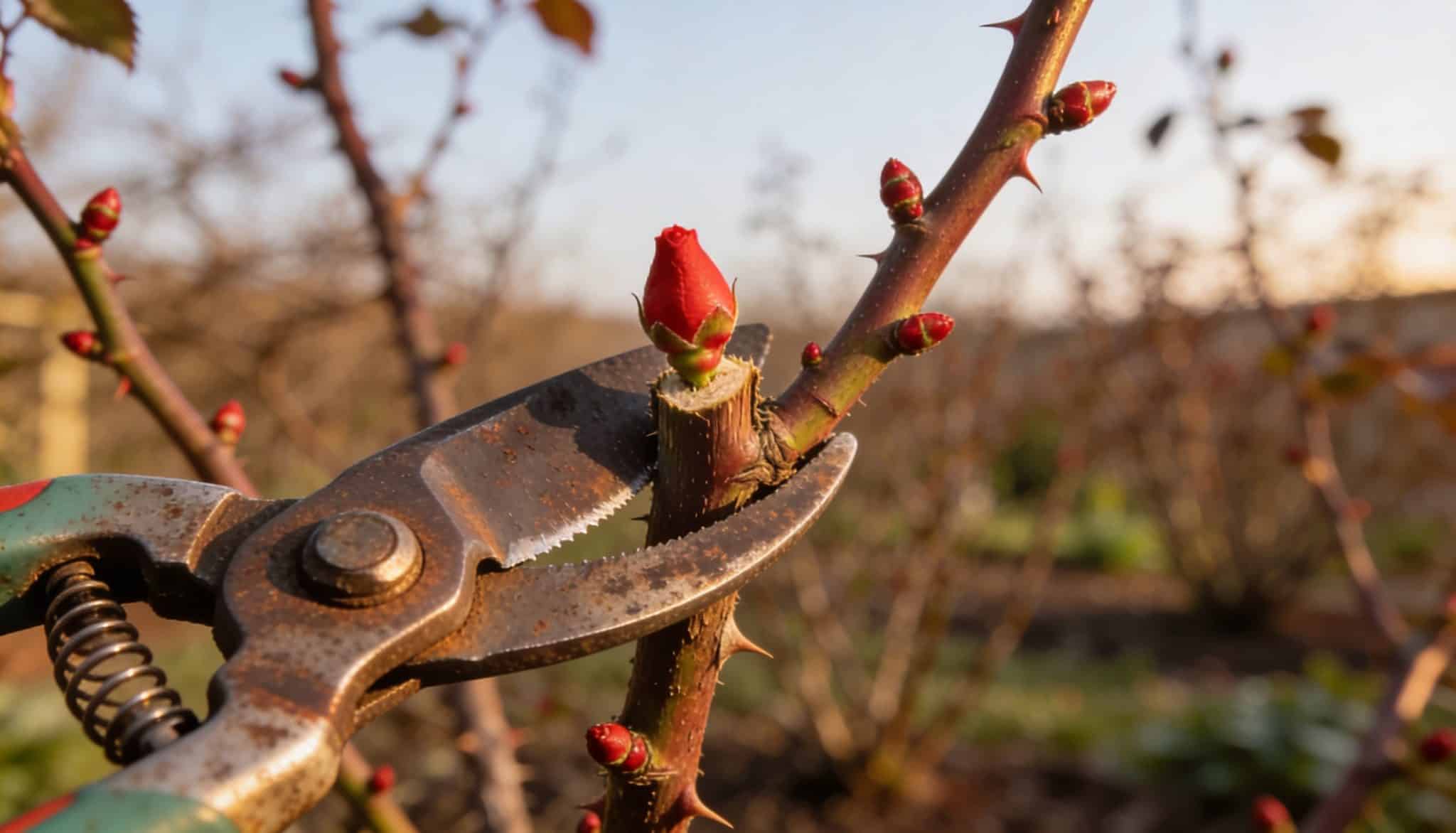

Every spring, gardeners ask me the same question while standing before a rose bush, pruners in hand:
When to prune roses? After 12 years, I’ve learned calendar dates aren’t the best guide.
Late winter to early spring spans a twelve-week window, influenced by where you live, the type of rose you have, and how the past winters have affected your garden’s timing.
I’ll show you when to prune each rose type and what to do if you’re late.
Understanding these factors will help you know exactly when to prune roses for healthy growth and beautiful blooms.
When to Prune Roses?
There’s a practice called phenology, reading the seasonal rhythms of your local landscape rather than a date on a wall calendar.
It’s the first thing I check in my own garden each March, before I even look at the roses themselves.
A reliable pruning signal is the blooming of forsythia, the bright yellow burst that appears before the plant even has leaves.
When forsythia blooms, it indicates that soil temperatures and ambient air conditions are ideal for roses to begin their spring cycle.
This timing aligns you with the plant’s natural rhythms, as forsythia and roses share a “wake-up clock” that breaks dormancy under similar thermal conditions after winter.
How to Prune Roses Correctly: Step-by-Step
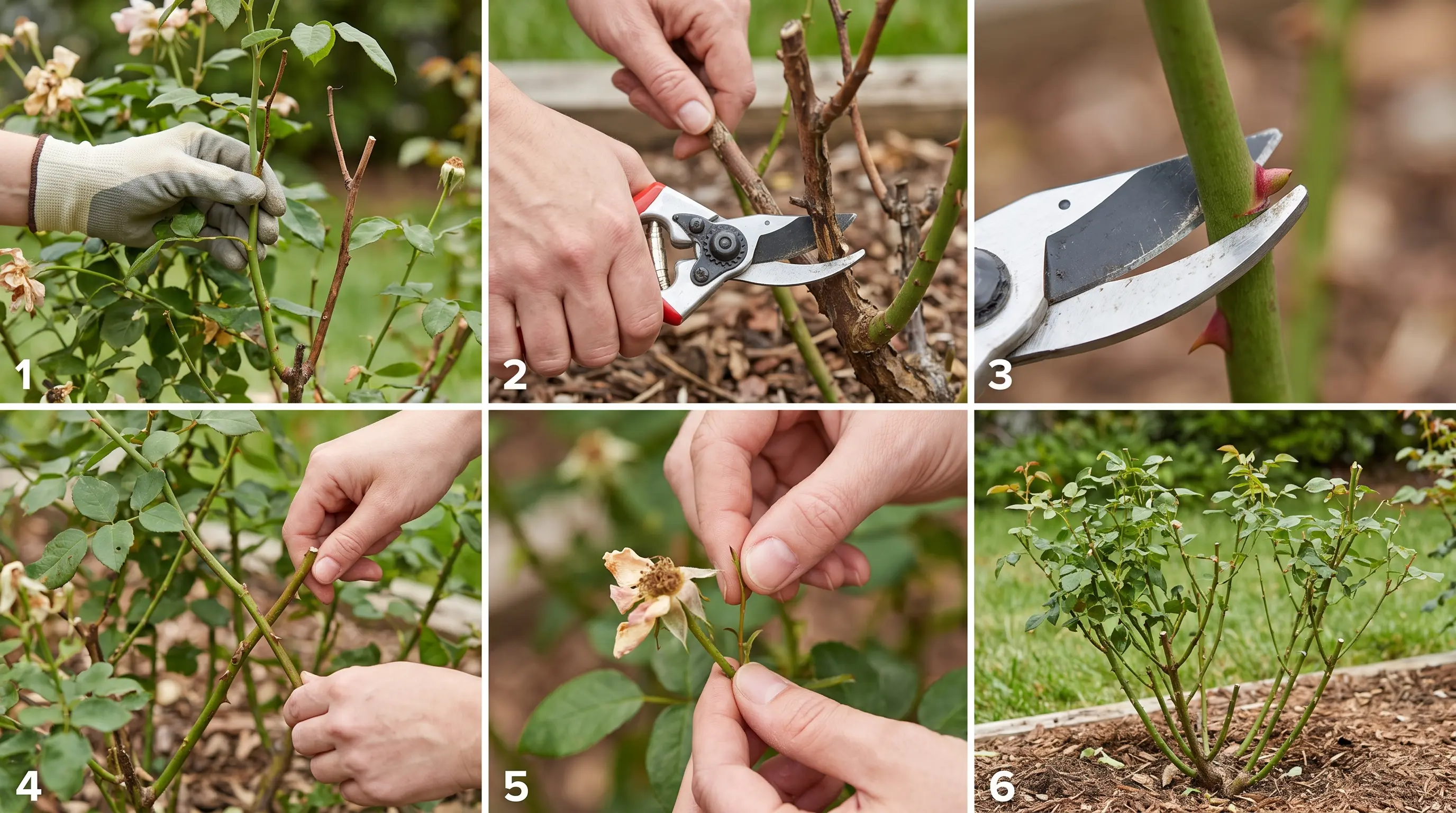
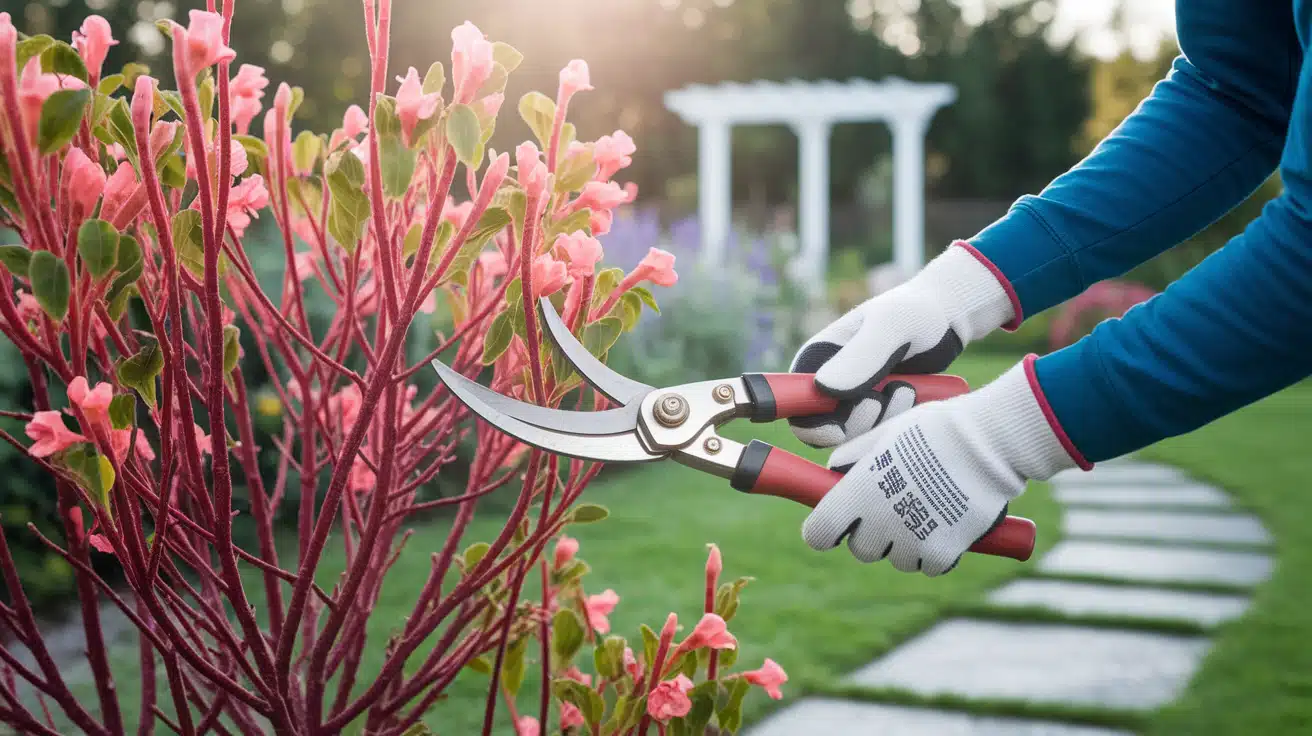
For canes thicker than 3/4 inch, use loppers, part of the basic gardening tool kit worth keeping on hand year-round.
Wipe the blades with rubbing alcohol before you start, and again between plants if you’re working through a garden bed. Fungal spores transfer on steel.
Step 1: Remove Dead Wood
Start by inspecting the rose bush and identifying any unhealthy canes before making cuts. Remove brown, shriveled, damaged, or hollow stems back to the base or until you reach healthy green tissue.
Use the scratch test by lightly scraping the cane surface; green underneath indicates live growth, while brown tissue should be removed.
Step 2: Cut Crossing Canes
Remove any canes that cross, rub against each other, or grow toward the center of the plant. These branches can create crowded conditions and reduce airflow, increasing the chance of disease.
Cut them at the base and keep strong, outward-growing canes that help maintain an open, balanced shape.
Step 3: Remove Weak Growth
Thin out small, weak stems that are thinner than a pencil, as they usually produce fewer flowers and weaker growth.
Removing these canes allows the plant to direct energy toward stronger branches. Clear out any spindly shoots growing from the base or crowded areas of the rose bush.
Step 4: Shorten Remaining Canes
Trim the healthy remaining canes to encourage new growth and better blooms. For hybrid teas and floribundas, cut stems back by one-third to two-thirds depending on the plant’s size and condition.
Make each cut about ¼ inch above an outward-facing bud eye at a slight angle to guide growth away from the center.
Step 5: Check the Cut Surface
After pruning, inspect each cut to make sure the cane is healthy inside. A clean cut should reveal white or pale green pith in the center. If the cut surface appears brown, dry, or hollow, continue trimming lower until you reach firm, healthy tissue.
Step 6: Clean Up Debris
Remove all pruned stems, fallen leaves, and plant debris from around the rose bush after finishing. Old debris can harbor fungal spores and pests that may affect new growth.
Disinfect pruning tools between plants and dispose of infected material properly to keep roses healthy.
Once the bed is clear, giving the plant a correctly dosed feed speeds recovery without pushing weak, tender growth.
When to Prune Roses by USDA Hardiness Zone
The ideal time to prune roses depends on your climate zone and winter conditions. Use this USDA Hardiness Zone guide to find the best pruning window for healthier growth and stronger blooms.
| USDA Hardiness Zone | Best Time to Prune Roses | Pruning Tips |
|---|---|---|
| Zones 3–4 | Late March to mid-April | Wait until the worst of winter has passed. Protect new growth from late frosts with mulch, and avoid pruning if a hard freeze is expected within the next 10 days. |
| Zones 5–6 | Mid-February to late March | Prune when buds begin to swell rather than relying only on the calendar. Forsythia blooming is a reliable seasonal indicator. |
| Zones 7–8 | Late January to late February | Mild winters can trigger early growth. Use the scratch test to confirm the canes are alive before pruning. |
| Zones 9–11 | December through January | Roses may not become fully dormant. Prune during their natural rest period, when flowering slows, and cane color appears duller. |
The same bud-swell cue applies to other spring-pruned shrubs. Hydrangeas follow a nearly identical signal, which is why the two are often pruned in the same weekend.
Note: The USDA updated its Plant Hardiness Zone Map in 2023, with many areas shifting warmer. Check your current zone, as local conditions like walls, urban heat, and frost pockets can change pruning time by 2–3 weeks.
What to Use if You Have No Forsythia Nearby
These options can serve as alternative indicators, listed approximately from most to least reliable.
- Crocus emerging and blooming (soil temps typically 40–45°F)
- Daffodil foliage showing 3–4 inches above ground
- The rose’s own bud swells, as described above
- Soil thermometer reading 38–42°F at 4-inch depth, sustained for a week
When to Prune Roses by Type
This is where most guides go right, but still leave gaps. The timing varies meaningfully by type, and the reason for the variation matters as much as the rule itself.
1. Hybrid Teas, Floribundas, and Grandifloras
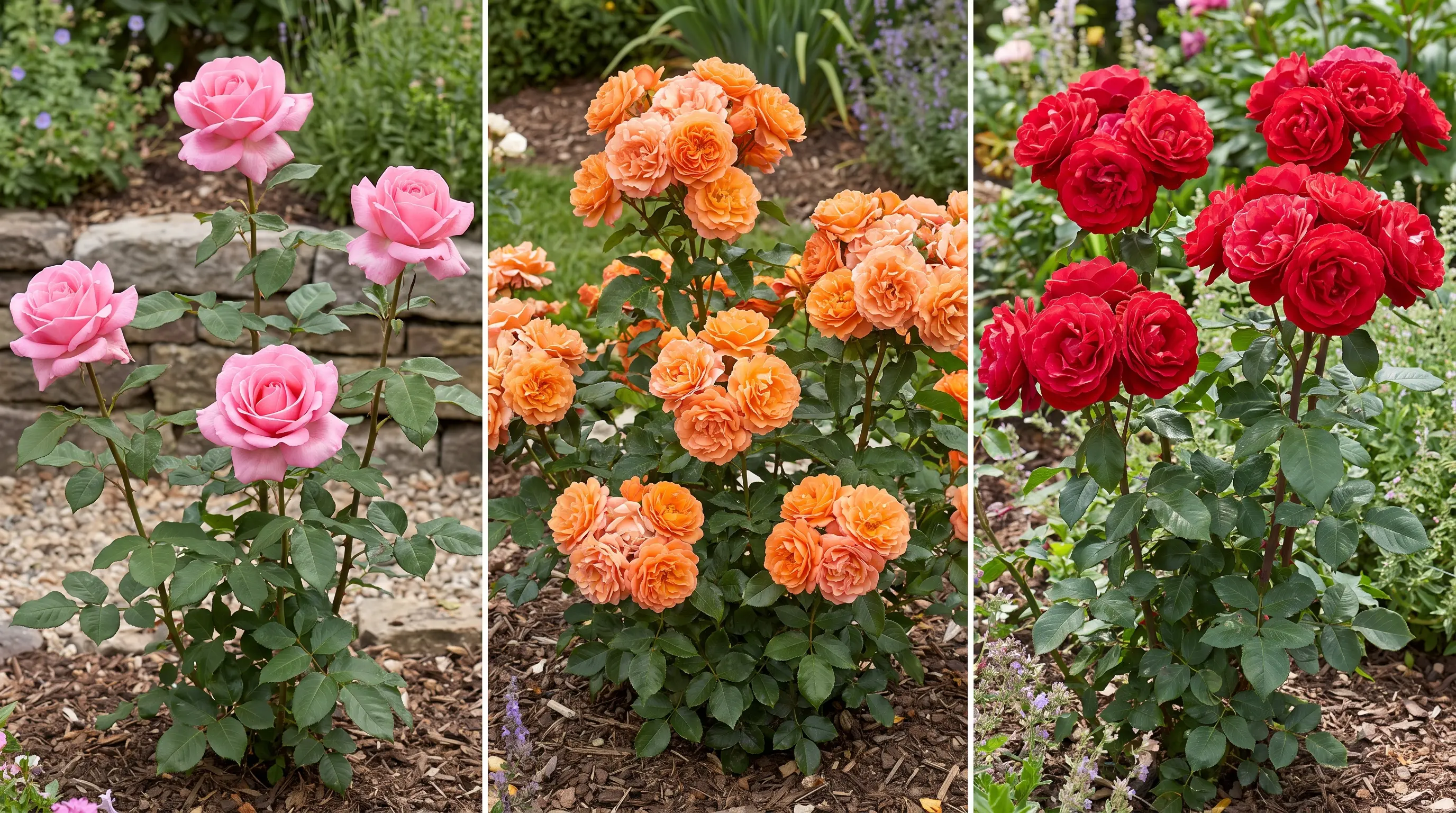
These are repeat bloomers that produce their best flowers on new wood canes grown in the season. Hard spring pruning is exactly what they want.
Wait until about half the buds along the canes are swollen, then cut back the plant by one-third to two-thirds of its height, leaving 3–6 healthy outward-facing canes.
The lower you cut a hybrid tea, the larger each individual bloom will be, but the fewer blooms overall.
Leave them taller, and you get more flowers on shorter stems. Neither is wrong; it depends on what you’re growing them for.
2. Modern Shrub Roses and Knockout Types
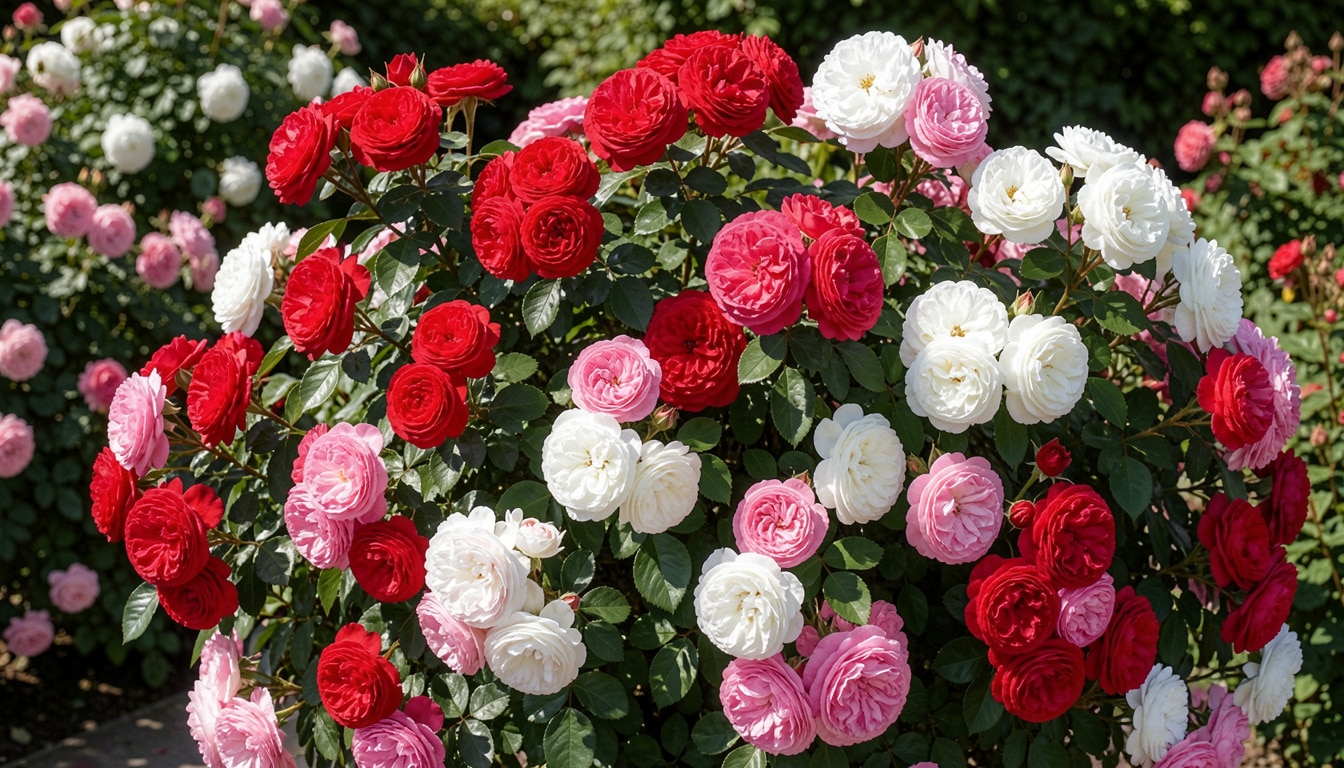
Knock Out roses are pruned back hard once a year, in late winter, to about 12 inches, when new shoots are just beginning to appear on the canes.
The plant will triple in size by mid-season. For shrub roses, use the one-third renewal method: remove the oldest third of canes, keep middle-aged ones, and shorten the youngest by a third.
Done annually, this keeps the plant continuously young without ever needing a drastic cut.
The same one-third renewal logic is why red robin shrubs get thinned out in stages rather than cut back all at once.
3. Once-Blooming Old Garden Roses

Gallicas, albas, centifolias, damasks, and moss roses bloom on wood that grew the previous season. If you prune them in spring before they flower, you’re removing this season’s blooms.
The rule: prune within a month of finishing flowering, typically June or early July. Then leave them alone.
I’ve watched gardeners make this mistake every year: they see their old roses looking rangy in March, cut them back, then wonder why they got almost no flowers. The wood you’re removing in spring is the wood carrying the buds.
4. Climbing Roses
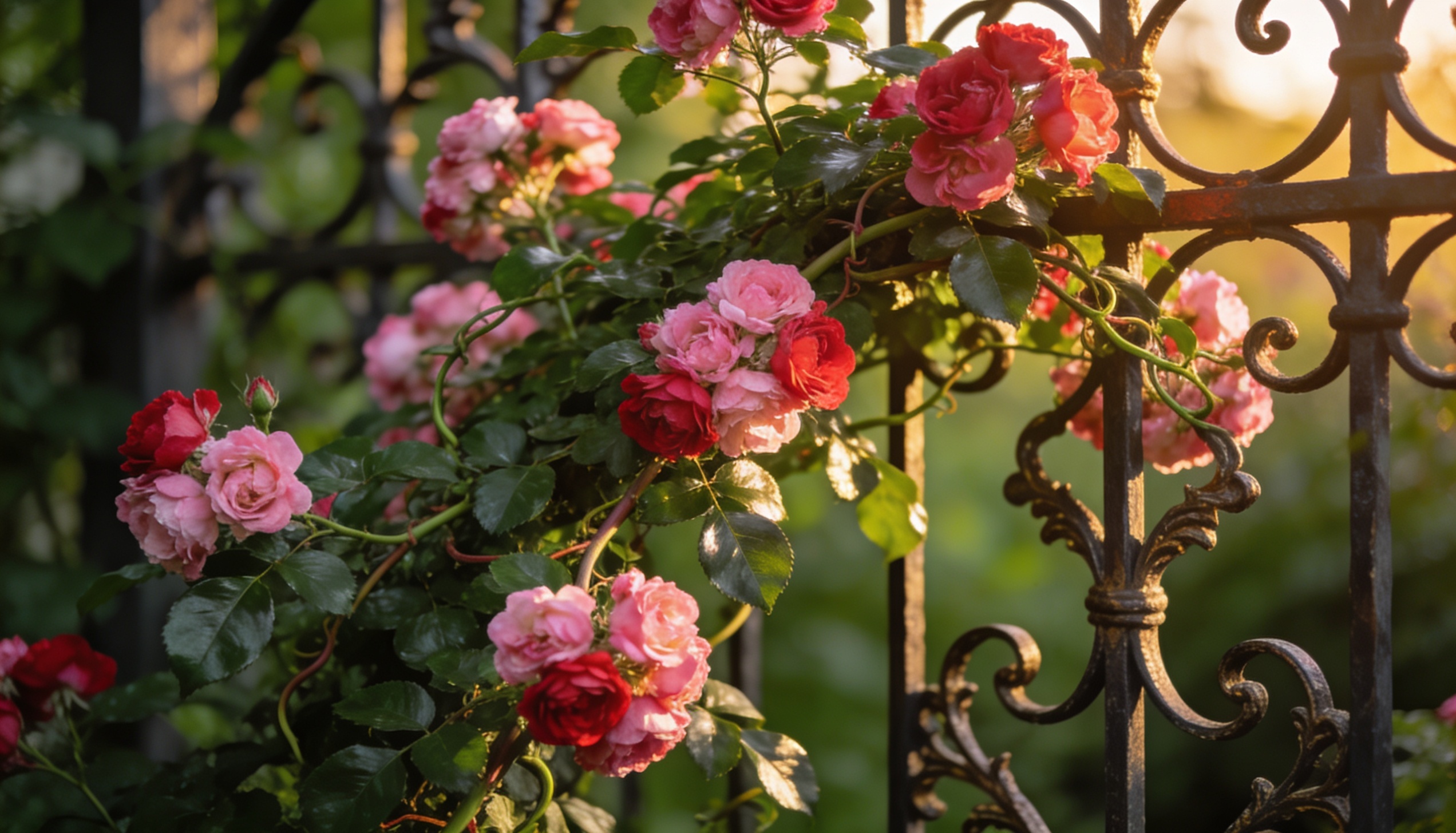
Don’t make any major cuts to a climbing rose in its first three years. Remove dead, diseased, or damaged canes, and that’s it.
The plant is building its main cane structure, which will carry flowering side shoots for years. Cut into that framework too early, and you restart the clock.
After year three, the main canes stay. Shorten the lateral shoots and the side branches to 2–3 buds or about 6 inches in early spring.
On a mature climber, you can selectively remove one or two of the oldest main canes at the base each year to make room for new ones coming up from the crown.
5. Rambling Roses
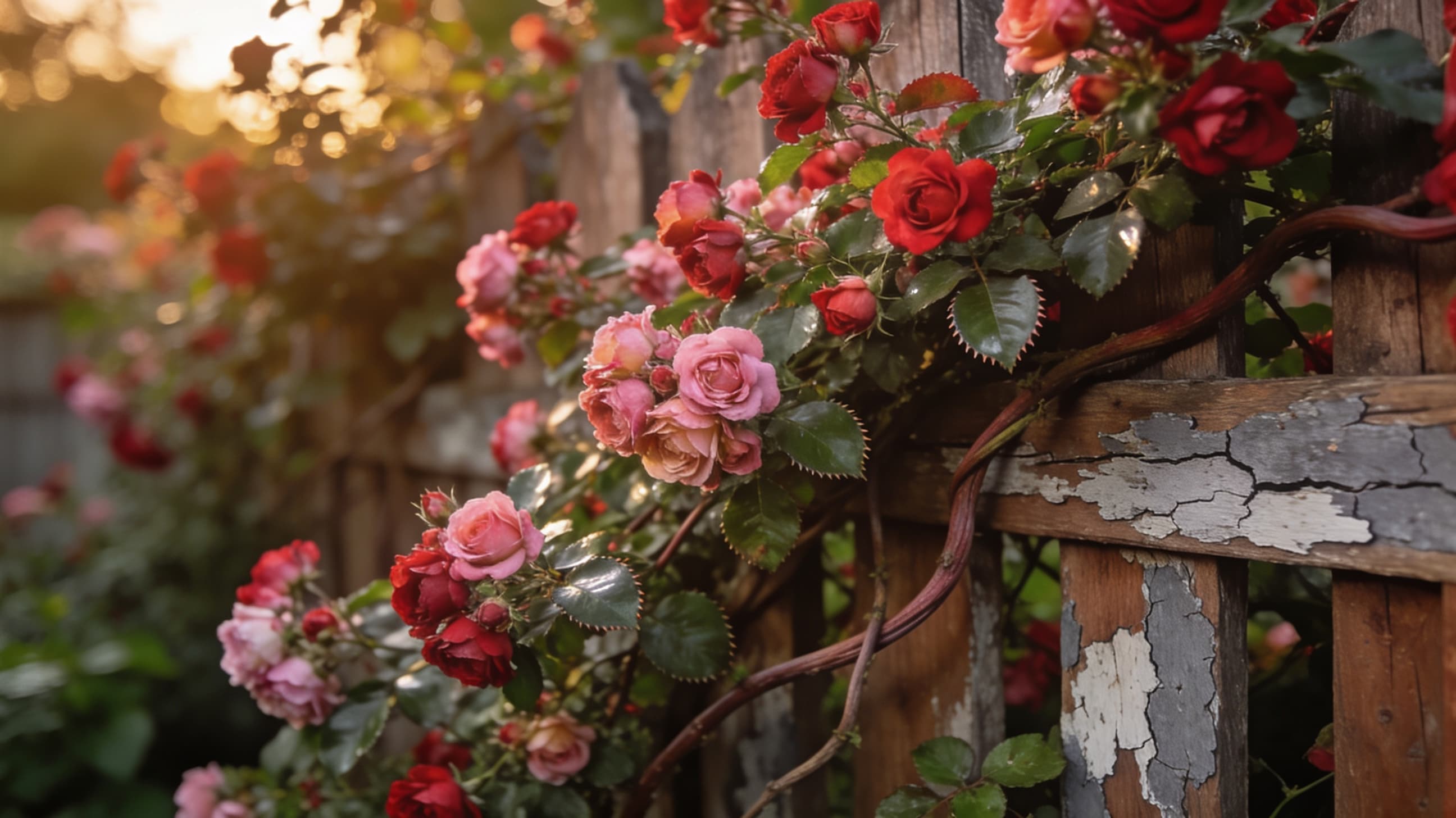
Rambling roses bloom once a year and produce flowers on the previous season’s growth, much like old garden roses.
Prune them immediately after flowering in early to midsummer, not in spring.
The canes produced after pruning will carry next year’s flowers, protecting them through fall and winter.
6. Miniature Roses

Same biology as hybrid teas: they bloom on new wood and benefit from hard spring pruning. Scale the cuts down to match the plant’s size, but don’t be timid.
A properly pruned miniature looks as if it were cut nearly to the ground, and it grows back vigorously.
Is It Too Late to Prune Roses?
It’s rarely too late to prune roses, even once buds have swollen or new leaves have opened. The approach just changes depending on how far the plant has progressed.
- Buds swollen, no leaves yet: proceed with the normal hard prune for your rose type; nothing changes.
- New leaves out, no flowers yet: still prune, just lighter. Stick to removing dead, crossed, and weak wood rather than the full one-third to two-thirds cut.
- Plant fully leafed or already budding flowers: deadhead and shape lightly instead. A hard cut now sacrifices this season’s first flush of blooms.
- Missed pruning entirely last year: prune as usual this year. One skipped season won’t harm a healthy rose, though the first round of blooms may run smaller until the plant catches up.
The real risk of pruning late is a smaller, later first bloom, not a dead plant.
Pruning vs. Deadheading Roses
Pruning and deadheading both improve rose health, but they serve different purposes.
Pruning shapes the plant, removes old or weak growth, and encourages stronger stems, while deadheading focuses on removing spent blooms to promote continued flowering.
| Aspect | Pruning | Deadheading |
|---|---|---|
| Purpose | Structural: shapes the plant, removes dead wood, and prepares for new growth. | Ongoing maintenance: redirects energy from seed production back to blooming. |
| Timing | Once or twice a year, mainly in late winter or early spring. | Every week or two during the growing season (from first bloom to late summer). |
| When to Stop | N/A (Prune once or twice a year). | Stop 6–8 weeks before the first frost. |
| Self-Cleaning Varieties | N/A | Many Knock Out and modern landscape roses drop their blooms naturally and don’t need deadheading. |
| Impact | Sets up the season’s growth framework. | Encourages continuous blooming throughout the season. |
How to Read Your Rose’s Own Cues for Pruning Timing
You don’t even need a forsythia nearby. Your roses will tell you themselves. Look for:
- Bud swell: The dormant buds along the canes start to fatten and show a hint of red or green. They’re plump but haven’t opened yet. This is the moment.
- Cane color change: Canes that were dull brown or gray over winter start to look greener and slightly waxy. The plant is moving sap.
- The scratch test: Run your thumbnail lightly across a cane. If it leaves a faint green mark, the tissue is alive, and the plant is waking up. If it scrapes off dry and brown, that section is dead and needs to be removed regardless of timing.
When you see buds swell on about half the canes and the forsythia in your neighborhood is blooming, you’re in the window.
Conclusion
Pruning roses well comes down to two things: knowing what type of rose you have, and learning to read your garden rather than a calendar.
These simple signs show when your garden is ready for pruning.
Get the timing right, and the plant does most of the work. Miss it by a few weeks, and you’ll still have roses, just fewer of them, later in the season.
Watch for bud swell before pruning, and the right timing will soon feel natural.
After years of watching first-time rose growers hesitate over a single cut, I can tell you the plant is tougher than the worry suggests.
A well-timed cut once a year is genuinely all they need to grow.
Frequently Asked Questions
What is the Proper Way to Deadhead a Rose Bush?
Cut faded rose blooms just above a healthy set of leaves or an outward-facing bud. Use clean shears to encourage new growth and more flowers.
Should You Still Deadhead Roses in October?
Yes, you can deadhead roses in October, but avoid heavy pruning. Remove faded blooms and spent flowers while leaving healthy hips and stems to help prepare the plant for winter.
How Far Down Do You Cut Roses for the Winter?
Cut roses back lightly for winter, removing dead, damaged, or crossing canes rather than heavily reducing the plant. In colder zones, shorten long stems by about one-third to prevent wind damage.
Can You Prune Roses in the Fall?
Only remove dead, damaged, or diseased canes in the fall. Save major cuts for spring, since fresh growth cut too late in the season can die back over winter.
Do Roses Need to Be Pruned Every Single Year?
Yes. Skipping years leads to smaller blooms and tangled, overcrowded canes. Even a light annual pass keeps the plant healthy and in good bloom.