
How much does a small orangery actually cost in 2026? Most property owners get three very different quotes and have no idea which figure is fair.
One installer says $32,000. Another says $68,000. A third leaves foundations out entirely. That gap is not a mistake. It reflects real differences in size, material, roof design, and what each contractor chose to leave out.
Getting this wrong means spending tens of thousands on a build that underperforms. Getting it right means knowing what drives the price before you speak to a single builder.
In this guide, we’ll walk you through verified 2026 small orangery prices by size and style, so your budget is built on solid facts.
What Does a Small Orangery Cost in 2026?
A small orangery costs between $32,000 and $70,000 for a fully installed build in 2026. This range covers structures from roughly 10 m² to 16 m².
Four variables shape the final number: size, frame material, roof design, and site preparation.
The cost per square meter falls as the build gets bigger, because fixed costs like design fees, scaffolding, and foundation work get spread across more floor area.
1. Prices by Size
Size is the single biggest cost driver. The table below shows verified 2026 price ranges for fully installed builds, including tax.
| Size | Footprint | Full Build Cost |
|---|---|---|
| Small | 10 to 16m² | $32,000 to $64,000 |
| Small-Medium | 16 to 20m² | $45,000 to $82,000 |
| Medium | 20 to 35m² | $64,000 to $108,000 |
| Large | 35m²+ | $102,000 to $152,000+ |
All figures include supply, installation, foundations, glazing, electrics, and basic internal finishing.
The 3m x 3m starting point:
The smallest practical orangery sits at 3m x 3m. A fully installed build at this size runs between $32,000 and $44,000. Go smaller, and the space becomes too tight to use as a proper room.
The 4m x 3m sweet spot:
This is the most popular footprint for homes with limited garden space. A standard-spec build at this size costs around $38,000 to $41,000. Higher-spec designs with more brickwork or premium frames start from $44,000.
If you have been researching small orangery extension ideas to settle on a style, the 4m x 3m footprint is a practical baseline to use before requesting any quotes.
2. Prices by Frame Material
Frame material is the second biggest cost variable. Each option brings its own price point, lifespan, and upkeep requirements.
uPVC:
uPVC is the most affordable option. A small 4m x 4m uPVC orangery costs around $32,000 fully installed. It requires minimal maintenance and resists weathering well.
Frames typically last 20 to 25 years. It suits modern homes and tighter budgets, though it can look out of place on period properties.
Aluminium:
Aluminum sits between uPVC and hardwood on both price and quality. Small aluminium builds of 10m² to 20m² run from $38,000 to $64,000.
The key advantage is slim sightlines.
Aluminum frames can be up to 50% thinner than uPVC while maintaining the same structural strength, allowing more glass in the frame and more light in the room.
Frames last 30 to 50 years with almost no maintenance.
Hardwood Timber:
Hardwood delivers the best finish but costs the most. A small hardwood orangery at 4m x 4m costs around $64,000 fully installed.
Frames last 40 to 60 years with proper care, though they need periodic painting or staining. Hardwood suits traditional and period homes well.
| Material | Approx. Cost per m² | Lifespan |
|---|---|---|
| uPVC | $1,900 to $3,200 | 20 to 25 years |
| Aluminium | $3,200 to $4,400 | 30 to 50+ years |
| Hardwood | $4,400 to $6,000 | 40 to 60+ years |
3. Prices by Roof Style
Roof Lantern (Traditional):
A single central lantern on a flat solid roof is the classic orangery look. It costs less than a fully glazed roof and still brings in strong natural light. This is the most common and most affordable roof choice for small builds.
Flat Roof with Rooflights:
Multiple rooflights across a flat roof suit modern homes and properties with strict height limits. This option tends to sit at the lower end of the cost range within each material tier.
Pitched or Hipped Roof:
A pitched roof works where low eave heights make a flat design look wrong. It adds cost because of greater structural complexity and additional materials.
How Orangery Cost Compares to a Conservatory or Extension?
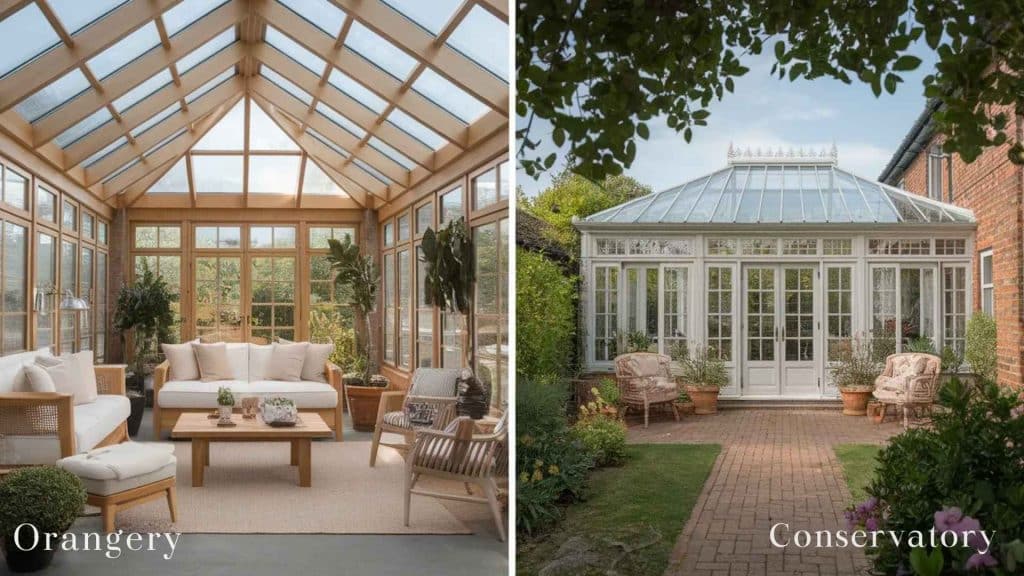
Many property owners weigh up all three options before committing. A typical orangery costs between $38,000 and $44,000, while a small single-story solid extension starts from $51,000 to $71,000.
Conservatories generally cost less upfront. Orangeries use more brickwork and higher-spec roofing and insulation, making them $13,000 to $25,000 more than a comparable conservatory.
That difference buys year-round comfort, better insulation, and a structure that reads more like a proper room than a seasonal addition.
The material you choose also plays a role here. A uPVC build keeps the gap between orangery and conservatory costs narrow.
Property owners who want to understand the long-term return before committing often look at whether or not orangeries add value to their property, alongside the upfront build cost.
Planning rules are another layer of the decision. Most small orangeries fall under permitted development, avoiding the need for full planning permission.
A separate set of rules also affects how long any extension can stand before it may need retrospective approval, and the 10-year rule for conservatories is worth reading before you finalize your design.
Hidden Costs to Budget For
Several items regularly appear on final invoices that were not in the original quote.
- Foundations on sloped ground: Adding $1,900 to $2,500 when deeper excavation is needed
- Bifold door upgrade: Adding $1,900 or more over standard French doors
- Frame color upgrade: Adding $640 to $900 over a standard finish
- Triple glazing: Improves thermal performance but adds both cost and weight
- Building regulations approval: Around $1,900 to $3,200, depending on location and complexity
- Internal plastering, electrics, and heating: Often excluded from headline quotes; include them upfront for an accurate total
How to Keep Costs Down?
A few practical steps cut the final bill without affecting how the room performs.
- Choose standard dimensions. Bespoke sizing costs more than designs built around standard glazing unit sizes.
- Simplify the roof. A single lantern costs significantly less than multi-pitch or curved designs while still delivering good light.
- Get three itemized quotes. Foundation work, electrics, and building regulations are the three items most often left out of headline prices.
- Use uPVC where it suits the property. Modern uPVC performs well and costs a fraction of hardwood or premium aluminum.
Conclusion
In summary, the cost of a small orangery in 2026 ranges from $32,000 to $70,000, depending on size, material, and roof style. uPVC keeps the budget lower.
Getting itemized quotes, knowing what each one includes, and working with standard dimensions rather than bespoke measurements gives you the most control over the final figure.
The upfront cost is only part of the picture. A well-built orangery affects your home’s resale value, and the financial return varies considerably by quality and location.
Planning rules also carry real financial consequences, and the 10-year rule for conservatories is worth understanding before any groundwork begins.