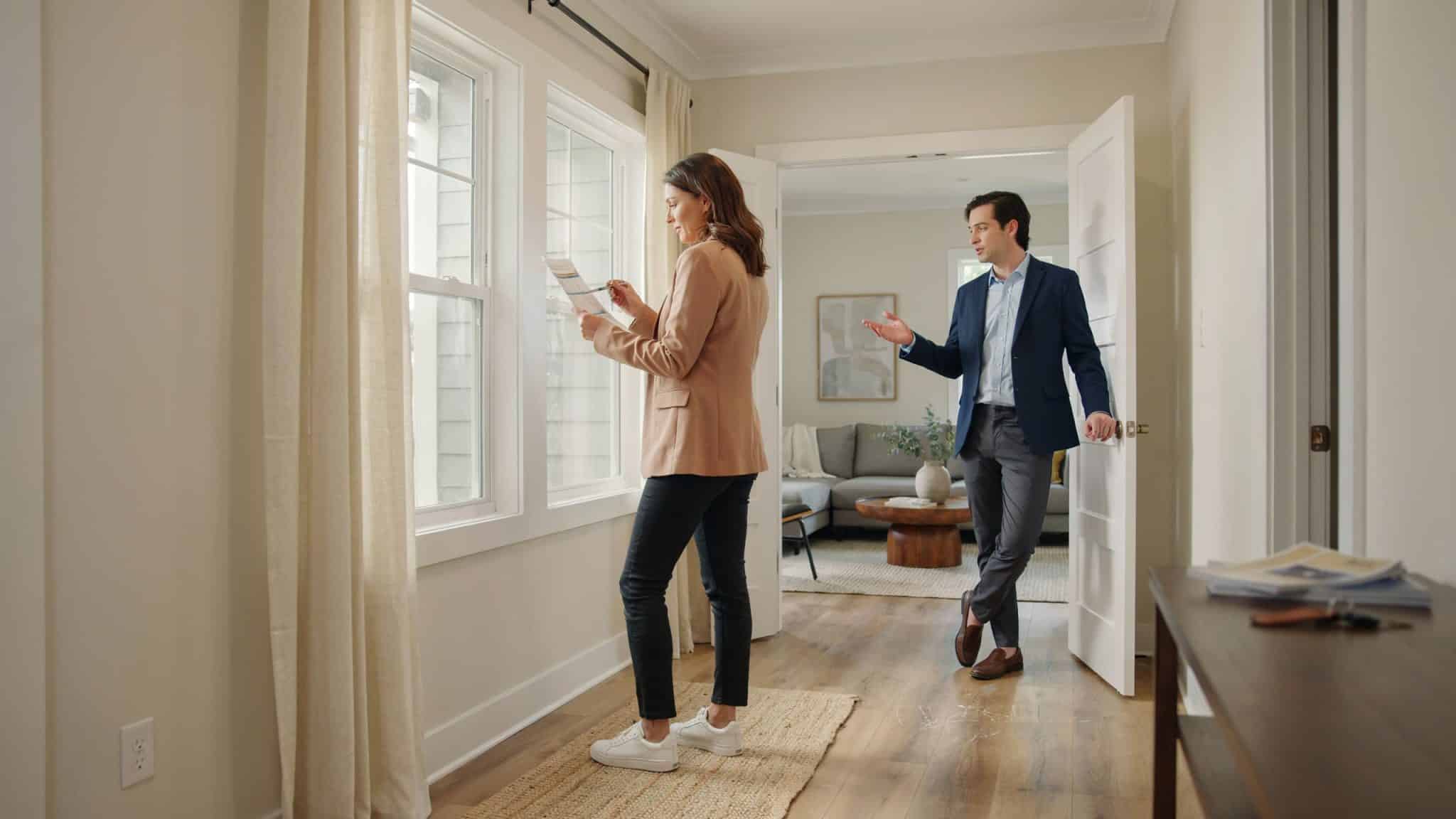

House viewings can trick you, as a bright living room and fresh paint often hide the real story.
Knowing what to look for when viewing a house is what separates buyers who catch problems early from the ones who find out after moving in.
Buyers fall for good styling and miss the details that matter later.
You only get 15–30 minutes to inspect a home. Without a checklist, it’s easy to notice the décor but miss costly issues hidden behind fresh paint or a quiet viewing.
A property that looks perfect on paper can still come with costly surprises.
This blog gives you a room-by-room home viewing checklist based on expert advice and real buyer experience, so you know exactly what to check.
Why Viewing a House is Important More Than Online Listings
Listing photos are chosen to flatter a property. Wide-angle lenses make rooms look bigger, and good lighting hides marks on walls.
A viewing lets you use your own senses. You can smell dampness, feel a draft near a window, or hear traffic noise that the listing never mentioned.
In my years advising buyers, I’ve watched cracks, damp, and worn fittings slip past a quick walkthrough more times than I can count.
Damp is one of the most common defects found in properties, and cracks in walls can come from settlement, thermal movement, or subsidence.
That’s exactly why a structured approach to viewing matters. You’re doing an early check that could save you from a bad purchase or a painful renegotiation.
Exterior and First Impressions Checklist
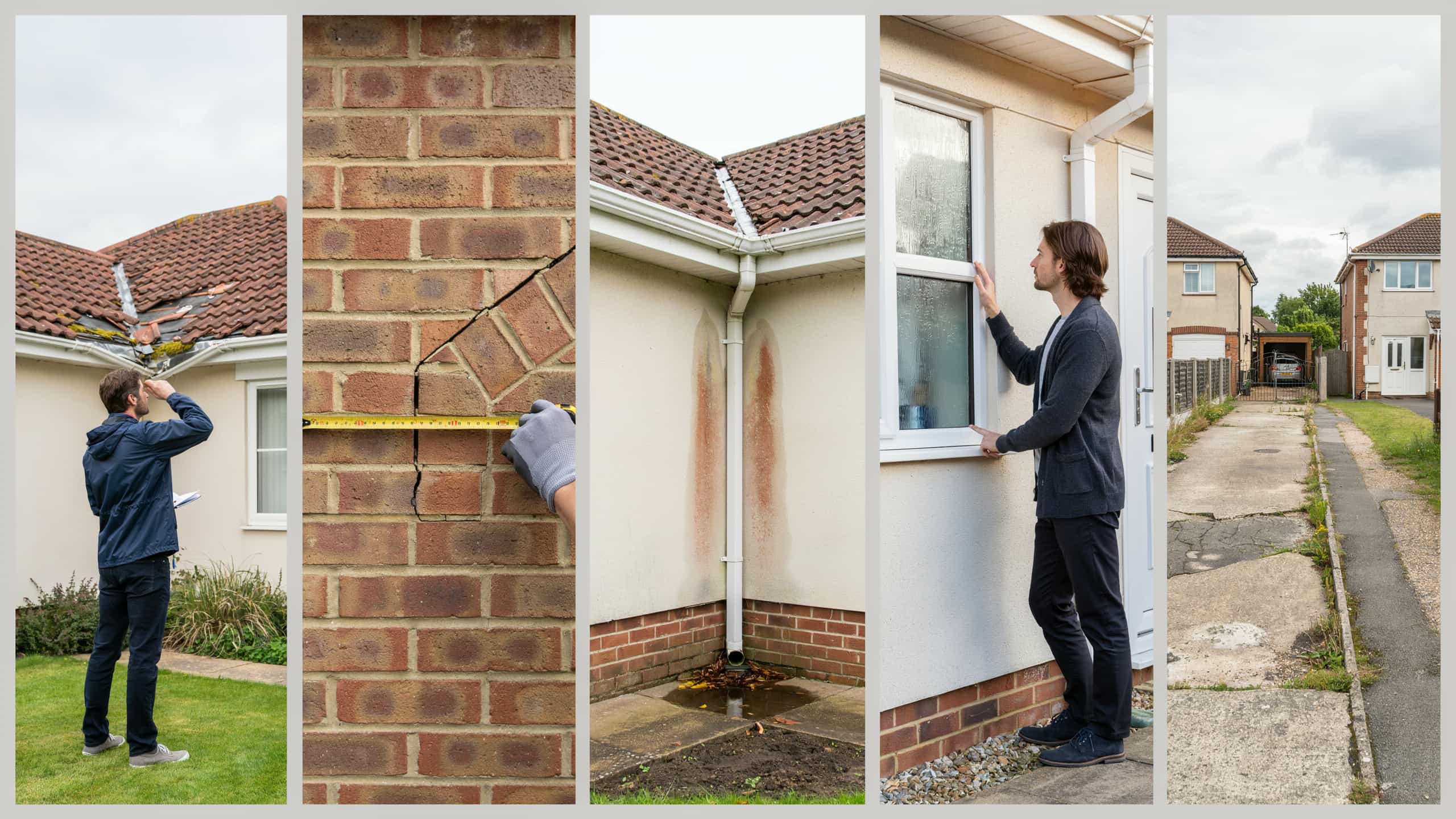
Buyers rush past the outside and head straight for the front door. The exterior tells you how well the property has been maintained.
1. Roof Condition and Visible Damage
Stand back and look at the roofline from the street. Check for:
- Missing or slipped tiles
- A roofline that sags or dips
- Moss or algae buildup on tiles
Broken or missing tiles, blocked gutters, inadequate downpipes, and flat roofs nearing the end of their life expectancy are the most common roof defects.
A roof needing full repair is one of the most expensive fixes you can inherit.
2. Walls, Brickwork and Cracks
Not every crack means trouble. Learn the difference:
- Hairline cracks are thin and usually cosmetic
- Structural cracks are wider, often over 5mm, and may run diagonally
Anything wider than 5mm or a crack that’s always getting bigger is definitely worth checking with a surveyor. They’re the best people to help you understand what’s going on and what to do next.
3. Drainage and Gutters
Look up and down. Overflowing or blocked gutters can indicate bigger problems beneath the surface.
Watch for:
- Stain marks under gutters or downpipes
- Water pooling near the base of the walls
- Damaged or disconnected rainwater pipes
Blotchy staining that lines up with damaged gutters or slipped tiles is a strong clue that water is getting in from outside.
Patches under a valley, along a chimney breast, or beneath a gutter run often point to cracked render, open joints, slipped tiles, or damaged rainwater goods.
4. Windows, Doors and Seals
Run your hand along window frames and feel for drafts.
Look between glass panes for condensation; that usually means a failed seal and a costly replacement ahead.
5. Driveway, Path, and Boundaries
Check paths and driveways for cracks or uneven slabs. If access is shared with a neighbor, ask who’s responsible for repairs.
Shared access disputes are a common source of stress after moving in.
Interior Condition Checklist Room-by-Room
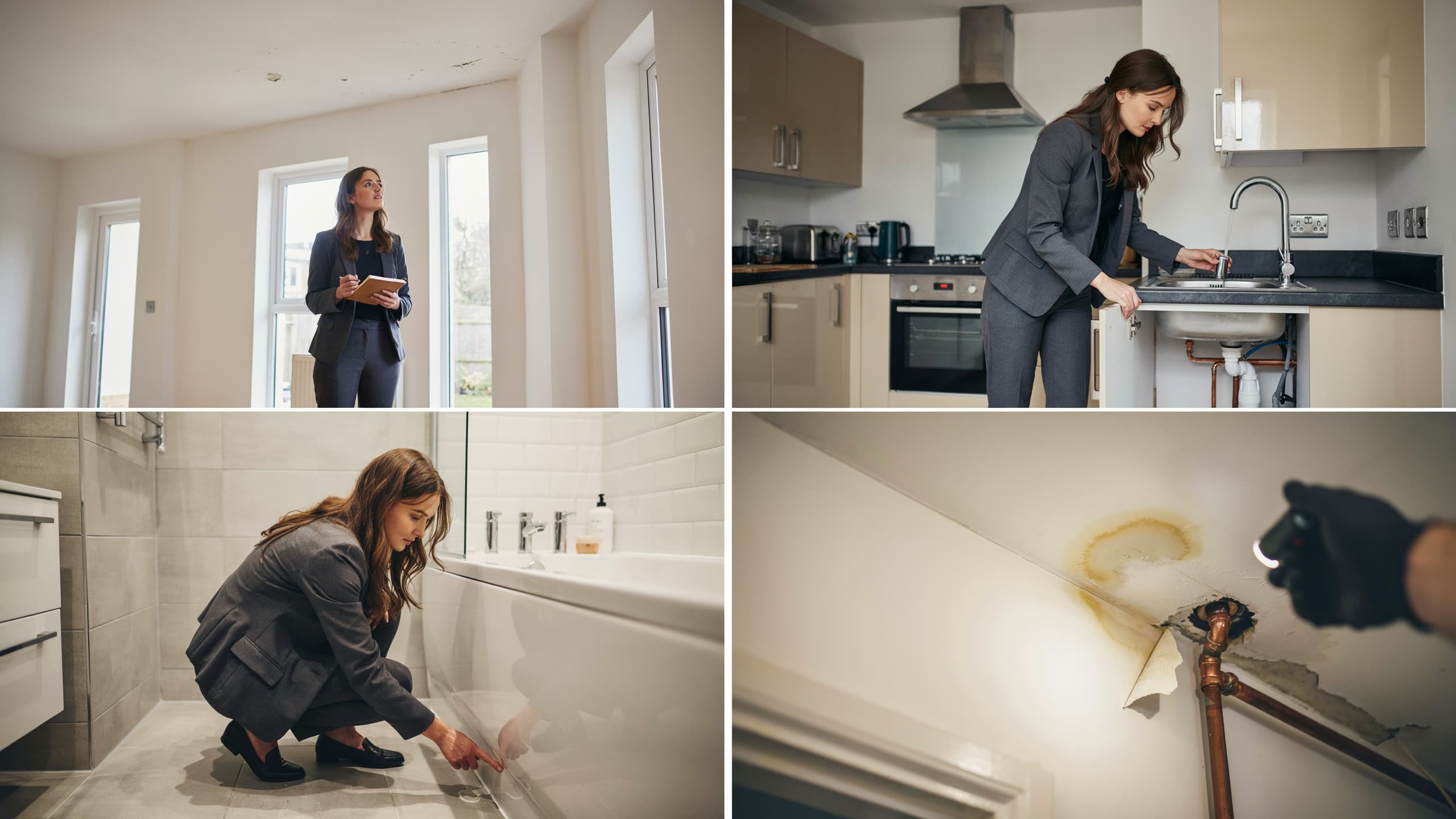
Once inside, resist the urge to picture your furniture in the space and focus on condition first. Style is easy to change, but structure and systems aren’t.
6. Living Room and Bedroom
Living rooms and bedrooms may look move-in ready at first glance, but a closer look at lighting, walls, and ceilings can reveal problems a quick tour won’t catch.
- Check the room’s orientation. South-facing rooms get more natural light throughout the day
- Look in corners and along the ceiling for damp stains or discoloration
- Check walls for cracks or patches of fresh paint that might be covering something up
7. Kitchen (High-Risk Zone)
The kitchen sees more plumbing, wiring, and daily wear than almost any other room. Check:
- Water pressure by turning on the taps
- Under the sink for swelling, staining, or mold on cabinets
- Where sockets sit, too few or badly placed sockets are common in older kitchens
- Whether the extractor fan actually pulls air, not just makes noise
8. Bathrooms
Bathrooms are a common source of hidden plumbing leaks.
A leak here often shows as a single ceiling patch below the bathroom, sometimes with soft plaster, flaky paint, or lifting floor edges nearby.
Plumbing leaks tend to be more localized and sharper in outline than a roof leak, so a tight, well-defined stain is usually the giveaway.
- Grout and silicone seals for black mold
- How fast does water drain after you run the tap
- Pipe noise when the toilet flushes or a tap runs
Issues That Are Often Overlooked While Viewing a House
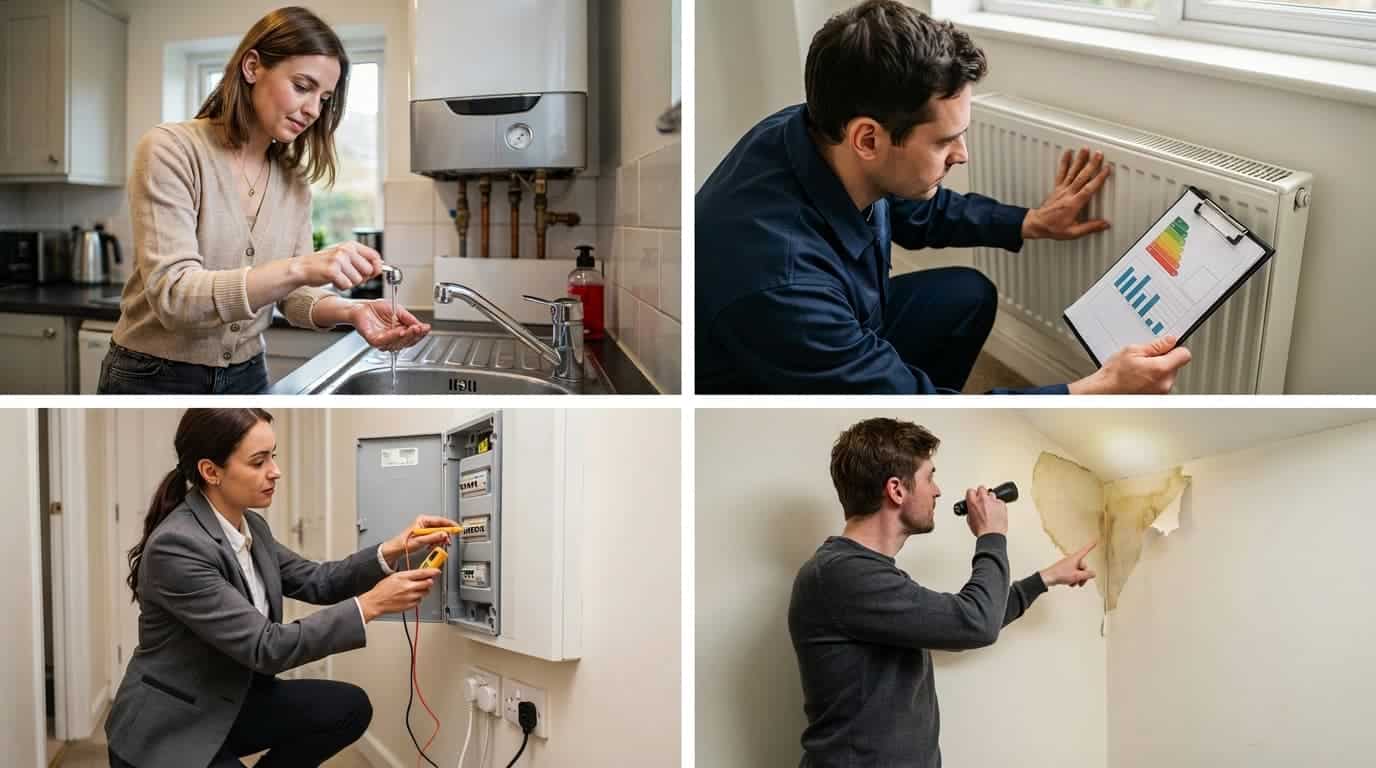
The internal systems of a house rarely announce themselves, and a boiler can look fine and still be years from failure.
Patch, a damp one, can hide behind a fresh lick of paint. This is where a slower, hands-on check of plumbing, heating, wiring, and moisture pays off, since these are the faults that cost the most to fix later.
9. Plumbing Checks
Water problems rarely show up on a quick walk-through, so run every tap you can and listen closely for warning signs.
- Turn on every tap you can, including the shower and the outside tap if there is one
- Ask how old the boiler is and when it was last serviced. I always tell buyers to try the hot tap themselves, since surveyors won’t do this. You want to make sure you have decent heat.
- Listen for banging or knocking in the pipes when a tap runs. This is called water hammer, and it can mean loose pipework or high water pressure
Ask to see boiler service records if they’re available. A well-maintained boiler with regular servicing is worth more than a shiny kitchen.
10. Heating System
A house can look warm and cozy on a viewing day, but the radiators and thermostat tell the real story of how well the heating actually works.
- Touch each radiator. Cold spots at the top usually mean trapped air. Cold spots lower down can mean a build-up of sludge inside
- Check where the thermostat sits. A thermostat next to a radiator or in direct sunlight can give a false reading and waste energy
- Ask to see the EPC (Energy Performance Certificate). It gives you a rough guide to running costs, and if the property has an EPC rating of C, this breakdown of what that rating actually costs per month is worth a look, though it should be read alongside a proper survey rather than on its own.
11. Electrical System
Wiring faults hide behind walls and switches, so a few quick checks on the fuse box and sockets can save you from a costly rewire down the line.
- Look at the fuse box, known as the consumer unit. An old fuse box with switches instead of modern trip switches can be a sign that the wiring needs updating
- Watch for overloaded sockets with several extension leads plugged in; this is a common sign that a room doesn’t have enough power points
- Flip a few light switches. Flickering lights can point to loose wiring or an overloaded circuit
12. Damp Stains
Damp is one of the most common problems buyers run into. It’s also one of the easiest to miss on a quick walk-through. A fresh coat of paint can hide it for weeks.
The shape and position of a stain often give away the cause. A patch that follows a roofline, chimney, or gutter run usually means the same outside leak is covered under drainage above.
A patch near a bathroom ceiling or along a visible pipe run points to a plumbing leak instead, the sharper-edged kind covered under bathrooms.
13. Ventilation Checks and Hidden Moisture Signs
Use your nose as well as your eyes. A musty smell, even without visible marks, is worth asking about.
- Check the corners of bedrooms and bathrooms, behind wardrobes, and around window frames, since condensation tends to collect in these low-airflow spots.
- Ventilation matters just as much as damp itself. Ask if extractor fans work in the kitchen and bathroom.
- Poor ventilation in a well-sealed, modern home can trap moisture just as badly as a leaky roof in an older one.
Things to Check Beyond the Surface
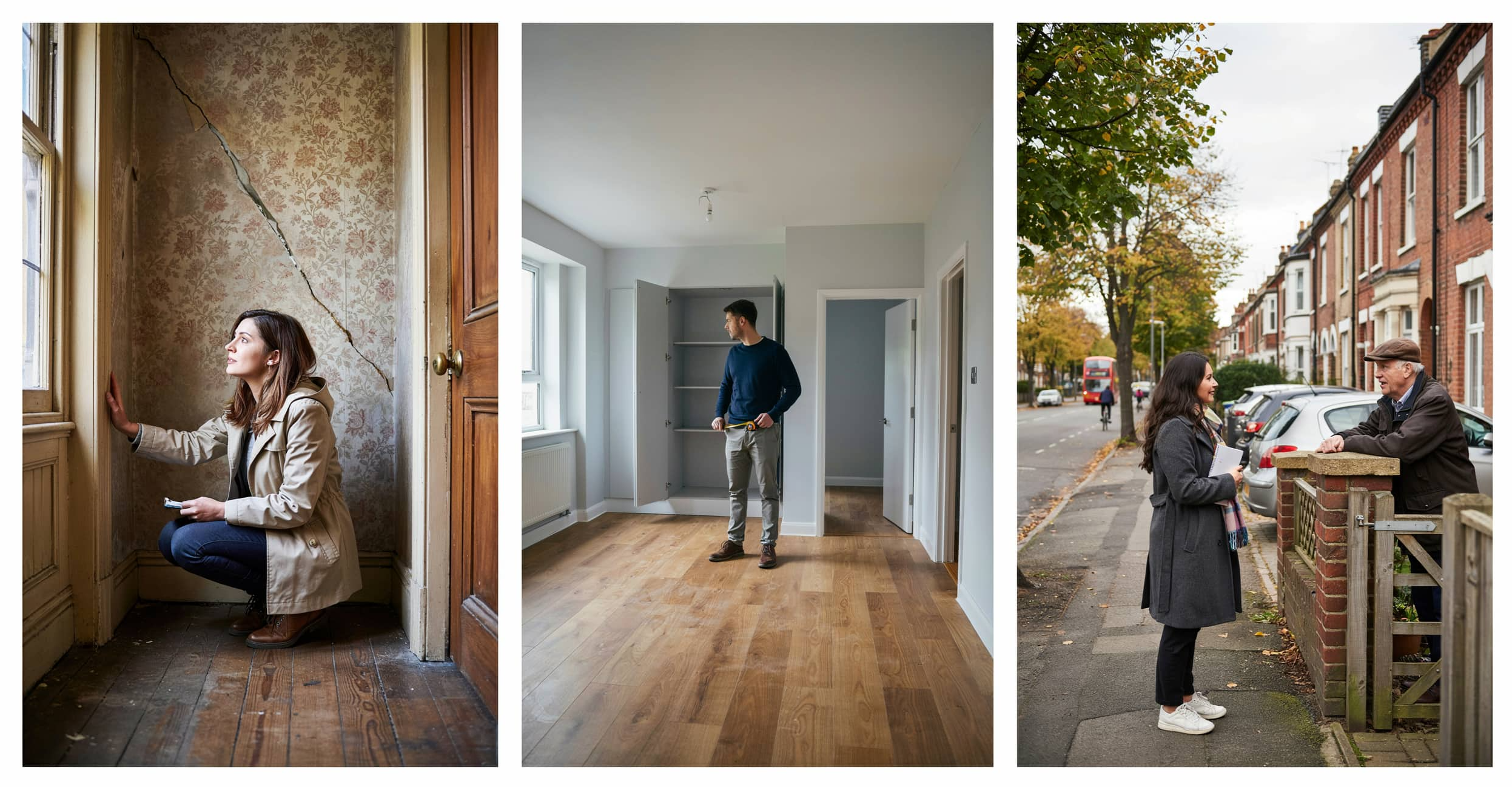
A house can look solid, feel spacious, and sit on a quiet street, and still hide problems in all three.
This section covers the structural signs, layout quirks, and neighborhood details that rarely show up in a five-minute walk-through, but matter just as much as damp or a dodgy boiler.
14. Structural Integrity and Hidden Issues
Structural problems are the most expensive kind, but also hide the best. A quick walk-through won’t reveal them.
- Walk slowly across each room and check the floors, since uneven or bouncy floors can indicate weak joists or underlying settlement
- Check where walls meet ceilings, as gaps here or peeling wallpaper at the corners often mean the building has shifted over time
- Test doors and windows, since a door that won’t close properly or a frame that looks out of square can mean the house has moved
- Watch for the classic subsidence red flags: cracks in walls, uneven floors, and misaligned doors or windows. Older non-standard construction types, like BISF steel-framed homes, carry their own structural quirks worth flagging to a surveyor if the property looks like one
15. Layout, Space, and Practical Living Flow
A house can pass every technical check and still not work for how you live. Layout matters as much as condition.
- Walk through the home as if it’s a normal day, and picture how you’d actually use each room
- Check storage carefully; don’t just count cupboards. Look at their size, location, and spread across the house, including additional storage areas like pantries, linen closets, attic space, and garage shelving
- Think about how rooms connect, and whether the flow between them suits your routine
- If you’re planning a family, think ahead, since a small second bedroom might work now but feel tight in a few years
- If you work from home, check whether there’s a quiet spot away from the main living areas
16. Neighborhood and External Environment
A quiet viewing on a Tuesday afternoon can hide a noisy street. Try to visit at more than one time of day, or ask the seller directly about noise levels.
- Observe traffic, trains, aircraft, or noise from nearby businesses, and open a window briefly to hear how much sound gets through.
- Talk to neighbors if you get the chance, since long-term residents can tell you things a listing never will, and a large number of long-term residents usually signals a place people don’t want to leave.
- Ask the estate agent about planned developments nearby, since building work next door or a new housing estate on a neighboring field can affect.
- Research schools, transport links, and crime rates independently, rather than relying only on what the agent tells you.
Additional Spaces and Practical Outdoor Considerations
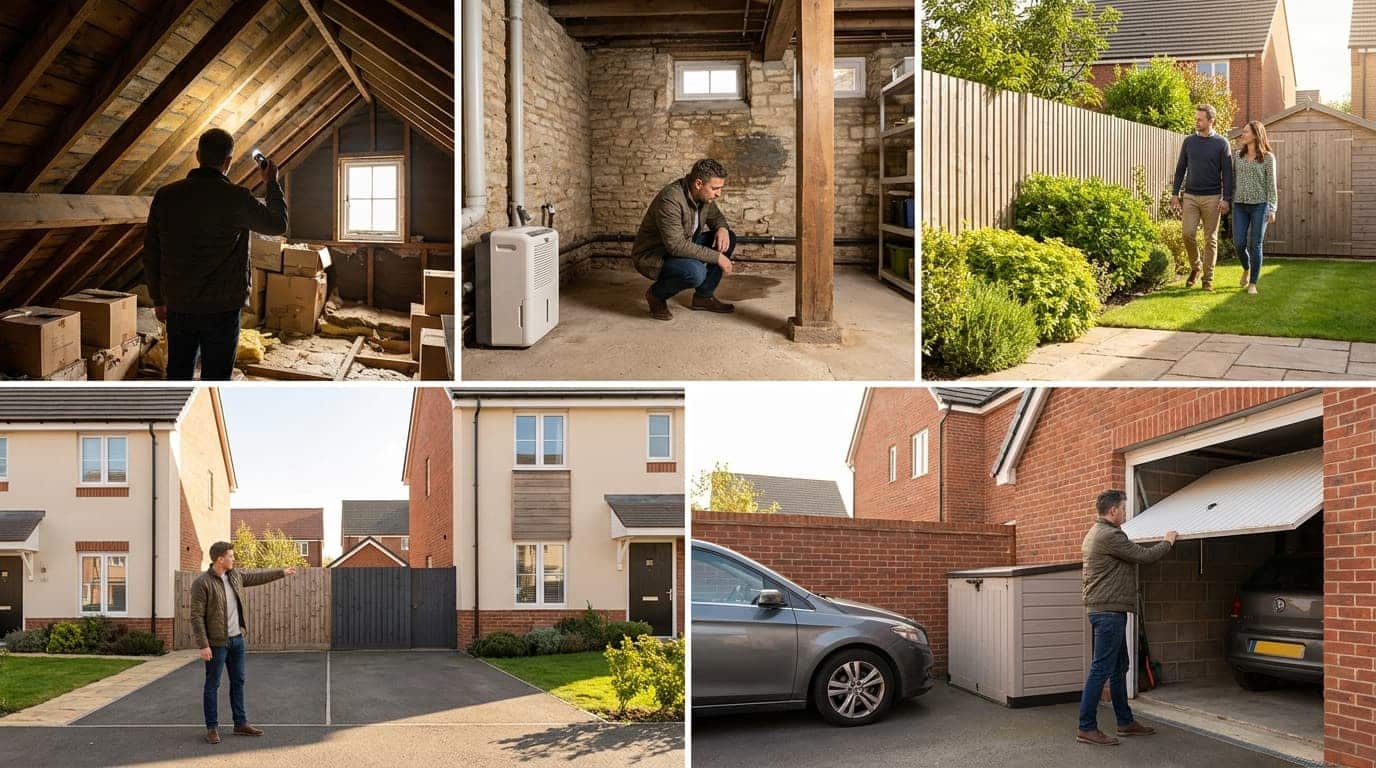
Most viewings focus on the main rooms and forget the spaces around them. Attics, basements, gardens, and boundaries often hold the details that affect your budget and daily life the most.
17. Check the Attic or Loft Space
Lofts are easy to skip during a viewing, but they often reveal a lot about a home’s condition. Ask to go up if there’s access, even for a quick look.
- Check for damp staining or dark patches on the underside of the roof.
- Look at insulation depth and condition, since poor insulation raises heating bills.
- Note any daylight coming through gaps, which can mean missing or damaged tiles.
If you’re picturing extra bedroom space down the line, note the roof pitch and headroom while you’re up there; that’s what decides whether an inside dormer loft conversion is realistic later.
18. Inspect the Basement or Cellar
Basements and cellars are prone to damp and rot, especially in older properties. A quick look can flag issues before they turn into a bigger repair bill.
- Look for signs of rot on any exposed wood or beams, since a damp basement often shows early signs.
- Check for a musty smell or visible mold on walls.
- Ask if a sump pump or damp-proofing system is fitted, and whether it’s been serviced.
19. Examine the Garden and Outdoor Space
A garden can change completely depending on the time of day and season. What looks fine on a viewing might not stay that way all year.
- Ask when the garden gets direct sun, and consider coming back later to check, since sun exposure can shift a lot through the day.
- Check fences, sheds, and any outbuildings for condition and stability.
- Look at drainage in the garden, since pooling water after rain can signal a bigger drainage issue.
20. Check Boundary Lines and Shared Areas
Boundary and access disputes are more common than buyers expect. Get clarity on this early, since it affects both privacy and the property’s future use.
- Ask exactly where the boundary lines sit around the house, so you know exactly what you’re getting for your money.
- Check if any paths, driveways, or gardens are shared with a neighbor.
- Ask about rights of way or easements that could affect how you use the outdoor space, since these can complicate the use and enjoyment of the property and lead to disputes later.
21. Review Parking and Storage Options
Parking and storage rarely make it onto a buyer’s checklist, but they matter for everyday life. Confirm what’s included before you make an offer.
- Check if parking is on-street, in a driveway, or in a private space, and whether it’s guaranteed or not.
- Ask if the shed, greenhouse, or any outdoor storage is included in the sale, since fixtures and fittings need to be confirmed as part of the legal process.
- Look at garage space, if there is one, and whether it’s usable for storage or parking or has been converted.
Lifestyle, Convenience, and Hidden Ownership Concerns
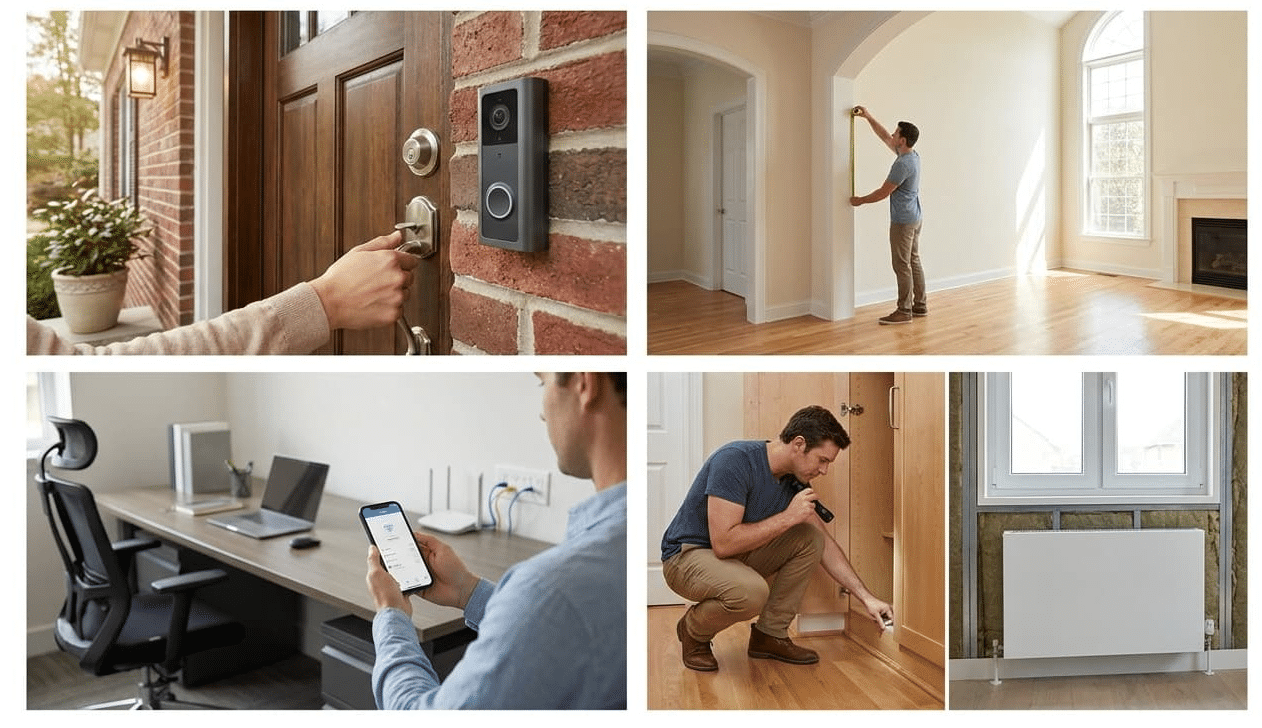
A house can pass every structural check and still fall short on daily comfort. These smaller, easy-to-skip details often shape how much you actually enjoy living there.
22. Test Doors, Locks, and Security Features
Security details are quick to check but easy to forget in the middle of a viewing. A few minutes here can save you an awkward call to a locksmith later.
- Test that every external door locks and unlocks smoothly.
- Check window locks, especially on ground-floor rooms.
- Look for existing security features like an alarm system, camera, or outdoor lighting.
23. Check Ceiling Height and Room Proportions
Room proportions affect how a space feels and how your furniture will actually fit. Photos rarely give an accurate sense of scale.
- Stand in each room and check ceiling height, especially in older properties or loft conversions.
- Look at room shape, since an awkward layout can waste usable space.
- Bring a tape measure if you plan to move existing furniture into the home.
24. Verify Mobile Signal and Internet Availability
Poor signal or slow broadband can be a daily frustration, especially if you work from home. This is simple to check and easy to overlook.
- Check your phone signal in different rooms, not just by the front door.
- Ask the seller or agent which broadband providers cover the property, and at what speed.
- Look for existing cabling or a fiber connection point, since this affects the installation cost later.
25. Look for Pest Signs and Energy Efficiency Features
Pests and poor energy efficiency both add ongoing costs, and neither is always obvious at first glance. A short check now can flag issues before they become expensive.
- Look for small holes in wood or fine dust near skirting boards, which can signal woodworm, since a survey often checks for signs of rot alongside damp and mold.
- Check for droppings or signs of nesting in lofts, sheds, or under decking.
- Ask about insulation, double glazing, and the property’s EPC rating, as these provide a rough guide to running costs and energy efficiency.
Legal and Documentation Checks Before Committing
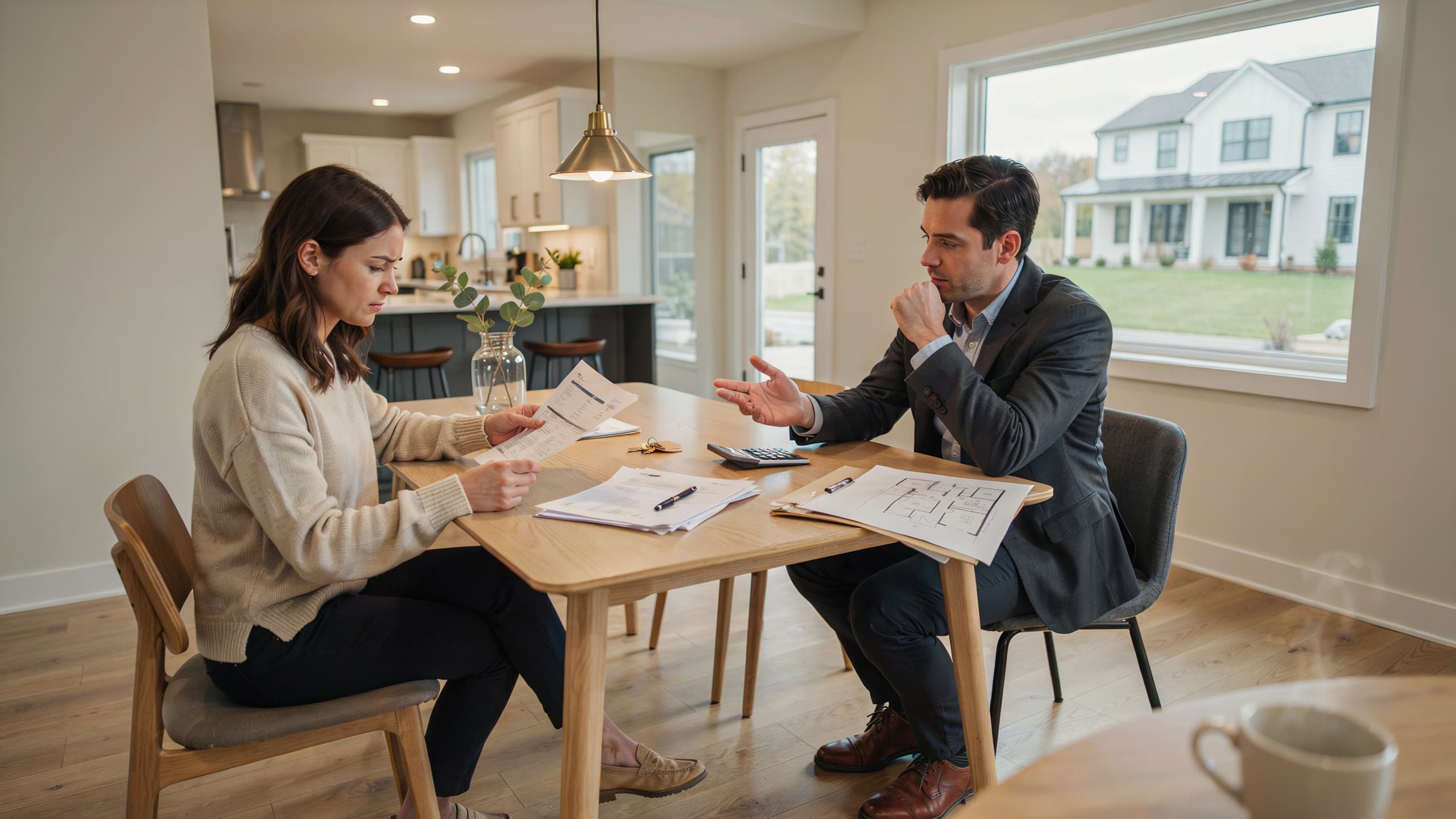
Some of the most important checks have nothing to do with bricks or paint. They’re about paperwork.
Find out early whether the property is freehold or leasehold.
This single detail can shape your costs for years, since freehold means owning the property and the land outright, while leasehold means leasing the land, sometimes with additional costs such as ground rent and service charges.
If it’s a leasehold, ask:
- How many years remain on the lease
- What are the current service charge and ground rent
- Who manages the building, and what is their reputation like
If any extensions, conservatories, or major renovations have been done, ask to see proof of planning permission and building regulations approval.
Make sure you can see the freeholder’s consent where it applies, since missing paperwork could mean having to tear down unapproved work later.
What are the Red Flags to Look for?
Some warning signs are easy to miss unless you know to look for them.
- Fresh paint in just one spot: A single freshly painted patch on an otherwise older wall can cover damp or a repaired crack
- A property listed for months with no clear reason: Ask why. There may be an issue that hasn’t surfaced yet, since a home on the market for more than three months is worth questioning, as a problem might only come to light on a second viewing.
- Vague or slow answers from the agent: Hesitation when you ask about disputes, renovations, or damp is itself a signal
- A short lease with no clear renewal cost: This can turn into a major expense later if not checked early
- Furniture placed to hide a wall issue: Ask to move a sofa or rug if something looks out of place
- No answer on recent building work: If an extension exists but no one mentions planning permission, ask directly and don’t assume it’s fine
Conclusion
Knowing what to look for when viewing a house is about more than a feeling. It’s about checking the right things in the right order.
Start by checking the roof, walls, and drainage, then inspect each room for damp, cracks, and wear.
Test the plumbing, heating, and electrics. Then ask the legal questions that protect you long after moving day.
This checklist helps you spot hidden problems that could turn a dream home into an expensive mistake.
Take this list with you on your next viewing, as a little care now can save you real money and stress later.
Frequently Asked Questions
How Long Should a House Viewing Usually Take?
A typical viewing lasts around 30–60 minutes, but older or larger properties may need more time. Avoid rushing, especially if you are seriously considering making an offer.
Should You Take Photos or Videos During a House Viewing?
Yes, if the seller or agent allows it. Photos help compare properties later and remind you of details you may forget after viewing multiple homes.
What Should You Bring With You When Viewing a House?
Bring a measuring tape, a phone charger to test the sockets, a notebook, a flashlight, and a copy of your checklist. These help you check practical details beyond appearance.
Is It OK to Open Cupboards and Look Inside Storage During a Viewing?
Yes. Sellers expect it. Checking cupboard depth, shelf spacing, and any hidden damp spots inside storage areas is a normal, expected part of a serious viewing.
Can You Ask for a Second Viewing Before Making an Offer?
Yes, and it’s worth doing. A second visit, ideally at a different time of day, often reveals noise, light, or condition issues the first viewing missed.