Potatoes are not a hard crop to grow. Getting the timing right is the part that trips people up.
Plant too early, and cold, wet soil rots the seed pieces before they sprout. Plant too late, and summer heat shuts down tuber production before the harvest is worth anything.
The window between those two points is narrower than most planting charts suggest. A calendar date alone will not get you there.
This guide covers everything that drives the timing decision. Your growing zone. Your variety type. What your soil temperature is telling you.
And the mistakes that cost you an entire season before you realize what went wrong. Get these right, and the rest of the season follows naturally.
When to Plant Potatoes by Growing Zone
Your last frost date gives you a rough starting frame. Your soil temperature at four inches gives you the actual answer.
Use the windows below as your base, then adjust for what your local season brings.
United States by USDA Zone:
| Zone | Typical Planting Window | Notes |
|---|---|---|
| Zones 3–4 | Late April to mid-May | Short season; first earlies only in colder areas |
| Zones 5–6 | Late March to April | Standard spring window for most variety types |
| Zones 7–8 | Late February to March | Plant early; summer heat arrives fast |
| Zones 8–9 | February or September | Fall crop often performs better than spring |
| Zone 10 | October to January | Winter crop only; spring heat ends tuber growth |
Gardeners in Zones 8 and 9 often get better results from a fall planting. Summer heat in these zones makes spring growing difficult past mid-February.
A September planting gives tubers the cool weather they need before the first frost.
United Kingdom by Region:
| Region | First Early | Second Early | Main Crop |
|---|---|---|---|
| South England | Mid-March | Late March | Mid-April |
| Midlands | Late March | Early April | Late April |
| North England | Early April | Mid-April | Early May |
| Scotland | Mid-April | Late April | Mid-May |
Why Does the Right Time to Plant Potatoes Matter?
Planting potatoes at the right time gives them the full cool-weather window they need to form tubers. Miss that window in either direction, and the season is already working against you.
- Soil below 45°F (7°C) causes seed pieces to rot before they sprout.
- Growth is strongest when soil sits between 60°F and 70°F (15°C–21°C).
- Tuber production stops when temperatures exceed 80°F (27°C).
- That upper limit catches gardeners off guard more than the lower one.
- Your zone and your variety show you exactly where the window sits.
Know the Potato Variety Before Planting
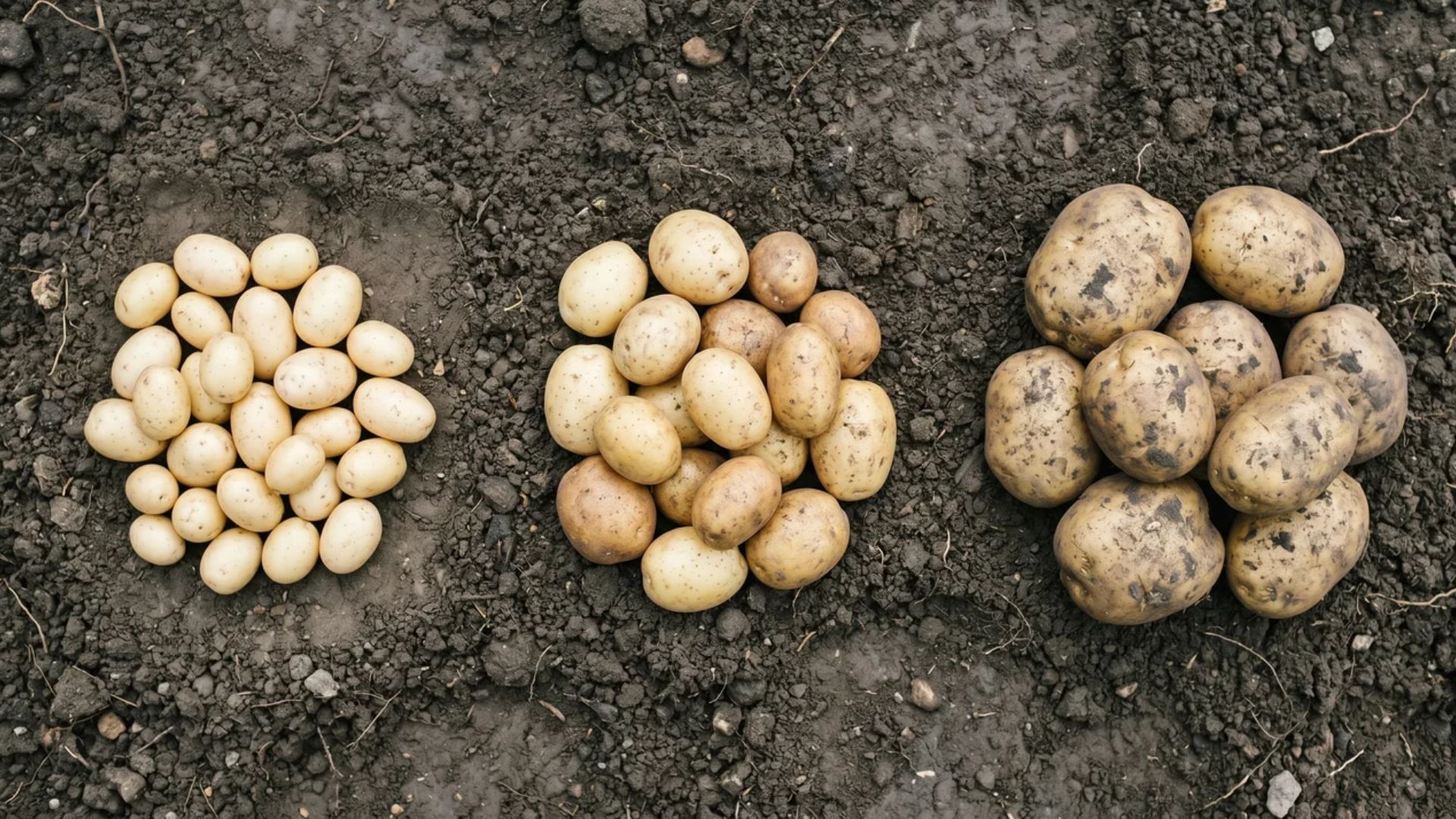
Variety type shifts your planting date by several weeks. Planting a main-crop variety on a first-early schedule means waiting longer than expected for a harvest that should have come sooner.
There are three main groups, each with its own planting window, potato growing time, and storage behavior.
| Type | Planting Window | Time to Harvest |
|---|---|---|
| First Early | Late February to April | 10 to 12 weeks |
| Second Early | March to April | 13 to 15 weeks |
| Main Crop | Mid-April to May | 18 to 20 weeks |
First earlies give you speed but smaller yields. Main crop varieties take the longest to mature and produce the largest tubers, making them the best pick for winter storage.
How Does Soil Temperature Tell You When to Plant?
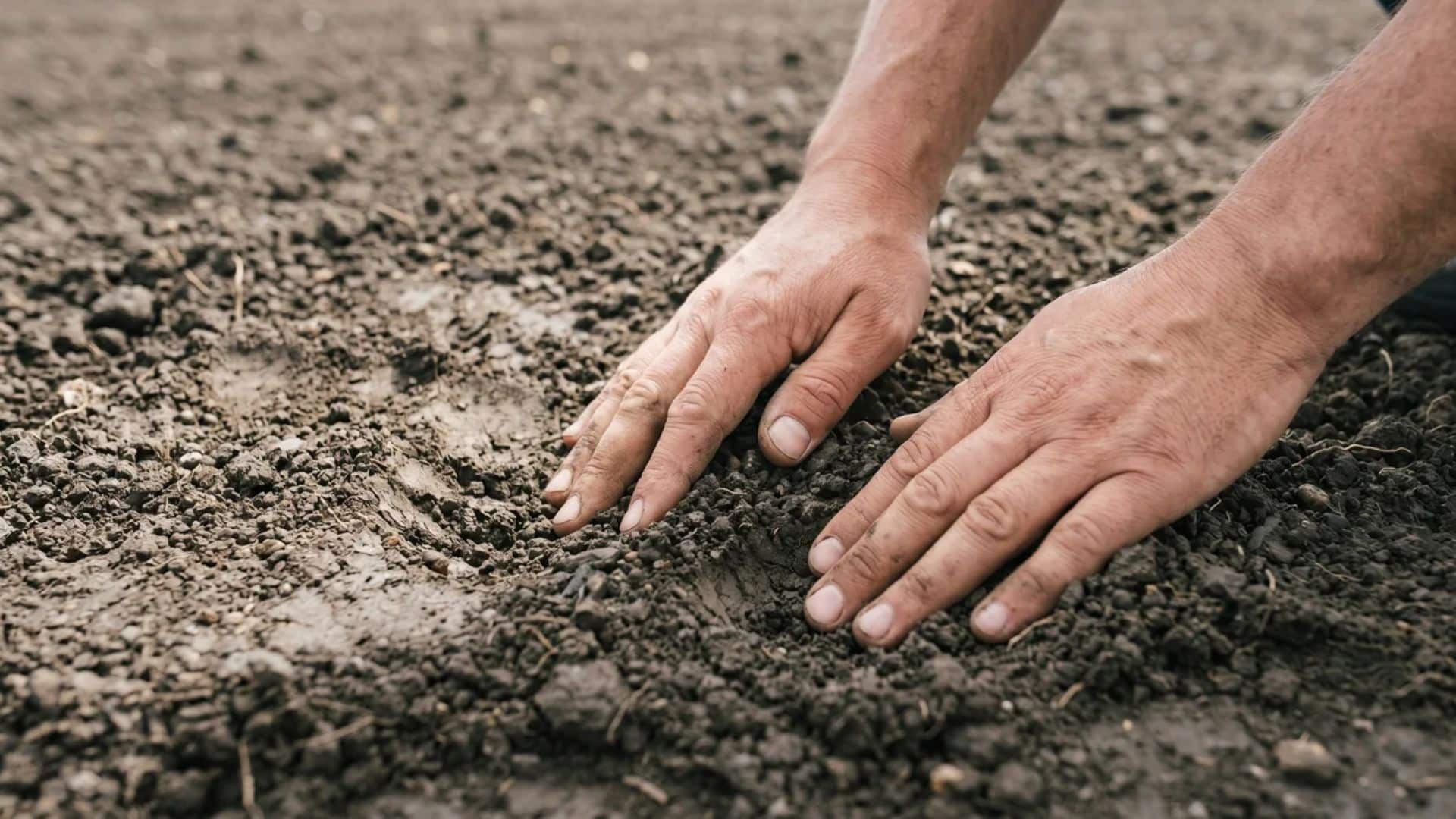
A planting date on a chart is an average. Your soil temperature is a fact. These two numbers are rarely the same, and the soil always wins.
- Potatoes need soil at a minimum temperature of 45°F (7°C) at a depth of 4 inches.
- The ideal growing range sits between 60°F and 70°F (15°C to 21°C).
- Below 45°F, seed pieces sit dormant or rot depending on moisture levels.
- Above 80°F (27°C), tuber formation slows and eventually stops.
- A date on a chart cannot account for a cold spring or an early heat wave.
A soil thermometer costs under $15 and removes all guesswork from this decision.
How to Check if the Soil is Ready to Plant?
Your soil gives clear signals before any seed potato goes into the ground. These four checks take under two minutes each and confirm whether conditions are right.
The Thermometer Test
- Push a soil thermometer four inches into the ground in the morning.
- Check it on three separate days to confirm the reading holds steady.
- Look for a consistent reading of at least 45°F (7°C) before planting.
The Squeeze Test
- Grab a fistful of soil and squeeze it firmly in your hand.
- Open your hand and poke the clump with one finger.
- If it holds shape but crumbles when poked, the moisture levels are right.
- If water drips out when squeezed, the soil is too wet to plant.
The Drainage Check
- Dig a small hole about six inches deep.
- Fill it with water and watch how quickly it drains.
- Water should drain within an hour for healthy planting conditions.
- Slow drainage means waterlogged soil that will rot seed pieces.
The Visual Check
- Look for soil that crumbles easily when turned with a fork.
- Avoid planting into soil that clumps heavily or looks grey and wet.
- Surface frost at night is a clear signal to wait at least another week.
What is Chitting, and Do You Need it?
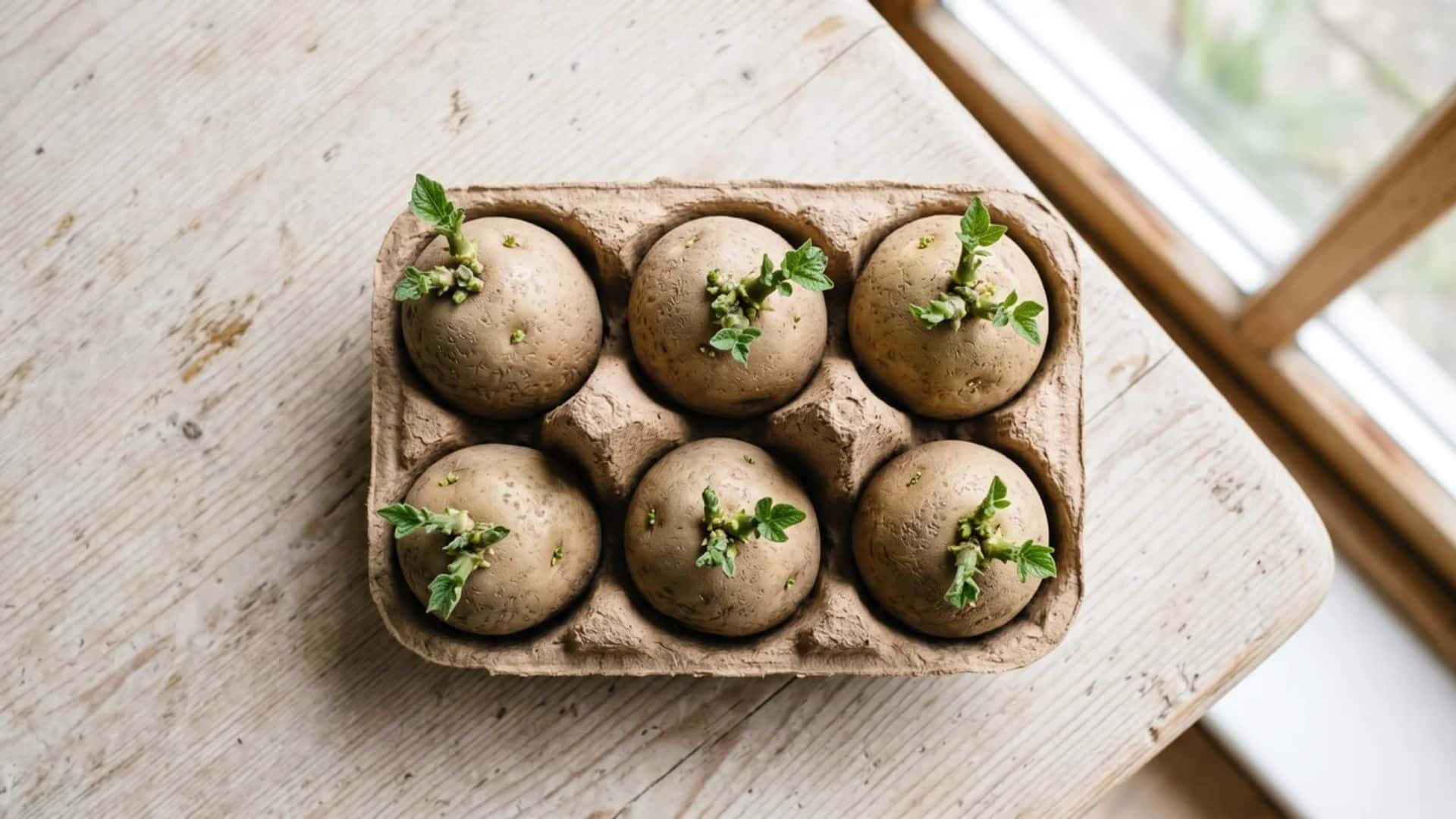
Chitting means letting seed potatoes sprout indoors before they go in the ground. It is not a growing technique. It is a timing tool that gives early varieties a two- to three-week head start on harvest.
For first- and second-early varieties, chitting makes a real difference. For main-crop varieties, the benefit is smaller, but it’s worth checking that each tuber is healthy before planting.
When to start chitting:
- First earlies begin chitting in late January to early February.
- Second earlies begin in February.
- Main crop begins in February to early March.
What chitting involves:
- Place seed potatoes, rose-end up, in egg boxes or shallow trays.
- Keep them in a cool, bright, frost-free room around 50°F (10°C).
- Plant out when shoots reach one to two centimeters in length.
- Label each variety clearly, as planting windows differ by several weeks.
Timing Mistakes that Cost Gardeners an Entire Season
Potato losses almost always trace back to timing decisions made before planting day. Every mistake below is simple to avoid once you know what to look for.
| Mistake | What to Do Instead |
|---|---|
| Planting by date alone without checking soil temperature | Use a thermometer at four inches; confirm three days in a row |
| Planting when soil is below 45°F (7°C) | Wait until the reading holds steady above the minimum |
| Planting too late in hot climates | In Zones 8–9, plant by mid-February or switch to a fall crop |
| Using the wrong variety for your season length | Match variety type to your zone’s frost-free growing window |
| Skipping chitting for early varieties | Start indoors 4 to 6 weeks before your planned planting date |
| Planting into waterlogged soil | Run the squeeze and drainage checks before any seed goes in |
Conclusion
Getting when to plant potatoes right comes down to three readings taken together.
Where you garden. What your earth says at four inches down. Which potato selection are you putting in? Those three line up, and the rest of the season follows naturally.
Plot cycling, indoor sprouting, ground conditioning. Each one reinforces that first correct decision. Your final pull at the end of the season reflects the call you made right at the start.
Once your plants are in the ground, knowing when potatoes are ready to harvest helps you time the dig without guessing.
Frequently Asked Questions
1. What Should You Not Plant Next to Potatoes?
Avoid planting tomatoes, peppers, eggplants, and other nightshades near potatoes because they share diseases and pests that can spread quickly.
2. How Many Potatoes Will I Get if I Plant One Potato?
One seed potato typically produces 5 to 10 potatoes, depending on variety, growing conditions, soil quality, and overall plant health.
3. What Fertilizer Increases Potato Size?
A low-nitrogen, high-potassium fertilizer promotes larger tubers. Potatoes benefit from potassium-rich feeds that support root development and tuber growth.
4. Is It Too Late to Plant Potatoes in June?
In cooler zones (5–7), you can plant early varieties through early June for a fall harvest. In hot climates, wait until September when the soil cools back down.
5. Do Potatoes Need Full Sun?
Yes. Potatoes need at least six to eight hours of direct sunlight per day. Less sun means smaller tubers and weaker plants overall.