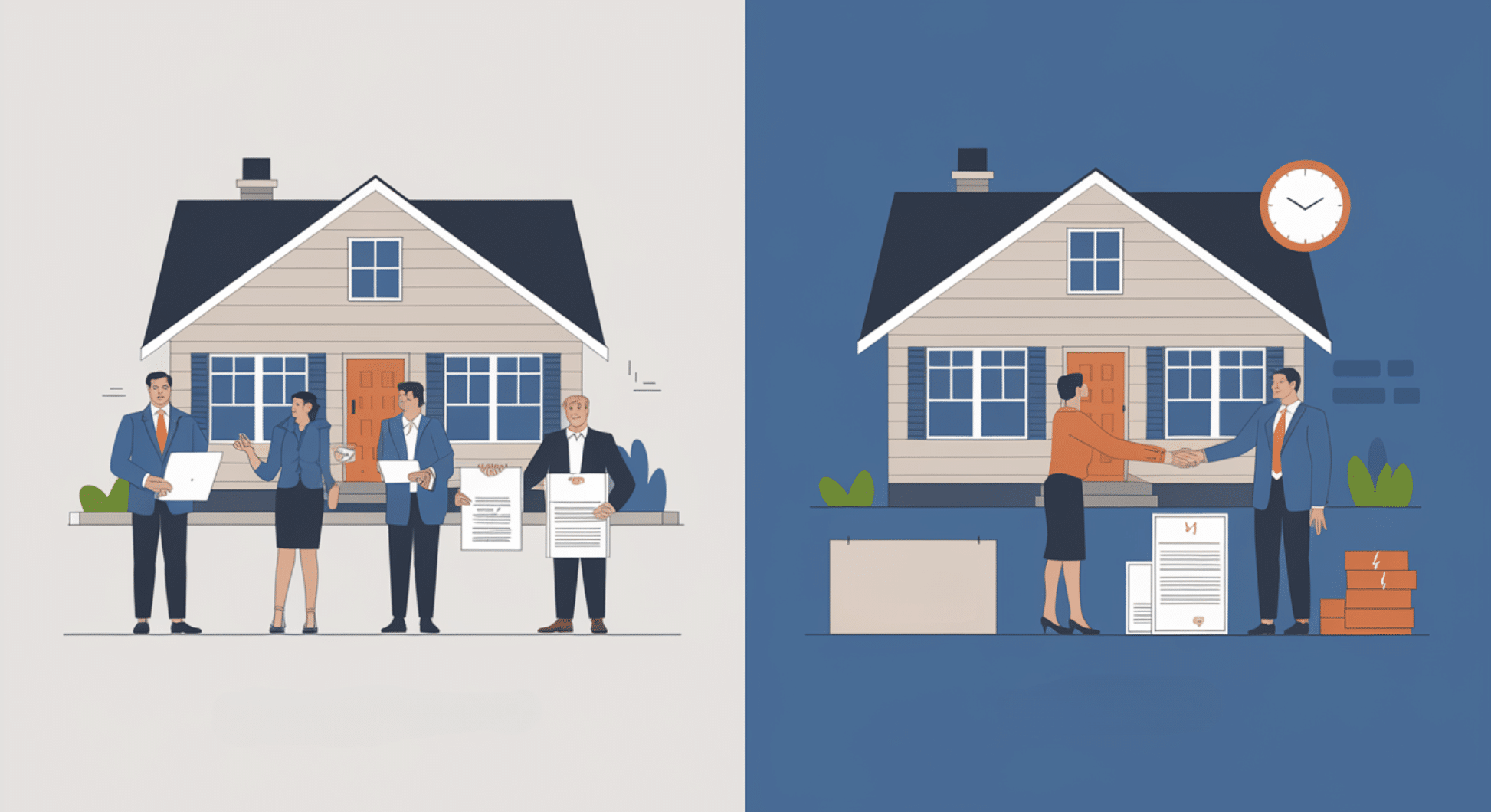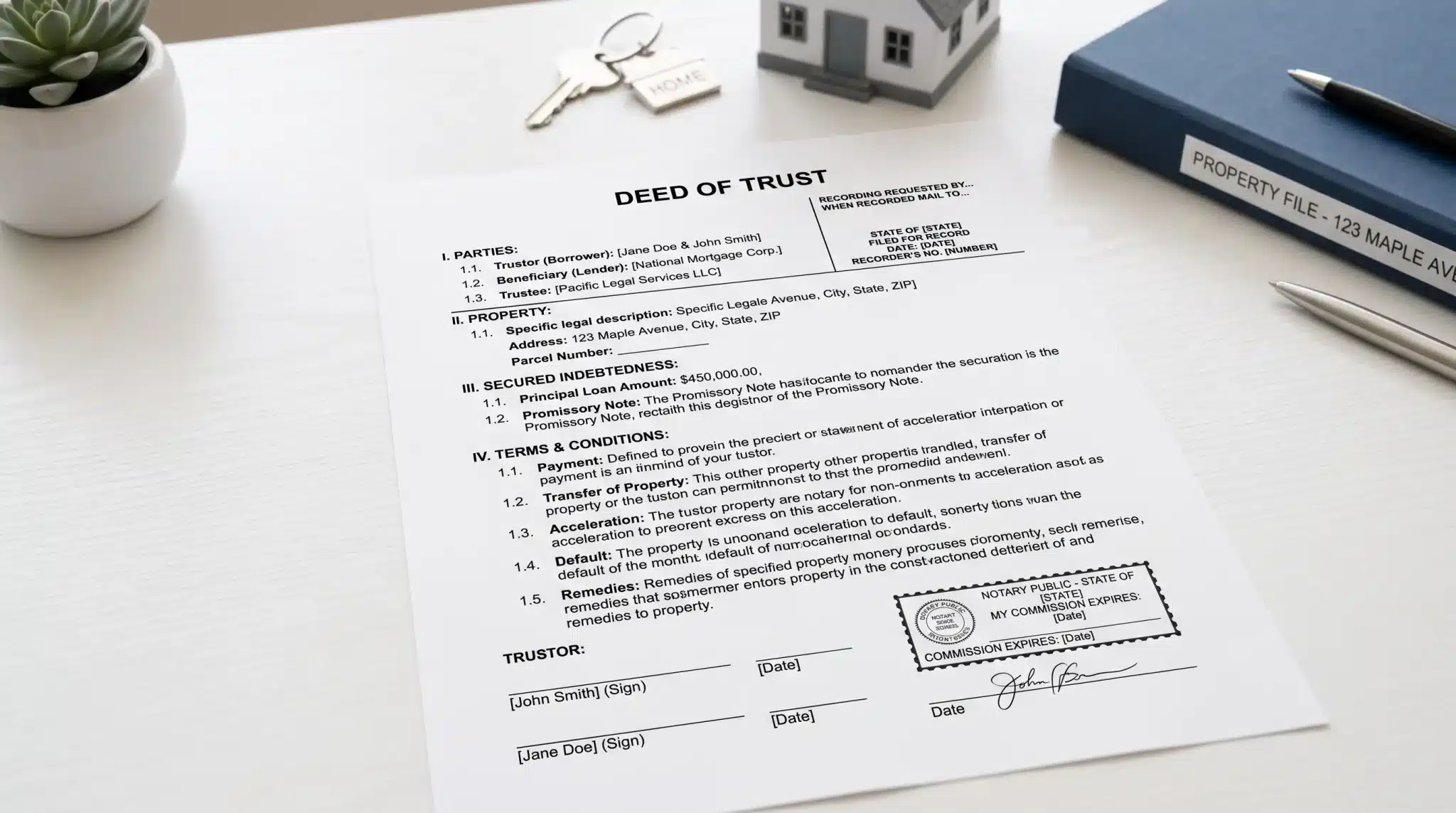

The first time most homeowners hear the phrase “deed of trust” is at their own closing table, usually buried in a stack of documents they’re signing on autopilot.
It sounds like it should mean the same thing as the deed that hands them the house. It doesn’t.
A deed of trust is a completely different legal animal from the property deeds that actually transfer ownership, and mixing the two up is where most of the confusion starts.
I’ve had clients ask me, halfway through a purchase, whether they actually own their home yet because they’d already signed something with “deed” in the title.
The honest answer is that it depends entirely on which document they mean.
What is a Deed of Trust?
A deed of trust is a legal document that secures a home loan by tying it to the property. It’s not the loan itself, and it’s not proof of ownership either.
Think of it as the enforcement mechanism sitting quietly in the background of your mortgage, doing nothing as long as you keep making payments, and becoming very relevant if you stop.
In states that use deeds of trust instead of traditional mortgages, this is the document that gives the lender a legal path to recover their money without necessarily going through court first.
Whether your state uses one comes down to state law, not anything you or your lender get to choose.
The Three Parties in a Deed of Trust
A mortgage typically involves two parties: the borrower and the lender, who agree on the loan terms and repayment obligations. A deed of trust involves three.
- The Borrower, also called the trustor, is the person taking out the loan. They sign a promissory note promising to repay it, and they hold equitable title the whole time, meaning they live in the home, build equity, and make every decision an owner makes.
- The Lender, also called the beneficiary, provides the loan funds. They don’t take possession of the home unless the borrower defaults, and even then, foreclosure is usually a last resort after other options have been exhausted.
- The Trustee is a neutral third party, almost always a title or escrow company, that holds legal title to the property for the life of the loan. The trustee doesn’t collect payments, inspect the property, or act on the lender’s behalf in day-to-day matters. Their entire job sits dormant until a default triggers it.
What’s Actually in the Document
If you’ve ever looked at what a house deed looks like and wondered why a deed of trust looks similar on the page but does something entirely different, the format is the same because both are recorded legal instruments, but the content inside serves a different purpose.
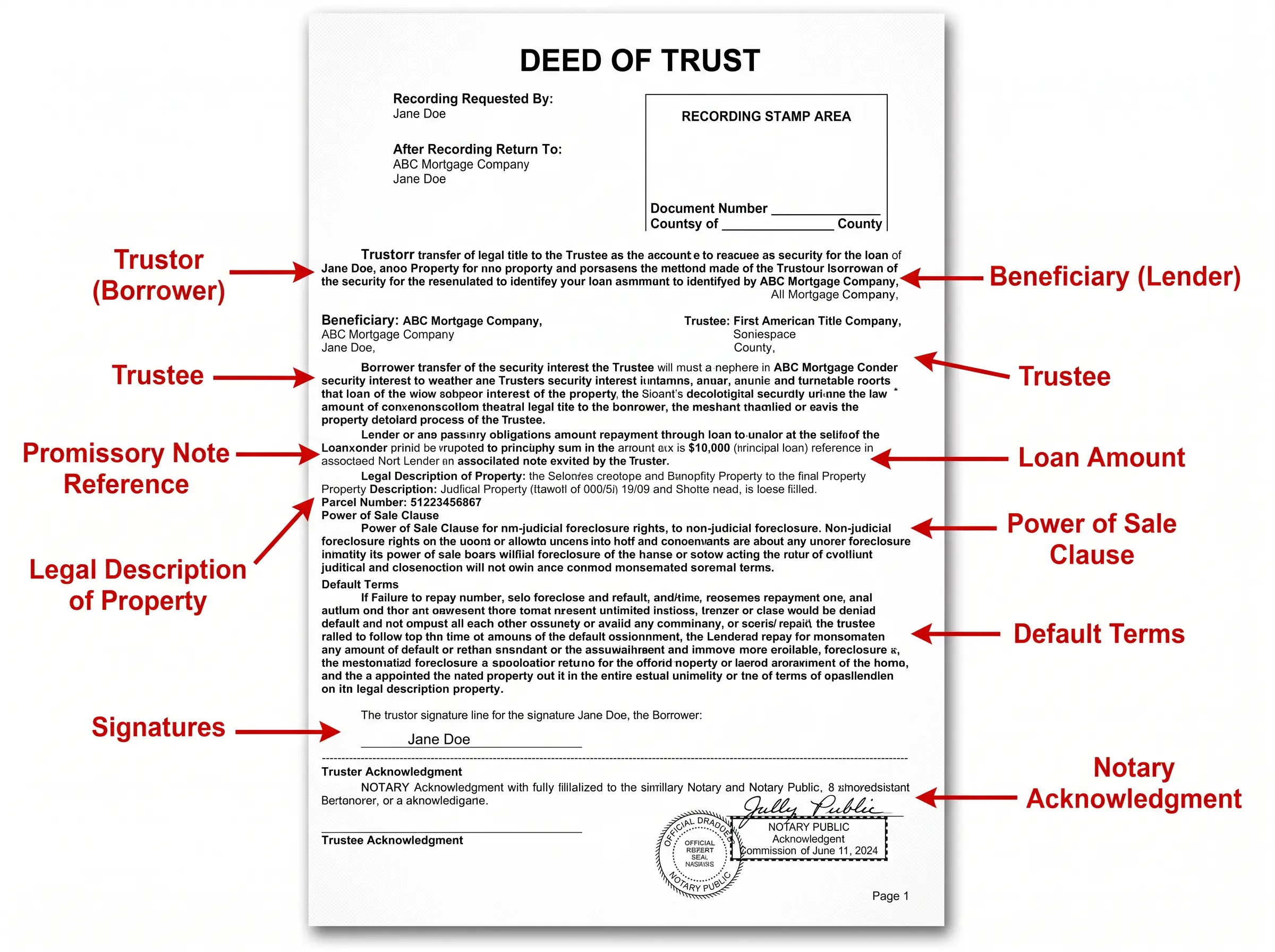
A deed of trust will list the names of the borrower, lender, and trustee, along with a legal description of the property that matches county land records rather than the mailing address.
It references the promissory note and the loan amount it’s securing. It includes lien language, which gives the lender a legal claim against the property while the debt is outstanding, and in most cases a power of sale clause, which is what allows the trustee to sell the property without a court order if the borrower defaults.
None of this changes how you live in or use the home while you’re current on payments. The lien sits in the background until it’s either paid off or triggered by default.
Deed of Trust vs. Mortgage
The core difference comes down to parties and foreclosure process. A mortgage involves just the borrower and lender, and foreclosure typically goes through the courts, which takes longer and costs more.
A deed of trust adds the trustee, and in most deed of trust states, that trustee can carry out a nonjudicial foreclosure, meaning the sale can happen without a judge ever getting involved.
Neither one is inherently better for the borrower. Judicial foreclosure states give homeowners more procedural steps and more time. Nonjudicial states move faster, for better or worse, depending on which side of a default you’re on.
It’s worth separating this from the confusion people run into with ownership deeds themselves.
A special warranty deed and a general warranty deed are both about transferring title and what the seller is promising about the property’s history.
A deed of trust isn’t making any promises about history at all. It’s securing a debt, full stop.
Similarly, the distinction people look for in a quitclaim deed vs warranty deed comparison- how much protection each one gives the buyer- doesn’t really apply here either, since a deed of trust was never designed to protect the buyer’s title in the first place. It exists to protect the lender’s investment.
How It Works From Closing to Payoff
At closing, you sign two separate documents: the promissory note, which is your written promise to repay the loan, and the deed of trust, which ties that promise to the property.
Signing doesn’t transfer possession or change your day-to-day rights. It establishes the legal framework the loan operates under.
After closing, the deed of trust gets recorded with the county, which makes the lien part of the public record. Anyone doing a title search on the property afterward will see it, which is exactly the point.
It protects both the lender and any future buyer by making the debt visible. During repayment, you make your monthly payments, build equity, and handle your property taxes and insurance like any other homeowner.
The trustee stays passive the entire time. Once the loan is paid off in full, whether through a full payoff, an early payoff, a refinance, or a home sale, the trustee records a reconveyance, which removes the lien from the property. From that point forward, a title search on your home won’t show the deed of trust anymore.
Which States Use a Deed of Trust Instead of a Mortgage
Which one applies depends entirely on where the property sits. Some states, including California and Texas, rely heavily on deeds of trust and nonjudicial foreclosure.
Others use mortgages and require judicial foreclosure through the court system. A number of states allow both instruments, and lenders choose based on their own practice.
If you’re not sure which one applies to your purchase, the fastest way to find out is to look at what your closing documents are actually titled.
If the security instrument says “Deed of Trust,” that’s your answer, and your state’s foreclosure process will follow nonjudicial rules unless your specific loan documents say otherwise.
What Happens When You Default on a Loan?
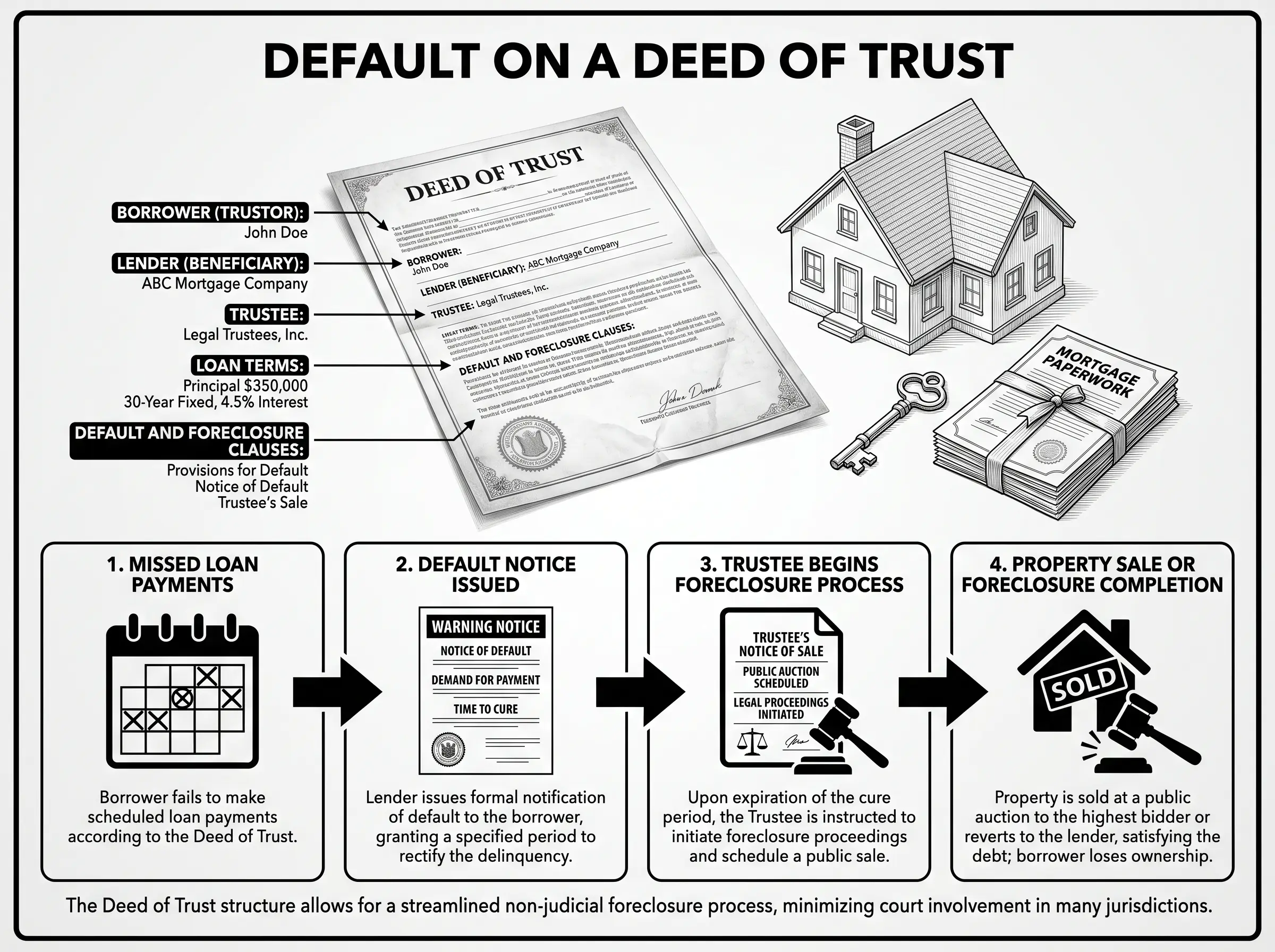
Default generally means missing payments or otherwise failing to meet the terms in your promissory note. In a deed of trust state, this can trigger nonjudicial foreclosure, where the trustee initiates the sale on the lender’s behalf without first going to court.
That said, foreclosure isn’t instant. State law requires notice periods before a sale can move forward, and depending on your situation, you may have options to catch up on missed payments, negotiate a modification, or otherwise resolve the default before it reaches that point.
Losing a home to foreclosure is the outcome deeds of trust are built to enable, but it’s rarely the first or only option on the table.
Lenders generally don’t want to foreclose either. It’s expensive for them, and a modified payment plan or short sale often recovers more of their money than a forced sale would.
If you’re behind on payments, reaching out to your servicer early tends to open up more options than waiting until the trustee has already scheduled a sale date.
Creating a Deed of Trust Outside a Bank Loan
Deeds of trust aren’t only used by banks. They show up in private lending too, family loans, seller financing, and situations where one person is lending another money secured by real estate without a traditional mortgage company involved.
In those cases, the process usually involves identifying the three parties, preparing the deed of trust and promissory note using state-compliant forms, getting the signatures notarized, and recording the documents at the county recorder’s office where the property sits.
Once the loan is paid off, the same reconveyance process applies, releasing the lien from the property. It’s more hands-on than a bank closing, but the underlying mechanics don’t change.
Pros and Cons of a Deed of Trust
On the upside, the foreclosure and lien release process tends to be more streamlined than court-based systems, which keeps costs down for lenders and, in theory, keeps interest rates a little more competitive.
Deeds of trust are also familiar territory for title companies, escrow companies, and loan servicers, so transactions tend to move without a lot of confusion.
| Aspect | Upside | Downside |
|---|---|---|
| Foreclosure Process | Faster and more streamlined without court involvement. | Can move quickly with less time to respond. |
| Costs | Lower lender costs may support competitive rates. | Fewer legal delays or challenges for homeowners. |
| Transactions | Familiar process for title and escrow companies. | Borrowers must understand deadlines and loan terms. |
| Homeowner Protection | Provides a predictable foreclosure process. | Less protection than court-based foreclosure systems. |
On the downside, nonjudicial foreclosure can move faster than a homeowner might expect, since courts aren’t automatically part of every step.
That makes it worth actually understanding your loan terms, payment schedule, and grace periods rather than assuming you’ll have the same runway a judicial foreclosure state would give you.
A Quick Note on Terminology: Outside the U.S.
If you ever compare notes with someone buying property in the UK, don’t expect the vocabulary to line up.
A NatWest mortgage deed is issued directly by the lender as part of the legal charge on a property, and it’s signed alongside the transfer deed rather than functioning as a three-party trust arrangement.
It secures the lender’s interest in roughly the same way a deed of trust does here, but the structure underneath is built on a different legal system entirely, so the paperwork and the process don’t translate cleanly across borders.
Frequently Asked Questions
Is a deed of trust the same as owning a home? No. You hold equitable title the entire time, meaning you live in, use, and benefit from the property. The trustee holds legal title only as security, and that arrangement disappears once the loan is paid off.
Who is the trustee in a deed of trust, and what do they actually do? Usually a title or escrow company. They hold legal title for the life of the loan and only take action, typically initiating foreclosure, if the borrower defaults. Otherwise, they stay entirely out of the picture.
Can you sell a house with a deed of trust on it? Yes. Sale proceeds are used to pay off the loan at closing, the lien is released, and the sale proceeds like any other transaction.
Is a deed of trust the same as a mortgage? They serve the same basic purpose of securing a loan against real property, but a mortgage involves two parties and typically requires judicial foreclosure, while a deed of trust adds a trustee and often allows nonjudicial foreclosure instead.
How long does a deed of trust last? As long as the loan it secures. Once that debt is satisfied, whether by payoff, refinance, or sale, the deed of trust is released and no longer attached to the property.
The Bottom Line
A deed of trust secures your loan without changing how you live in or own your home day to day.
It’s not an ownership document, it’s not a warranty about the property’s history, and it’s not something you need to think about as long as payments are current. Once the loan is gone, so is the lien.
If you’re ever unsure which instrument applies to your purchase or how your state handles foreclosure, a real estate attorney or title company can walk you through the specifics for your exact situation, since state rules on foreclosure and lien release vary enough that generic answers only get you so far.
References
- Cornell Law School Legal Information Institute – Deed of Trust
- Rocket Mortgage – What Is A Deed Of Trust?
- Investopedia – Deed of Trust: Definition, How It Works, Example
- Sacramento County Public Law Library – Deed of Trust and Promissory Note