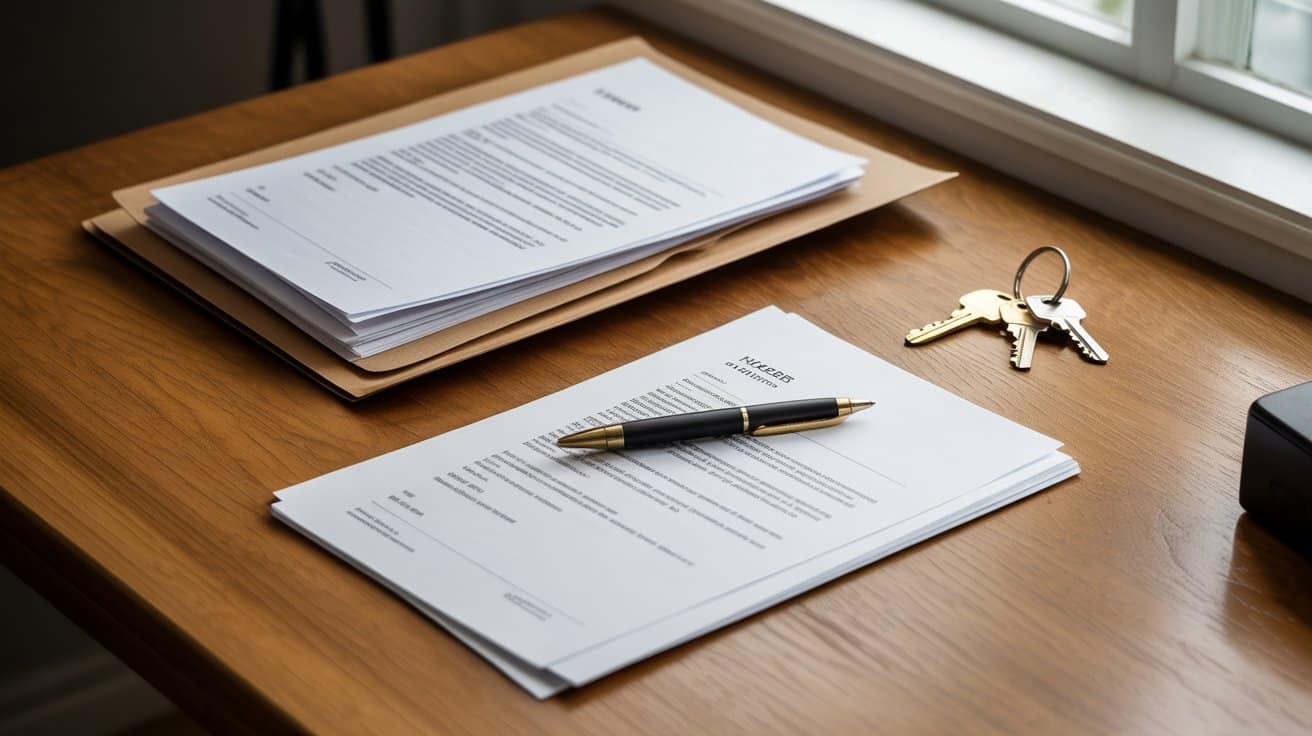

You bought a home and signed the papers. But is your deed actually on file with the government?
A recorded deed is a legal document filed with your local county or municipal office. This filing creates a public record of ownership. It tells the world that this property belongs to you.
But here is what most homeowners miss. Signing a deed and recording it are two different things. Your title or escrow agent usually handles the filing after closing. But agents make mistakes, paperwork gets lost, and county offices miss filings.
Knowing how to check if a deed is recorded through your county recorder’s website or office takes less than ten minutes and can save you a serious headache later.
If your deed was never recorded, you could run into real trouble when it is time to sell, refinance, or prove that the property is yours.
What Counts as Proof of Property Ownership?

The Legal and Practical Meaning of “Proof”
Before we get into specific documents, it’s worth knowing what “proof” actually means in this context.
Legally, proof of ownership is any document or set of documents that establishes your right to a property.
It confirms that the property was lawfully transferred to you, that the transaction was recorded, and that no competing claims exist.
On the practical side, different situations call for different levels of proof.
A bank processing your mortgage application will demand more rigorous documentation than a municipal office issuing a utility connection.
A courtroom dispute requires documents with the highest legal standing, while an insurance claim might accept supporting records that simply link you to the property.
Primary vs Supporting Documents
This is where the distinction between primary and supporting documents becomes important.
Primary documents directly establish ownership. Courts and government authorities treat them as definitive evidence.
Supporting documents don’t prove ownership on their own, but they corroborate your claim by showing a pattern of control, occupancy, or financial stake in the property.
When is One Document Enough?
Sometimes a single primary document is enough.
Other times, especially when records are incomplete or disputed, you’ll need a layered approach with multiple documents that together build an undeniable case for your claim.
Primary Documents That Prove Property Ownership
These are the documents that carry the most legal weight. When authorities, courts, or financial institutions want to confirm who owns a property, these are the records they look for first.
1. Registered Sale Agreement
A registered sale agreement records the terms of a property transaction between buyer and seller.
When properly registered with the local sub-registrar’s office, it becomes a legally recognized document that carries significant weight.
However, there’s an important detail to keep in mind. A sale agreement records the intent and terms of a sale, but it isn’t always treated as the final word on ownership.
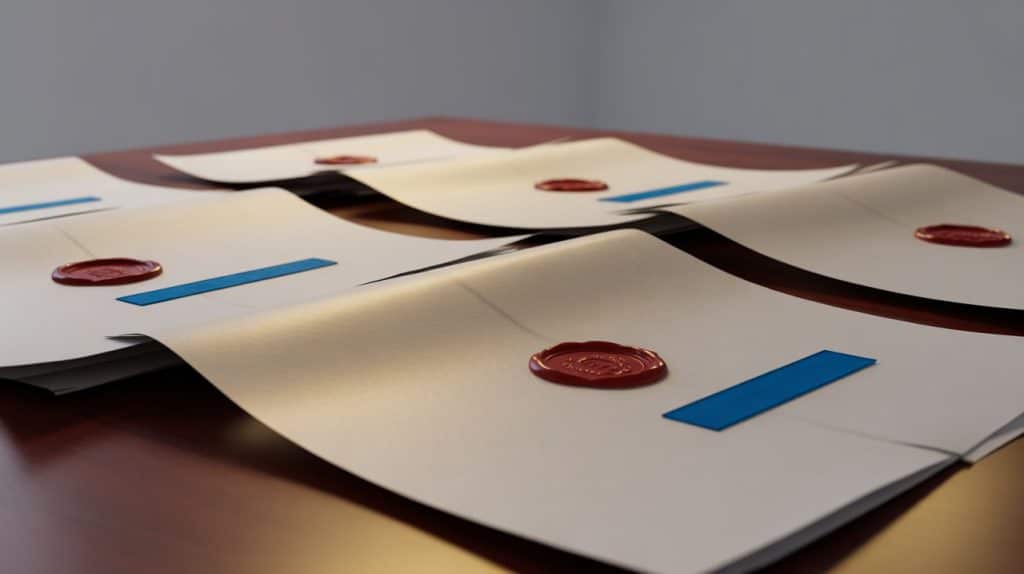
In many jurisdictions, the sale deed, executed after all conditions in the agreement are met, carries greater authority. If you’ve never handled one before, most people are surprised by what a house deed actually looks like.
It is a formal legal instrument with grantor and grantee names, a legal property description, notary seals, and a recording stamp from the county office. That distinction between an agreement and a deed becomes clearer once you’ve seen the document itself.
2. Property Tax Receipts
Most property owners overlook that consistently paying property taxes is one of the simplest ways to reinforce an ownership claim.
These receipts show that the local municipal authority recognizes you as the owner of the property.
They don’t directly establish ownership, but a long, unbroken record of tax payments creates a strong presumption that the property belongs to you.
Courts give weight to property tax records, especially when other documentation is incomplete. Banks also rely on them during loan processing as a sign of active ownership.
3. Encumbrance Certificate
An encumbrance certificate is one of the most underrated yet critical ownership documents.
Issued by the sub-registrar’s office, it provides a complete history of all registered transactions related to a specific property over a defined period.
What makes it so valuable is what it confirms through absence. An encumbrance certificate showing no outstanding mortgages, liens, or legal disputes indicates that the property’s title is clear.
It essentially validates that the ownership chain is intact and uncontested. To be fully certain, it’s worth taking a moment to check if the deed is recorded in official property records.
Banks rely heavily on encumbrance certificates during loan approvals. Buyers use them during due diligence.
And in legal proceedings, a clean encumbrance certificate can significantly strengthen your position.
If you don’t already have a recent one, it’s worth obtaining, especially before any major transaction.
4. Possession Certificate
A possession certificate confirms physical control over a property and is issued by a revenue authority or local government body.
It holds special significance in semi-urban and rural areas, where families may have held properties for generations without modern documentation. In such cases, it often serves as the primary evidence of control.
It doesn’t meet the legal weight requirements for a registered deed, but in boundary disputes, land acquisition cases, and government allotments, it plays a decisive role.
5. Allotment Letter (for New Properties)
If you’ve purchased from a government housing authority or registered developer, the allotment letter is your first official proof of ownership.
It confirms the unit allocation, including location, dimensions, price, and allotment terms.
This letter serves as proof of ownership until the final sale deed or conveyance deed is executed.
But remember, it’s transitional. Always follow up to get a proper sale deed registered in your name.
Secondary Documents That Support Ownership Claims
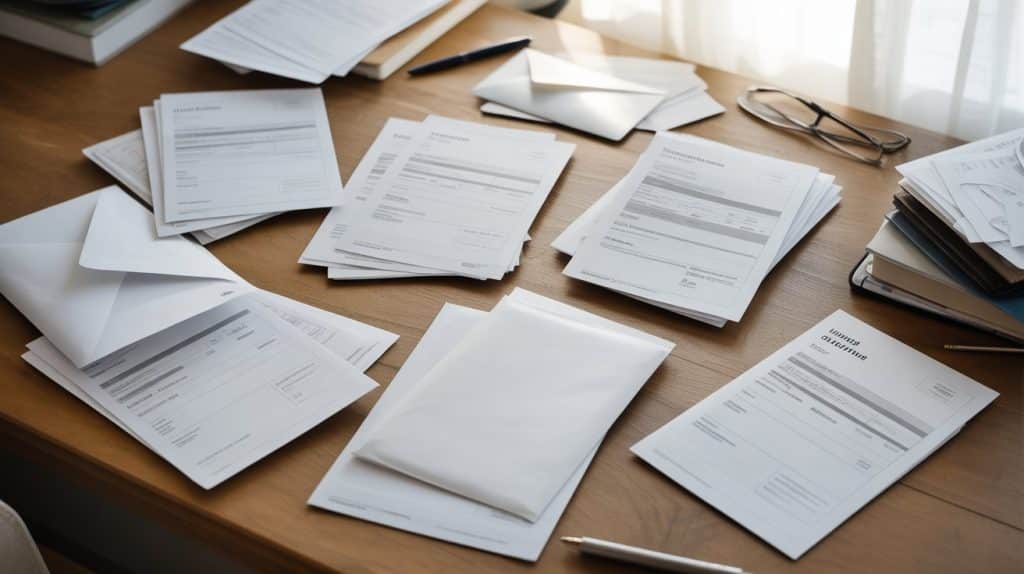
These documents don’t prove ownership by themselves, but they add layers of credibility to your claim.
They act as reinforcements that strengthen your overall documentation.
1. Utility Bills (Electricity, Water, Gas)
Utility bills registered in your name establish a consistent record of occupancy and control.
They prove you’ve been using and paying for the property’s services, which implies authority that aligns with ownership.
When primary documents are being verified or contested, utility bills can tip the scale in your favor, especially for establishing how long you’ve been associated with the property.
2. Home Loan Documents
Your loan documents serve as indirect but compelling proof of ownership.
The bank wouldn’t have approved the loan without first verifying ownership through its own due diligence.
Sanction letters, disbursement records, and repayment statements all create a financial trail linking you to the property.
They work best when combined with other documents to present a complete picture.
3. Insurance Papers
Property insurance documents name the policyholder and describe the insured property.
Beyond risk coverage, they act as supporting evidence linking you to the property since the insurer would have verified basic ownership details before issuing the policy.
4. Society or Municipal Records
Society shares certificates, membership records, and municipal property registers that document your recognized status as the property owner within a community or administrative area.
These records are particularly helpful in cooperative housing scenarios, where they often complement or even substitute for individual ownership documents.
Which Document Is Considered the Strongest Proof?
The Legal Hierarchy
If you had to rank these documents by legal strength, a registered sale deed or conveyance deed sits at the top.
Next comes the registered sale agreement, followed by the encumbrance certificate, and then property tax receipts.
The possession certificates, allotment letters, and supporting documents follow in descending order.
Registered Beats Unregistered
Courts and government authorities will almost always prioritize registered documents over unregistered ones.
Among registered documents, those that directly record the transfer of ownership carry more weight than those that merely reference or support the transaction.
Why Combining Documents Works Best
The strongest position isn’t held by someone with one perfect document. It belongs to someone who has multiple documents that all point in the same direction.
A registered deed backed by tax receipts, a clean encumbrance certificate, and utility bills in the same name creates a virtually unassailable claim.
When You Might Need Multiple Ownership Documents
Several common situations demand a comprehensive documentation approach rather than relying on a single record.
1. Property Disputes and Boundary Issues
These require you to demonstrate not just legal ownership but also the physical extent of your claim.
2. Loan Approvals and Refinancing
Banks conduct thorough verification across multiple document types before sanctioning any loan.
3. Selling or Transferring Property
Satisfying a buyer’s due diligence requirements typically involves producing multiple records simultaneously.
4. Inheritance or Succession Cases
Establishing an unbroken chain of ownership across generations is something no single document can accomplish on its own.
How to Organize Your Property Documents Properly

1. Build a Simple Inventory
A good organization doesn’t require anything complicated.
Start by gathering every property-related document you have and creating a simple inventory, a list that notes each document, its date, and where the original is stored.
2. Store Originals and Copies Safely
Keep the originals in a secure location, such as a bank locker or a fireproof safe.
Maintain at least two sets of clear photocopies, one at home for easy reference and another stored separately as a backup.
3. Go Digital
Digital backups are equally important. Scan every document and store the files in a secure cloud service or encrypted drive.
4. Review Annually
Set a reminder to review your property documents at least once a year. Check that names, addresses, and details are consistent across all records.
Verify that tax payments are current. Confirm that your encumbrance certificate is recent enough to be useful.
What to Do If You Don’t Have Proper Proof
Start With the Sub-Registrar’s Office
If your documentation is incomplete, don’t panic, but do act promptly. Start by visiting your local sub-registrar’s office.
Many registered documents can be retrieved through certified copies, even if the originals are lost.
Check Municipal and Revenue Records
Municipal offices and revenue departments maintain their own records that can help reconstruct your ownership trail.
Property tax departments can provide duplicate receipts for past payments.
When to Get Legal Help
Sometimes the situation is more complex. Disputed ownership, missing links in the chain of title, or properties that have changed hands multiple times without proper documentation all call for professional legal help.
A legal professional can guide you through the process of establishing ownership through mutation records, affidavits, court orders, or other remedial measures.
Conclusion
Proof of property ownership is never just about one document. It’s about maintaining a complete, consistent set of records that together leave no room for doubt.
Gather, organize, and keep your property documents up to date. It feels tedious until the day it saves you from a costly dispute or a stalled transaction.
And if there’s one takeaway to carry forward, understanding what your core ownership document actually says and does is the foundation upon which every other record builds its value.
Frequently Asked Questions
Which Type of Evidence Cannot Prove?
Evidence that is irrelevant, unreliable, or illegally obtained cannot reliably prove facts in court and may be rejected by the judge.
Can Screenshots of Text Messages Be Used as Evidence?
Yes, screenshots can be used if their authenticity is verified and they are not tampered with; courts may require supporting proof or device verification.
Can Emails Be Used as Evidence In Court?
Yes, emails are admissible as electronic evidence if their authenticity and origin are proven under applicable evidence laws and proper verification procedures.