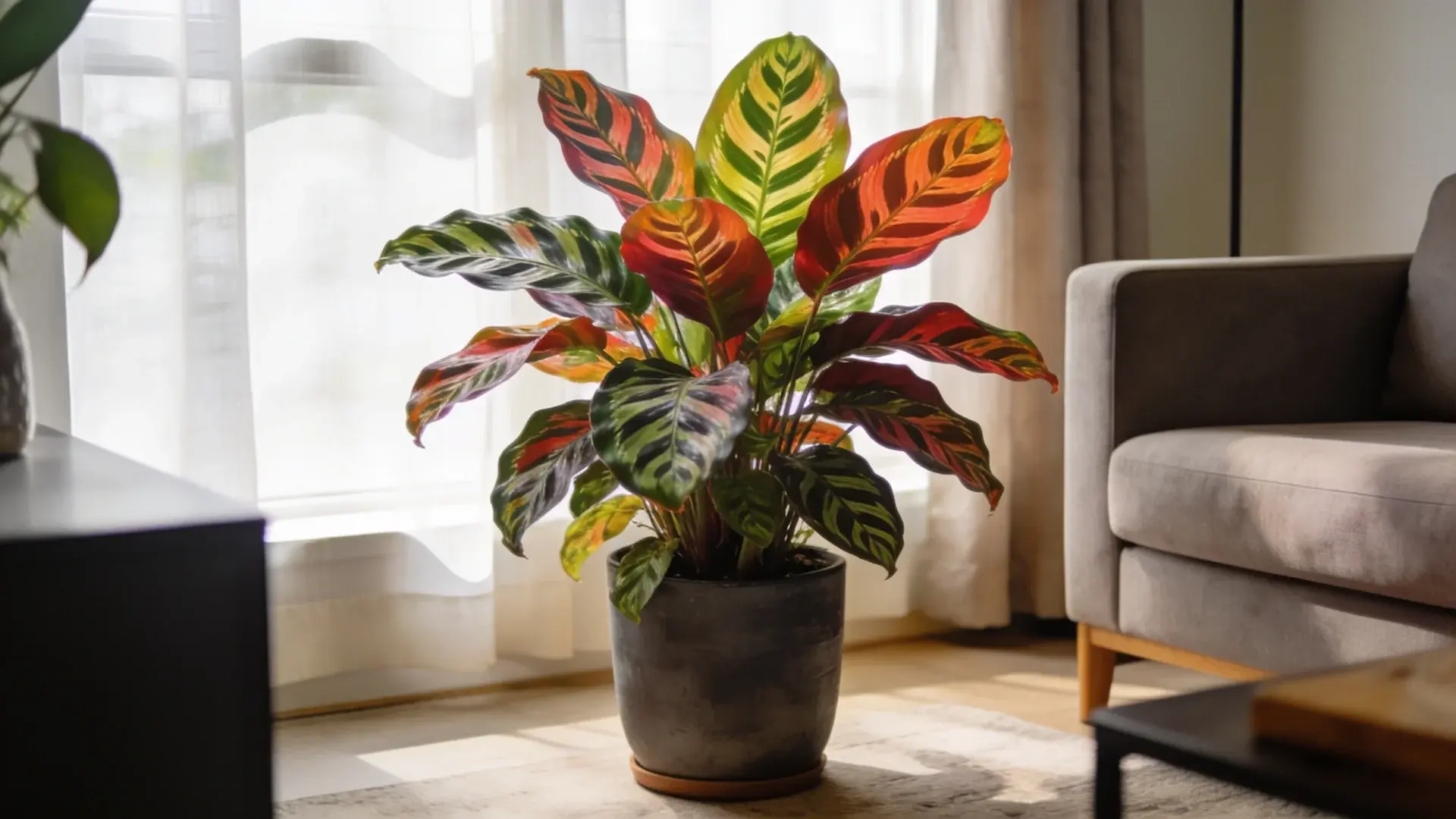

Calathea care is not as hard as it looks once you know what the plant actually needs. These tropical plants need indirect light, consistent moisture, and higher humidity to stay healthy indoors.
Get these three things right, and you’ll enjoy some of the most stunning indoor foliage.
In my 12 years helping home gardeners keep tropical plants alive, I see the same three mistakes again and again: overwatering, direct sunlight, and skipping humidity entirely.
Then the leaves curl, the tips brown, and the whole plant looks sad within a few weeks.
Once you understand what your calathea needs and why it reacts the way it does, keeping it alive becomes a lot more manageable.
This guide covers watering, soil, humidity, repotting, and fixing common problems.
What Is a Calathea?
Calatheas are tropical plants native to the rainforest floors of Central and South America. They belong to the Marantaceae family, which is why they are widely known as prayer plants.
Their leaves move upward at night and downward during the day. This movement follows a daily rhythm and is the plant’s way of responding to light. It is one of the most unique things about keeping a calathea at home.
They grow to around 60-70 cm indoors and are slow growers. They are non-toxic to cats, dogs, and children, which makes them a safe choice for most homes.
One thing worth knowing before you buy: wide calathea varieties have been reclassified under the genus Goeppertia.
You may see both names on plant labels at nurseries. The care requirements stay the same, so do not let the name change confuse you.
Quick Calathea Care Reference
Use this quick reference to keep your Calathea healthy. It covers the basic care needs you’ll want to remember at a glance.
| Care Factor | Requirement |
|---|---|
| Light | Medium to bright indirect light |
| Water | When the top 1 to 2 inches of soil feel dry |
| Water type | Filtered, distilled, or rainwater |
| Humidity | 50 to 70% |
| Temperature | 65 to 80°F (18 to 27°C) |
| Soil | Moist, well-draining mix |
| Fertilizer | Monthly in spring/summer at half strength |
| Repotting | Every 1 to 2 years in the spring |
| Pet safe | Yes |
Best Calathea Varieties for Beginners
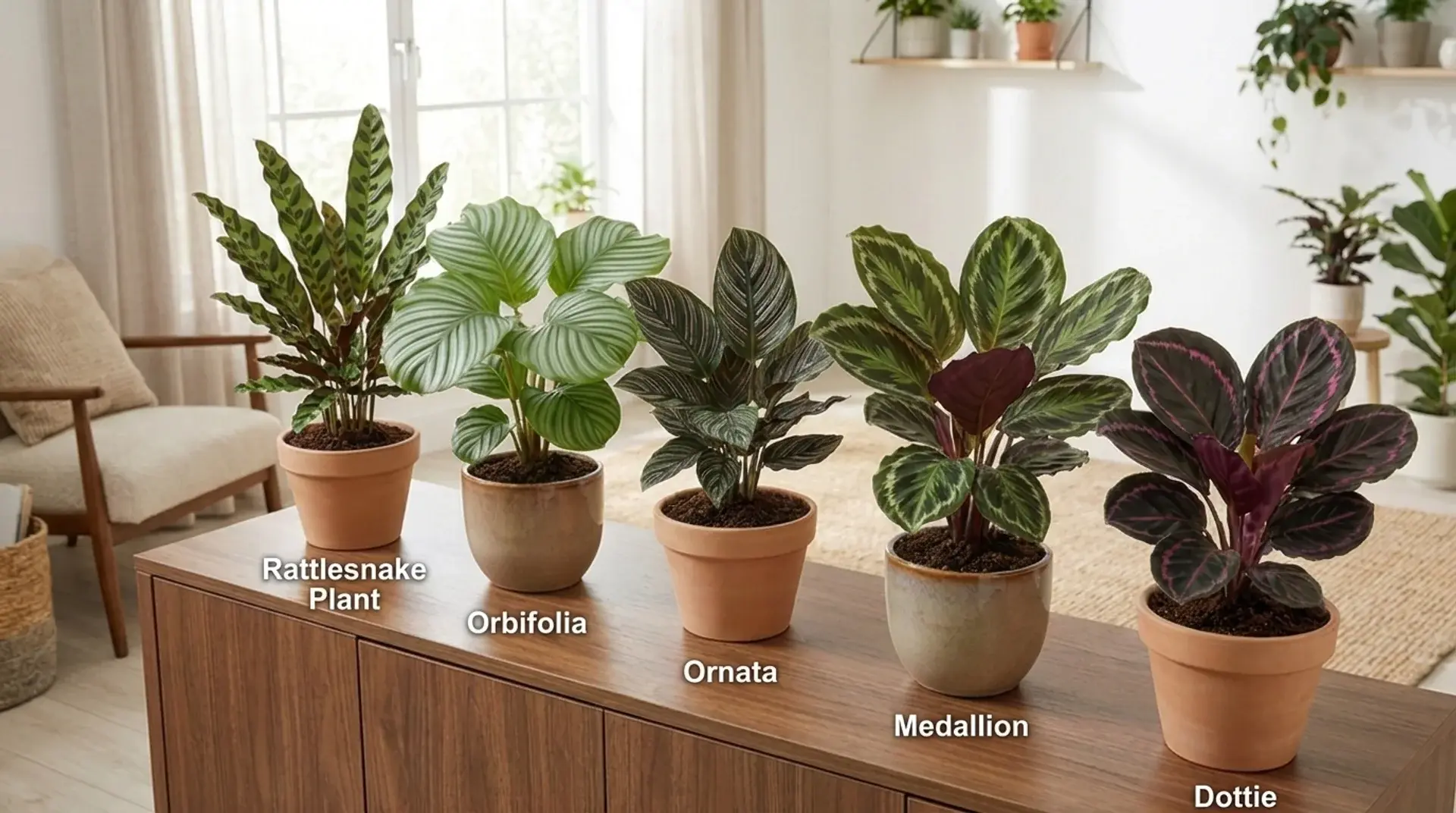
Not all calatheas are equally forgiving. Some handle a bit of neglect better than others.
- Rattlesnake Plant (Calathea lancifolia): It is the best starting point for beginners. It tolerates lower humidity and is more forgiving if you miss a watering. The long wavy leaves with dark oval markings are easy to recognize.
- Orbifolia: It has large, round leaves with silver-green stripes. It makes a bold statement indoors but needs a bit more attention to keep looking its best.
- Ornata (Pinstripe): It features deep green leaves with fine pink lines. It is striking but slightly more sensitive to dry air.
- Medallion: one of the most popular varieties. It is at a mid-level of difficulty and widely available at most garden centers.
- Dottie: It has deep purple-green foliage with a bright pink outline. It is beautiful but on the more sensitive end of the spectrum.
If this is your first calathea, start with the rattlesnake plant. Get comfortable with its needs before moving on to the more demanding varieties.
How to Water a Calathea Correctly
Watering is where calathea care most often goes wrong. The plant sits between two extremes. It does not like sitting in soggy soil, but it should not dry out completely either.
Water when the top one to two inches of soil feel dry. You can test this by pressing a finger into the soil near the base of the plant. If it still feels moist, wait another day or two.
1. Avoid Regular Tap Water
Calatheas are sensitive to fluoride and chlorine, which can cause brown leaf tips over time. Water with filtered, distilled, or rainwater whenever possible.
If tap water is your only option, leave it in an open container for 24 hours before using it so some of the chlorine can dissipate.
2. Try Bottom Watering
Bottom watering is a great way to keep the soil evenly moist. Place the pot in a tray or sink with a few inches of water and let it soak for about 30 minutes.
The roots absorb moisture from below, encouraging stronger root growth while reducing the chance of overwatering the soil surface.
3. Water Less in Winter
Calatheas need more water during spring and summer when they are actively growing. In winter, growth slows, so water less often and only when the soil begins to dry.
Keep the soil lightly moist, but never let it become completely dry or soggy.
Essential Calathea Care Requirements for Healthy Growth
Creating the right environment is the key to keeping a calathea healthy, vibrant, and free from common issues like curling leaves, brown edges, and stunted growth.
From light and humidity to soil, feeding, and repotting, each aspect of care plays an important role in helping your plant thrive indoors.
1. Light Requirements
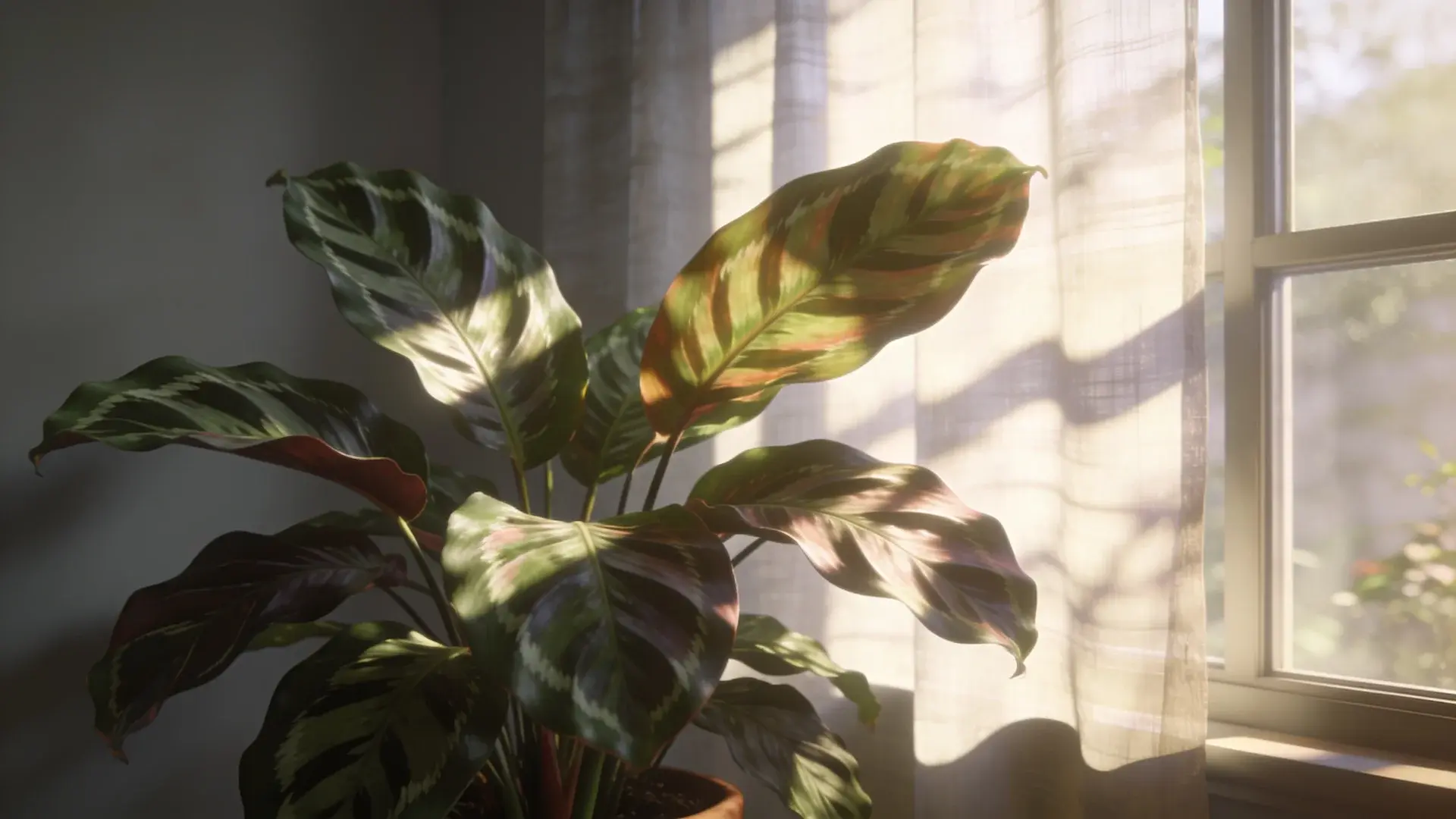
Calatheas grow on the forest floor in their natural habitat. Taller trees block much of the sunlight above them, which means they are used to dappled, indirect light.
Indoors, they thrive in medium to bright indirect light but tolerate lower light at the cost of vibrancy. Direct sunlight is harmful; even a few hours can burn leaves, fade patterns, and dry soil quickly.
A good placement is a few feet away from an east- or north-facing window. If your home only has south- or west-facing windows, hang a sheer curtain to soften the light before it reaches the plant.
2. Humidity and Temperature
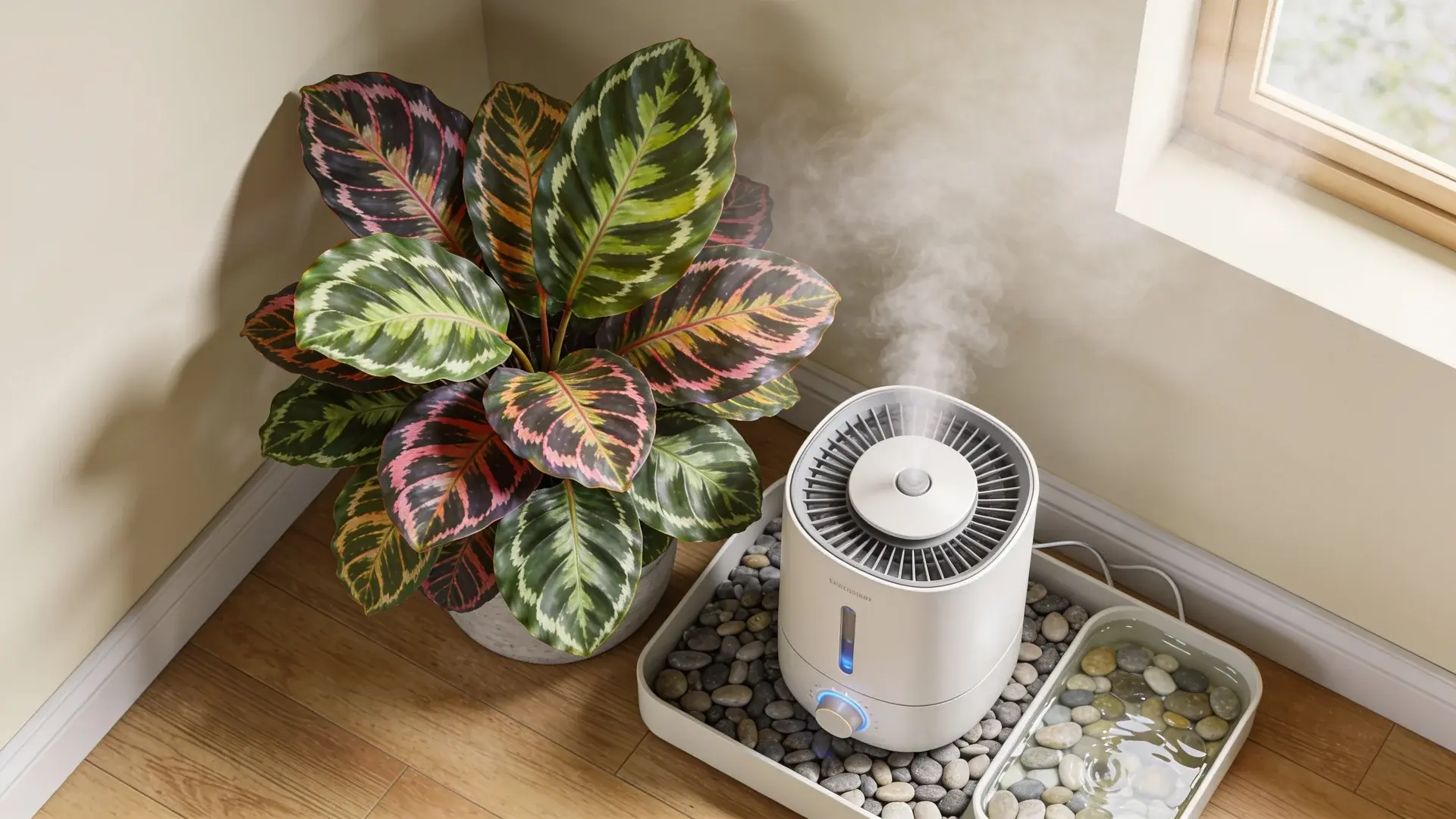
Calatheas need humidity. This is non-negotiable. They come from rainforests where humidity levels stay between 60% and 80%. Indoors, most homes sit well below that.
A humidity level of 50% to 70% is the target range. The easiest way to provide this is to place your calathea in a bathroom or kitchen, where air moisture is naturally higher.
If you want to keep it in a living room or bedroom, here are three ways to raise the humidity around the plant:
- Pebble tray: Fill a shallow tray with pebbles, add water just below the top of the pebbles, and place the pot on top. As the water evaporates, it raises the humidity directly around the plant.
- Misting: Lightly mist the leaves every two to three days using lukewarm water. Cold water can shock the leaves.
- Humidifier: A small humidifier placed nearby is the most consistent and low-effort solution.
Grouping calatheas together also helps. Plants naturally release moisture through their leaves, and a cluster of plants creates a small humid zone that benefits all of them.
The same trick works well for other humidity-loving houseplants like the Chinese money plant.
Keep it away from heating vents, air conditioning, and cold drafts by windows, which cause humidity and temperature fluctuations that stress the plant.
Ideal temperature is 65°F to 80°F (18°C to 27°C); never below 55°F (13°C).
3. Soil and Potting
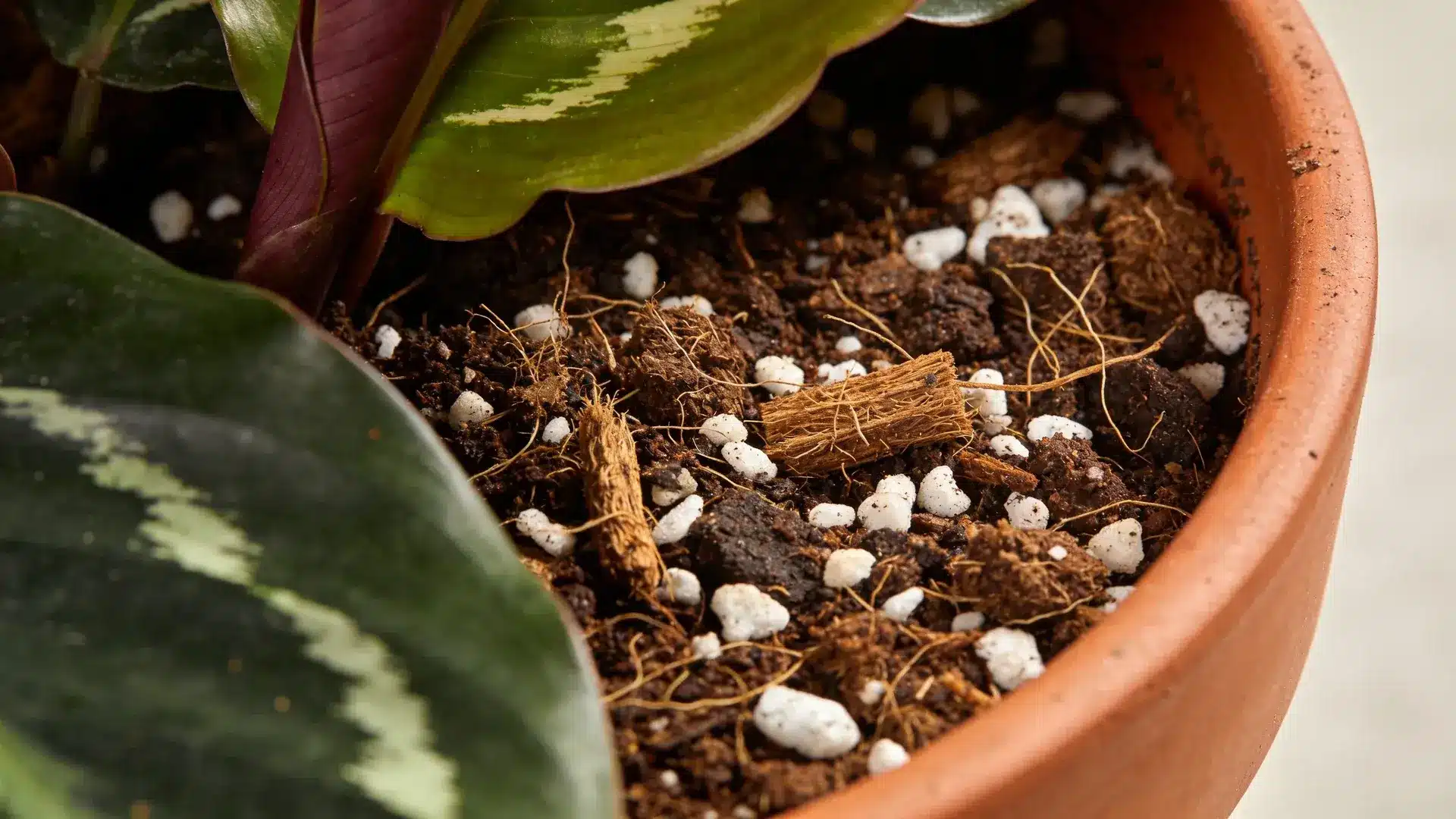
The right soil keeps moisture available without letting the roots sit in water. The mix needs to retain some moisture but drain well enough to prevent sogginess.
A reliable DIY mix is two parts coco coir and one part perlite, with a small amount of compost added for nutrients. This combination keeps moisture without compacting over time.
Avoid two extremes: heavy, dense soils that trap water and cause root rot, and fast-draining succulent mixes that leave the plant constantly thirsty.
When choosing a pot, go only one to two inches larger than the current root ball. An oversized pot holds more water than the roots can use, which creates the right conditions for root rot.
Terracotta pots are a good choice if you tend to overwater. They absorb excess moisture and help the soil dry more evenly. Always make sure the pot has drainage holes.
4. Fertilizing
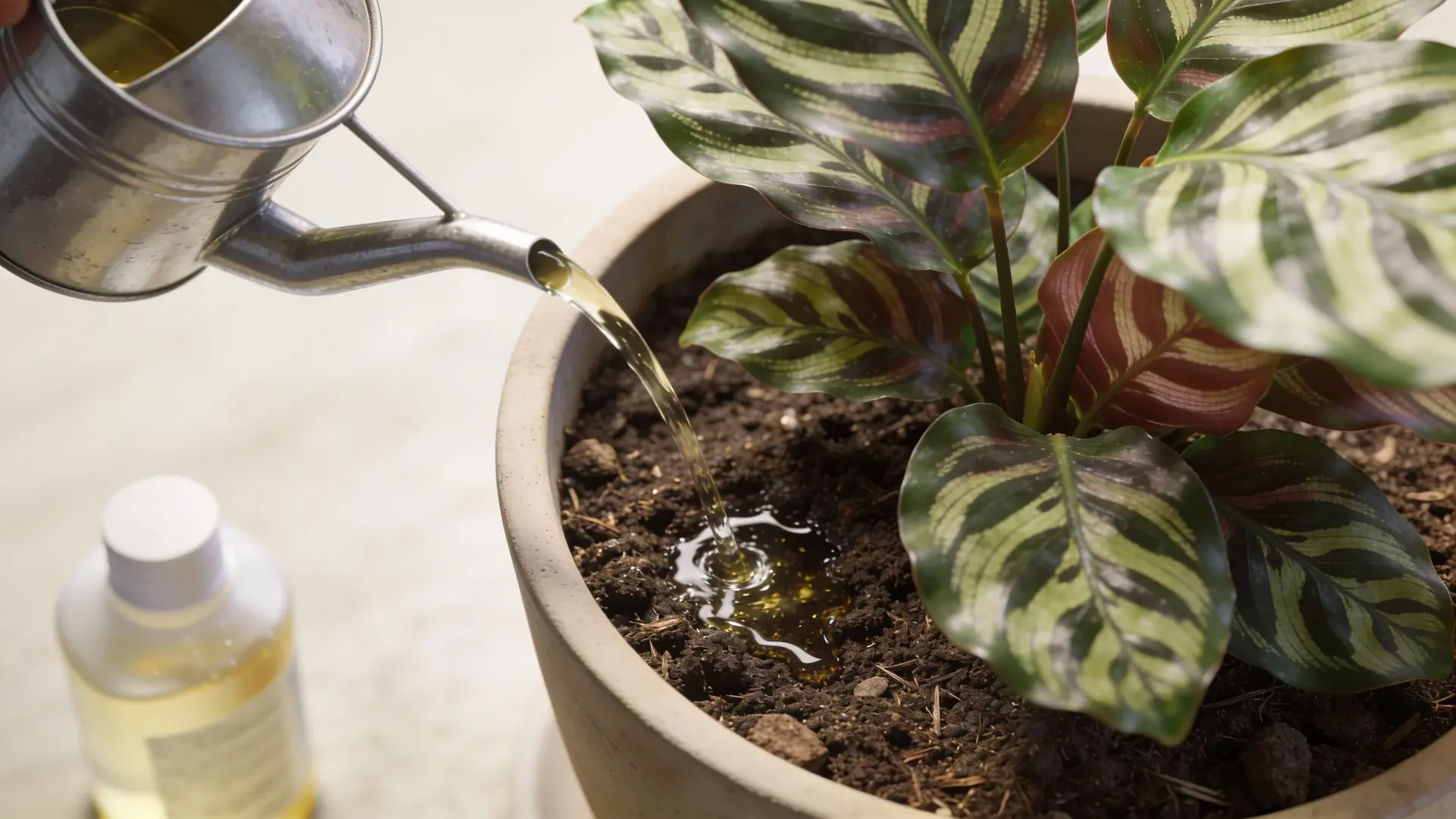
These plants do not need heavy feeding. A balanced liquid fertilizer at half strength, applied once a month during spring and summer, is enough to keep the plant growing well.
If you’re feeding several houseplants at once, a fertilizer dosing guide can help you work out the right amount for each pot size.
Always water the soil before applying fertilizer. Applying it to dry soil concentrates the nutrients at the roots and can cause burning.
Stop feeding completely in autumn and winter. Growth slows during these months, and the plant does not actively take up nutrients.
Feeding during this period builds up salts in the soil and can damage the roots over time.
5. Repotting
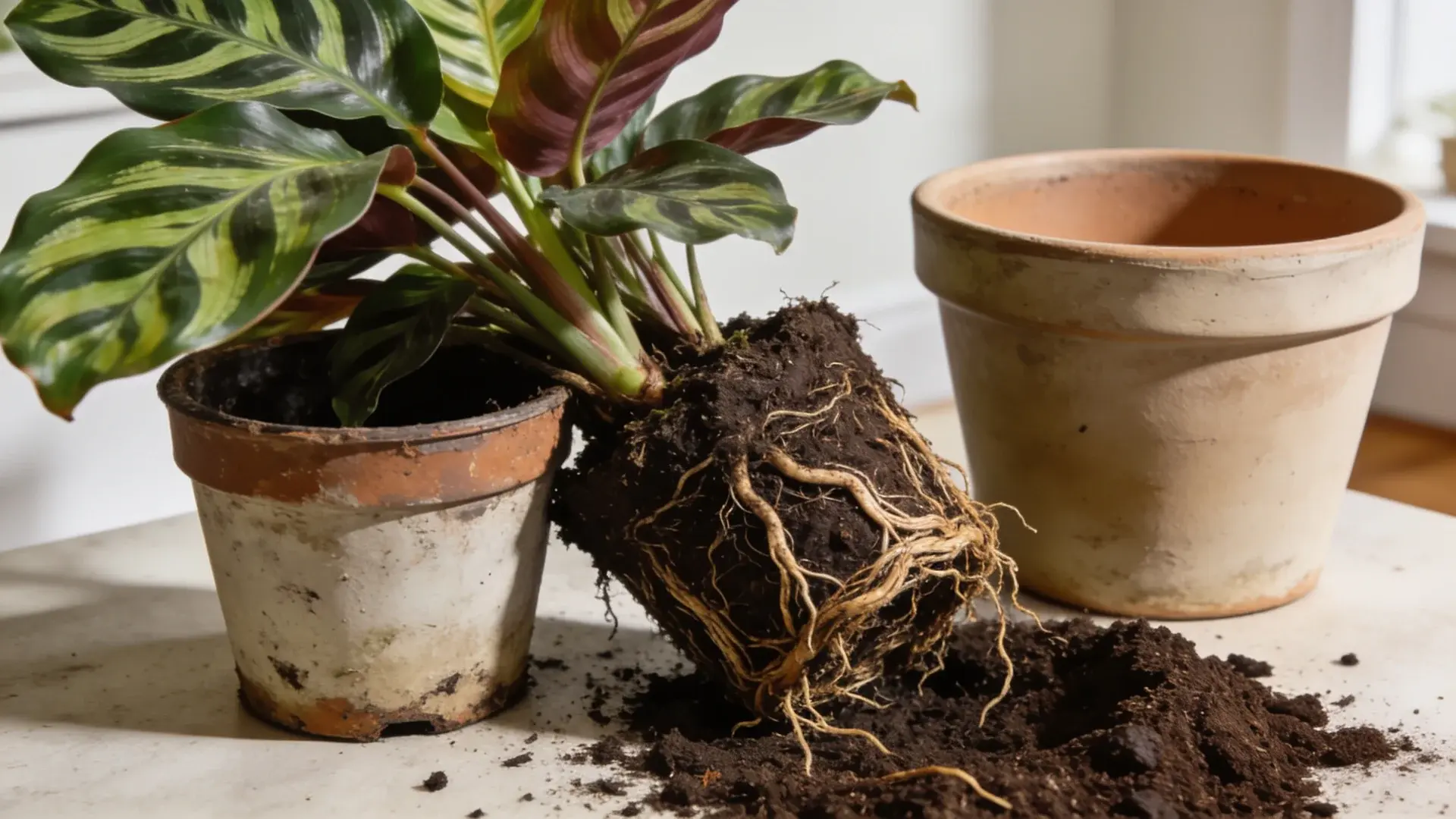
Repot your calathea every one to two years, or when you notice roots circling the bottom of the pot or growing out through the drainage holes.
Spring is the best time to do this. The plant is entering its active growing period and recovers from the disruption more quickly.
Steps to repot:
- Water the plant thoroughly the day before to reduce shock.
- Choose a pot that is one to two inches wider than the current one.
- Fill the new pot partway with fresh potting mix.
- Gently ease the plant out without pulling on the stems.
- Inspect the roots. Healthy roots are white and firm. Cut away any brown, soft, or mushy sections with clean scissors.
- Place the plant in the new pot, fill it with fresh soil, and press lightly around the base.
- Water it well and place the plant back in its usual spot.
Work quickly during repotting. The faster you move the plant from one pot to another, the less transplant shock it experiences.
Consistently meeting basic care needs ensures calatheas have vibrant foliage and steady growth. Even well-cared plants can develop issues, so early recognition and fixes are important.
Common Problems and How to Fix Them
Even with proper care, calatheas can be sensitive to changes in their environment.
The good news is that most problems show clear warning signs, making it easier to identify the cause and restore your plant’s health before the damage becomes severe.
1. Leaves curling inward: Usually a sign of low humidity or underwatering. Try bottom watering to thoroughly hydrate the roots and boost humidity using one of the methods above.
2. Brown tips or edges: Often caused by tap water chemicals, dry air, or inconsistent watering. Switch to filtered water, increase humidity, and try to water on a more regular schedule.
3. Yellow leaves: Usually linked to overwatering or poor drainage. Let the top layer of soil dry before watering again. Check that the pot has drainage holes and that water is not sitting in a saucer below.
4. Faded leaf patterns: A sign of too much direct light. Move the plant further from the window or add a sheer curtain.
5. Drooping, soft stems with wet soil: A strong sign of root rot from overwatering, the same failure mode that shows up in other popular houseplants when soil stays wet too long, including yucca plants grown indoors. Remove the plant from the pot, cut away the damaged roots, and repot in fresh, well-draining soil.
6. Leaf spots: These can come from fungal issues or mineral buildup from tap water. Switch to distilled water and water the soil directly rather than the leaves.
7. Fungus gnats in the soil: Small flies hovering near the pot are usually fungus gnats, drawn to soil that stays moist too long. Let the top inch dry between waterings to break the breeding cycle. For other common houseplant pests, see this guide to getting rid of black flies naturally.
Most calathea problems can be traced back to watering, humidity, light, or soil conditions.
By addressing issues early and making small adjustments to your care routine, you can keep your plant healthy, vibrant, and producing its signature patterned foliage for years to come.
Conclusion
Calathea care comes down to a few consistent habits: indirect light, clean water, regular humidity, and well-draining soil.
Get these four things right, and most problems fix themselves before they become serious.
The plant will tell you when something is off. Curling, browning, or yellowing leaves are signals, not failures.
Adjust one thing at a time and give it a few days to respond.
In my experience, the calatheas that struggle are almost always getting straight tap water or sitting somewhere too dry or too bright.
Small changes make a big difference with calatheas. Have you been growing one at home? Share what has worked for you in the comments below.
Frequently Asked Questions
Why Does My Calathea Have Tiny Flies in the Soil?
Small flies are usually fungus gnats, drawn to consistently moist soil. Let the top inch dry between waterings and add a thin layer of sand on top.
Why Won’t My Calathea Bloom?
Calatheas rarely flower indoors and are grown mainly for their foliage. Low light, a small pot, or an immature plant are the most common reasons blooms don’t form.
Why Are There White Crusty Spots on My Calathea Leaves?
White crusty spots are usually mineral or salt deposits from tap water, not pests or disease. Wipe leaves with a damp cloth and switch to filtered water.