
Knowing when to harvest garlic can feel harder than growing it.
Pull too early and the bulbs come out underdeveloped.. The leaves still look mostly green. The bulbs come out small, thin-skinned, and barely worth curing. All that time in the ground, gone.
Getting the timing right is not complicated. Your plants send clear signals. You just need to know where to look. This post covers every sign that tells you your garlic is ready to come out of the ground.
You will learn the leaf-counting method, the test-pull technique, and why soil moisture matters more than most gardeners think.
Softneck or hardneck, dry summer or wet spring, this post has every timing scenario covered.
Pull your bulbs at the right moment, and your harvest will last the full season.
When to Harvest Garlic?
Hardneck garlic matures faster and signals readiness with a scape. Softneck does not produce a scape, so leaf count is your only visual cue
Use your leaves as your calendar. The date on your phone is just a rough starting point.
- Garlic planted in October is usually ready by late June
- Garlic planted in November may not be ready until mid-July
- Softneck varieties take slightly longer than hardneck types
- General rule: 8 to 9 months from fall planting to harvest
- Leaf signals confirm readiness. Planting dates only estimate it.
When to Pick Each Type of Garlic?
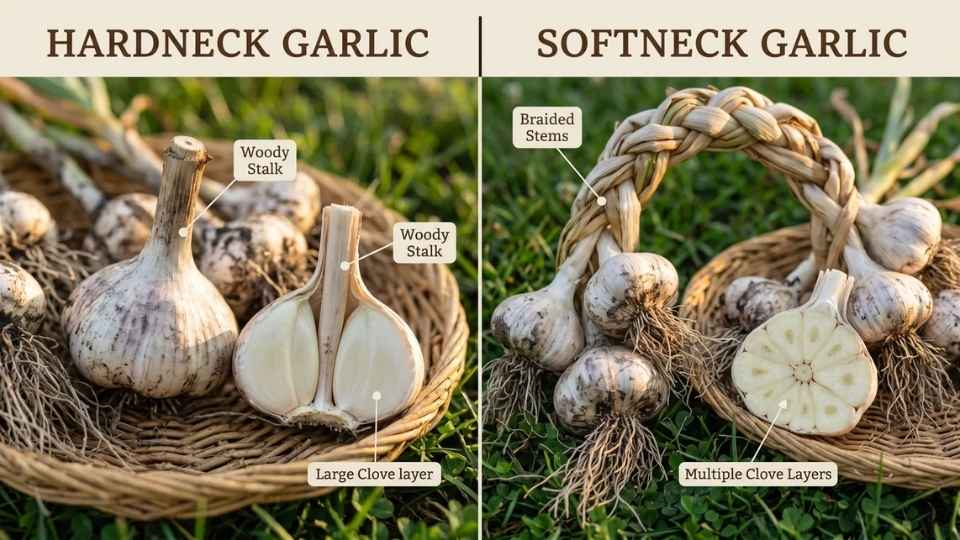
Not all garlic behaves the same way. Hardneck garlic matures faster. Softneck garlic stores longer but signals readiness differently. Knowing your garlic type changes everything about your harvest timing.
Before you pull a single bulb, confirm the type of garlic growing in your bed.
- Hardneck garlic sends up a curling stalk called a scape before harvest
- Softneck does not produce a scape, so leaf count becomes your only visual cue
- Hardneck bulbs have fewer but larger cloves per head
- Softneck varieties like Silverskin and Artichoke are the most widely grown
| Garlic Type | Average Harvest Window | Key Signal to Watch |
|---|---|---|
| Hardneck | Late June to early July | 5 to 6 lower leaves yellowed, and scape removed |
| Softneck | Mid-July to early August | 3 to 4 lower leaves fully browned |
Signs that Tell You that Your Garlic Is Ready to Harvest
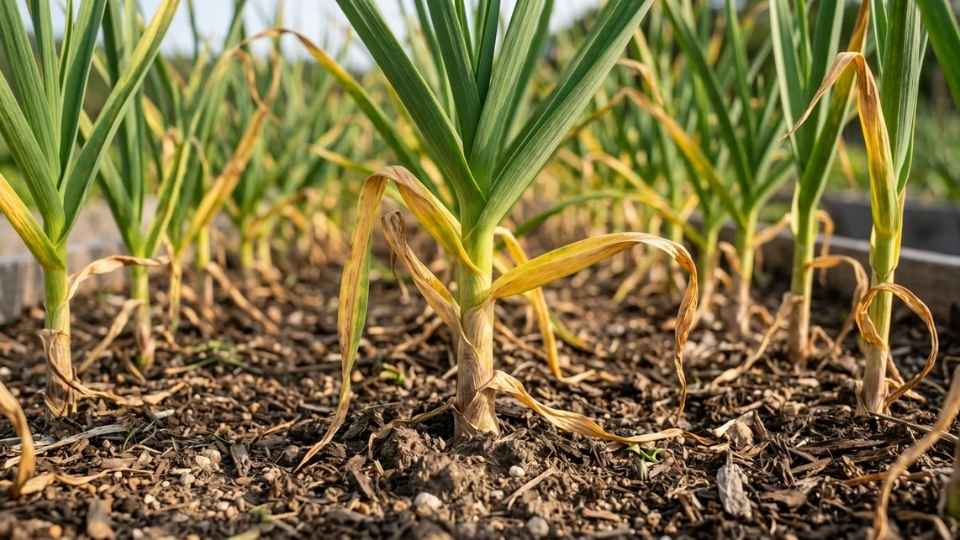
Your garlic plant communicates clearly before it is ready to come out of the ground. Three main signals point to a ready bulb. Miss even one of them and you risk pulling too early or leaving bulbs in too long.
Read all three before you reach for your fork.
1. The Leaf Counting Method
Each leaf above ground matches one wrapper layer around the bulb. This is the most reliable harvest signal you have.. Count from the bottom up, and you will always know exactly where your garlic stands.
- Each green leaf above ground equals one intact wrapper layer around the bulb
- The ideal harvest point is roughly 5 to 6 leaves still green, 5 to 6 turned yellow or brown
- Too many green leaves mean the bulb is still developing underground
- Too many brown leaves mean the bulb may have already split open underground
- Always count from the soil line upward, starting with the lowest leaves first
Pro Tip: Do your leaf count on a dry morning. Wet leaves droop and are harder to count accurately.
2. The Color Change Signal
Garlic leaves change color from the bottom upward. Yellow at the base signals the bulb is close to ready. Brown spreading toward the upper leaves means your harvest window is closing fast.
- Yellow lower leaves mean the bulb is nearing the finish line
- Brown lower leaves mean the harvest window is fully open right now
- Brown upper leaves mean you may have already missed the best window
- A fully green plant with no yellowing means the bulb still needs several more weeks in the ground
3. The Scape Signal for Hardneck Garlic
Hardneck garlic sends up a curling green stalk before harvest. This is the scape. Cutting it at the right moment gives you a reliable two- to three-week harvest countdown. Do not skip this step if you grow hardneck varieties.
- Scapes appear in late spring or early summer, depending on your local climate
- Cut the scape when it makes one full curl and before it straightens back out
- Cutting redirects energy away from the flower and back into the bulb for final development
- Wait 2 to 3 weeks after cutting the scape before pulling your bulbs
- Scapes are fully edible. Use them in stir-fries, pestos, and compound butters.
How Does Planting Time Affect When to Harvest Garlic?
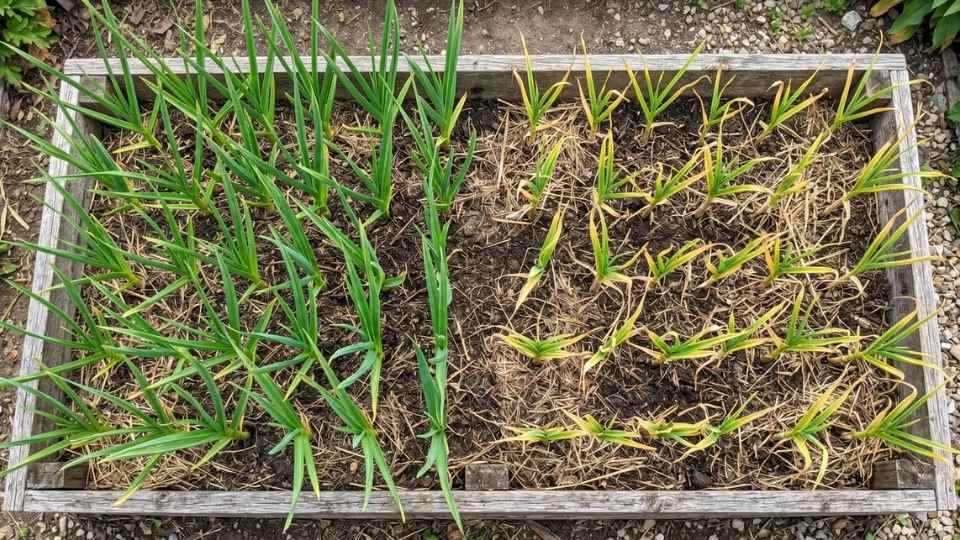
Your planting date is your starting point. Garlic needs roughly 8 to 9 months in the ground to fully develop. You and plant late harvest late. Plant early and you harvest early.
The math is simple. But the exact week still depends on your leaf signals. Track your planting date so you know when to start watching your plants closely.
- Garlic planted in early October is expected to be harvested around late May to mid-June
- Garlic planted in late October is expected to be harvested around mid to late June
- November planting is expected to be harvested in late June to mid-July
- In mild climates with late winter planting, the harvest window shifts to August
- Use your planting date to know when to begin leaf checks. Not when to pull.
Key Takeaway: Your planting date tells you when to start watching. Your leaves tell you when to start pulling.
How Climate and Region Shift Your Garlic Harvest Window
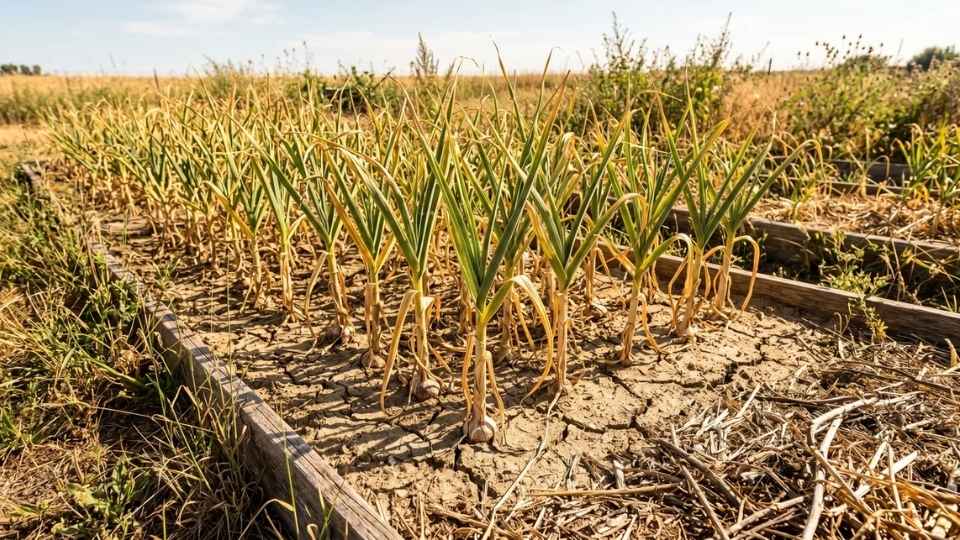
Garlic responds to soil temperature, not just air temperature. A warm winter speeds up development. A cold, wet spring slows it down.
Your local climate can shift your harvest window by weeks in either direction. Zone numbers give you a reliable starting range for your specific growing conditions.
- A wet spring can push your harvest back by one to two weeks
- A dry, warm spring may move your harvest window one week earlier than expected
- Cold soil slows bulb development even when air temperatures feel mild
- Watch the leaves, not the weather app, for your final harvest confirmation
| Climate Type | Expected Harvest Window |
|---|---|
| Cold winters, short summers | Late June to mid-July |
| Moderate, four-season climate | Mid-June to early July |
| Mild winters, warm springs | Late May to mid-June |
| Warm winters, hot summers | May or even late April |
How to Do a Test Pull Before You Harvest the Whole Bed?
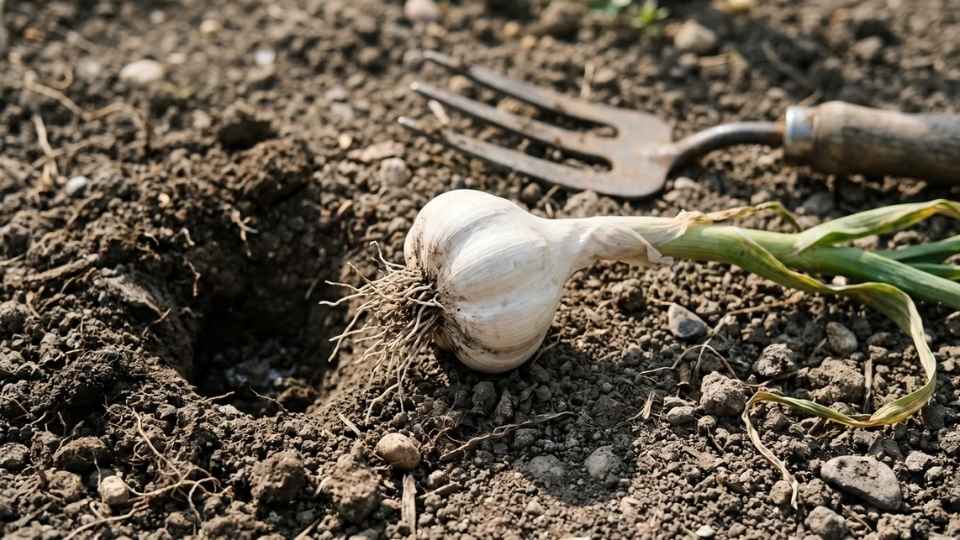
One bulb near the edge of your bed tells you everything you need to know before pulling the whole crop.
You do not need to dig up the entire bed. A single test pull gives you a clear answer in seconds.
- Choose one bulb near the edge of your garlic bed
- Push a garden fork into the soil 4 to 6 inches away from the plant
- Loosen the soil in a full circle before lifting. Never yank the stalk.
- Gently lift the bulb from below and brush off loose soil with your hand
- Check the outer wrapper. Is it thick and fully intact?
- Look at the cloves. Are they defined but not splitting apart?
- Both present: your bed is ready to harvest now
- Thin wrappers and undefined cloves: give it one more week, then check again
- Wrappers already cracked and cloves separating: pull the entire bed today
Pro Tip: Do your test pull on a dry day. Wet soil sticks to the bulb and hides the wrapper condition completely.
What Goes Wrong When You Miss the Right Harvest Time?
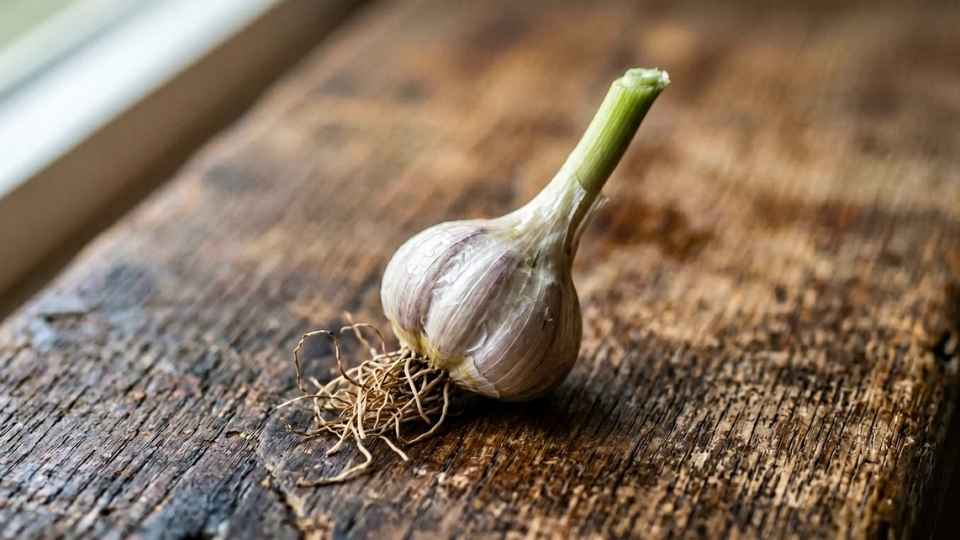
Pull too early and the bulbs will not store. Pull too late and the ground damages them before you lift a fork. Both mistakes are avoidable once you know what each one looks like.
Harvesting Garlic Too Early
Small, thin-skinned bulbs. Poor flavor. Short shelf life. Harvesting too early is the most common garlic mistake. The bulb looks like garlic, but it will not perform like it in the kitchen or the storage bin.
- Cloves are small and poorly developed inside the bulb
- Outer wrappers are thin and tear apart during curing
- Bulbs stored at this stage go soft within 2 to 3 weeks
- Flavor is mild and watery. Not worth using fresh or dried.
- Once pulled too early, you cannot put the garlic back in the ground to finish
Harvesting Garlic Too Late
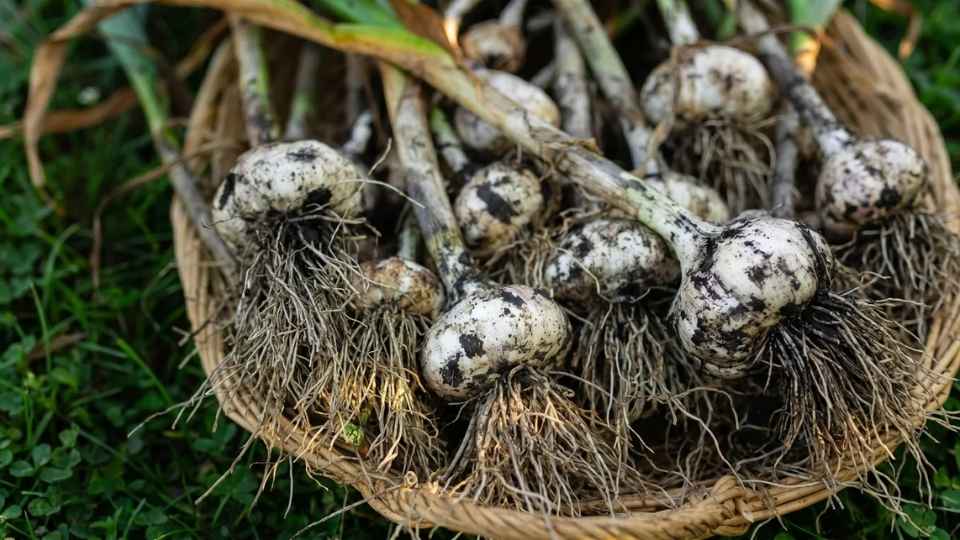
Waiting too long does real damage underground before you ever see it. The outer wrapper breaks down. Cloves split apart. The bulb loses the protection it needs to cure and store properly after harvest.
- Outer wrappers crack or fully decompose in the soil before harvest
- Individual cloves separate from the bulb before you even dig it up
- Bulbs left too long may already show mold on the outer layers
- Some cloves may have started re-sprouting underground
- Rotten patches in the wrapper mean the bulb will not cure at all
How Does Soil Moisture Change Your Garlic Harvest Time?
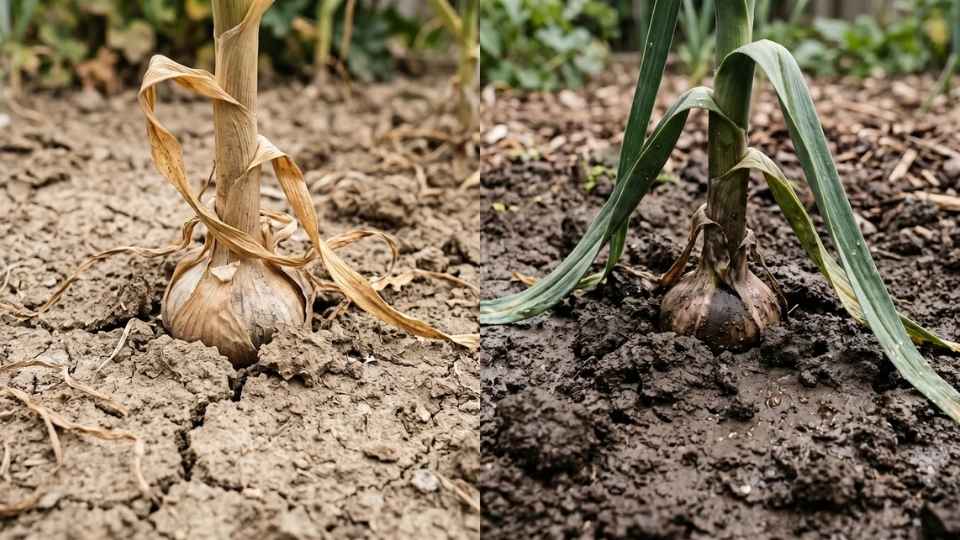
Soil moisture directly affects when garlic finishes developing and how well the bulb holds up at harvest.
Get this wrong, and you lose good bulbs even after pulling them at exactly the right moment.
- Stop watering garlic 2 to 3 weeks before your expected harvest date
- Dry soil helps outer wrappers stay thick, intact, and easy to read
- Wet or waterlogged soil slows bulb development and raises rot risk significantly
- If heavy rains hit right before harvest, wait 3 to 5 days before pulling
- Harvesting from soaking wet soil coats the bulb and causes mold during curing
- Very dry conditions can cause leaves to yellow early. Always do a test pull first before making a decision.
How to Pick Garlic Without Damaging the Bulbs?
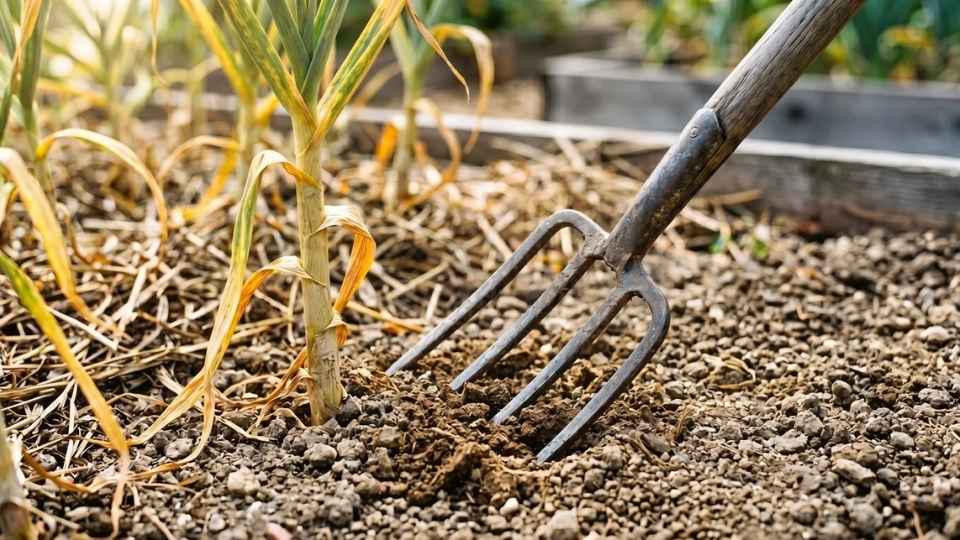
Use a garden fork to loosen the soil around each plant rather than pulling directly on the stalk.
Follow each step to protect the wrappers and get every bulb out intact. Growing potatoes alongside other root vegetables follows the same careful fork-lift method.
- Use a garden fork or flat spade. Never use your hands alone.
- Push the fork into the soil 4 to 6 inches away from the plant base
- Work in a full circle around the bulb before lifting to loosen all surrounding soil
- Lift from below. Never pull directly on the stalk.
- Once the bulb is out, shake the soil off gently with one hand
- Do not rub, scrub, or knock bulbs together during cleanup
- Lay bulbs flat immediately in a shaded, dry spot out of direct sunlight
Important: Do not wash garlic after harvest. Water on the bulb during curing leads directly to mold and rot.
What to Do Right After You Pick Garlic?
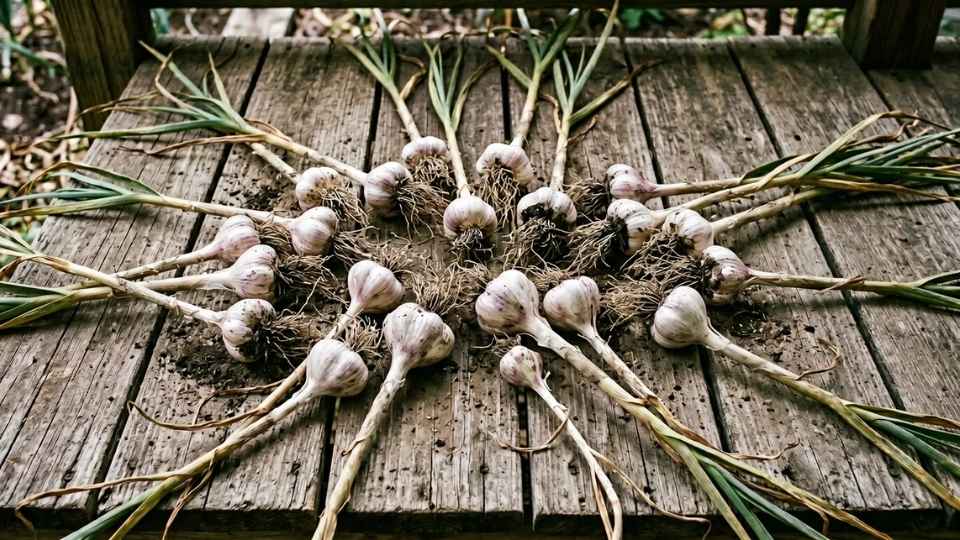
What you do in the first hour after harvest determines how long your garlic stores
Skip the curing step, and the whole season goes to waste faster than you expect.
- Lay bulbs flat or hang them in bunches in a shaded, dry, well-ventilated spot
- Never leave freshly pulled garlic in direct sunlight. It damages the outer wrapper.
- Curing takes 3 to 6 weeks, depending on local humidity and air circulation
- After curing, trim the roots and cut the stalk down to 1 inch above the bulb
- Store cured bulbs in a mesh bag or open wooden crate at room temperature
- Softneck garlic stores for 6 to 12 months when properly cured
- Hardneck garlic stores for 4 to 6 months under the same conditions
Conclusion
Getting the timing right comes down to three things: your leaf count, your garlic type, and your soil conditions. Get all three right, and you will pull full, firm, flavorful bulbs every single season.
Wait for half the leaves to yellow. Do your test pull. Stop watering two to three weeks before harvest day. That is the whole method.
A good harvest does not happen by chance. It comes from watching your plants at the right moments and acting on what they show you.
Your bulbs are only as good as what happens right after they come out of the ground. Proper curing protects every bulb you worked months to grow. Hang your garlic in a shaded, dry spot and let time do the rest. Next season starts with how well you finish this one.
Frequently Asked Questions
What is the 10-Minute Rule for Garlic?
Crushed or chopped garlic releases allicin when left to sit for 10 minutes before cooking. Heat destroys this compound instantly if you skip that wait.
How Many Days Does it take for Garlic to Mature?
Garlic takes roughly 240 to 270 days to fully mature from planting. That equals about 8 to 9 months in the ground.
Can You Eat Garlic Immediately After Harvesting?
Yes. Fresh garlic is edible right after harvest. The flavor is sharper and more moist than that of properly cured and dried bulbs.
Does Garlic Need a Lot of Water?
Garlic needs about one inch of water per week during active growth. Stop watering completely two to three weeks before your expected harvest date.
Does Garlic Continue to Grow After Harvest?
No. Once pulled from the ground, garlic stops developing entirely. Growth continues only if individual cloves are replanted into the soil.
Can You Harvest Garlic If It Has Not Produced a Scape?
Yes. Softneck varieties never produce scapes. For these, rely entirely on leaf count and color change. Half the leaves yellowed is your pull signal.
Why Are My Garlic Bulbs Splitting Underground?
Bulbs split when left in the ground too long after the wrappers break down. Pull as soon as 5 to 6 leaves have browned. Delay causes cloves to separate before harvest.
Can You Replant Cloves from Homegrown Garlic?
Yes. Save the largest, firmest bulbs from your harvest. Separate into cloves and plant in autumn. Replanting from your best bulbs improves the next season’s crop.